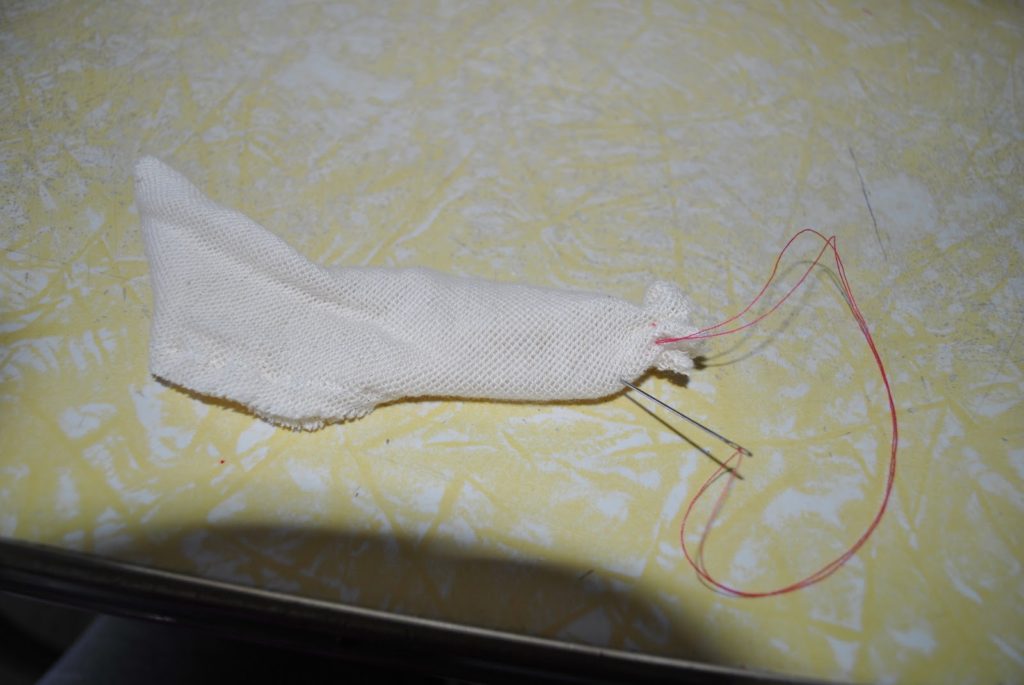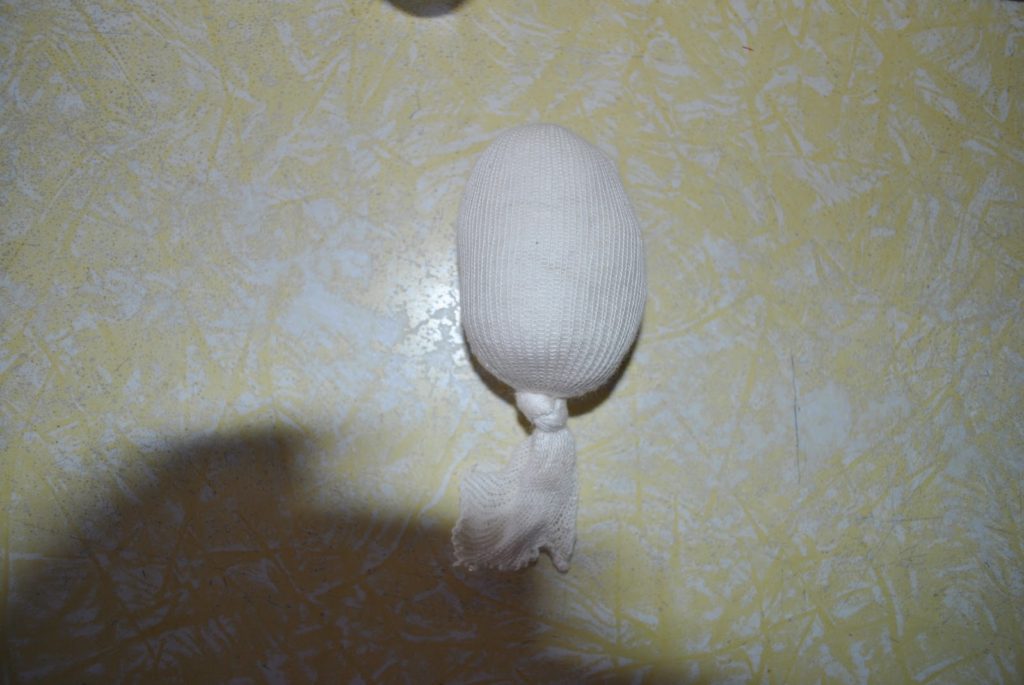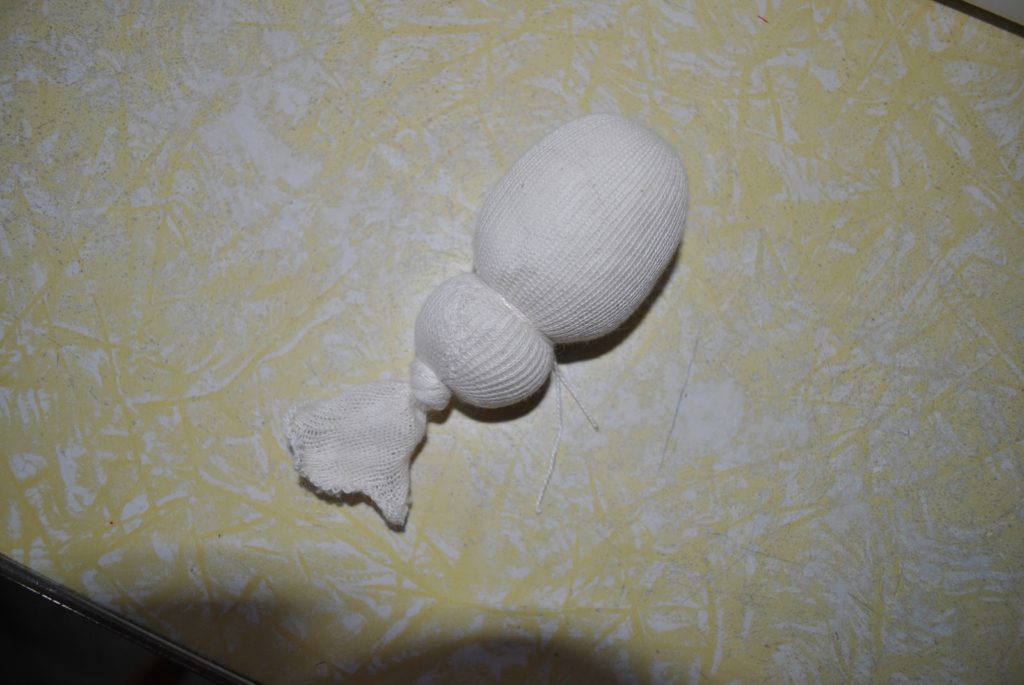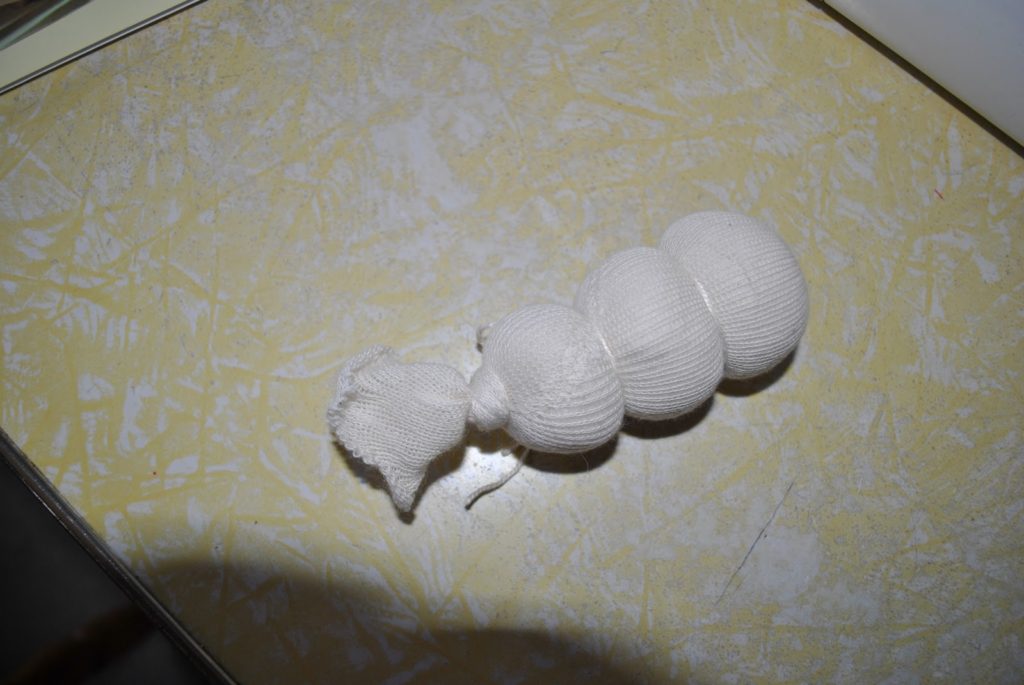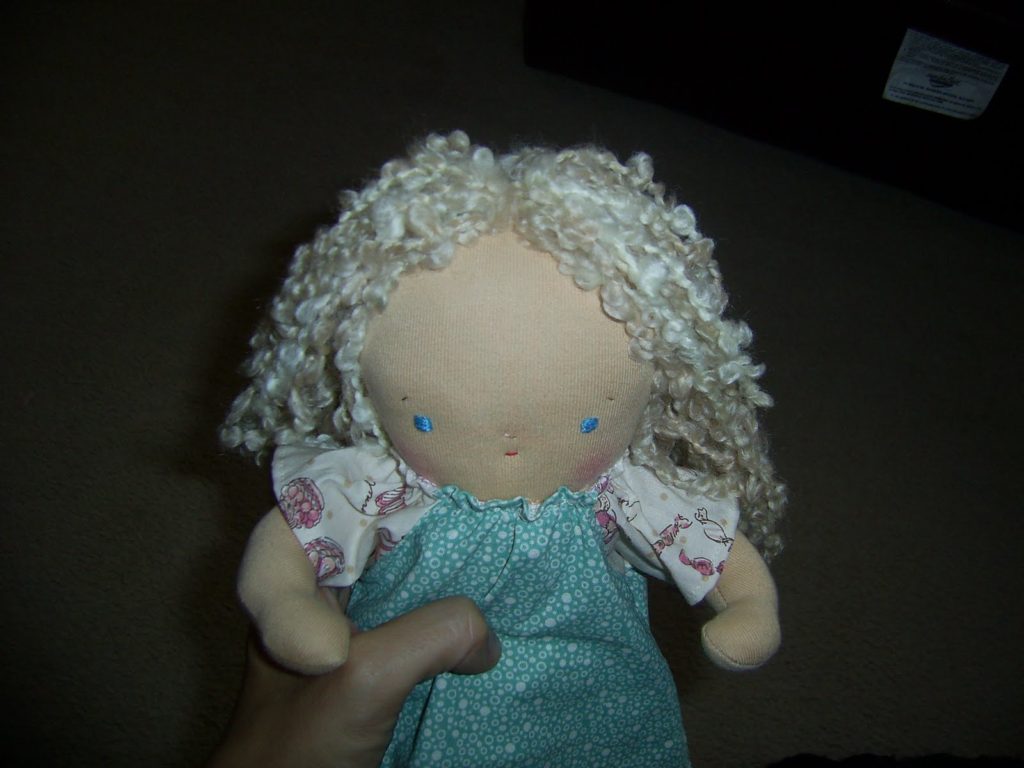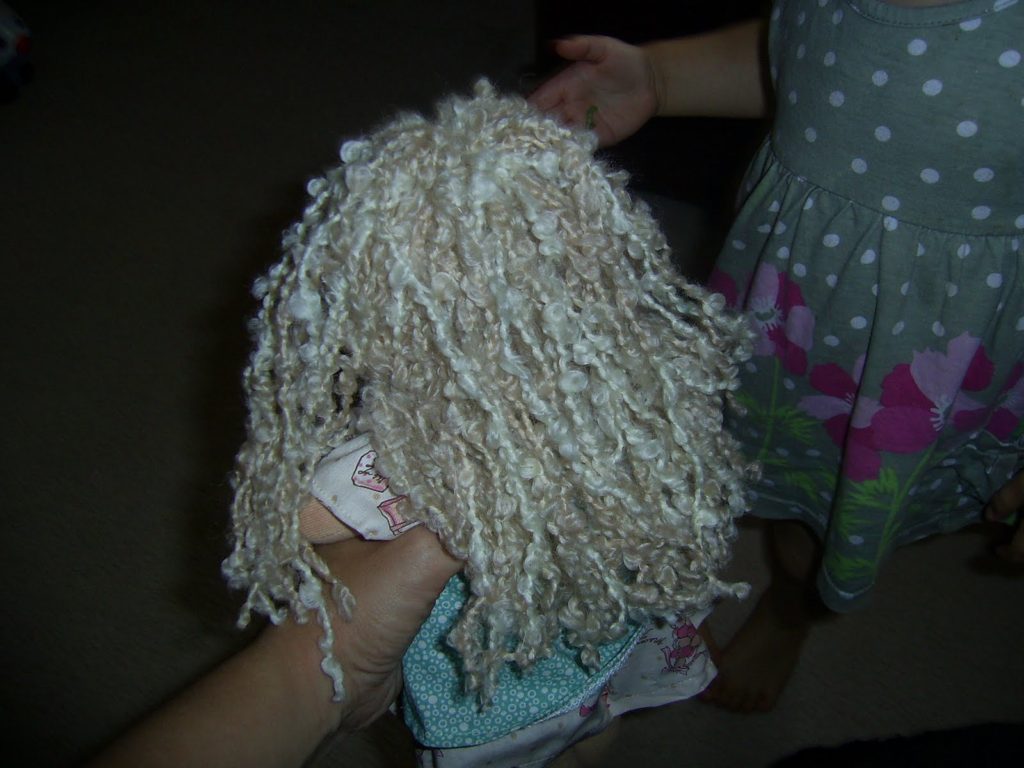
I’m a little embarassed at how long it has taken me to complete part 2, but I’m terrible at finishing what I start! Part 1 of the tutorial can be found here.
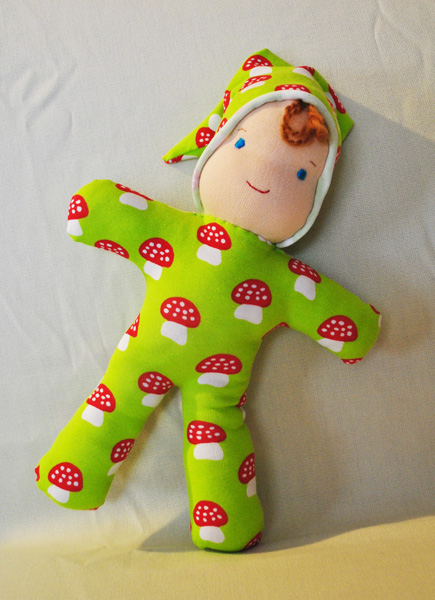
The pattern can be downloaded and printed from here.
For the body you will need 2 9x 9 inch pieces of knit fabric. Use a good quality knit with a percentage of elastane for a good result. If the knit is too stretchy, your doll will stretch out of shape.
You will also need clean carded wool for stuffing.
For the pixie hat you will need approx. 11 x 11 inch piece of knit to be folded.
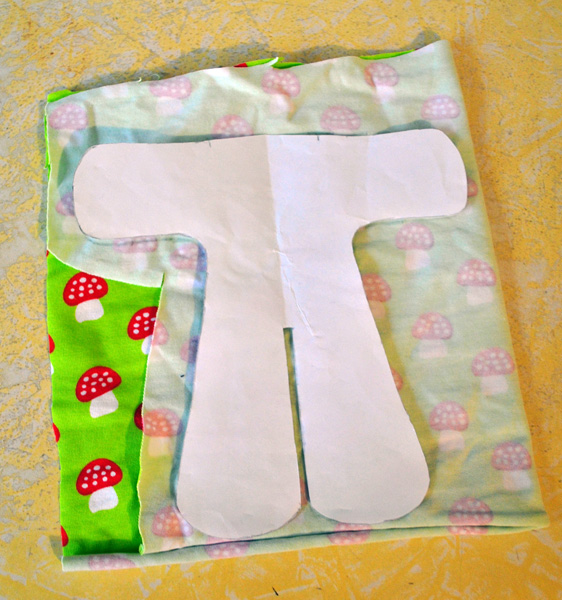
Place your knit pieces together, right sides facing. Pin the body pattern on with the most stretch running horizontally and trace around it onto the fabric.

Place a few pins to stop the fabric moving. With a ballpoint needle and matching thread, stitch on the lines you traced, leaving a gap where indicated. Use small stitches to make strong seams. If you’re concerned about seams parting during stuffing, stitch right around the body piece again, leaving the gap open.
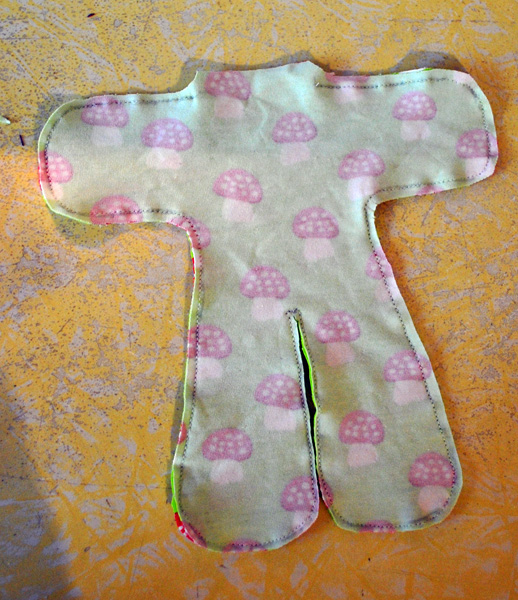
Cut around close to the seam lines being careful not to snip the stitches! Snip the curves. Be very careful when cutting between the legs, go slowly.

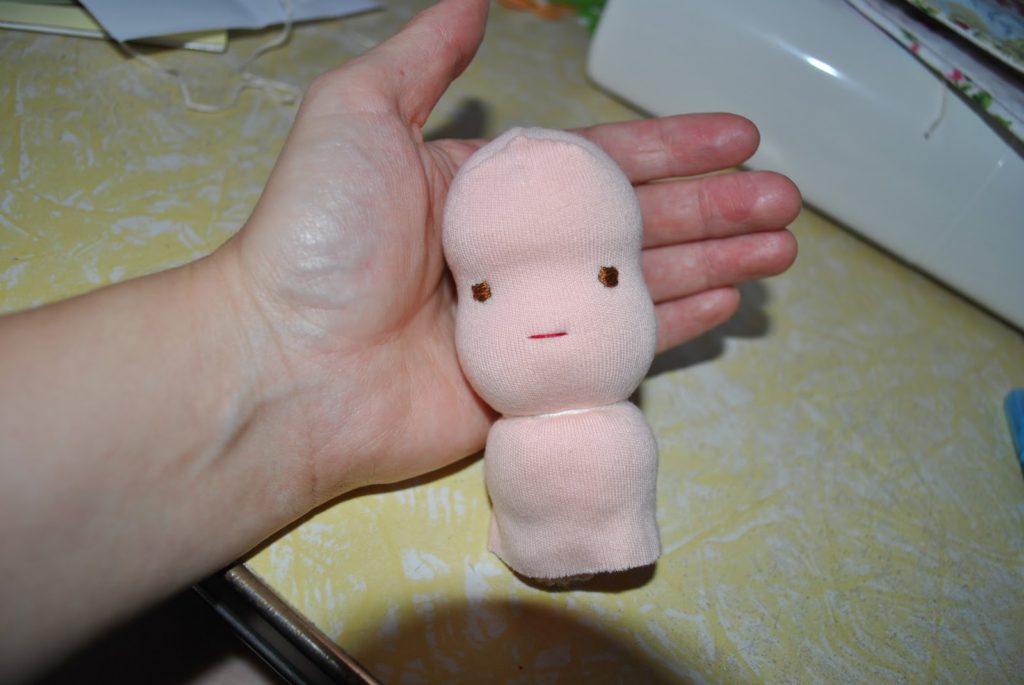
Turn the body piece right side out, running your finger around the inside seams to turn all the pieces properly. Ain’t that cute!
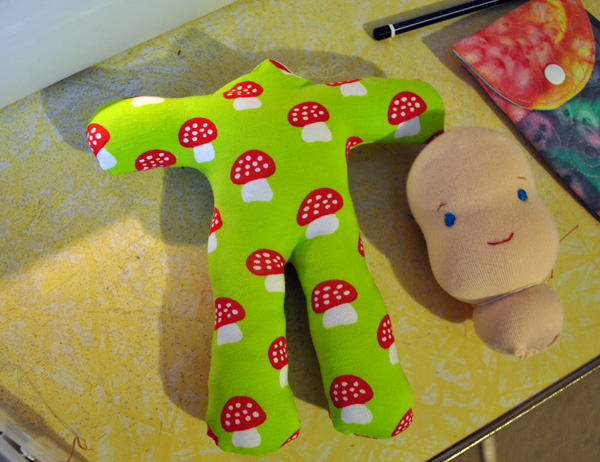
Stuff the body with clean carded wool. It is up to you how firmly you stuff, but keep in mind that the wool stuffing will relax over time. When stuffing, try to leave a hollow space where you will insert the neck.
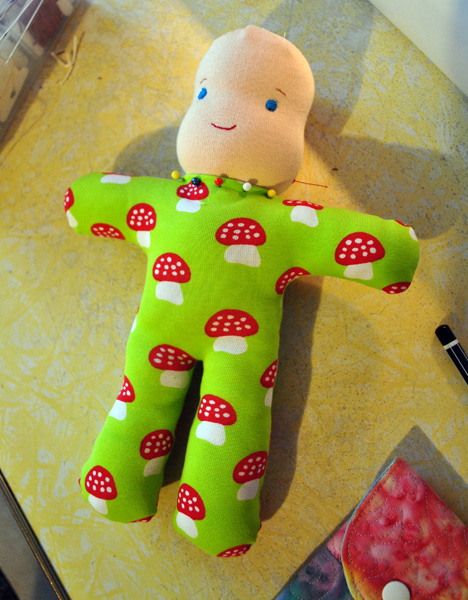
Pop the head into the opening and stick pins into the “muff” that you created when making the head. Make sure the raw edges of knit are folded in around the neck – the great thing about knit fabric in this case is it tends to naturally roll inward, so it makes it easy to get those raw edges in.
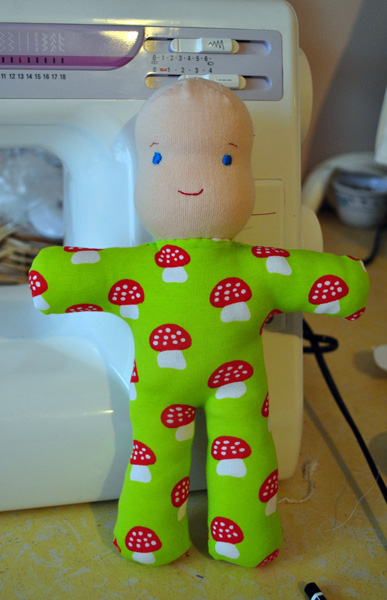
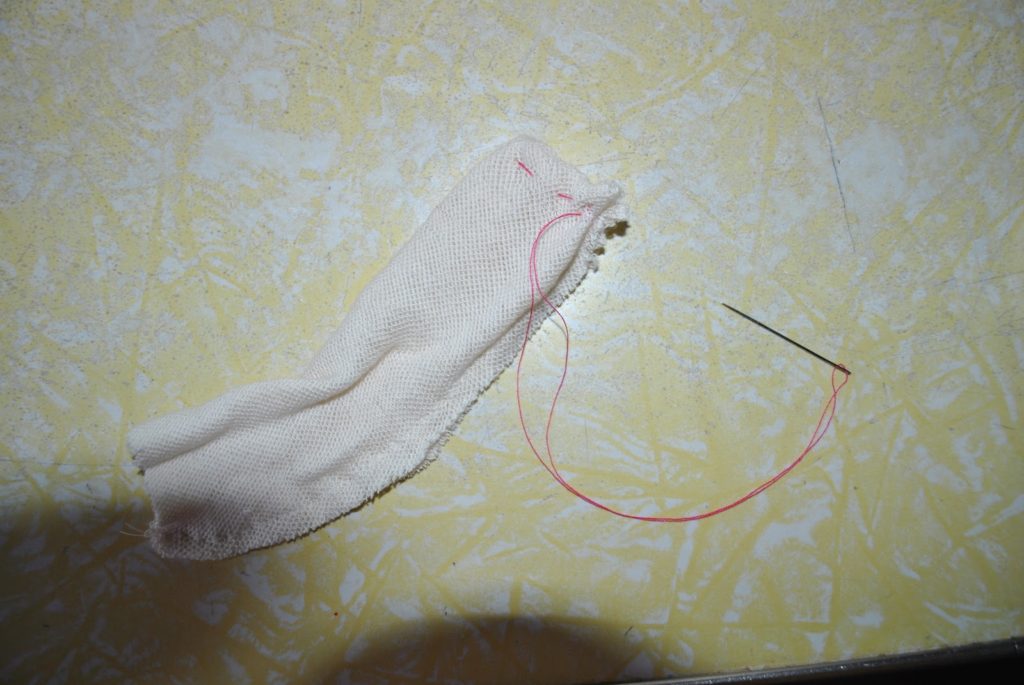
Now, beginning at the back of the neck, hand stitch all the way around the neck, catching the head and body together. I use a little “catch stitch” which is almost invisible. I use a doubled thread in a complimentary colour. Stitch the little shoulder seams as you go. I stitch around the neck twice to ensure it’s really secure.

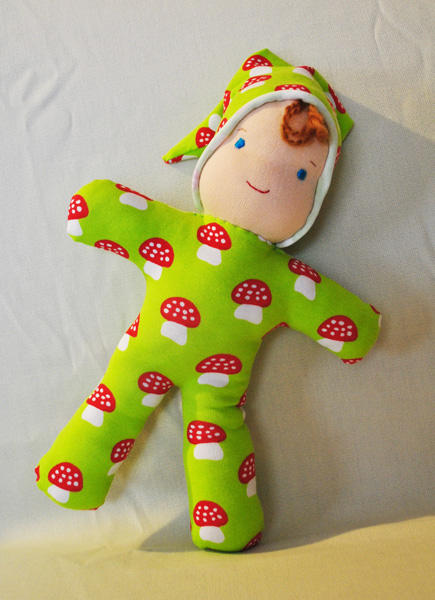
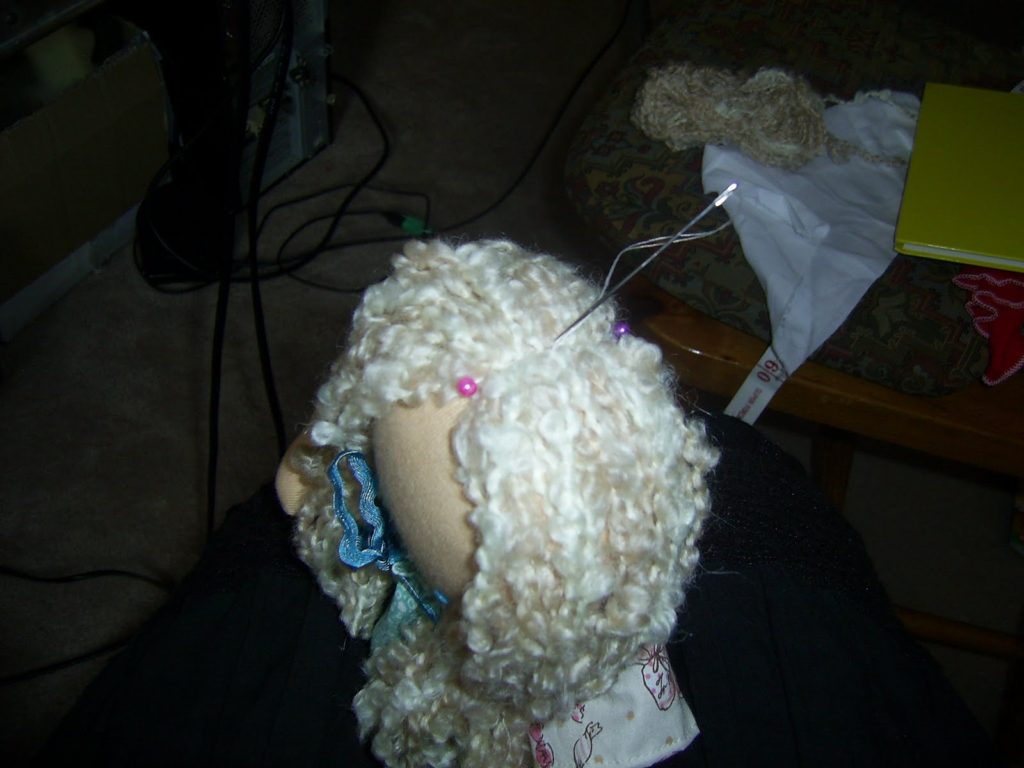
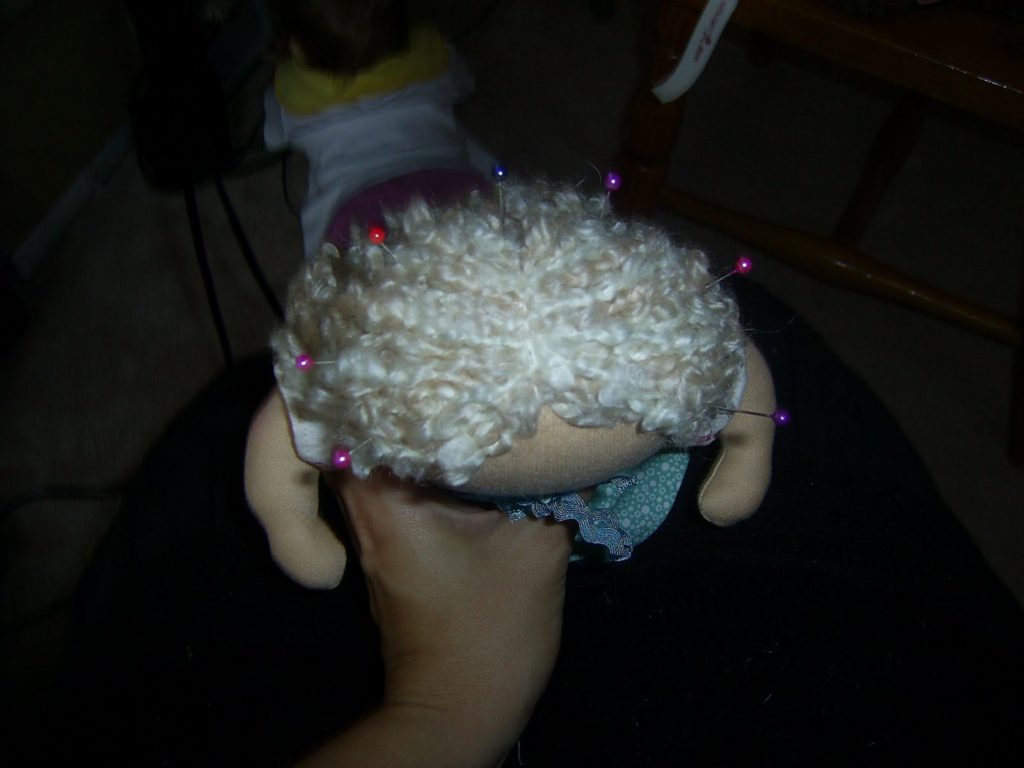
You can do a full head of hair if you wish but here I will show you how to do a pixie hat with a little hair tuft peeking out. Using a lovely, natural yarn make 3 – 4 loops. Pin these to the top of the head so that the cut end is poking towards the back of the head and all the nice loops are at the front, over the forehead. Stitch across the loops in a place that won’t show once the hat is on to secure them to the head.
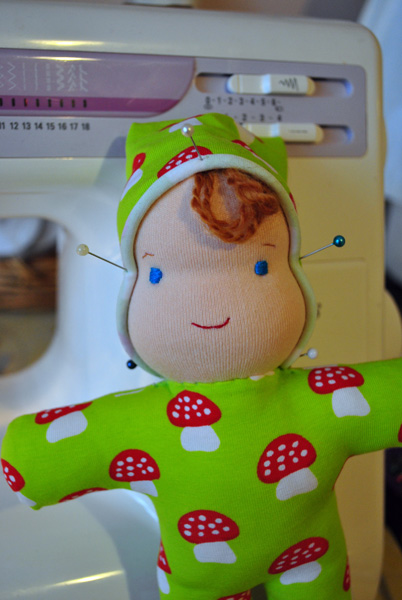
Now the hat! Fold your second piece of knit with right sides together. Place the pixie hat pattern (triangle) onto your fabric against the fold where indicated and with the most stretch running horizontally. Stitch along the long, straight side, up to the point, leaving the bottom edge open.
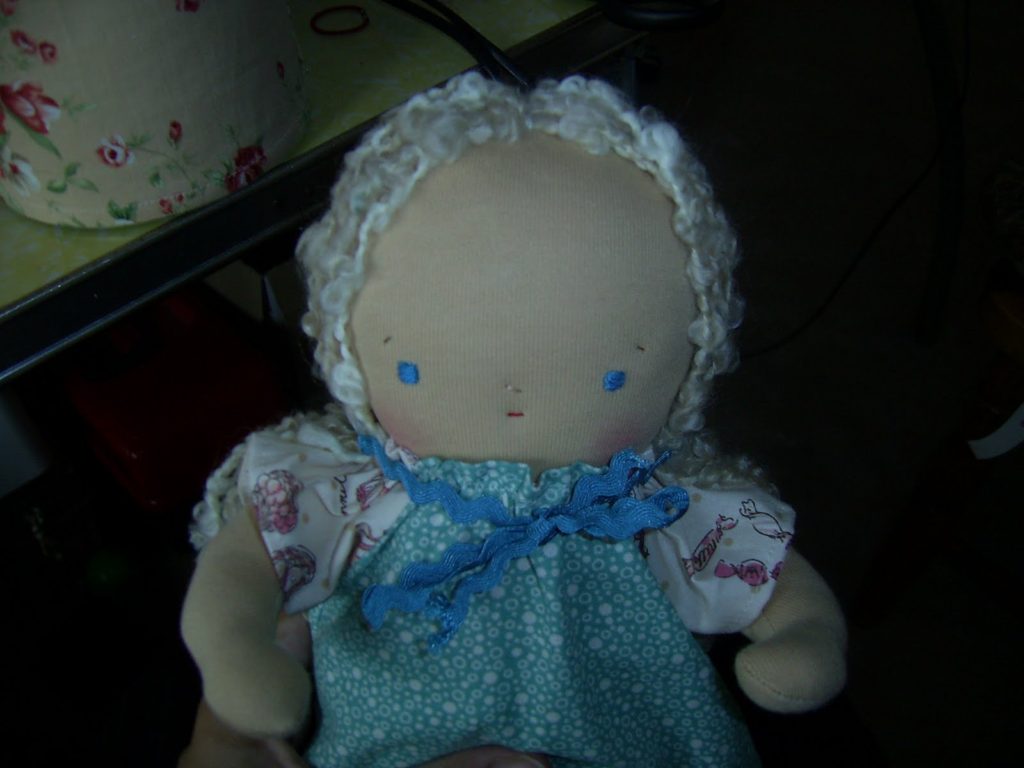
Turn right side out and poke out the point of the hat with a knitting needle or similar. Placing the hat seam at the back of the doll’s head, pin in place. See how the knit has rolled up at the front to make a rim?
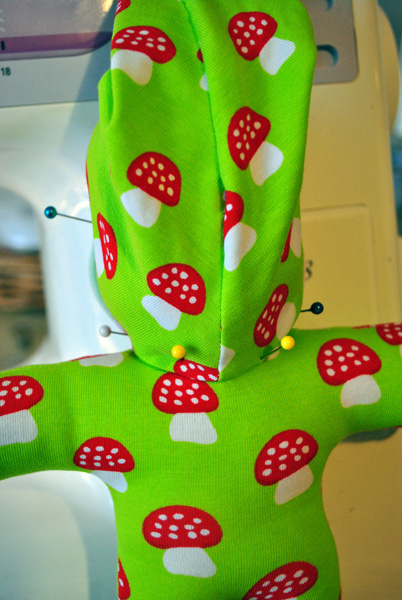
You may have to tuck up the hat at the back, which is easy to do. Using a catch stitch and matching thread, sew all the way around the hat, catching it to the head.
How does your doll look? I’d love to see it!
I’d also love your input (i.e. let me know if there are any mistakes in the tute!)
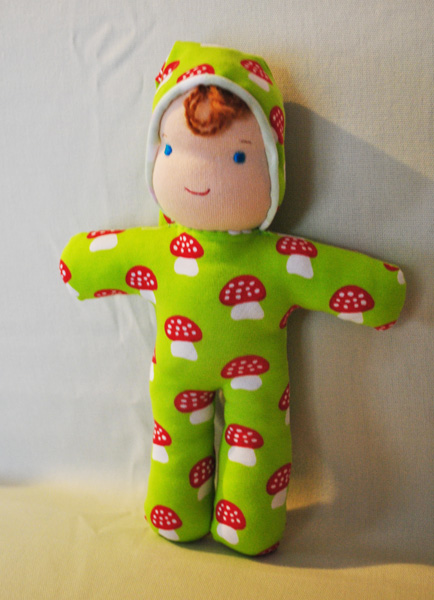
Just a little heads up. I’m approaching 800 blog posts and am in the mood to celebrate with a little giveaway. I’m thinking this mushroom doll may be featuring. Ssshhh!