• Skip to main content
  • Skip to primary sidebar

Kelly Casanova Weaving Lessons

  • Hi! I’m Kelly!
    • Disclosure
  • Online Weaving School Class Index
    • Common account issues
    • Common technical issues
    • What do I get with a membership?
  • New to rigid heddle weaving? Start here!
    • Never heard of the rigid heddle loom?
    • How to weave neat edges on the rigid heddle loom
    • Rigid heddle weaving
    • Rigid Heddle Weaving Patterns
  • Patterns
  • Subscribe

Kelly

Weaving for Healing: When the Loom Becomes More Than a Hobby

by Kelly Leave a Comment

Over the years, I’ve had so many women quietly tell me the same thing:

“My loom helped me through a really hard time.”

“Weaving is really helping me through this period of grief”.

“Weaving is good for my mental health”.

We don’t often talk about this side of weaving. We talk about the excitement of new projects, yarn choices, techniques and looms. But there’s another layer to it – the quiet support that weaving can offer when life feels heavy.

I want to explore that here – not as therapy advice, because I am definitely not a therapist! Not as a substitute for proper support, because that is absolutely key for healing of any kind.
But as an honest look at why weaving can feel deeply stabilising during stressful or painful seasons.

(And just to reiterate clearly – weaving is not a replacement for professional health care. If you’re struggling, please seek the right support!)

The Comfort of Repetition

Think about what happens at the loom.

Throw the shuttle.
Beat.
Change shed.
Repeat.

There’s something incredibly regulating and grounding about that gentle rhythm.

When life feels chaotic or uncertain, the loom does not change. The process is the same today as it was yesterday. The loom waits until we’re ready for the next weaving session.

Our nervous systems respond well to predictable, repetitive movement. Both hands working. A steady pace. Clear steps.

You don’t have to make a hundred decisions.
If you run into problems or errors you can address them quietly and in your own time.
Then you progress to the next step.

It’s just you, the weaver, and the loom in that moment of time.

That simplicity can be a relief.

Weaving During Stressful Seasons

There was a period in my life when my son was very ill in hospital for an extended time. It was exhausting and uncertain, and there were so many things completely outside my control. At times, we didn’t know if he would make it.

To add to the distress, I was quite sick with the flu myself and there were many days that I couldn’t be with him at the hospital, which was quite a distance from our home.

During that season, weaving became something steady.

It didn’t solve the situation or remove the stress. Actually, at first I felt selfish for sitting at the loom when I couldn’t be at my son’s side.

But it gave me:

  • A familiar process
  • A quiet mental focus
  • A small sense of completion

When everything else felt unpredictable, the loom was predictable.

The warp was still straight.
The heddle still lifted and lowered.
Cloth still formed, one row at a time.

And sometimes, that was enough to steady me for the day. I even made a Youtube video during that time because it helped me to feel I was doing something positive for someone else.

Weaving and Chronic Illness

If you live with chronic illness, you’ll understand how much it can affect your sense of identity and capability.

Energy shifts.
Plans change.
Progress feels inconsistent.

One of the things I’ve appreciated about weaving is that it allows for slowness.

You can sit and weave for ten minutes or longer if you feel up to it.
You can stop without “failing.”

Even weaving a small section of cloth can restore a sense of competency and satisfaction – a reminder that your effort still produces something tangible.

Why Structure Feels Safe

Weaving is built on structure.

Warp first, then weft, tension balanced, order maintained. Step by predicable step.

There is real comfort in that structure.

When your emotions feel messy or overwhelming, when your thoughts lack clarity, working within a clear system can feel grounding. You are not staring at a blank canvas wondering what to do. You follow steps, repeat sequences and see progress.

Rigid heddle weaving in particular lends itself beautifully to this. Once your loom is dressed, the work becomes rhythmic and contained. The setup takes less time so is more manageable.

Weaving Through Grief

Grief is difficult to put into words and can be so individual.

Textile work gives your hands something to do when your mind feels foggy. It’s something tangible and stable in a time where nothing feels controllable. Weaving can feel like “something to hold on to”.

Some women choose to:

  • Weave with colours that remind them of someone
  • Create a small memorial piece
  • Weave for someone else who is grieving or going through a difficult stage
  • Incorporate meaningful yarn into a project

Creating a Gentle “Healing Weaving” Practice

If you’re walking through a stressful season and would like to use your weaving as support, here are a few simple ideas:

Keep one loom dressed.
Remove the barrier of setup.

Choose simplicity.
Plain weave. Soft colours. No pressure to be clever.

Weave how you feel.
Ten minutes is enough if that is all you can cope with. Or spend the entire day at the loom if you are able. Whatever feels most healing for you for today.

Let it be private.
Not everything needs to be shared online or with others if you don’t want to. Just like artwork, it can be done just for you.

Notice the rhythm.
The sound of the shuttle.
The beat of the reed.
The growing cloth.

Sometimes the most helpful thing is simply the repetition.

What Weaving Is and Isn’t

Weaving is not a cure for everything.
It’s not therapy and it’s not a fix for trauma.

But it can be:

  • A steady rhythm
  • A quiet anchor
  • A creative outlet
  • A small place of control in a season that feels out of control

Across history, women have woven through war, loss, uncertainty and transition. Cloth has always been made during ordinary days and very hard ones.

There is something deeply human about building structure when life feels unstructured.

If you’ve experienced weaving as something more than just a hobby, I would love to hear about it in the comments.

You may be encouraging someone else more than you realise.

If you are in a season of struggle and don’t feel you’re coping, I urge you to please, get help. Whether it’s talking to friend, family member or someone you trust online. Maybe it’s joining a support group. Or maybe you need to go deeper and seek out professional help. You don’t have to do it all alone ❤️

Until next time…

Happy Weaving!

Filed Under: Healing through Weaving, Health and home, Weaving Tagged With: healing through weaving, mental health

Weaving with Chronic Illness: Tips for Staying Creative on Low-Energy Days

by Kelly 7 Comments

In the fiber arts community, we are often surrounded by images of “hustle.” We see weavers finishing beautiful projects in a weekend or posting daily updates of their perfectly manicured studio spaces.

For a long time, I felt I had to participate in that “polished weaving” version of reality. I only showed up on my good days, hiding away when the fatigue or illness took over.

But the truth is, a large portion of the weaving community lives with chronic illness, injury, or the physical changes that come with aging. After all, we are regular people from all different backgrounds and circumstances. If we only talk about weaving when we are at 100%, we leave out the beautiful, quiet work that happens in the “in-between.”

Hiding behind an illness can also be a missed opportunity to share. It’s only through talking about our difficulties that we discover there are others struggling as well.

If you are struggling to balance your love for the loom with a body that needs extra care, this guide is for you. Here are some ways we can adapt our craft to be a source of healing rather than a source of stress and disappointment.

1. Redefining Productivity: The “Investment” Mindset

When you live with a chronic illness, a “bad day” can feel like a failure. I used to spend my resting hours feeling guilty, thinking about the yardage I wasn’t weaving or the classes I wasn’t filming. Not only that – I felt like a burden on those around me.

I’ve had to learn to turn that narrative around. When you are resting, you aren’t “doing nothing” – you are investing in your next good day.

On the days when your body says “no” to the loom, try these low-impact creative investments:

  • Passive Learning: This is the perfect time to watch YouTube tutorials or documentaries on weaving, textile history or other crafts you love. It keeps your mind engaged and your skills growing without requiring a single physical movement.
  • Digital or Mental Design: Use a tablet or a good old fashioned notebook to sketch out colour palettes, draft patterns and form ideas for future projects.
  • The “Baseline” Grace: Accept that some days are only for survival. Your loom will be there when you feel better. Recognizing that you need a “Quiet Day” is a skill in itself.

2. The Ergonomic Loom: Choosing Your Partner

One of the biggest hurdles to weaving with illness is the equipment itself. We often choose looms based on what they can make, but we should be choosing them based on the reality of our ability to use them.

Make Friends with a Rigid Heddle Loom

Rigid heddle looms are typically smaller and for most weavers, they are easy on the body. Pair a rigid heddle loom with a stand and a comfy chair where you can tuck yourself right in against the loom, and you have a very comfy weaving situation!

Why a Floor Loom Might Be Better Than a Table Loom

It seems counter-intuitive, but for many with chronic pain, a floor loom is actually more accessible than a table loom.

  • Distribution of Work: On a table loom, your upper body does everything. You are constantly reaching for levers and passing the shuttle, which can lead to neck and shoulder strain for some weavers.
  • The Floor Loom Advantage: A well-designed floor loom distributes the work. Your legs handle the heavy lifting of opening the shed, while your arms guide the shuttle. This “whole-body” movement is often much more sustainable for longer weaving sessions.

Looking for “Light” Design

If you are in the market for a floor loom, look for words like “light treadling”. For example, my Louet David Floor loom has been a game-changer for me. It’s designed so that the treadling stays light even with complex tie-ups, and the loom itself is light enough to be moved easily across the floor.

3. Creating a “Restful” Creative Kit

I highly recommend having a “Tier 2” creative hobby—something you can do when you are too unwell for the big loom but too restless to do nothing.

  • The Lap Loom: Small frame looms or tapestry looms can be used in a recliner or even in bed. They allow you to feel the yarn and play with colour without needing to sit upright at a bench. I like to play around with my inkle loom or zoom loom when I don’t feel up to something larger.
  • The Portable Arts: Knitting and crochet are the ultimate companions for chronic illness. They are portable, lightweight, and can be picked up for five minutes or two hours depending on your energy levels.

4. Practical Hacks for the Studio or Creative Space

When you do have the energy to weave, make sure your setup is doing the work for you:

  • Lighter Tie-ups: If your floor loom feels heavy, experiment with your tie-up. Sometimes pressing two treadles at once is physically easier than one heavy treadle.
  • The Dobby Option: While expensive, Dobby looms (mechanical or electric) are the “gold standard” for aging weavers or those with mobility issues because they automate the most strenuous parts of the process.
  • Seated Preparation: When warping, don’t feel like you have to stand at a warping peg. Find ways to sit (try seated warping!), use a warping board at eye level, or take frequent breaks between sections.

5. Weaving Related Activity

You don’t have to be physically weaving to be involved. Tidying up a few things in your weaving space, leafing through your favourite weaving books, prepping yarn or shuttles are simple activities that don’t take a lot of time, but contribute positively towards your next weaving session.

Final Thoughts: You Are Not Alone

The most important point I wanted to share is this: You can still be a weaver. Your limitations might change the way you weave, the speed at which you weave, or the tools you use, but they do not take away your identity as a maker.

Don’t be hard on yourself. Every moment you spend refreshing your body is a moment spent ensuring you can keep weaving for years to come.

And don’t forget gratitude! Be grateful for every minute you get to spend at the loom – it’s a privilege!

I shared a raw and honest video on Youtube about Weaving with a Chronic Illness, you can watch that here:

I’d love to hear from you. How have you adapted your loom or weaving space to fit your needs? Do you have a “go-to” activity for when you’re not well enough to weave? Let’s share our “hacks” and support each other in the comments below.

Until next time…

Happy Weaving!

*This post contains affiliate links. For further information, please see my disclosure policy here.

Filed Under: Health and home, Weaving Tagged With: autoimmune disease, chronic illness, tips for staying creative on low energy days, weaving and illness, weaving with chronic illness

Why Not All Towels Are the Same: Weaving Kitchen, Hand & Bath Towels

by Kelly 8 Comments

I find that towels are one of the most satisfying things to weave. They are practical, gift-worthy, and so customisable. If you’ve ever wondered how to weave towels that are absorbent, durable and enjoyable to use, this guide will walk you through what you need to know.

Not all towels are created equal. A kitchen towel has different demands to a hand towel, and a bath towel is a whole other level again.

In this article, I’ll walk you through the three main types of towels you can weave – kitchen towels, hand towels and bath towels. We will talk about:

  • suitable yarns for each
  • suitable loom types
  • weave structure considerations
  • and links to patterns and resources if you want a proven starting point

1. Kitchen Towels (Tea Towels)

Kitchen towels (we call them tea towels in Australia!) are usually the first towels handweavers make, and they’re an excellent place to start if you’re learning how to weave towels.

Kitchen towels are such a great place to start. They’re quick to weave, highly practical, and a fantastic way to experiment with colour, structure and yarns.

What a kitchen towel needs to do:

  • Be highly absorbent
  • Dry quickly
  • Stand up to frequent washing
  • Feel pleasant but not fluffy

Best yarns for kitchen towels (absorbent & durable)

  • Cotton (8/2 or 10/2 is ideal)
  • Cotton-linen blends (I love 8/2 cottolin for kitchen towels)
  • Linen (beautiful, but better for experienced weavers)

Avoid wool or acrylic – they simply don’t absorb well enough. They will repel, rather than absorb moisture.

I have a more detailed article about which cotton to use for kitchen towels here.

Best looms for weaving kitchen towels

  • Rigid heddle looms (perfect for beginners)
  • Table looms
  • Floor looms

Kitchen towels are very forgiving and work beautifully on a variety of looms.

Best weave structures for kitchen towels

  • Plain weave (simple and effective)
  • Waffle weave (especially absorbent)
  • Simple twills
  • A combination of structures for a beautiful, classic look like these
  • Summer and Winter actually makes beautiful towels

2. Hand Towels

Hand towels bridge the gap between kitchen towels and bath towels. They need to be practical, but they’re also something you see and touch every day in the bathroom or kitchen.

Hand towels sit somewhere between kitchen towels and bath towels – they need to be absorbent, but also soft and attractive. They are usually thicker in weight and larger in size than a kitchen towel.

What a hand towel needs to do

  • Absorb water efficiently
  • Feel good against the skin
  • Look nice hanging in a bathroom or kitchen

Best yarns for weaving hand towels

  • 8/4 cotton (will weave a thicker fabric than 8/2 cotton)
  • Cottolin (cotton/linen blend – once again a heavier weight is preferable)
  • Knitting cotton
  • Cotton blends (choose natural fibres)

You can afford to prioritise softness and loftiness here more than with kitchen towels.

Best looms for weaving hand towels

  • Rigid heddle looms (with slightly wider widths)
  • Table looms
  • Floor looms

If weaving on a rigid heddle loom, consider using pick up sticks or two heddles to allow for more interesting structures.

Best weave structures for hand towels

  • Twills
  • Waffle weave
  • Honeycomb
  • Subtle textured patterns

3. Bath Towels

Bath towels are the most advanced towel project for handweavers because they are a large size and may require a more significant time investment if using a technique like loop pile (keep reading if that piques your interest!)

Bath towels are the most ambitious towel project, but can be very rewarding.

What a bath towel needs to do

  • Be very absorbent
  • Feel soft against the skin
  • Be strong enough for heavy use
  • Have good drape
  • Be regular wash friendly

Best yarns for weaving bath towels

  • Fine cotton (8/2 or finer)
  • Unmercerised cotton for maximum absorbency
  • Cotton/bamboo blends for softness
  • Other plant fibres can also be used successfully, like hemp, for example.

Bath towels usually require more yarn and more weaving time, so quality matters.

Best looms for weaving bath towels

  • Floor looms (ideal)
  • Large table looms
  • Large rigid heddle looms

While bath towels can be woven on rigid heddle looms, width limitations often mean compromises or seaming. This won’t be an issue if your RH loom is 32″ or larger.

Best weave structures for bath towels

  • Waffle weave (classic bath towel structure)
  • Twill variations
  • Textured blocks
  • Loop pile or cut pile. Loop pile is the technique used for most commercially available towels. Cut loop is a little more luxurious and velvety but can be less absorbent. The loop pile technique is not hard to learn and is worked on a plain weave backing. My Lux Hand Towels pattern used loop pile as a decorative border.

Syne Mitchell has a handy section on loop pile in her book Inventive Weaving on a Little Loom, page 178- 181.

How to Choose the Right Towel Project for Your Loom and Skill Level

If you’re new to weaving towels, start with kitchen towels. Once you’re comfortable with yarn behaviour, finishing and shrinkage, move on to hand towels, and then tackle bath towels when you’re ready for a bigger commitment.

Each type teaches you something different, and all of them result in something genuinely useful.

Towel Weaving Resources (Kitchen, Hand & Bath)

If you’d like to learn more about weaving towels, I have a range of resources to help:

  • Kitchen towel patterns → 

Diamond Stripe Towels

Happy Fibonnaci Towels

Bright & Beautiful Towels

Floor Loom 4 Shaft Class Towels

  • Hand towel patterns → 

Lux Hand Towels

Wash Your Hands Towels (free pattern)

These patterns remove the guesswork so you can focus on enjoying the weaving. Here are some other resources related to weaving towels:

  • How to hem hand woven towels
  • How to hem hand woven by hand (no sewing machine)
  • Which cotton weight for kitchen towels
  • Tips for weaving with cottolin
  • New towels for our new home

Frequently Asked Questions About Weaving Towels

What is the best yarn for weaving towels?

For most towel projects, cotton yarn is the best choice due to its absorbency, durability and ease of care. I like 8/2 unmercerised cotton as it’s so easy to work with. Linen and cotton blends can also be used, particularly for kitchen and hand towels.

Can you weave towels on a rigid heddle loom?

Yes! Kitchen towels and hand towels are very well suited to rigid heddle looms. Bath towels are possible, but width limitations often make table or floor looms a better choice.

What weave structure is best for towels?

Waffle weave is one of the most popular structures for towels because of its excellent absorbency, but plain weave, twill and honeycomb can all work beautifully depending on the towel type.

Final tip: Always sample when in doubt. Towels change dramatically after washing, and sampling will tell you more than any chart ever could. This is especially important for weave structures like waffle weave, which has higher rates of shrinkage than plain weave.

I hope this guide has been super helpful to you 😊

Until next time…

Happy weaving!

*This post contains affiliate links. For more information, please see my disclosure policy here.

Filed Under: 4 shaft weaving, 8 shaft weaving, All about looms, Weaving, Yarn Tagged With: bath towels, hand towels, hand woven towels, kitchen towels, weaving towels

Levers vs Treadles (plus a free weaving draft!)

by Kelly Leave a Comment

Choosing between a table loom and a floor loom is one of the biggest decisions a weaver can make. While both allow you to weave intricate multi-shaft weave structures, the way you achieve that – using hand-operated levers versus foot-operated treadles can completely change the weaving experience.

In my latest video, Levers vs. Treadles (Free Pattern Included!), I break down the physical differences, pros and cons, and the rhythm of each setup. I also use the free weaving draft included in this article (scroll to the bottom for your free copy 😉) and show you how I would approach the tie up for both levers and treadles.

The Table Loom Experience: Weaving with Levers

Table looms are often the entry point for multi-shaft weaving and this was certainly the case for me. Instead of using your feet, you use hand-operated levers (usually located on the side or the top of the castle) to lift your shafts.

The Pros:

  • Portability: These looms are frequently much smaller, lighter and can be moved easily, making them perfect for workshops. Most table looms have a foldable castle.
  • Ease of Setup: There is no “tie-up” process, because basically, the shafts are permanently tied up. If you want shaft 1 and 3 to go up, you just flip levers 1 and 3.
  • Visual Learning: It’s very easy to see exactly which shafts are raised, which is great for beginners learning to read drafts.

The Cons:

  • Slower Speed: Every time you throw the boat shuttle, you have to take your hand off it to flip the levers. This breaks your weaving rhythm. It also means frequently putting the boat shuttle down to free up your extra hand.
  • Physical Strain: Using your arms and shoulders to lift shafts for hours can lead to fatigue more quickly than using your legs. This can depend on the size of your table loom and how you have it set up.

The Floor Loom Experience: Rhythm with Treadles

Floor looms are designed for production and ergonomic flow. By moving the shaft control to your feet, your hands are free to focus entirely on throwing and catching the shuttle.

The Pros:

  • Speed and Rhythm: Once you get into a “dance” with your treadles, the weaving goes significantly faster.
  • Ergonomics: Pushing down with your legs is generally less tiring than lifting levers with your arms, allowing for longer weaving sessions. Using your whole body to weave can feel very balanced.
  • Complexity Made Easy: While the tie-up takes time at the start, once it’s done, a single foot press can lift (or lower, depending on your loom type) multiple shafts at once.

The Cons:

  • Space: They require a dedicated space in your home.
  • The Tie-up: Crawling under the loom to tie treadles to shafts can be a bit of a workout! If you have back issues, the less time you spend hunched on the floor, the better!

Which Should You Choose?

If you are short on space or want a loom you can take to guild meetings, the Table Loom is a fantastic tool. However, if you find yourself wanting to weave long projects (like yardage for clothing or multiple towels) or if you want to find a faster “flow,” the Floor Loom is the way to go.

Tips For Weaving with Levers

I always recommend to purchase a stand with your table loom. Although it’s an extra expense, it is worth the investment long term.

Weaving with your table loom on a stand allows you to get very close to the loom and levers, providing a greater level of comfort and less arm/shoulder/neck fatigue. You can usually adjust the height of the stand too (or use a height adjustable chair) to get the perfect height for you.

You can speed up your weaving process a little by flipping more than one lever at a time. Once you get used to it, you will find yourself doing this naturally.

Using a table loom with levers means you don’t have to be “treadle conservative”. Your levers are not limited to a specific tie up like treadles are, so pattern explorations are much more possible.

Tips for Weaving with Treadles

Opt for “light treadling” when you can. What this means is try not to tie too many shafts up to any one treadle, as this will make the treadling heavy and hard on your back.

If you find the number of treadles on your loom (or lack thereof) a bit limiting, try a skeleton tie up or use a treadle reducer. This can expand the kind of patterning you can achieve.

For some types of looms (like a countermarch) the tie up can be quite cumbersome and difficult. To avoid time spent cramped on the floor inside your loom, look into options like the Top of the Lamms method. Also put a lot of thought into the type of floor loom that will work for you prior to purchasing. You may want to look at the “not time spent on the floor” looms like the Louet Megado Dobby (my dream loom!)

Download Your Free Weaving Draft!

To help you practice on either setup, I’m sharing one of my favourite weaving drafts. This is a versatile 4-shaft M & W Twill that works beautifully whether you are flipping levers or stepping on treadles.

M & W Twill Variation Weaving DraftDownload

If you have weaving software and would like the WIF file, grab that here:

Download the WIF here

Don’t forget to check out the Youtube video for more information on levers and treadles!

Until next time…

Happy Weaving!

  • This post contains affiliate links. For more information, please see my disclosure policy.

Filed Under: 4 shaft weaving, 8 shaft weaving, Floor Loom Weaving, Table loom weaving, Weaving Tagged With: floor loom weaving, levers, table loom weaving, treadles

6 Cosy Winter Rigid Heddle Weaving Projects

by Kelly Leave a Comment

Winter has a funny way of slowing us down – shorter days, cooler weather, and a natural pull toward cosy, comforting activities. For many of us, that makes it the perfect season for weaving.

If you’re looking for inspiration, winter is a wonderful time to focus on rigid heddle weaving projects that are warm, practical, and satisfying to make. The kind of projects that feel good on the loom and get plenty of use once they’re finished.

Personally, I am a practical person and so I have a great desire for my weaving projects to be very purposeful.

In this post, I’m sharing some of the best winter rigid heddle weaving projects, whether you’re a beginner or a more experienced weaver looking for something cosy and rewarding to work on.

Why Winter Is Perfect for Rigid Heddle Weaving

Winter weaving just hits differently. As soon as Autumn starts to roll in, something stirs within me and my creative mind goes into hyperdrive! By the time Winter arrives, I usually have a list of “must weaves”.

It’s a season that naturally suits:

  • Slower, more mindful making
  • A desire or need to be warm and work with fibres like wool that just feel good in this season
  • Projects you can work on in small or longer pockets of time
  • Textiles that are meant to be physically used, not just admired

Rigid heddle looms are especially well suited to winter projects because they’re:

  • Quick to dress compared to floor looms
  • Ideal for cosy, textured fabrics
  • Easy to leave warped and come back to without fuss
  • Great for thicker yarns like knitting wool

If your energy and mood dips a little in winter (you’re not alone), choosing the right project makes all the difference.

Scarves: A Winter Weaving Classic (for Good Reason)

Scarves are a go-to winter project, and honestly, they deserve their popularity.

They’re:

  • A manageable size for a weaving project, making them a great beginner weaver option
  • Easy to customise
  • Great for experimenting without overwhelm
  • Literally one of the warmest things you can wear! I find that if my neck is warm it really helps the rest of me to feel warm

On a rigid heddle loom, scarves are perfect for playing with:

  • Thicker yarns like wool or wool blends
  • Texture (waffle weave, other pick up patterns, or simple colour changes)
  • You choose the width and length according to personal preference

If you’re newer to weaving, a scarf is an excellent confidence builder. If you’re more experienced, it’s a lovely way to try a new technique without committing to a huge project. If you don’t intend to keep the scarf for yourself (let’s face it, we can’t keep every one!) they may wonderful gifts.

Resources for Scarf Weaving

Rigid Heddle Beginner Scarf Bundle…

The Heart Scarf (Free Project)…

Join My Mailing List to Receive the Free Moroccan Dreams Scarf Pattern…

Shawls and Wraps for Cosy Layering

Winter is also a beautiful time to weave shawls and wraps, especially if you enjoy slightly longer projects that still feel achievable.

Rigid heddle looms are great for:

  • Rectangular wraps
  • Narrower shawls sewn together from panels
  • Lightweight but warm fabrics using wool or alpaca

Shawls are particularly satisfying because they:

  • Feel a little more “special” than a scarf but are basically an upsized scarf!
  • Work well with simple or more complex weave structures
  • Are wonderful gifts (or well-earned keepsakes)
  • Provide many options for exploring colour, pick up techniques or finger controlled techniques

If you tend to weave in the evenings, shawls are a lovely project to have on the loom – steady, rhythmic, and very calming.

Resources for Shawl Weaving

The Anastasia Shawl…

The Midnight Shawl…

The Mobius Shawl (Free Project)…

Blankets and Throws (Yes, You Can on a Rigid Heddle Loom)

Winter is when many weavers start dreaming about blankets (sometimes I think that blankets are a bit of an obsessions for me 🤭) and while large blankets can feel intimidating, rigid heddle looms handle them surprisingly well.

Some winter friendly options include:

  • Baby blankets
  • Lap blankets
  • Throws made from multiple woven panels
  • Even full sized bed blankets

Blanket weaving is well suited to rigid heddle looms because:

  • You can weave narrower panels to seam together off the loom if loom size is an issue
  • Thicker yarns work well and are extra cosy
  • The end result is incredibly satisfying
  • Double width weaving is a great way to weave a larger blanket

Winter is also a great time for these projects because you’re not in a rush. You can let them unfold slowly and consistently.

Resources for Blanket Weaving

Rainbow Lap Blanket…

Double Width Plaid Blanket…

Double Width Baby Blanket…

Cushions and Homewares for Winter Comfort

If wearables aren’t your thing, winter is a wonderful season to weave homewares. Textiles have been used for a very long time to increase warmth, omit drafts and provide happy colours to homes.

Think:

  • Cushion covers
  • Table runners
  • Wall hangings with a warmer, textural feel

These projects are ideal if you:

  • Want something that will make a difference to your living space/s
  • Enjoy playing with texture or colour
  • Like seeing your weaving used every day

Thicker yarns, weft faced weaving, and simple patterns really shine here, and rigid heddle looms are perfect for creating sturdy, practical fabrics that hold up well to use.

Resources for Cushions and Homewares

Log Cabin Table Runner…

Pick Up Perfection Cushion…

Krokbragd Wall Hanging…

Cowls and Neck Warmers: Small but Mighty Projects

If winter energy is low, and your need to feel warm and cosy is high,  cowls and neck warmers are a fantastic choice.

They’re:

  • Quick to weave
  • Easy to finish
  • Are very yarn friendly
  • Very wearable

A short warp, a cosy yarn, and a simple weave structure can still produce something beautiful and are very welcome on cold mornings.

These are also excellent projects if you:

  • Want fast finishes
  • Are weaving for gifts
  • Need to warm up fast!
  • Need a “palette cleanser” between larger projects

Resources for Neck Warmer and Cowls

The Jewel Cowl…

Neck Warmers Two Ways…

Tips for Choosing the Right Winter Weaving Project

When deciding what to weave in winter, it helps to ask yourself a few simple questions:

  • Do I want something quick or something slow and steady?
  • Do I want to learn, or just enjoy the process?
  • Will I actually use this when it’s finished?
  • Do I need a low yarn project or is a bit more yarn ok?

Winter Is for Cosy, Enjoyable Weaving

Winter is a time for hot tea, warmth, comfort, and making things that feel good to create in the season.

The right project can turn winter weaving into something you genuinely look forward to – hot drink nearby, loom waiting patiently, no pressure at all.

If you’ve been wondering what to weave this winter, I hope this list has sparked a few ideas and reminded you that simple, cosy rigid heddle weaving projects are a great way to keep you warm and happy!

Until next time…

Happy Weaving!

*This post contains affiliate links. For further information please see my disclosure policy.
Support My Free Articles Here 😀

Filed Under: Rigid heddle weaving, Rigid Heddle Weaving Patterns, Weaving Tagged With: cosy weaving projects, cosy winter rigid heddle weaving projects, rigid heddle weaving

Before You Buy a Bigger Rigid Heddle Loom

by Kelly 2 Comments

Pros, Cons & Practical Things to Consider

It’s a question I hear all the time:
“Should I buy a larger rigid heddle loom… which size is best for me?”

Bigger looms are very tempting. The idea of weaving wider fabric, growing into your skills, and not having to upgrade again later can be appealing – but a larger loom isn’t automatically the right choice for everyone.

Before you invest, it’s worth slowing down and thinking through some very practical considerations. In this post, I’ll walk you through the pros, cons, and key questions to help you decide whether a larger rigid heddle loom is right for you.

Practical Considerations Before Buying a Larger Loom

Do You Have the Physical Space?

This is the first (and sometimes overlooked) question.

A larger rigid heddle loom:

  • Takes up more floor or table space
  • Needs room in front of you for comfortable weaving
  • Needs somewhere safe to store it when not in use (if you don’t have a space to leave it in)

If you’re tight on space, a 32″ or 48″ loom can feel quite large and may be overwhelming – not just physically, but mentally too.

What Is Your Budget?

As looms get wider, everything gets more expensive – not just the loom itself, but also the parts. Here are some pricing examples of larger Ashford Rigid Heddle Looms and Ashford Rigid Heddles. These prices in USD were pulled from the Woolery.

Loom price examples (USD / AUD approx.)

  • 24” Ashford rigid heddle loom – ~$345
  • 32” loom – ~$379
  • 48” loom – ~$639 USD / ~$965 AUD

Heddle price examples

  • 24” heddle – ~$51
  • 32” heddle – ~$62.50
  • 48” heddle – ~$133 USD / ~$200 AUD

Those costs add up quickly, especially if you want multiple heddles for different yarn weights.

What Do You Intend to Weave?

Think realistically about what you actually want to weave. If you’re brand new to weaving, It can be difficult to know, but most of us start out with some desired projects in mind.

  • Scarves, cowls, and table runners don’t require a very wide loom
  • Shawls, blankets, yardage, and garments will benefit from extra width
  • Some projects can be woven narrower and joined later

Do You Have Any Physical Limitations?

Be real with yourself. It’s no good making a large investment in a loom that you can’t use.

A wider loom means:

  • Reaching further to pass the shuttle
  • Handling a wider and heavier heddle
  • Potential strain on shoulders, neck, back and wrists

Some weavers find that even a 32″ loom causes discomfort, especially during longer weaving sessions. Others have no problems with a wider width at all. This is a very personal factor and an important one to be honest about.

Pros of Buying a Larger Rigid Heddle Loom

The Loom Can Grow With You

One of the biggest advantages is flexibility.

You can:

  • Start by weaving narrower projects
  • Gradually work up to wider pieces as your skills and confidence grow

You’re not forced to weave wide just because the loom allows it.

You Can Weave Wider Fabric

This is the obvious benefit — and for some weavers, it’s a game changer.

A larger loom allows you to:

  • Weave wider shawls and wraps
  • Create fabric for garments
  • Experiment with yardage and homewares

If wide fabric is central to your weaving goals, this may tip the balance in favour of a larger loom.

Great Resale Value

Larger rigid heddle looms tend to hold their value well.

Many weavers:

  • Start small
  • Look to upgrade later
  • Actively seek out larger looms second-hand

So if you do decide to sell later, there’s often good demand.

Cons of Buying a Larger Rigid Heddle Loom

Increased Physical Strain

For some weavers, wider looms mean:

  • Shoulder fatigue
  • Difficulty reaching across the warp
  • Struggling with a wide heddle

Comfort matters. If weaving becomes uncomfortable, it stops being enjoyable.

Higher Cost Overall

As mentioned earlier, the loom itself costs more, but so do:

  • Extra heddles
  • Accessories
  • Replacement parts

Takes Up More Space

A larger loom:

  • Needs more room to use comfortably
  • Is harder to tuck away between projects
  • Can dominate a small weaving area

Less Portable

If you like to:

  • Weave in different rooms
  • Take your loom to workshops or groups
  • Pack it away frequently

A larger loom is simply less convenient to move.

Warping Takes More Time and Care

Wider warps mean:

  • More opportunities for uneven tension
  • More patience required
  • More care during setup

This isn’t a deal-breaker, but it’s something beginners often underestimate.

My Recommendations

Absolute Beginners

If you’re brand new to weaving:

  • Start with a smaller loom. Personally, I think a size like my 24″ Ashford is perfect. Small enough to not cause physical issues and large enough to weave towels, shawls, runners and even blankets (double width weaving).
  • Save the extra to grab a stand for your loom. You will thank me later 😉
  • Learn the basics
  • Upgrade later if you feel limited

There’s no rush.

Think About Ergonomics

If you do go larger:

  • Use a height-adjustable chair to get close to your loom on a stand
  • Wheels on a chair can make repositioning easier
  • Pay attention to posture and comfort
  • Lumbar support is super helpful! I love my old office chair, I haven’t found another quite like it, but at a basic level you’re looking at something like this.

Your body will thank you.

Don’t Forget Double Weave

Before buying wider, remember:

  • Double width weaving allows you to create wider fabric on a narrower loom

It’s a powerful technique and well worth learning before assuming you need more width. The only drawback is that you’re limited to plain weave on a rigid heddle loom for double width due to the number of shafts required.

Final Thoughts

A larger rigid heddle loom can be a wonderful tool, but it’s not automatically better.

The right loom is the one that:

  • Fits your space
  • Fits your body
  • Fits your budget
  • Fits what you actually want to weave

Take your time, be realistic, and choose the loom that will help you enjoy weaving for years to come.

If you’re interested in seeing me discuss these, and more aspects around buying a larger rigid heddle loom, check out this free video ⬇️

*This post contains affiliate links. For more information, please see my disclosure policy.
Until next time…

Happy Weaving!

Filed Under: All about looms, Rigid heddle weaving, Weaving Tagged With: bigger rigid heddle loom, rigid heddle loom, rigid heddle weaving

A Weaver’s Guide to Loom Finishes: Lacquer, Wax, or Natural Wood?

by Kelly Leave a Comment

To Finish or not to Finish? 🤔

When you purchase a brand new weaving loom, you may anticipate that it will arrive “finished” or treated with some sort of lacquer. This is not always the case and it’s worth checking before purchase, just so you are fully informed.

Let’s have a look at the pros and cons of finished and unfinished looms.

Finished Loom Pros:

Protected Surface: A lacquer or varnish finish gives wood a protective surface that is resistive to moisture, wear, scratches, and general daily use. 

Low maintenance: The finish lasts a long time without the need for being reapplied.

Stable in varied environments: A sealed finish helps guard against wood swelling/shrinking from humidity or moisture (we already discussed how that can affect your loom!) If you live in a high humidity zone, a finish is of great benefit.

Cleanable surface: With a sealed finish, you can wipe the loom down with a clean, damp cloth to remove fibres or other marks. This will make the surface appear shiny and new again.

My vintage Varpappu Berga Savonia countermarch floor loom has it’s original varnish (circa 1970’s – 1980’s) and is still going strong!

Finished Loom Cons:

Less natural feel and movement: Wood that has been finished with a lacquer or varnish is generally very smooth and shiny. From an aesthetic point of view, this may appear as less natural. Some weavers may also prefer a less slippery surface to work with. 

Harder to repair/touch-up: If the finish gets scratched or worn, repairing often requires sanding and refinishing, not just a quick wipe. I learned this recently when assembling my Louet Jane table loom. When trying to balance the beater, the lovely new insides of the loom frame were scratched by some metal ends of the beater 😧

Potential aesthetic trade-offs: Some finishes can look too shiny or “plasticky,” may yellow slightly over time (on light woods), or mask the more subtle natural grain/texture of the wood. I have found that how much the lacquer changes colour over time does depend on the wood the loom is made of. For example, my Ashford rigid heddle loom has darkened slightly over time whereas my Louet David floor loom has slightly yellowed (I would call it more a “warm blush”). Neither of these are a problem for me, I just see it as part of the ageing process. My looms are ageing with me! 👵🏻

Health/chemical concerns during finishing: Finishes like lacquer/varnish often involve solvent-based chemicals with fumes; applying them safely requires ventilation – something to consider especially if you plan to finish a loom yourself.

Unfinished Loom Pros:

Natural wood feel & smoothness: The wood feels different, with natural grip and warmth. Some weavers prefer this for parts where hands or yarn touch. In weaving forums, many note that leaving shaft paths or contact surfaces “bare or very lightly finished” helps movement, and some looms are shipped unfinished.

Further to keeping it natural: If you decide to finish your loom with a natural substance like beeswax, the aroma is simply wonderful! Your weaving space will smell like honey for a little while. Many weavers love the connectivity they feel with ancestors or weavers who have gone before us. Using a beeswax (the Lojan beeswax is beautiful!) or natural oil finish is very much in keeping with this.

Easier to re-finish or customise: Without a hard film, you can treat the wood with oils, waxes, or different finishes over time. That can be good if you want to modify appearance or maintain wood health. I’ve even seen weavers paint their looms with beautiful, original designs!

Less risk of chemical smells or toxicity (if using natural finishes): Using wax or natural oils avoids synthetic solvents and their odour; some finishes like wax are even considered non-toxic once cured. Personally, I have never notices a particular aroma associated with my finished looms, but it’s worth pointing out.

Better wood “breathability” and stability in some climates: In more humid or variable climates, wood that is not heavily sealed may respond more naturally to moisture changes (though this depends heavily on species and use). Some weavers report that leaving looms unfinished worked “fine” for years.

The Lojan Flex Table Loom is sold unfinished. I waxed it with the lovely Lojan beeswax for protection.

Unfinished Loom Pros:

More maintenance required: If you use wax it is ideal to re-apply periodically to help keep wood protected.

Less protection / durability: Wax alone offers only limited scratch, heat, moisture, or wear resistance; heavy use (especially near water, spills, rough handling or direct sunlight) may wear wood down faster. 

Vulnerability to humidity swings (if completely unfinished): Without any sealing, wood may absorb moisture or dry out, possibly leading to warping, loosening joints, or dimensional instability (though this depends a lot on the wood species, ambient climate, and how well assembled). Some weavers mention problems when assembling looms in one season and letting them sit through another.

Less “ready to use”: A totally raw loom may absorb oils from skins or yarn more readily, possibly affecting how fibers behave on wood (though some weavers don’t mind this). There can be a build up of oils on “high touch” parts of your loom that can’t be easily wiped away.

Pricing differences

Usually you will notice a difference in pricing between finished and unfinished looms. This simply reflects the additional time and cost of materials to finish the loom.

What I’d recommend – depending on your specific needs

  • If you want a loom that’s low-fuss, durable, and long-lasting – go for a finished (lacquered/varnished) loom (or finish it that way yourself). This is especially useful if you’re in a variable humidity climate, weave often, or don’t want to worry about regular maintenance.
  • If you care about natural feel, ease of repair, and a “traditional wood-working feel” an unfinished or waxed loom may be better. Especially if you plan to treat or maintain the wood occasionally (oil/wax), or if you like working with wood surfaces directly.

Specific to Looms — why some prefer wax/unsealed wood

A few loom specific points that distinguish looms from “just furniture”:

  • Many loom parts (shuttles, heddle bars, harnesses, shafts) move, rub against each other, or are handled frequently. A sealed finish will make movement more smooth than a natural wood surface.
  • Looms may sit unused for periods, or be stored in changing humidity – a sealed wood may resist moisture fluctuations better than raw wood (which might absorb moisture or dry out).
  • If you’re refurbishing an older loom, you need to know what finish was originally used: sometimes removing old wax or sealant is tricky, and applying new lacquer over residual wax can lead to problems. That’s why many advise to sand down thoroughly before refinishing.
The Louet David floor loom comes finished with a smooth, shiny lacquer.

A Tip For Finishing a Loom Yourself

If your loom arrives in a box and unfinished and you decide to finish it yourself (either with a lacquer or a wax), make sure you do so while the loom is in pieces still.

It can be hard to calm yourself enough to take this extra step and possibly have to endure a drying time, but trust me, it is so much easier than finishing an already assembled loom!

If you would like to know more about weaving loom care, check out this free and helpful guide.

I hope this article has been helpful and educational. If you have any thoughts or tips to share with others, please leave them in the comment section below 👇

Until next time…

Happy Weaving!

*This article may contain affiliate links. For further information, please see my disclosure policy.
Love my free content? Leave me a tip! 😀

Filed Under: All about looms, Weaving Tagged With: guide to loom finishes, weaving looms

Are You Caring for Your Loom? A Guide to Looking After Your Most Faithful Tool

by Kelly 4 Comments

Are you really caring for your loom?

Think about it. As weavers we often make a substantial investment in our weaving loom and tools. But there is more to just assembling a loom and then using it indefinitely.

It’s easy to forget, because our looms are such steady workhorses. For the most part hey just do their job… until suddenly something squeaks, sticks, loosens, dare I say it – breaks or behaves in a way that leaves us frustrated.

A tiny bit of regular care and thoughtful use not only helps your loom last for decades and in many cases, into the next generation, it gives you a smoother, more enjoyable weaving experience. And honestly, it feels good to honour and value the tools that help us create beauty.

This is your gentle reminder: your loom might need a little attention.
Let’s walk through what that looks like.

Why Loom Care Matters

The majority of commercially available weaving looms these days are still constructed from some kind of wood. Wood responds to its environment. Metal gathers oils from our hands. Lint builds up in surprising places. Over time, even the best-made looms can show signs of wear, not because they’re poorly made, but because we use them a lot.

Regular care:

  • prevents small issues from becoming big ones
  • keeps your weaving experience smoother and more consistent
  • ensures your loom ages gracefully
  • saves you money on repairs and replacements

A Simple Frequent Care Routine (Just 5 – 10 Minutes)

You don’t need a whole afternoon. Five minutes at the end of a weaving session or at the start of the weekend makes a big difference.

Here’s a quick routine to try:

1. End of project clean routine

At the end of a project is a perfect time to do a little loom maintenance. A lot of fibres can be displaced when weaving and most of them will end up on the loom, stuck in the reed, or on the floor. Tiny pieces of cut yarn will end up in the most interesting places!

A quick vacuum goes a long way to resetting your work space and cleaning your loom. Use a soft or brush attachment to avoid any damage to your loom.

Then I like to wipe down the loom itself. A very slightly damp, clean cloth is enough for everyday care. Don’t use any cleaning chemicals on the wood of your loom, it’s not necessary and may corrupt the integrity of any finish used on the loom.

2. Clear out heddles and the reed

Lint and tiny fiber fragments love to hide in here. A quick sweep with a clean cloth or soft brush is generally enough to displace anything left behind.

3. Check for loose screws or bolts

If any loom parts have loosened, you will generally feel that when you’re actually weaving and may want to deal with it there and then. Looms naturally loosen over time with movement and vibration. A simple tighten keeps everything feeling solid – that goes for your stands too!

4. Care of metal parts

This is very loom dependent, but in thinking of my Louet David floor loom, I very frequently treat the sliding beater rods, as they become stiff with use. I use a non silicon lubricant spray and a clean cloth. Spray the cloth (not the rods) and rub the rods in a back and forth motion, all over.

You don’t even need to remove the beater to do this if you don’t want to. Just slide the beater back, rub the front parts of the rods, then slide the beater forward and rub the back parts. You will be amazed at the difference this can make.

This can be a useful tip for an overhung beater that feels a little stiff or has started to squeak. You shouldn’t need to treat them every time you weave, just occasionally and if you feel it’s needed.

Look out for rust. This is a tell tale sign that your loom room is moist and you may need to do something about it. If you have every purchased a floor or table loom used and it has a chequered past, you probably have experience with rusty reeds!

A rusty reed can be so difficult to clean that many weavers will opt to replace it with a new one. While effective, this is expensive, so it makes sense to care for your reeds!

5. Take a moment to inspect the loom components

Are cords, apron rods, ties, and brakes looking healthy? Small wear-and-tear is easier to catch early. If your loom has some plastic components, these will usually show more wear than metal.

For example, Ashford rigid heddle looms have plastic ties on the apron rods. While my 24″ Ashford rigid heddle is still going strong after 12+ years of use, I have heard of these rod ties breaking for some weavers.

Likewise, the plastic “holes and slots” component of the rigid heddle can break (this has never happened to me). Typically, you can avoid these breakages with proper use and care, some of which I will go over in a later part of this article.

Taking this time for small inspections keeps you in touch with your loom and can catch little problems before they bite.

Common Problems and What They Usually Mean

Here are a few symptoms you might recognise:

“My loom squeaks!”

This can point to dry joints or parts that needs a light oiling. Depending on where the squeaking is coming from, it may be a simple matter of loosening, then tightening some nuts and bolts – try that first!

“I can’t achieve decent tension.”

Look at your brake, apron cords, and the integrity of your rods and ties. Make sure shafts are hanging properly and not sticking on each other as they are raised and lowered. Has any of your hardware come loose? Particularly check your wheels and cogs that operate the tension on the front and back beam of the loom.

Also, ensure that your loom parts are correctly placed and that when warping you took your front and back apron rods OVER the cloth and breast beam. This is a very common error!

“My heddles/shafts feel sticky.”

Dust, oils, humidity, or the beginnings of rust can cause drag. A good clean usually fixes it.

“My reed is grabbing the threads.”

Often caused by lint build-up. Occasionally by tiny rust spots or other roughness in the metal if it’s an older reed that has not been cared for. Clean the reed (can be as simple as running a light, thin piece of clean cloth horizontally and vertically in the dents, or spaces in the reed.

Planning your loom room or creative space

If you are looking at getting a loom for the first time, you have the advantage of deciding where it will be placed and kept for you to work at.

If you have such a space available, try to ensure that the room is not moist, prone to leaks or flooding and that your loom is not going to sit in direct sunlight permanently.

All of these things will cause potential damage to a loom. I even heard a story of a weaver who kept her floor loom in an upstairs room near a large window. One day when she went into the room for a weaving session, she found that a large part of her loom had been badly scorched.

The sun through the window onto the loom was an oversight that could have caused the loss of their entire home if it had actually caught on fire, which it very nearly did!

I have also heard of weavers who have dealt with flooded studios or creative spaces, usually following an extreme weather event. This is a sad occasion, as often looms are destroyed by flood waters. When exposed to water for a period of time, wood will swell, warp and potentially crack and pry apart at the joints.

Depending on the severity, some looms can be saved and restored, others are destroyed beyond repair. So, if you’re considering making a loom room out of your basement, consider that it may not be flood proof!

Storing Your Loom Properly

There are many reasons why weavers may have to store a loom for a period of time. Good storage is part of good care. Here are a few simple tips:

  • Keep the loom out of direct sunlight.
  • Avoid highly humid or very dry environments.
  • Cover it with a cloth or sheet when not in use to keep dust away.
  • Avoid storing a warp under tension for long periods.
  • Don’t store in an area prone to leakages or flooding
  • Check your loom regularly. This is especially important to ensure there is no wood borer infestation. Wood borers love damp and dark conditions.

Different Loom Types, Different Needs

While the basics are true for all looms, here are a few quick notes:

  • Rigid heddle looms: Go easy on your loom! Rigid heddle looms are not designed to weave under super high tension. They typically include a number of plastic components. These pieces are strong but not invincible.
  • Relax the tension on your warp in between weaving sessions. This is kind to the loom and the warp.
  • Be careful when threading, particularly the closer sett heddles. A 15″ heddle needs more care when threading as the plastic is thinner and more vulnerable.
  • Don’t leave your rigid heddles in the sun or near any heat source – the heddle can melt or be compromised and become brittle.
  • Jack looms: Extra attention to moving parts, brake systems, and treadle cords is helpful.
  • Counterbalance + countermarche: More moving parts = more spots for dust. Clean regularly.
  • There are typically a lot of tie up cords at the top and bottom lamms that may wear over time.
  • Inkle looms: Check for splinters on ends of pegs and keep tensioning mechanisms smooth.
  • Occasionally tensioning knobs or bolts may need replacing, as they can become bent out of shape from holding the warp under high tension.
  • Table looms: Dust settles everywhere – keep it covered when possible. The tie up cords do a lot of work raising and lowering shafts and may need replacing occasionally.
  • Go easy on the levers – try not to let them drop without control, lower them gently. If you find it difficult to raise the shafts, your cord length may need adjusting.
  • Some table looms have a back apron rod made of wood rather than a metal rod. I have found with the Ashford table looms, this rod can bow significantly when warped and under tension. While I’ve never had a wooden rod break, a metal rod can be preferable to use.

To Finish or not to Finish?

I started to write about all the pros and cons of purchasing either a lacquered/varnished loom as opposed to an unfinished one. I realised very quickly that this article would be way too long if I included that section, so it has become it’s own independent article, which you can read here.

A Moment of Appreciation

There’s something beautiful about caring for the tools that help us create.

It’s a practice of stewardship, gratitude, and truly valuing your possessions.

A well cared for loom will not only give you many years of weaving happiness, it can even become a useful family heirloom that passes the gift of weaving onto the next generation.

That is something special indeed!

Until next time…

Happy Weaving!

Book an email consultation with Kelly

*This post may contain affiliate links. For further information, please see my disclosure policy here.

Filed Under: All about looms, Floor Loom Weaving, Rigid heddle weaving, Table loom weaving, Weaving Tagged With: caring for your loom, loom care, weaving loom care

What is drape in hand woven fabric and how to achieve it?

by Kelly Leave a Comment

If you’ve ever held a piece of handwoven fabric and noticed the way it falls or flows, you’ve already experienced drape. Drape is simply how a fabric hangs or holds its own weight, and it’s one of the most important qualities to understand, especially if you’re weaving garments or anything meant to move with the body.

The beautiful thing is that drape isn’t mysterious or random. As handweavers, we have the privilege of making deliberate choices that directly influence how our fabric behaves. In this article, we’ll explore what drape is, why it matters, and exactly how to achieve the type of drape you want in your weaving.

What Is Drape?

Drape refers to the way a fabric falls under its own weight. Some fabrics spill and flow like water. Others hold their shape, creating crisp folds and firm edges. Both ends of this spectrum are useful and beautiful – they simply serve different purposes.

Amount of Drape – High Drape (think flowey fabric)

A highly drapey fabric:

  • bends and flows easily,
  • conforms to the body,
  • hangs in gentle folds,
  • feels soft and fluid.

You’ll often see high drape in scarves, shawls, wraps, and handwoven garments intended to move freely.

Amount of Drape – Low Drape (think stiffer, crisper fabric)

A fabric with low drape:

  • is firm or crisp,
  • has more body,
  • keeps its shape rather than flowing,
  • feels more structured.

Low drape is perfect for items like table linens, cushions, bags, and even some structured outer garments.

Photo Examples of Drape

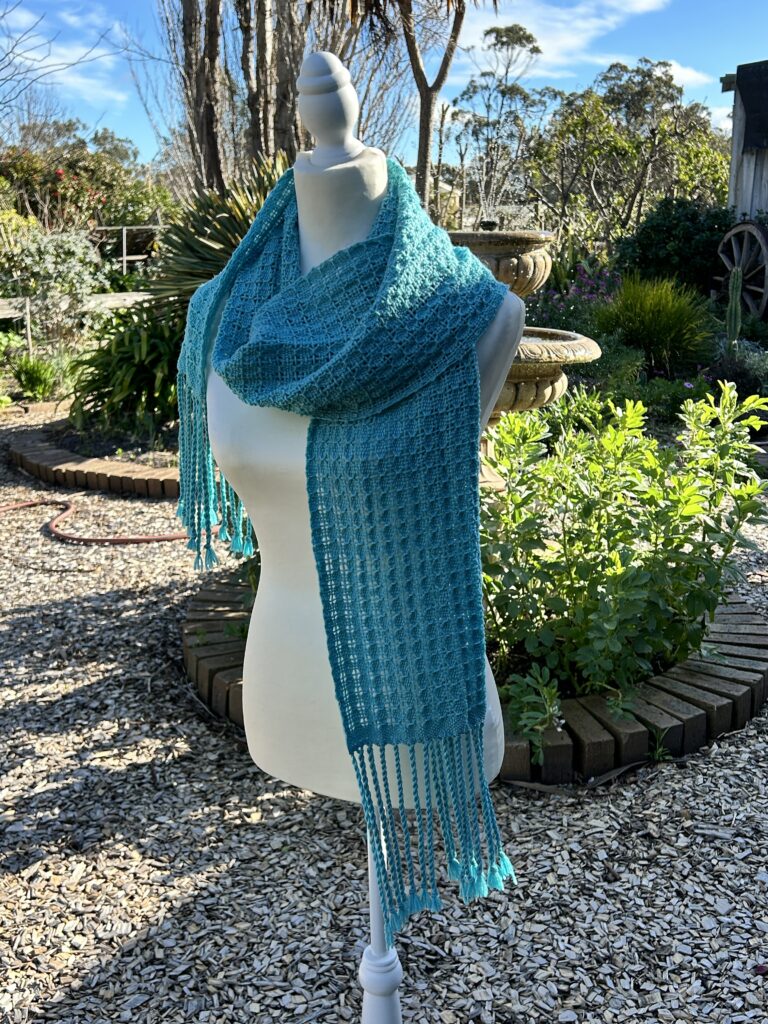
High Drape Example – This scarf was woven with very fine 60/2 silk and an undulating twill structure. It is amazingly soft, light and flowing.
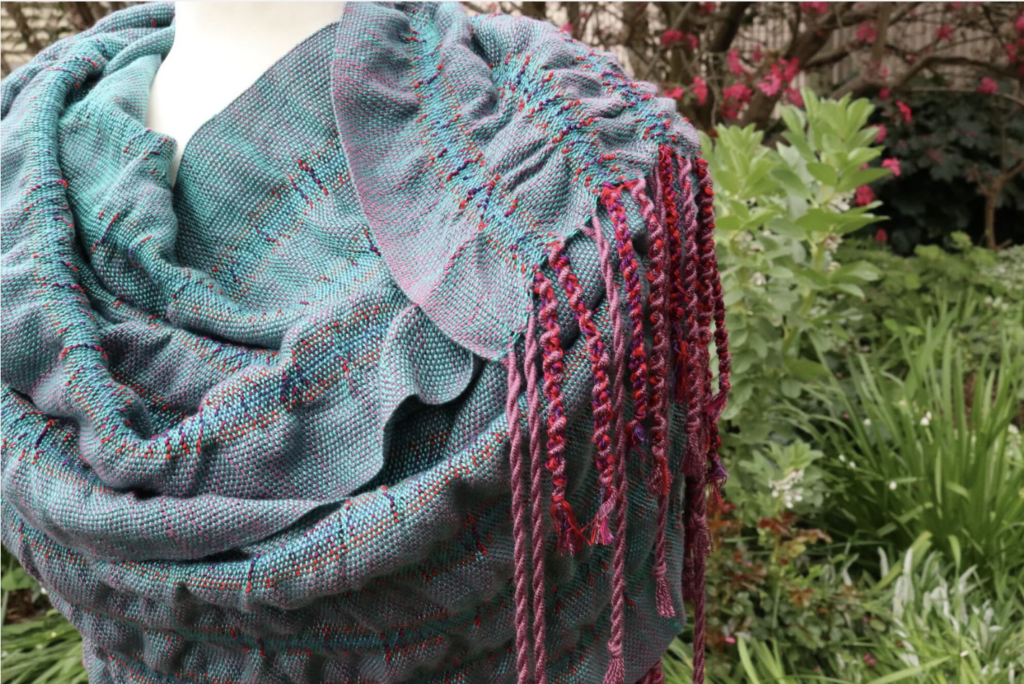
High Drape Example – A combination of 8/2 tencels and bamboos were used to create this plain weave shawl. In addition to the luxury threads used, the fabric was not sett too close, affording it extra drape. This shawl design was featured in WEFT magazine Summer 2025 edition.
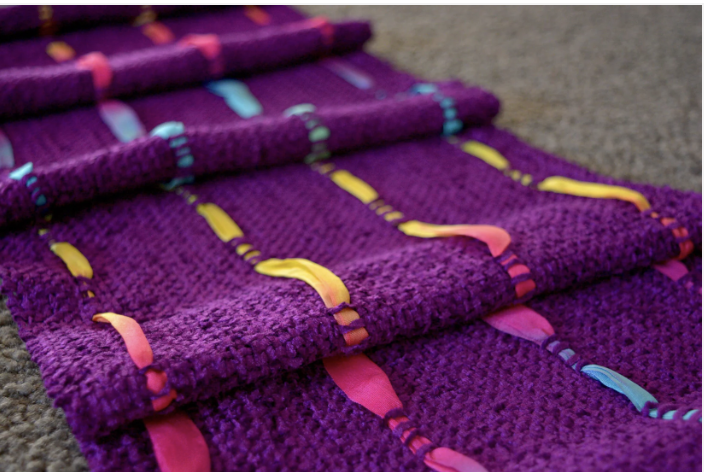
Mid Drape Example – The Weekend Scarf was designed to be a “quick weave” and therefore uses thick yarn that weaves up faster. The fabric still has enough drape to make an attractive and comfortable scarf, but is on the firmer side.
Low Drape Example – Krokbragd is a weft faced weave structure. The warp is covered with a thicker weft that is packed down, forming a heavy, stiff fabric.

Why Drape Matters (Especially in Garment Making)

If you’re weaving fabric for clothing, drape becomes even more important. A garment must move with the wearer. A stiff fabric can feel bulky, rigid, or uncomfortable, while a beautifully drapey fabric feels elegant and effortless.

Drape affects:

  • comfort,
  • how the garment fits the body,
  • how it swings and moves,
  • the overall look and feel.

When we understand drape, we can weave garments that not only look beautiful but feel beautiful to wear.

Ingredients for Achieving the Drape You Want

Drape is influenced by three main elements: yarn, sett, and weave structure. Think of them as the ingredients in a recipe. Change one element and the entire “dish” behaves differently.

1. Yarn Choices

Your yarn will have a big impact on the drape of your hand woven fabric. It is important to sample in order to achieve more predictable outcomes.

Fibre type:

  • Softer, more fluid fibres (like silk, bamboo, alpaca, tencel) naturally create high drape.
  • Fibres such as cotton, linen, and wool can range from crisp to soft depending on their preparation.
  • Woolen-spun yarns (with lots of air) tend to be lofty and less drapey than worsted-spun.

Yarn size:
Finer yarns usually create more drape. Thicker yarns are naturally more structured.

Yarn twist:

  • Lower twist = softer, more movement.
  • Higher twist = firmer, more body. Hight twist yarns can also introduce texture or movement in fabric.

Ply:
Singles often feel softer and more relaxed. Plied yarns add strength and structure.

If you want a highly drapey garment, starting with a naturally soft, fine, lower twist yarn will give you a head start, however if using for warp it does need to be strong enough to hold up under tension, so be sure to check that before warping!

2. Sett (Ends Per Inch)

Your sett is the second major influence on drape, and it’s often underestimated, it’s actually a crucial consideration.

  • Looser sett → more openness, more bend, more drape.
  • Tighter sett → firmer, denser, more structured cloth.

A wider sett creates a more open, spacious cloth, giving the fabric a fluid quality. Too loose, though, and the fabric can become flimsy or unstable (otherwise known as a “sleazy” cloth.)

A close sett can give beautiful structure but will reduce drape.

Tip: When weaving for garments, always weave a sample and wet finish it before committing to the full project. Wet finishing can completely transform drape!

3. Weave Structure

The weave structure you choose plays a huge role in how your fabric behaves.

  • Plain weave naturally has less drape because the interlacement is even, frequent, and stable. But don’t worry – plain weave can still have wonderful drape, depending on the other factors.
  • Twill offers more drape thanks to its diagonal floats and smoother surface.
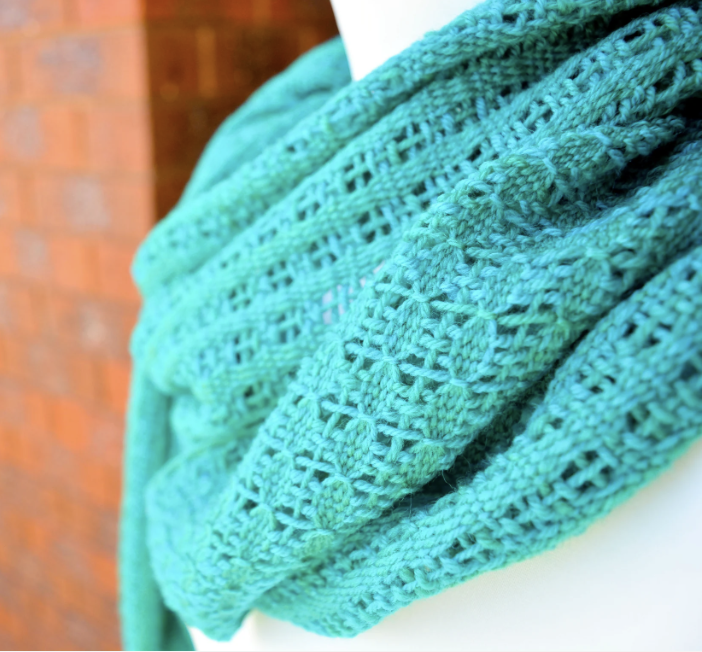
  • Lace weaves provide openness and softness, perfect for shawls and lightweight wraps.
  • Structures with longer floats (some twills, satins, or pattern weaves) allow more movement and therefore more drape.
  • Texture-heavy weaves like waffle can be stiffer until wet finished, when they often collapse and soften—but will still hold more body than lightweight twills.

Think of weave structure as the “architecture” that supports or inhibits movement.

Bringing It All Together

When you blend yarn + sett + structure intentionally, you can predictably create fabric with the drape you desire.

A few examples:

  • Highly drapey scarf:
    Fine silk/bamboo yarn, slightly open sett, and a twill or lace weave.
  • Soft, wearable shawl:
    Tencel or alpaca blend, silk/ wool blend, generous sett, a simple 2/2 twill.
  • Structured bag fabric:
    Strong, tightly twisted cotton, firm sett, plain weave.
  • Crisp household textiles:
    Linen or cotton, tighter sett, plain weave or simple twill.

Every combination creates its own personality.

Final Thoughts on Drape in Weaving

Drape isn’t something that happens to your weaving, it’s something you can create with intention and understanding. Once you start observing how different yarns, setts, and structures behave, you’ll develop a feel for what works in garments and what works for more structured items.

If you’re new to weaving for drape, start small, sample generously, and take notes. I promise, it’s one of the most rewarding skills you’ll develop as a weaver.

I’d love to hear about your experiences with drapey or not-so-drapey cloth! Feel free to leave a comment dow below to share your own experiences ⬇️⬇️⬇️

Until next time…

Happy Weaving!

Filed Under: Sewing, Weaving, Yarn Tagged With: drape, drape in weaving, hand woven fabric

What Do Those Mysterious Weaving Yarn Numbers Mean?

by Kelly 5 Comments

I received a question from a reader recently about weaving yarn numbers, weights and thicknesses.

“You speak about 8/2 and 8/4. I do understand they relate to thickness. But, what do the numbers really mean and stand for? Also, how do they relate to the numbers. You said that 8/4 is twice the thickness of 8/4. But let’s say I am wanting to purchase some yarn online. How do I get a sense of their thickness??? Thanks!”

What Do These Numbers Mean??

These numbers are not just there to confuse you and once you understand their meaning, they actually provide clarity on the yarn you’re looking to purchase.

The yarn numbers were developed in the 1800’s as a base measurement for cloth manufacturers to use. The numbers are actually a fraction and this fraction can be different between yarn types.

For example, the popular 8/2 cotton appears to be approximately the same weight as 22/2 cottolin and yet the numbers on the label are different.

A Brief Mathematical Overview

To give a brief overview, let’s look at the 8/2 (sometimes also written as 2/8!) cotton weaving yarn, one of my personal favourites!

For 8/2 cotton, the “8” refers to the actual measurement (figured out with a mathematical equation) and the “2” refers to the ply.

If you are a bit of a math geek, or even if you’re just interested to know more, I have a short, low cost presentation that explains the mathematics clearly. The presentation also covers knitting yarns and how to best match which yarns with which heddles (for rigid heddle weavers).

Online Presentation – What Do All the Numbers Mean?

Product image

What do all the numbers mean and how do they apply to a rigid heddle loom?

4352 students enrolled

Last updated Dec 18th, 2025

Select a Pricing Plan
Buy now

Buying Weaving Yarn Online

To answer the next question about buying weaving yarn online and how to get a sense of the yarn thickness:


The best way to get a sense of the thickness or weight of a yarn is to check a couple of things. The information may be on the label of the yarn or on the seller’s sales page for that particular yarn.

  1. The wpi (wraps per inch) will sometimes be provided. That tells you how many times the yarn wraps around an inch ruler over the measurement of one inch. Knowing this figure allows the weaver to figure out a suitable sett based on their project.

2. Yards per pound. This can be useful for comparisons eg. yarns that have a similar number of yards per pound will often be a similar thickness.

3. The recommended epi (ends per inch) may be provided. This can be really useful for weaving projects. Usually the higher the epi, the finer the yarn. I do want to point out though, that these recommended numbers can vary quite a lot, so again it comes down to your project and weave structure.

Further Resources

The Weaver’s Toolkit is a 22 page ebook that you will find an invaluable asset to your rigid heddle weaving journey. Inside you will find:

*Detailed calculating warp and weft sheets

*Project record sheet

*Knitting yarn conversion chart

*Knitting yarns and the rigid heddle loom chart

*Weaving yarns size and recommendations charts

*Sett explanation and instruction pages

*Rigid Heddle Weaving tools pages

*Measurement conversions sheets

*Glossary of common weaving terms sheets

*Typical project sizing charts

The Weaver’s Toolkit

Here is what some happy weavers have to say about this ebook:

Fantastic!!! So glad I purchased this, every weaver should have this Toolkit!

Pamela

Spectacular!
Everything is clear and easy to understand. It is a very positive way to learn.

Julia

You will also find many yarn resources here and on my Youtube channel. Here are a few to get your started:

A Guide to Choosing the Perfect Cotton For Your Weaving Project

Which Yarn Is Best For Weaving?

Choosing and Using Yarns in Weaving

I hope this was super helpful and interesting for you! If you have any questions or just thoughts to share, please leave them in the comments section below ⬇️

Until next time…

Happy Weaving!

Affiliate links may be included in this article. For more information, please see my disclosure policy.
Filed Under: Ask Kelly, Rigid heddle weaving, Weaving, Yarn Tagged With: all about yarn, rigid heddle weaving, weaving, weaving yarn, what do the numbers mean

  • Page 1
  • Page 2
  • Page 3
  • Interim pages omitted …
  • Page 118
  • Go to Next Page »

Primary Sidebar

About Kelly Casanova

Hand crafted boat shuttles

Categories

Archives

Meta

  • Log in
  • Entries feed
  • Comments feed
  • WordPress.org

Copyright © 2026 Kelly Casanova Weaving Lessons on the Foodie Pro Theme