• Skip to main content
  • Skip to primary sidebar

Kelly Casanova Weaving Lessons

  • Hi! I’m Kelly!
    • Disclosure
  • Online Weaving School Class Index
    • Common account issues
    • Common technical issues
    • What do I get with a membership?
  • New to rigid heddle weaving? Start here!
    • Never heard of the rigid heddle loom?
    • How to weave neat edges on the rigid heddle loom
    • Rigid heddle weaving
    • Rigid Heddle Weaving Patterns
  • Patterns
  • Subscribe

Personal development

Is Talent or Knowledge More Important? The Real Answer Might Surprise You!

by Kelly 12 Comments

Is talent or knowledge more important? Or is there something else that helps us achieve our goals?

We love to talk about talent.
From a young age, we’re told that some people are “naturally gifted”—as if success in life, art, or work hinges on whether you were lucky enough to be born with a certain spark.

But is talent really the guaranteed key to success?
What about knowledge—what you learn and earn through experience?
Or is there something even more powerful than both?

Here’s the truth: Talent and knowledge both fall short without one essential trait.

And that trait is curiosity.

Talent Sounds Glamorous… But It’s Not Enough

Let’s be honest: talent can feel like a shortcut. When we see someone do something effortlessly—whether it’s painting, singing, coding, or crafting, weaving—it’s tempting to believe they were just born that way.

But talent alone doesn’t build skill. It doesn’t guarantee growth.
In fact, people who rely solely on talent often plateau early. They avoid challenges that might expose their limits, and they may never learn how to push through difficulty.

Talent is a wonderful gift to be given, but on its own it doesn’t necessarily go anywhere. Talent must be driven, challenged and honed.

Knowledge is Powerful, But Passive

On the other side, we have knowledge—something we can all gain over time.
Books, courses, teachers, and life itself give us endless opportunities to learn. And yes, knowledge matters. Deeply.

But knowledge without application? That’s just trivia.
Knowing how something should work doesn’t mean you’ll actually do the work, or that you’ll keep going when it gets hard or boring.

Just like talent, knowledge requires a driving force to be put into action.

So What Really Drives Success?

Curiosity!
It’s the overlooked secret behind talent and hard work.
It’s the thing that gets you started and keeps you going.

Curiosity is what makes you:

  • Ask questions others aren’t asking
  • Try something new without fear of failure
  • Dive deep into a topic or craft without being pushed
  • Stick with it, not because you “have to” but because you want to know more
  • Be willing to see out a project and learn from it, even if it’s difficult

It turns learning into a game. Practice into play. Repetition into discovery.

Why Curiosity Beats Both Talent and Knowledge

Let’s break it down:

TraitStrengthLimitation
TalentGives a head startFades without effort
KnowledgeBuilds understandingStagnates without action
CuriosityFuels both learning and effortLeads to progress regardless of starting point

Curiosity is active. It doesn’t wait for perfect timing or permission.
It creates momentum—and momentum is what moves you forward, even when you feel stuck or unsure.

My Experience: How Curiosity Carried Me

In my own creative journey, I’ve had seasons where I felt untalented.
And times when I had no idea what I was doing.
But what I did have was an inner spark—the drive to figure things out. To try. To explore. To keep going, not because I had all the answers, but because I was curious.

That’s what has made the biggest difference.
Not talent. Not perfect knowledge. But the willingness to learn, fail, adjust, and try again.

A curious person sees the barriers, they acknowledge the reasons to not persist, but they brush them aside and forge ahead.

When you’re curious it doesn’t matter how you learn, it just matters that you do.

So many times in my weaving journey I have almost convinced myself that I’m not talented enough, not smart enough, that I’ll never be able to learn this new technique or weave structure.

But that driving force keeps driving me forward, it replaces the lack of talent or knowledge with determination and eventually (sometimes a long time later!) I achieve the goal.

What This Means for You

If you’ve ever thought:

  • “I’m not talented enough”
  • “It seems so easy for others”
  • “I don’t know enough”
  • “I’m too far behind/ too old to start”

Let me gently challenge you.

Ask yourself instead: “What am I curious about?”
That single question can shift everything.

Because curiosity doesn’t care where you begin. It only cares that you begin.
And that’s where real growth lives—not in being perfect, but in being interested enough to keep going.

Final Thought

Talent may open a door. Knowledge may show you where it leads.
But curiosity? Curiosity gets you to turn the handle and walk through it.

Ready to Explore Your Curiosity?

Download my free 7-Day Creative Exploration Journal Prompter and start following your curiosity—one small step at a time.

ʘ Click here to get the printable journal sent to your inbox.

You’ll also get occasional emails with tips, inspiration, and behind-the-scenes from my creative world.

Now I’d love to hear from you:
Have you ever followed your curiosity into something unexpected or life-changing?
What’s something you’ve always wanted to explore, even if you’re not “naturally good” at it?

So, what has your experience been? Has curiosity played a big role in your life? Or has something else been your driving force?

Let me know in the comments, I love to hear from you and share experiences!

Until next time…

Happy Weaving!

Filed Under: Inspiration, Personal development, Weaving Tagged With: curiosity, encouragement, inspiration, knowledge, talent, weaving journey

What is a weaver? (Hint: It’s About More Than Making Cloth)

by Kelly 7 Comments

When you think of a weaver, what comes to mind? Someone sitting at a loom, throwing the shuttle back and forth, quietly creating cloth from yarn? That’s true—but it’s only the beginning.

After years immersed in the world of weaving—teaching, learning, and connecting with thousands of weavers—I’ve come to realize that being a weaver is as much about who you are as what you make.

I’ve been pondering the question “What is a weaver?” Does weaving shape who we are or do we shape the way we weave?

Here are my thoughts on the heart of a weaver:

A Weaver Is Generous

Weavers are givers. You’ll rarely meet a weaver who hasn’t gifted their handmade creations to friends, family, neighbors, or total strangers. Whether it’s a handwoven tea towel, a scarf, or something as intricate as a baby blanket, their joy is in the giving.

But the generosity doesn’t stop with finished pieces. Many weavers freely share their time, knowledge, and experience with others. It’s a craft rooted in community.

Many weavers are involved in charitable organisations. They may weave tiny blankets for babies born early, or weave prayer shawls as part of their church ministry. Some will weave and sell items so they can then donate to their favourite charities.

A Weaver Is Curious

Weavers love to learn. Whether it’s trying a new technique, exploring color combinations, or diving into historical weave structures, curiosity is a common thread.

Weaving is full of possibilities, and a weaver is always asking, “What if?” “Can I bend that rule?” “What will happen if I change this?”

A Weaver Is Patient

Weaving takes time. A lot of time.

Warping the loom, threading heddles, sleying the reed, fixing mistakes—it all requires focus and patience. Many weavers spend long hours in solitude, and it shows in their calm, centered presence. The process itself often becomes a form of quiet meditation.

If you consider yourself and impatient person, does that mean that weaving won’t suit you? Of course not! Weaving will help you develop patience naturally as you work to achieve your goals.

A Weaver Is a Problem Solver

Tangled warp? Uneven tension? A threading error discovered ten inches into your cloth?

Weavers are skilled at troubleshooting and adapting. The craft naturally develops resilience and creativity. A weaver rarely gives up—they pause, reflect, and try again.

If a weaver cannot figure something out they strive to find out more. Online communities have been a wonderful support for many weavers.

A Weaver Is Willing to Share

The weaving community is one of the most open and supportive I’ve ever known.

Whether online or in person, weavers are always ready to lend a hand, offer advice, or cheer you on. Ask a question in a weaving group, and you’ll get answers, encouragement, and maybe even a photo tutorial or links to further resources!

A Weaver Is Passionate

Once weaving grabs your heart, it doesn’t let go.

Weavers are deeply connected to their craft. Yarn, texture, structure—it’s more than just a hobby. Many weavers describe it as a lifelong journey of discovery, challenge, and joy.

So… What Is a Weaver?

A weaver is someone who turns threads into cloth—but more than that, a weaver is:

  • A generous spirit
  • A curious mind
  • A patient soul
  • A creative problem solver
  • A passionate maker
  • A thoughtful giver
  • And a valuable part of a rich, global community

If you’re just starting your weaving journey, welcome. You’re joining a long line of extraordinary makers who don’t just weave cloth—they weave meaning, kindness, and connection into everything they create.

To put it really simply, weavers make the world a better place ❤️

Want to Join the Weaving Community?

If this post resonates with you, you might already be a weaver at heart. Browse my Youtube channel, sign up for a class, or subscribe to my newsletter for inspiration, patterns, and tips sent straight to your inbox.

Until next time…

Happy Weaving!

Filed Under: Inspiration, Personal development, Rigid heddle weaving, Table loom weaving, Weaving Tagged With: encouragement, gratitude, inspiration, what is a weaver

My 11 income streams

by Kelly Leave a Comment

If there is one important thing I’ve learned in the 8 years of running an online business it is that you must diversify your income – that is how I have come to develop 11 income streams!

That is a fancy way of saying “don’t put all your eggs in one basket”. Relying on just one source of income is risky because you don’t have anything to fall back on if needed.

Today I’m going to talk about my 11 income streams (yes, that’s right – 11!) I’m not going into any figures because numbers can be misunderstood (for example, I get to keep approximately half of my actual revenue once taxes and running expenses are paid).

But I will outline my 11 income streams in order from what makes the most to what makes the least amount. The order is still a generalisation as most of my income streams are fluctuating from month to month.

  1. Online courses

The Online Weaving School was started back in 2017 and supplies the largest part of my income (by a long shot!) The weaving school is hosted at Teachable, which works very well because I, as the creator have my own space on the internet and I’m fully in control of how the school runs, the type of content available there and the pricing for my students.

There are two models on which the school operates – single purchase classes and memberships.

A single purchase class is just what it sounds like – the student make a one time purchase and then has permanent access to the class. They can come back, log in to their account and re-watch the class as many times as desired. They also have the ability to receive feedback, share comments and photos on the platform.

Memberships have been a huge part of my success as an online business. The student chooses a membership tier and then has access to a full class library, including member’s only classes until their membership expires (at which point they can choose to renew or cancel). A membership also gives a student access to the private member’s community. A membership model is excellent because it provides the creator with recurring and somewhat more predictable income.

Product image

Premium Membership

Access to full class library for one annual fee. All prices are in US dollars

1926 students enrolled

Last updated Feb 4th, 2026

Select a Pricing Plan
Buy now

2. My Design Store

For many years I have also been designing weaving patterns. These are usually project based and provide the buyer with step by step written instructions, colour photos and often video links to complete a weaving project.

I sell my designs in digital format at Kelly Casanova Designs using the Shopify platform.

I have also branched into writing ebooks to provide even more information to weavers and these are also available in my design store.

Digital downloads are an excellent source of (mostly) passive income as much of the work is done up front in the designing and writing. There is often some follow up needed in the form of support for purchasers but this is relatively minimal compared to the weaving school.

Very occasionally I also make weaving/yarn kits available to my audience and these are based on existing patterns.

If you are interested in trying a Shopify store for yourself, you can get 3 days free plus 3 months for $1 each when you sign up for a trial, just use this link to take a closer look at that offer.

3. Youtube

Income from Youtube is made through Google Adsense. The ads are place on my videos and I get a cut of what the advertisers pay to Youtube (about half). This type of income is fluctuating and not very reliable and because I’m in the “craft” niche, advertisers pay much lower rates than they would for videos in something like the business or finance niche.

The beauty of Youtube when it comes to online business is that it can act as an audience funnel for your existing business. It allows you to build and audience that can get to know and trust you. It can be a way for potential students to sample your teaching style before investing in a course or membership.

My business has grown from my Youtube following, so it has been an absolute essential part of my success.

4. My blog

Income from my blog is also made through Google Adsense. This is not ideal, and some readers do complain that there are too many ads when they read articles. Having ads enabled on my blog does cover my hosting fees though, and gives some small compensation for the many hours I’ve spent writing informative articles.

Similar to Youtube, the blog also acts as a funnel or advertising space for my paid products.

5. Affiliate income

Affiliate income is when you recommend a product, service or company to your audience with a special referral link. If someone clicks on your link and makes a purchase, you receive a small percentage of that purchase as a thank you from the company.

Affiliate income is an excellent way to make money, but certainly not the easiest (at least, that has been the case for me!) Affiliate commissions vary a huge amount from as little as 1 -4% of the sale (hello Amazon!) to 30-50% (I don’t have any affiliates that pay that much but I know they’re out there).

It takes a lot of time to insert links and write them into content in a way that provides value to your audience. No one wants to feel like they’re being spammed so it’s important to use affiliate links properly and respectfully.

You can do this by only recommending products/services that you use yourself or that you have sufficient knowledge of in order to recommend with confidence.

Some months my affiliate income now surpasses my blog or YouTube income but this is not a frequent occurrence.

6. Paid newsletter

This year I started my very first paid newsletter through Convertkit (now known as Kit). I have been sending out a free newsletter for many years but the paid newsletter is separate and covers different topics.

7. Magazine work

This income stream involves writing articles and submitting projects. I have completed quite a bit of this type of work over the last year or so and continue to receive requests and proposals.

Submitting projects takes a great deal of work and time and I don’t feel the compensation is high enough for the amount of work required. So, for the near future at least I will stick more to the article writing, which I find enjoyable and rewarding.

8. Public speaking/ presentations

This is another income stream that I just started this year. I receive invitations to speak or present for weaving guilds or groups. So far, these presentations have been online, which is brilliant as it allows me to reach people that live in different locations to me! I prepare a presentation ahead of time and then give the presentation live.

9. Handmade items

This is a very, very small stream as I only sell handmade items occasionally. Before I started the Online Weaving School, I was a handmade seller, but I have very little time now to actually make something physical to sell.

10. Facebook

This one is kind of a surprise. I logged into my Facebook analytics one day and found that I had made a little money! I didn’t even know that was a thing 😆 Since then, I’ve made small amounts every month. It’s really only pocket money but I certainly don’t mind earning money for posting on my Facebook page, which is something that I would be doing anyway.

11. Merchandise

I have tried merchandise with Society6 and Spring. I have closed the Society6 store and will likely do the same for the Spring store in the future. This has not been a good source of income for me, so I have stopped promoting it in order to focus more on the streams that do work well for me.

Being an entrepreneur is such a journey of learning, adapting and pivoting when needed. Having more than one stream of income really helps you to try things out, see what will work and what won’t and then maximise the things that work the best for your business.

If you are starting out with online business, you will find these articles helpful as well:

Should I start with Etsy or Shopify?

Handmade Business Beginner Essentials

3 ways to start selling online for free

Do you want to start selling your weaving?

This article is also available in video format here:

I hope you enjoyed reading about my income streams and I wish you all the best with your online business!

If you want to take steps towards building your own business or making money online, it makes sense to talk to someone who has done it already. I am available for 1:1 email consultation, click the button to find out more.

Book a consultation

Filed Under: Business, Entrepeneur, Handmade business, Inspiration, Online business, Personal development, Weaving Tagged With: entrepreneur, handmade business, online business

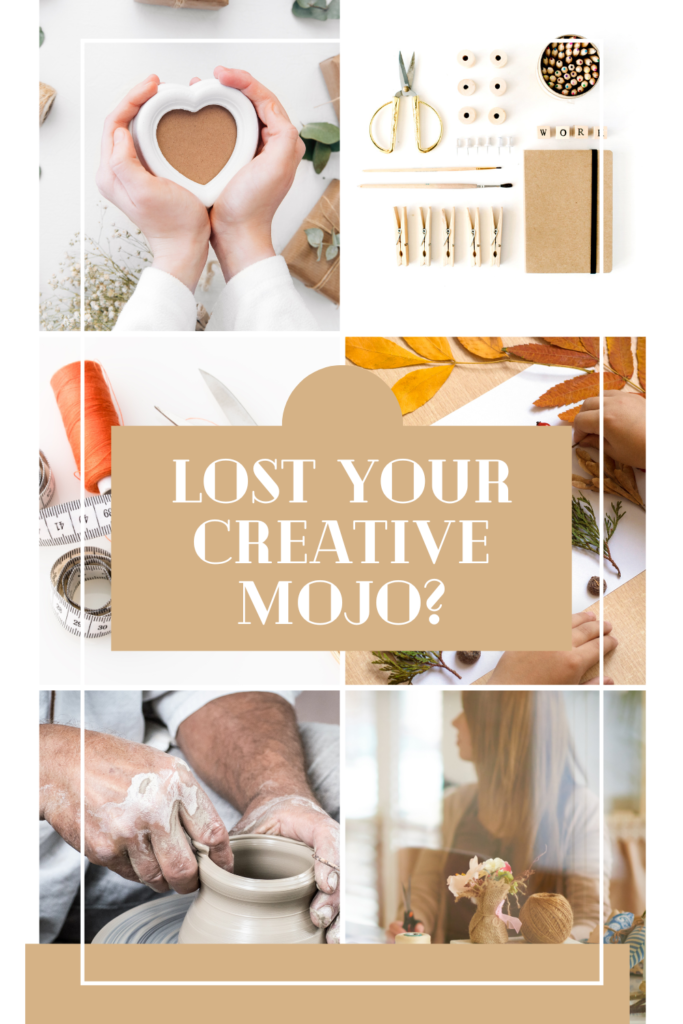
Lost your creative mojo? Read this!

by Kelly 10 Comments

Every creative person experiences a loss of mojo at some point.

You know that feeling when you really want to be creative but you either can’t figure out what to do, or you simply don’t have the mental or physical energy to begin?

Thankfully there are some concrete steps you can take to make your way out of this uninspiring headspace and regain that creative mojo.

Here are the tips that always get me back on track:

HEALTH FIRST

An absolute essential is to take stock of your current overall health status. Have you been looking after yourself physically and mentally? Are you getting adequate sleep? Is your loss of mojo a result of over tiredness? If you have a chronic illness are you getting correct treatment or doing all the things you know you should be doing to avoid flare ups?

Although it’s not something that you can necessarily get on top of right away, it’s something that needs your attention first. If you have been neglecting any aspect of your health, start taking steps right now to improve that situation!

MESS IS STRESS

Cleaning up your creative space when you’re lacking energy may not sound like the best advice, but for me this is one of the best ways for me to feel inspired again.

I find that a cluttered space can also make me feel cluttered mentally, which is stifling to creativity. I never regret having a good old fashioned clean up as it allows me start afresh and start to feel like so much is possible again!

Another side benefit of cleaning up your space is you often rediscover lost materials, ideas or even partially started projects. Sorting these things will help you to prioritise and decide on what to do next. Sometimes that will be working on a project to get it finished and sometimes it could be more ideal that you get your creativity flowing again by starting something brand new.

Once you start cleaning you may not feel like stopping. Perhaps you will come up with a new layout or more ways to organise your creative stuff for the future too.

RESOURCES FOR INSPIRATION

Inspiration is actually everywhere, we just don’t always see it.

When I’m lacking mojo I love to flip through some of my favourite books. It can remind me of ideas I’ve already had or weaving drafts I’ve been wanting to try, or it can give me an idea for a new project.

It can be helpful to search on Pinterest and grab some new pins for your inspiration boards.

Youtube is an amazing resource for learning and inspiration where you can find almost anything you want to learn. Did you know that I have almost 400 videos on my weaving channel now? I also have a second channel, Providence Ridge that is a great source of inspiration.

Product image

Premium Membership

Access to full class library for one annual fee. All prices are in US dollars

1926 students enrolled

Last updated Feb 4th, 2026

Select a Pricing Plan
Buy now

You can find more online inspiration in the form of podcasts, Facebook groups and other online communities. When you have a membership with the Online Weaving School you gain access to a wonderful members only group.

GO AWAY

Here is another idea that seems counterproductive but actually works – get away from your familiar surroundings for a little while!

You know what they say, absence makes the heart grow fonder. By removing yourself from what you’re accustomed to seeing and doing you can come back to it with fresh eyes and a new appreciation.

Not only that, but often you will find new inspirations in a different setting. Whether it’s a nature hike, a visit to the beach, a road trip, visiting galleries or so much more, you can be inspired by nature or things you don’t see everyday.

TRY SOMETHING NEW

Perhaps you’re feeling bogged down by your craft. How about trying something new? I have done this frequently over the years and what I have discovered is that, rather than take me away from my main craft (in my case – weaving!) the more skills you learn the more you can contribute to that chosen craft.

And if you do try something new and feel that is the right time for you to move away from what you have been doing into this new endeavour, that is also a good thing. As an artist/craftist/maker we often feel compelled to be creative and to use our hands to make things. We don’t need to restrict ourselves in this and there are so many ways to achieve artistic expression.

I hope this article has been helpful to you!

Until next time…

Happy Weaving!

Filed Under: Books, Health and home, Inspiration, Online Weaving School, Personal development, Weaving Tagged With: creativity, health, inspiration, mental health, mojo

Primary Sidebar

About Kelly Casanova

Hand crafted boat shuttles

Categories

Archives

Meta

  • Log in
  • Entries feed
  • Comments feed
  • WordPress.org

Copyright © 2026 Kelly Casanova Weaving Lessons on the Foodie Pro Theme