• Skip to main content
  • Skip to primary sidebar

Kelly Casanova Weaving Lessons

  • Hi! I’m Kelly!
    • Disclosure
  • Online Weaving School Class Index
    • Common account issues
    • Common technical issues
    • What do I get with a membership?
  • New to rigid heddle weaving? Start here!
    • Never heard of the rigid heddle loom?
    • How to weave neat edges on the rigid heddle loom
    • Rigid heddle weaving
    • Rigid Heddle Weaving Patterns
  • Patterns
  • Subscribe

Kelly

Chocolate Protein Pudding

by Kelly Leave a Comment

Sometimes I just want something sweet, creamy, and chocolatey. But it has to fit within my animal based way of eating. That’s where this little gem of a recipe comes in.

I call it my Chocolate Protein Pudding, because it really feels like a sweet, no bake pudding treat. It’s a nourishing snack, a yummy dessert, or a quick breakfast if you’re short on time and want something satisfying that won’t spike your blood sugar.

Personally I love to eat this protein pudding for breakfast as it gives me a great, protein filled way to start the day that satisfies my appetite for hours.

What I love about this pudding:

  • It’s high in protein – around 22–24 grams per serve depending on the brands you use.
  • It’s gently sweet, not overly sugary. I find overly sweet foods distasteful since I quit processed sugar. Most of the sweetness comes from the honey and yoghurt.
  • It’s rich but light. The peanut butter and cream give it a velvety texture without being too heavy.
  • It’s flexible! You can leave out the honey if you’re cutting back on sugar, you can use a different (or no) nut butter or add some berries and whipped cream for a decadent dessert.

When I eat it:

As I mentioned, this is a breakfast food for me as I don’t tend to eat snacks or desserts regularly. But there are some days where I’m hungry and I want something sweet! This would be the perfect afternoon treat in this instance.

Top It Up!

Another thing I love about this recipe is the possibilities for toppings if you want to add even more nutrition or just like to jazz it up. Berries, other fruits, nuts, cream, dark chocolate, chopped medjool dates or seeds ( I love raw pumpkin seeds) are just some of the possible toppings.

Macro Breakdown

Here is an approximate nutritional breakdown for this recipe:

240 calories

22-24 grams protein

13 grams fat

12 grams carbs

Chocolate Protein Pudding

Print Recipe Pin Recipe
Ingredients Method

Ingredients
  

  • 1/2 cup Greek Full Fat Yoghurt
  • 1 tsp Natural Peanut Butter
  • 1 tsp Raw Honey
  • 1 scoop (15g) Collagen Powder
  • 1.5 tsp Cocoa Powder
  • 1-2 tsp Pure Cream (optional)

Method
 

  1. Place all ingredients together into a bowl or container.
  2. Mix thoroughly with a spoon until all ingredients are blended.
  3. Serve into bowl or cup.
  4. Eat immediately or place into fridge for a firmer texture.

A Word on Collagen

I’ve used collagen powder in the past but I’ve recently restarted to add protein and hopefully boost my hair, skin and nails. It’s a really simple way to add protein to your diet if, like me, you struggle with that.

The collagen powder I now use is the best I’ve had, it’s available in Australia from Gelpro. It’s flavourless and great quality with no weird flavour additives. If you’re not in Australia, I recommend trying to find a quality, grass fed collagen powder like this one and take it consistently. A flavourless powder dissolves easily in your morning coffee and actually makes the coffee creamier!

If you give it a go, let me know how you like it or which variation worked well for you. I’m always up for a bit of protein-rich inspiration!

Interested in starting your own health reset journey after 40? Check out my Happier, Healthier, Hopeful on Youtube for videos on perimenopause, animal based eating, auto immune disease and motivational help.

See you soon

Kelly 💕

This post contains affiliate links, which means if you click and purchase, I receive a small commission at no extra cost to you! For further information, please see my disclosure policy.

Filed Under: Animal Based Diet, Health Reset, Recipes Tagged With: animal based eating, chocolate protein pudding recipe, easy recipe, health reset, protein rich

Can You Direct Warp a Table Loom? My First Time Experience

by Kelly 7 Comments

I often have students ask “can you direct warp a table loom?” and my answer was always “yes, but I haven’t tried it”. Well, that has changed because I just direct warped my table loom for the first time!

Traditional Table Loom Warping

The usual way to warp a table loom is to make your warp on a warping board, remove it and space it in a raddle and then take it to your loom and roll your warp on, then thread the heddles, sley the reed, tie on and then you finally get to weave! 😆

If you are brand new to table loom weaving, this is a more advanced method. I recommend that you start with my online course, Weaving on a Table Loom.

Direct Warping

One thing I really enjoy about rigid heddle weaving is the ability to use a warping peg/s to direct warp. This means that the warp is made on the loom without additional exterior tools or actions. It’s super fast and fairly simple once you have some practice.

So I decided it was time to experiment by trying a direct warp on a table loom for myself. I had just assembled the new Flex Conversion Kit to my Flex Rigid Heddle Loom and wanted to warp it with a project to try it out. This method will work for any table loom.

I settled on weaving a 4 shaft scarf from my Crackle Scarf Collection pattern. A scarf is such a great project when you want to get to know a new loom.

I spent a bit of time considering the best way to warp a table loom directly and decided that warping front to back would be easier than my usual back to front, for a variety of reasons. Warping from the front to back allows you to use your reed to space the warp without the need for a raddle (that’s a bonus if you don’t own a raddle!)

I filmed an in depth walk through video for the Kindred Weavers members on Youtube and this article is a brief overview of that video. If you want to see the full video, consider joining the Kindred Weavers for exclusive videos, priority comment responses and early access to new uploads.

Be Sure To Calculate and Plan

Before beginning your project, be sure to calculate and plan. Exactly how you direct warp your table loom will be dependent on your sett or ends per inch. That will determine how many threads you pull through each dent of the reed.

How To Direct Warp a Table Loom

The first step is to set up your table loom ready for direct warping. The important part is to turn your loom around so that the front of the loom is facing away from the direct warping pegs.

The warping begins at the front of the loom, using the front apron rod. Tie the warp onto the front rod to begin.

Using a threading hook, pull your attached warp thread through a dent in the reed and take it to your direct warping peg. Take the warp thread over or under the apron rod and through the next dent in the reed.

Continue warping in this way for the width of your warp. If you are familiar with warping a rigid heddle loom, this part will be quite familiar, except there are just slots in the reed as opposed to slots and holes.

When your last thread is tied to the apron rod you can commence rolling the warp threads on to the front beam. It is helpful to use some choke ties to keep the warp length in order. You can use your own preferred method for rolling on the warp, I opted to use the yank and crank method.

I began by threading from the front by picking up the threads in order from the reed pulled to the front. Threading from the front makes the use of a threading hook difficult, so I threaded through the heddles by hand. Some of the warp ends were slightly frayed and this interfered with the threading by hand. I also had some trouble picking up the threads in correct order from the reed, as I had to bend over to check the order, causing neck and back fatigue. So, I decided to try threading from the back.

This proved to be more simple and straightforward than I imagined! Once I got used to the idea that my shafts were backwards I found threading from the back easier without any neck or back bending.

When threading is complete it’s time to tie on to the back apron rod. I left extra warp for this step because I wanted fringes on my scarf.

*This post contains affiliate links. For more information, please see my disclosure policy.

The last step is to wind the warp from the front to the back. We can’t weave and advance the warp unless this step is completed. Just take the brake off the front (but keep some tension on it so it doesn’t unwind too fast!) and slowly and evenly wind on to the back.

Now you’re ready to separate your warp and weave!

The full video is available below ⬇️ for members of the Kindred Weavers on Youtube.

I hope this overview was helpful to you! Did you know that I am a reseller for Lojan in Australia? Feel free to contact me with enquiries about Lojan products.

In the US, Lojan products are available from Revolution Fibers.

Until next time…

Happy Weaving!

Filed Under: Table loom weaving, Warping, Weaving Tagged With: direct warping, table loom

When No One Notices

by Kelly 15 Comments

I’ve been reflecting a lot lately on the strange pressures of living a creative life online.

In the weaving world, there’s so much inspiration to be gleaned – endless projects, beautiful photos, clever ideas. It’s wonderful, but it can also creep up on you in ways you don’t expect. Sometimes it feels like there’s an unspoken rule: keep producing, keep sharing, keep impressing. You need to do something new! If you don’t? You fall behind and get forgotten.

Of course, no one says this out loud. But that’s how it can feel.

I’ve found myself getting stuck in this mindset more than I’d like to admit. I catch myself thinking:

“I need to have something new to show. Something exciting, something impressive. Otherwise, why would anyone pay attention?”

And when I do share something I’ve made that I was excited about and it lands quietly, with hardly a comment or a like… it gets under my skin more than I want it to. I start questioning the work itself:

“Was it not good enough? Was it boring? Did I waste my time? Have I lost my creative spark?”

Even worse than that, my original thoughts and excitement about the piece change. Because, if no one likes it, if it’s not popular it’s less valid, right? 🤔

It’s not just about weaving, either.

I’ve noticed this happening in other parts of my life too, most recently with my health. This year I’ve been working consistently on some major changes. Eating better, moving more, taking care of myself, prioritising my health and getting stronger.

I’ve lost some weight, I feel stronger and healthier, but – hardly anyone has said a word. No “You’re looking great!” or “You seem really well!” Not even from people close to me. Literally the only person to have notice the changes is my husband.

And honestly? It’s made me question whether the effort is even worth it.

It shouldn’t be that way. I know it shouldn’t. We’re supposed to be motivated by our own progress, our own joy in the process. I am proud of the changes I’ve made, both in my weaving and in my health. But I’ve realised how easy it is to get tangled up in needing recognition to feel like something counts.

When something goes unnoticed, it’s tempting to think it wasn’t valuable. It can be so hard to keep going, keep striving for improvement when you feel alone in it.

But that’s not true.

Some of the most meaningful work we do – in creativity, in health and in life happens quietly, without applause.
The growth, the learning, the persistence, the small daily choices still matter. Even when no one notices.

I’m sharing this because I suspect I’m not alone in feeling this way. If you’ve ever poured time into a weaving project and wondered why it didn’t get more attention. If you’ve ever made positive changes and felt deflated when no one cheered you on – please know this:

It’s normal to want encouragement. But it’s also possible to keep going without it.

It could be helpful to examine your own sources of motivation and purpose. I’ll use weaving and health as some examples in my own case:

MOTIVATION 1 – WEAVING

My desire to weave began with a fascination but there are other factors that have made me remain a weaver rather than giving up.

  1. I feel called to spread beauty throughout the world.
  2. Using my hands to create brings me joy and stillness
  3. I love to help others
  4. Weaving feels very special and unique to me
  5. I love giving handmade gifts

MOTIVATION 2 – HEALTH JOURNEY

  1. I love to feel as physically well as I possibly can
  2. Being overweight is unpleasant and slows me down
  3. I don’t want my auto immune disease to dominate my life
  4. As I age I want to gain strength and be capable
  5. I like my clothes to feel comfortable and I want to feel good in my own body
  6. Being healthy and exercising is great for my mental health

For me, this is a lesson in finding deeper motivation. Not the quick hit of approval, but the steady satisfaction of knowing I’m moving in the right direction for me. That’s what really matters.

Weaving has always taught me patience. It’s teaching me this lesson too.

Thanks for reading. I hope this article resonates with you and helps you to think through your own perceptions in a positive way.

So, tell me. Have you ever felt this way? Perhaps, like me, it’s something that you struggle with frequently? Drop me a comment down below to share your experience ⬇️

Until next time…

Happy Weaving!

Support my work 😊

Filed Under: Motivation, Weaving Tagged With: creativity, motivation, no one cares

I love weaving but I hate warping

by Kelly 7 Comments

One of the most common things I hear from new students is:
“I love weaving… but I hate warping.”

And I get it completely!

Warping can feel tedious, slow, and (if things go wrong) a little discouraging. When you’re excited about starting a new project, it’s tempting to rush through the setup so you can just get to the good part – the weaving!

I wouldn’t say I hate warping – not at all. But I definitely feel that tug of impatience when I’m partway through winding a warp or threading a rigid heddle, and my mind is already dreaming about the fabric to come.

I think it’s fairly natural to just want to get to the good part 😀

But when I hear someone say that they hate warping, my first thought is “then something in your warping process needs to change”. Unless you have a huge weaving school or you’re mega rich and can pay someone to warp your loom for you, the warping is going to come down to you.

Why Warping Feels Like a Roadblock to Some Weavers

Over the years, I’ve realised that what many weavers dislike about warping isn’t the task itself—it’s the fear of making mistakes, or the uncertainty of whether it will all work out. If a weaver lacks confidence and is convinced that warping will be hard then yes, it will feel hard.

Questions like:

  • Did I calculate this right?
  • Is my tension going to be uneven?
  • Why are some threads shorter than others?
  • Why is this yarn so twisty and tangly?!
  • What if my tension is off and I won’t know until I start weaving?

Sound familiar?

A Shift in Mindset: Warping is Part of the Weaving

When I started weaving, I saw warping as the boring “set-up” before the real fun began. But over time, my perspective changed. I started seeing warping as part of the creative process, not separate from it.

Here’s what helped:

  • Taking my time to work through the steps
  • Having a clear plan before I even touch the loom
  • Using it as a moment to slow down, focus, and prepare—like priming a canvas before painting
  • Understanding the warping as an essential part of the process
  • Viewing the warp as the heart of the loom – a vital component to a happy weaving project

Now, even when I feel a little impatient to start weaving, I remind myself that the care I take in warping lays the foundation for everything to come.

Tips to Make Warping Easier (and Less Stressful)

If you or someone you know struggles with warping, here are a few things that might help:

  • Use a calculations sheet or online calculator – it helps you stay organised and confident in your numbers
  • Stick with warp-friendly yarns – smooth, strong yarns are more forgiving for beginners
  • Start with manageable warps – a short, narrow project is less daunting and easier to troubleshoot
  • Watch a video tutorial as you go – it can make all the difference to have a visual guide alongside you.

And most importantly—give yourself grace. Warping gets easier with practice. Even if it’s not your favourite part, it doesn’t have to be the thing that stops you from getting to the good part – the weaving!

If you are looking for beginner online courses to get you more comfortable with weaving, be sure to check these out:

Rigid Heddle Weaving Beginner Course

Table Loom Weaving Beginner Course

Floor Loom Weaving Beginner Course

What About You?

Do you enjoy warping? Do you rush through it, or take your time with it?
I’d love to hear what your relationship with warping looks like—and if you have any tips of your own, please share them in the comments!

One Final Thought…

I can’t go away without leaving you with this one very important fact. Years of practice in the art of weaving has taught me this truth: Everything in weaving is fixable!

Until next time…

Happy Weaving!

Filed Under: Warping, Weaving Tagged With: make warping easier, warping, weaving

Krokbragd Inkle Weave Along Student Work

by Kelly Leave a Comment

During the month of June 2025 I released the Krokbragd on an Inkle Loom course. I also ran the Krokbragd Inkle Weave Along – a fun and interactive way for students to start weaving krokbragd together.

There was a private Facebook group for those participating in the Weave Along and it quickly became a thriving space with students sharing their work and troubleshooting common issues.

We also had a super cool giveaway – a Lojan Inkle Loom which was won by one lucky participant.

I wanted to show you some of the beautiful student work that was shared during the weave along. Some students followed the class designs exactly, others branched out and used some different colors and some even took the leap to design their own krokbragd bands! 👏👏👏

Bands by Laura

Bands by Barbara

Bands by Leslie

Bands by Loraine

Bands by Monica

I am always impressed to see the willingness to learn and enthusiasm of students. Even when the technique is brand new, they come into the class with an openness that is wonderful to see.

I think you will agree that these bands are absolutely beautiful. I hope you find them as inspiring as I do!

If you are interested in learning how to weave Krokbragd on an Inkle Loom, check out the comprehensive online course and make a start!

Until next time…

Happy Weaving!

Filed Under: Inkle Weaving, Krokbragd, Online Weaving School, Weave Along, Weaving Tagged With: inkle weaving, Kelly casanova weaving lessons, krokbragd, krokbragd inkle band, krokbragd inkle weaving, online weaving school, weave along

Fallen out of love with weaving?

by Kelly 1 Comment

If you’re feeling uninspired by your weaving lately — or wondering where the passion went, know that you’re not alone. Every creative journey has its ebbs and flows. You’re just not feeling it lately, I get it. But does this mean that you have fallen out of love with weaving?

I want to assure you that it’s very natural to have periods of time where you just don’t feel motivated to weave. For some people it will be a few days long, for others it will be “my loom is in the back of the closet” long!

Taking a break from weaving is absolutely fine and sometimes it’s really necessary. But I feel very sad when someone tells me they are giving up altogether. I feel that, with the right tools, information and motivation, most weavers can reset and get their weaving mojo back.

Today I’m going to take you through a few ideas and mental exercises that may be just what you need to get re-started.

Take a Trip Down Memory Lane

It doesn’t really matter whether you’ve been weaving for a shorter or longer time, these methods apply to all weavers.

I want you to think about the time leading up to, and beginning to weave for the first time. Cast your mind back and consider these questions:

  • What drew you to weaving in the first place?
  • What were your first projects like?
  • What excited you most back then?

Now I want you to write down the words and/or phrases you would use to describe those early feelings. Think of it as a brain dump – you can write whatever emotions you remember feeling at that time, both positive and negative.

I’m going to share my list of words with you as an example, but please use the words that apply best to you.

My Words and Phrases

Happiness, joy, intrigue, fascination, wonder, disbelief, enraptured, amazed, hopeful, confused, frustrated, curious, excitement, immersion, something to look forward to, dreamy.

Now that we have a list, first highlight the words you would consider to be negative. Choose 3 of those words. We’re going to look at those negatives in a different way to turn them into positives:

Felt ThenPositive Outcome
ConfusedLearning and understanding, clarity
Frustrated Patience, learning through further research
OverwhelmedSlowing down, one step at a time

Now we’ll take a look at the rest of the words and again, choose 3 to work with. This time think about how that positive emotion has contributed to your overall weaving journey, and where it has allowed you to get to.

Felt ThenWhere it took me
FascinationA habit of curiosity and interest
HopefulKept me going when it was hard
ImmersionAllowed to expand my skills

The point of this exercise is to remind you of the positives surrounding your creative journey and to illustrate that even the perceived negatives have a necessary place in learning.

Why Do We Lose Enthusiasm?

There are so many reasons why we might find ourselves at a point of thinking we have fallen out of love with weaving. Some reasons may include:

Repetitiveness leading to boredom

Pressure to be productive or guilt that you’re not using your loom/s

Comparison or perfectionism

Lack of time/energy

Not knowing what to weave next

Poor health or chronic illness

Sometimes you need to go backwards in order to go forwards. That is why we did the exercise of words and emotions, it’s a strong reminder of you as a newbie weaver.

Practical Ideas to Reignite Joy

Here are a few ideas that can help to kickstart a little reset and have you feel that joy for weaving like you used to:

  • Try a new technique
  • Make a gift that blesses someone you love
  • Weave with a child or a friend
  • Reorganize your yarn stash—rediscover old favourites and donate what you don’t intend to use
  • Set up your loom just for play—no outcome required. A sample is perfect or maybe an arty wallhanging.
  • Take a fun quiz to give you a fresh perspective
  • Watch inspiring weaving videos or documentaries
  • Join a weaving challenge or class

Student Wisdom

I asked some students of the Online Weaving School to share their own thoughts and advice when it comes to the concept of falling out of love with weaving.

Inga has some great advice about acceptance:

“I know that falling out of love with weaving (or any craft) will happen. I also know the spark will come back, so I try not to sweat it if I’m in a slump. I have everything I need to jump right back in as soon as the spark hits.“

Gai had some wonderful ideas about keeping the spark alive in a small way when you can’t be working on bigger things:

“I had never used a pin loom before, but this loom arrived when I was at the start of a year-long health issue that left me, both physically and mentally, unable to use my RH or inkle looms. This little loom took no effort to warp and weave, and I believe it kept me sane during a very difficult time. I literally made hundreds of 4” squares during this time, beginning with just random squares in any colour wool or cotton that I laid hands on.

The humble pin loom kept me in the creative realm by giving me something new, simple and undemanding to do and, I believe, it inspired me to explore even more on my other looms when I was able to start weaving on them again.“

Katie found that the rediscovery of a special yarn she had purchased as a new weaver, plus discovering another beautiful alpaca yarn to go with it, was the perfect solution to getting out of a weaving rut.

“I found that, for me, even switching out my choice of fiber could jump start the creative process again!”

Are You Ready to Fall Back in Love With Weaving?

Consider the possibility that you haven’t lost your love for weaving—it’s just waiting for you to notice it again, perhaps from a different angle. The spark is still there and can be reignited.

I hope this article has helped or inspired you to consider ways that you might fall back in love with weaving!

Until next time…

Happy Weaving!

Filed Under: Self Improvement, Weaving Tagged With: inspiration, motivation, self improvement

3 Fears Stopping You From Starting Your Creative Business (And How to Start Anyway)

by Kelly 2 Comments

You dream of turning your weaving or handmade craft into a business—but something keeps holding you back. I have noticed over time that there tends to be 3 fears stopping you from starting your creative business.

When I asked my YouTube audience if they wanted to start their own business, over half said yes. So why don’t more people get started? Why are they stuck and can’t get their business idea from their head into reality?

I have been running my own six figure weaving business for 10 years now and you could say that I’ve learned a thing or two about how to start and run a successful business.

The 3 Biggest Fears

Today, I want to walk you through what I perceive to be the 3 biggest fears that stop most creative people from starting. I want to also give you some simple baby steps you can take to begin— no need to quit your job, spend a fortune, or announce anything big to the world.

Fear 1: Fear of What You Don’t Know

“I don’t know how to start a business.”
“I don’t understand websites, email, marketing…”

This fear is totally normal. You’ve never done this before—and guess what? Neither had I when I started. Have you ever started a new job and known exactly what to do, right away? Starting a business is no different – of course you don’t know what you don’t know!

My business started as a micro movement. Just me, myself and I, one step at a time. No money, literally none. I worked around my young family, investing time in the business around existing commitments and utilising free and very low cost online tools.

When I think back, I knew nothing about starting and running a business. The benefit of starting super small is that you can baby step your way in, learning what you need to know, when you need to know it.

Baby Step 1 : Start a blog.

Setting up a blog is one of the easiest, safest ways to build an online presence without needing social media or pressure to sell anything yet. I have been blogging since 2008 (yes, really!!) and it started as a free and satisfying hobby. It gave me a way to share my creative life with an online audience.

✅ WordPress is a free way to get started quickly. You do need some sort of blog hosting though, I have used Bluehost for many years and am happy with their service. They are very low cost to get started with.
✅ You can begin by just writing about your craft, what you’re working on, or what you’re learning. No pressure to “sell” anything. This helps you to gather an interested audience. You can even begin selling directly from your blog if you want to.

Why it works:
Blogging helps you build confidence, get comfortable sharing online (including familiarity with writing good copy, taking clear and quality photos and fielding queries), and slowly grow an audience that trusts you.

A blog can be monetised in a variety of ways, but the most simple beginner way is to sign up with a media company. They will place ads on your blog and pay for the privilege. I started out using Google Adsense and now I use Journey by Mediavine.

Fear 2: Fear of Failure

“What if I try and nobody buys?”
“What if I waste time or money?”
“What if I fail in public?”

Starting small is your antidote. You don’t need to launch a full business. You just need to test the waters. When my business was starting to grow bigger and at times I felt overwhelmed with the work, someone recommended Company of One by Paul Jarvis. This book resonated so much with me that I spent some time re-evaluating the kind of business I wanted to have. Paul encourages you to stay small as a business rather than growing to the point of needing a team, if that speaks to your heart. It surely does to mine!

Baby Step 2 : Start collecting emails.
Your email list is the single most important tool you’ll ever use to grow your business. I can not overstate this enough!

Once you have built a mailing list, it belongs to you. That means you will always have a way to contact your audience directly.

And it makes sense, right? You want to be in contact with the people who are genuinely interested in what you do.

✅ I use Kit (formerly known as Convertkit) — it’s free for your first 10,000 subscribers (that’s an amazing deal!) and built for creators.
✅ You can put a simple opt-in form on your blog: “Want to see behind the scenes of my weaving life?” Or use your blog to mention your newsletter/mailing list and get sign ups that way.

Why it works:
You’re not “selling” yet. You’re just building a list of people who are interested in what you do. No pressure. You can figure out what to offer later.

Fear 3: Fear of the Work

“This sounds like a lot. I don’t have time.”
“I already have a job/kids/health issues…”

Totally fair. That was me when I started, a busy Mum, homeschooling her kids and running a household. You don’t need to do it all. The beauty of being your own boss is that you decide how much or how little you put in to the business.

Admittedly, the work will increase as the business grows, this is inevitable and is actually a good thing because it means you’re succeeding. Again, keeping the business small initially and taking baby steps is the way to go to prevent work overwhelm.

Baby Step 3: Start sharing casually.
If you’re already on Instagram, YouTube (this topic needs it’s own post, it has been so instrumental in building my business!), or Pinterest, just start saying things like:

  • “I’ve been thinking about turning my weaving into a business…”
  • “Testing out email marketing to share more of my weaving journey…”
  • “Just started a blog to document my process—excited and nervous!”

✅ This arouses curiosity. People will start following along naturally.
✅ You’re not launching anything—you’re just documenting and sharing.

*This post contains affiliate links. For further information please see my disclosure policy.

Wrap-Up: You Don’t Need to Jump—Just Take the Next Step

You don’t need a “launch plan”, business plan, products, or a perfect website. You just need to start showing up in a consistent, gentle way that feels right to you.

Here’s your 3-step starter kit:

  1. Start a blog with Bluehost
  2. Collect emails with ConvertKit
  3. Talk about your journey naturally on social media

More Resources

3 Ways to Start Selling Online For Free

Do You Want To Start Selling Your Weaving?

Etsy V’s Shopify

Selling For Weavers (online class)

And if you want to see what tools I use to run my own creative business, grab my free PDF (scroll to the download button underneath 😉):

Tools I use to grow my weaving business!Download

Would you like to continue the discussion? Check out my Youtube video and leave a comment to share your thoughts 👇

Have questions you need answered? I can help with that. Make your booking here to work with me in a one on one email consultation:

Book Your Consultation Here

Until next time…

Happy Weaving!

Filed Under: Business, Handmade business, Online business, Weaving Tagged With: entrepreneur, handmade business, online business, weaving business

How Many Projects Is Too Many?

by Kelly 11 Comments

How many projects is too many? 🤔 If you’re anything like me, you’ve probably got more than one project on the go at any given time. Maybe it’s a rigid heddle scarf on the loom, a tapestry sampler, some floor loom experiments, or even a non-weaving project like knitting or sewing. And maybe—just maybe—some of those projects have been “in progress” for quite a while.

Is that a problem? Not necessarily.

In fact, I’ve found that having multiple creative projects on the go can actually be a good thing—for creativity, productivity, and even self-care. But I’ve also learned that this approach doesn’t work for everyone, and even for those of us who love variety, there are a few important things to consider.

Let’s take a look at the pros and cons of juggling multiple projects at once, and how to make it work for you (rather than against you).

The Upside: Why More Than One Project Can Be a Great Thing

There are several reasons why I personally enjoy and benefit from having multiple projects in motion.

💡 It keeps me creatively inspired

When I switch between different techniques, fibres, or project types, I find it actually fuels my motivation. If I feel a bit stuck or bored with one thing, I can take a break and pick up something else that excites me.

🧘‍♀️ It gives my body a break

Different projects involve different movements and muscle groups. For example, weaving at a floor loom can be demanding on the legs and back, while spinning or hand-sewing is more gentle and seated. Rotating between them helps avoid repetitive strain and gives parts of my body a rest.

🎯 It helps me be more productive overall

This might sound counterintuitive, but I often finish more projects when I allow myself to work on a few at once. Why? Because I stay in the flow of creativity rather than getting bogged down in frustration or boredom with a single task.

Turned Tacquete on my Louet David 8 Shaft Floor Loom

The Downside: What to Watch Out For

Of course, having too many projects can come with its own set of challenges.

🕳️ The danger of the “unfinished” pile

Longer-term or more difficult projects can easily end up languishing while I focus on newer, shinier things. Sometimes, they’re forgotten entirely—or feel like a burden when I do remember them.

🏠 The clutter adds up

Let’s be honest—every project takes up space. If you don’t have dedicated storage, and adequate space, things can get messy fast. (Ask me how I know, I have my own studio and things still get out of hand!)

🤹 It can feel mentally overwhelming

Even when projects are tucked away, they take up mental space. That little voice saying “You really should finish that…” can start to sound pretty loud when it’s multiplied by five or six projects.

Are You a One-Thing-at-a-Time or Many-Things-at-Once Kind of Person?

This is the key question. Some people feel scattered and anxious when they have too many projects on the go. Others (like me!) thrive on at least some measure of variety.

Ask yourself:

  • Do you feel inspired or overwhelmed by multiple projects?
  • Are you good at coming back to things, or do you tend to move on permanently?
  • Does your environment support multiple projects, or is it stressing you out?

Being honest about your tendencies, preferences and living situation can help you make better decisions for your creativity and well-being.

Bright & Beautiful Towels PDF Pattern

A Few Things to Consider Before Starting “Just One More”

Before you jump into another project, it’s worth asking:

💰 Can I afford it right now?

Some projects require buying new tools, yarns, or supplies. Do you have the budget to support more than one at a time?

📦 Do I have the space to store it?

Even small projects take up room. Is there somewhere safe and organised you can keep your work-in-progress?

📅 Am I likely to finish it—or will it join the WIP graveyard?

You know yourself best. If you’ve started five projects in the past month and finished none, it might be time to pause and focus. Be honest and know yourself for the best outcome.

What Works for Me

Over time, I’ve found a rhythm that suits both my creative energy and my practical limits.

  • I usually have one main weaving project on the loom, plus one or two side weaving projects plus some other activities like dyeing, sewing, spinning, knitting or crochet.
  • I use small baskets, zip pouches and tote bags (handwoven of course!) to keep WIPs organised and tidy.
  • I allow myself to start something new only if it serves a creative need or solves a problem (not just to avoid a tricky bit on something else!). If there is something I’m feeling super passionate about, I will allow myself to go with that motivation and ride the wave at least some of the time.
  • I keep a simple notebook list of active projects so I can easily jump back in when I have time or energy. I also add future desired projects to this list.

And most importantly—I try not to beat myself up if something takes a long time. Creativity isn’t always linear, and that’s okay.

Theo Moorman Technique Online Course

Final Thoughts: It’s Not About the Number, It’s About the Balance

There’s no magic number of “allowed” projects. What matters is whether your projects are serving you—your creativity, your energy, your enjoyment.

If you’re the kind of person who thrives with multiple projects, embrace it (with some boundaries if needed). If you prefer one at a time, that’s great too. Either way, tune into what works for YOU in this season, and don’t be afraid to change your approach if needed.

*This post may contain affiliate links. For more information, please see my disclosure policy.
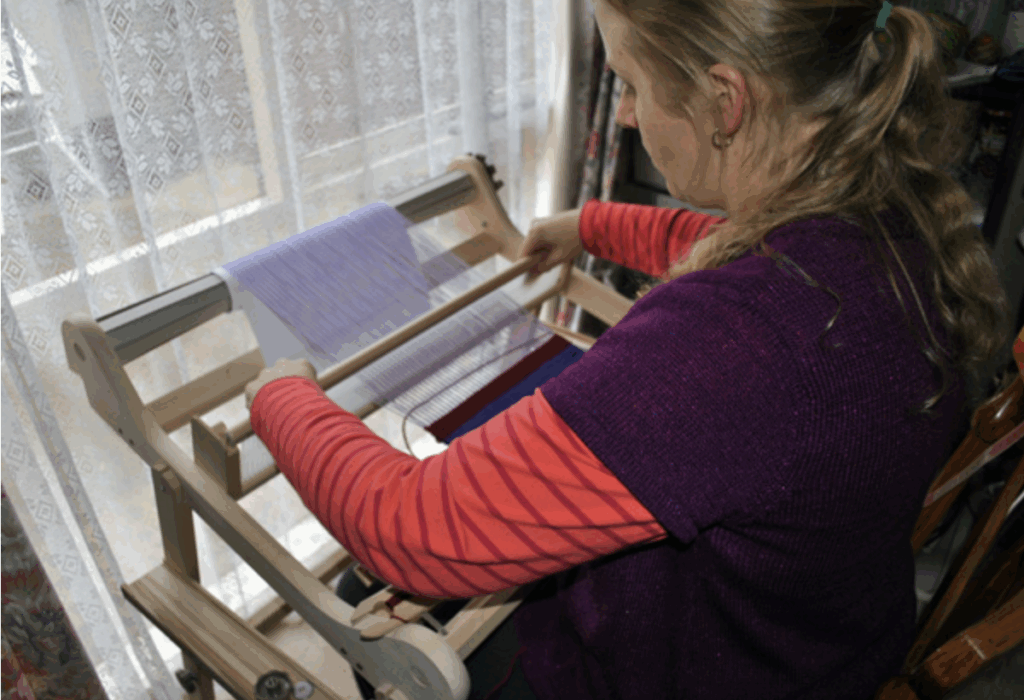
If you’re challenged by availability of space, consider whether small loom weaving would be well suited to your situation.

If you find it hard to focus or get anything done with the time that you have, check out the 10 Minute Rule to increase productivity.

I hope you enjoyed this post and feel free to share with us your own thoughts and experiences in the comments below ⬇️

Until next time…

Happy Weaving!

Filed Under: Free Pattern, Rigid heddle weaving, Rigid Heddle Weaving Patterns, Weaving Tagged With: too many projects, weaving projects

Is Talent or Knowledge More Important? The Real Answer Might Surprise You!

by Kelly 12 Comments

Is talent or knowledge more important? Or is there something else that helps us achieve our goals?

We love to talk about talent.
From a young age, we’re told that some people are “naturally gifted”—as if success in life, art, or work hinges on whether you were lucky enough to be born with a certain spark.

But is talent really the guaranteed key to success?
What about knowledge—what you learn and earn through experience?
Or is there something even more powerful than both?

Here’s the truth: Talent and knowledge both fall short without one essential trait.

And that trait is curiosity.

Talent Sounds Glamorous… But It’s Not Enough

Let’s be honest: talent can feel like a shortcut. When we see someone do something effortlessly—whether it’s painting, singing, coding, or crafting, weaving—it’s tempting to believe they were just born that way.

But talent alone doesn’t build skill. It doesn’t guarantee growth.
In fact, people who rely solely on talent often plateau early. They avoid challenges that might expose their limits, and they may never learn how to push through difficulty.

Talent is a wonderful gift to be given, but on its own it doesn’t necessarily go anywhere. Talent must be driven, challenged and honed.

Knowledge is Powerful, But Passive

On the other side, we have knowledge—something we can all gain over time.
Books, courses, teachers, and life itself give us endless opportunities to learn. And yes, knowledge matters. Deeply.

But knowledge without application? That’s just trivia.
Knowing how something should work doesn’t mean you’ll actually do the work, or that you’ll keep going when it gets hard or boring.

Just like talent, knowledge requires a driving force to be put into action.

So What Really Drives Success?

Curiosity!
It’s the overlooked secret behind talent and hard work.
It’s the thing that gets you started and keeps you going.

Curiosity is what makes you:

  • Ask questions others aren’t asking
  • Try something new without fear of failure
  • Dive deep into a topic or craft without being pushed
  • Stick with it, not because you “have to” but because you want to know more
  • Be willing to see out a project and learn from it, even if it’s difficult

It turns learning into a game. Practice into play. Repetition into discovery.

Why Curiosity Beats Both Talent and Knowledge

Let’s break it down:

TraitStrengthLimitation
TalentGives a head startFades without effort
KnowledgeBuilds understandingStagnates without action
CuriosityFuels both learning and effortLeads to progress regardless of starting point

Curiosity is active. It doesn’t wait for perfect timing or permission.
It creates momentum—and momentum is what moves you forward, even when you feel stuck or unsure.

My Experience: How Curiosity Carried Me

In my own creative journey, I’ve had seasons where I felt untalented.
And times when I had no idea what I was doing.
But what I did have was an inner spark—the drive to figure things out. To try. To explore. To keep going, not because I had all the answers, but because I was curious.

That’s what has made the biggest difference.
Not talent. Not perfect knowledge. But the willingness to learn, fail, adjust, and try again.

A curious person sees the barriers, they acknowledge the reasons to not persist, but they brush them aside and forge ahead.

When you’re curious it doesn’t matter how you learn, it just matters that you do.

So many times in my weaving journey I have almost convinced myself that I’m not talented enough, not smart enough, that I’ll never be able to learn this new technique or weave structure.

But that driving force keeps driving me forward, it replaces the lack of talent or knowledge with determination and eventually (sometimes a long time later!) I achieve the goal.

What This Means for You

If you’ve ever thought:

  • “I’m not talented enough”
  • “It seems so easy for others”
  • “I don’t know enough”
  • “I’m too far behind/ too old to start”

Let me gently challenge you.

Ask yourself instead: “What am I curious about?”
That single question can shift everything.

Because curiosity doesn’t care where you begin. It only cares that you begin.
And that’s where real growth lives—not in being perfect, but in being interested enough to keep going.

Final Thought

Talent may open a door. Knowledge may show you where it leads.
But curiosity? Curiosity gets you to turn the handle and walk through it.

Ready to Explore Your Curiosity?

Download my free 7-Day Creative Exploration Journal Prompter and start following your curiosity—one small step at a time.

ʘ Click here to get the printable journal sent to your inbox.

You’ll also get occasional emails with tips, inspiration, and behind-the-scenes from my creative world.

Now I’d love to hear from you:
Have you ever followed your curiosity into something unexpected or life-changing?
What’s something you’ve always wanted to explore, even if you’re not “naturally good” at it?

So, what has your experience been? Has curiosity played a big role in your life? Or has something else been your driving force?

Let me know in the comments, I love to hear from you and share experiences!

Until next time…

Happy Weaving!

Filed Under: Inspiration, Personal development, Weaving Tagged With: curiosity, encouragement, inspiration, knowledge, talent, weaving journey

Boat Shuttle vs Stick Shuttle: Which Should You Use on a Rigid Heddle Loom?

by Kelly 7 Comments

If you’re a rigid heddle weaver and you’ve ever looked at a boat shuttle and wondered, “Can I use that on my loom?” — this post is for you!

When you first purchase a rigid heddle loom, it almost always comes with a stick shuttle to get you started. But then, you might notice other weavers using a boat shuttle instead and wonder why.

Today I’m going to walk you through the key differences between these two types of weaving shuttles, how I decide which one to use, and whether a boat shuttle is worth the investment for your weaving journey.

Can You Use a Boat Shuttle on a Rigid Heddle Loom?

Yes, absolutely! While a stick shuttle is what most rigid heddle looms come with, a boat shuttle is a wonderful tool that can be used on these looms — you just need to know when and why it might be helpful.

Let’s look at the differences so you can decide which shuttle is right for your projects.

Boat Shuttle vs Stick Shuttle: What’s the Difference?

Here’s a quick comparison of the two:

1. Cost

  • Stick Shuttle: Usually inexpensive — you can even make your own or improvise with a paint stirring stick or similar.
  • Boat Shuttle: Although prices vary significantly, a boat shuttle is more of an investment — In addition to the shuttle, you’ll likely want extra bobbins, which are an additional cost.

💡 Tip: Some weavers make their own bobbins from cardboard or stiff paper!

2. Ease of Use

  • Stick shuttles are quick and simple for thicker yarns. I like to use mine when I’m weaving with anything thicker than fingering weight.
  • A stick shuttle involves passing the shuttle through the shed.
  • Boat shuttles shine when working with finer yarns (like Tencel, lace weight or 8/2 cotton). They feed yarn more smoothly and save a lot of time.
  • A boat shuttle (depending on the width of the warp) involves throwing the shuttle through the shed.

One of my favorite things? I can pre-wind multiple bobbins and just swap them out quickly mid-project. So satisfying and keeps you in “the zone”!

3. Efficiency

With a boat shuttle:

  • Winding yarn is fast — especially if you use a hand bobbin winder or electric bobbin winder.
  • Weaving is smoother. No need to stop and unwind yarn manually like with a stick shuttle.
  • It glides beautifully through the shed, especially when you’re working with fine, smooth yarns. You do need to ensure that you have good warp tension, especially on a wider warp where you might need to throw your boat shuttle further.

💡 Tip: You can even use a hand drill to wind bobbins!

A stick shuttle:

  • It’s fairly quick to wind a thicker yarn onto a stick shuttle
  • Once you’ve had some practice, you can kind of “shoot” the shuttle from one side of the warp to the other, making the transfer quicker. You will need a good firm tension and straight angle to ensure the “prongs” of the shuttle don’t catch on any warp threads.

Does a Boat Shuttle Fit Through the Shed on a Rigid Heddle Loom?

Great question — and yes, it absolutely does!

I often hear weavers worry that the shed (the opening between raised and lowered threads) won’t be large enough for a boat shuttle. But on my rigid heddle looms, I’ve had no issues at all. The boat shuttle fits through easily, and its smooth design helps it glide through like a dream.

If you were using a boat shuttle with a higher profile, you may run into issues. For that reason, I recommend a low profile boat shuttle (about an inch high is perfect).

💡 Tip: Just make sure you’re advancing your warp often so your shed stays nice and open!

Which Boat Shuttle Should You Buy?

There are so many boat shuttles out there, it can feel a bit like picking your first loom all over again!

A great entry level shuttle is the Ashford 13 or 15 inch open boat shuttle:

  • Lightweight but sturdy
  • Tapered ends for easy gliding
  • Works beautifully for both narrow and slightly wider projects
  • Affordable

It comes with one plastic bobbin, but I definitely recommend grabbing a few extras if you can.

A mid range shuttle would be this 13″ open boat shuttle from Pickers Ridge.

  • Handcrafted in Australia but affordable
  • Quality, sustainable New Guinea Rosewood
  • Light and lovely to hold
  • Magnetic spindle
  • Regular sized Ashford bobbin fits this shuttle

And for a high end, one of a kind shuttle check out the 13″ open boat shuttle from Pickers Ridge.

  • Handcrafted in Australia
  • Stunning appearance
  • Quality, sustainable Figured Silkwood maple
  • Magnetic spindle
  • A special piece for your weaving studio
  • Regular sized Ashford bobbin fits this shuttle
Image from Pickers Ridge Online Store

So… Do You Need a Boat Shuttle?

Nope — but you might really enjoy having one in your weaving toolbox.

If you mostly work with thicker yarns, don’t mind winding by hand and need to be budget conscious, your stick shuttle might be all you ever need. But if you’re venturing into finer yarns, love having pre-wound weft ready to go, or just want to make your weaving more efficient — the boat shuttle is a game-changer.

I love having both shuttle options available — and using them based on the yarn and project I’m working on. Like most weaving tools, it’s all about finding what works best for you.

If you’re interested in learning more about different types of boat shuttles, check out this article I wrote on open boat shuttles v’s closed boat shuttles.

*This post contains affiliate links. For more information, please see my disclosure policy.

Let me know in the comments below:
Do you use a boat shuttle on your rigid heddle loom? Or are you tempted to give one a try?

If you found this post helpful, feel free to share it or subscribe to my YouTube channel for more weaving tips and tutorials.
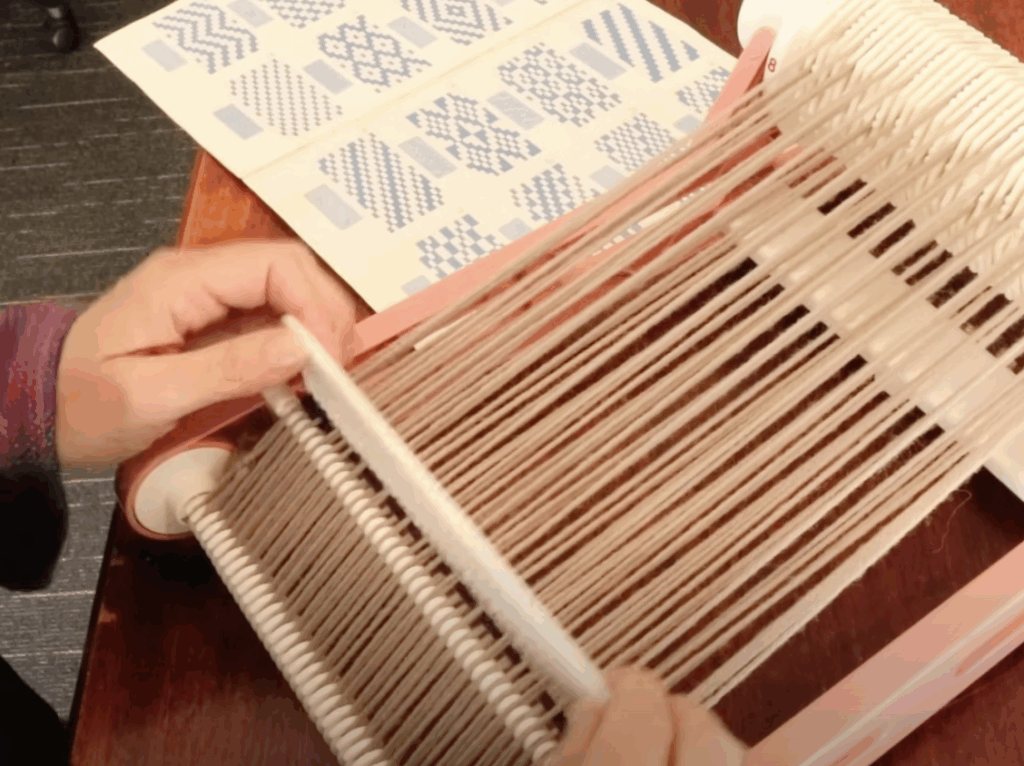
Check out the video below to see the boat shuttle in action with a rigid heddle loom:

Until next time…

Happy weaving!
— Kelly 💛

Filed Under: Rigid heddle weaving, Weaving Tagged With: boat shuttle, rigid heddle weaving

  • « Go to Previous Page
  • Page 1
  • Page 2
  • Page 3
  • Page 4
  • Page 5
  • Interim pages omitted …
  • Page 118
  • Go to Next Page »

Primary Sidebar

About Kelly Casanova

Hand crafted boat shuttles

Categories

Archives

Meta

  • Log in
  • Entries feed
  • Comments feed
  • WordPress.org

Copyright © 2026 Kelly Casanova Weaving Lessons on the Foodie Pro Theme