
To Finish or not to Finish? 🤔
When you purchase a brand new weaving loom, you may anticipate that it will arrive “finished” or treated with some sort of lacquer. This is not always the case and it’s worth checking before purchase, just so you are fully informed.
Let’s have a look at the pros and cons of finished and unfinished looms.
Finished Loom Pros:
Protected Surface: A lacquer or varnish finish gives wood a protective surface that is resistive to moisture, wear, scratches, and general daily use.
Low maintenance: The finish lasts a long time without the need for being reapplied.
Stable in varied environments: A sealed finish helps guard against wood swelling/shrinking from humidity or moisture (we already discussed how that can affect your loom!) If you live in a high humidity zone, a finish is of great benefit.
Cleanable surface: With a sealed finish, you can wipe the loom down with a clean, damp cloth to remove fibres or other marks. This will make the surface appear shiny and new again.

Finished Loom Cons:
Less natural feel and movement: Wood that has been finished with a lacquer or varnish is generally very smooth and shiny. From an aesthetic point of view, this may appear as less natural. Some weavers may also prefer a less slippery surface to work with.
Harder to repair/touch-up: If the finish gets scratched or worn, repairing often requires sanding and refinishing, not just a quick wipe. I learned this recently when assembling my Louet Jane table loom. When trying to balance the beater, the lovely new insides of the loom frame were scratched by some metal ends of the beater 😧
Potential aesthetic trade-offs: Some finishes can look too shiny or “plasticky,” may yellow slightly over time (on light woods), or mask the more subtle natural grain/texture of the wood. I have found that how much the lacquer changes colour over time does depend on the wood the loom is made of. For example, my Ashford rigid heddle loom has darkened slightly over time whereas my Louet David floor loom has slightly yellowed (I would call it more a “warm blush”). Neither of these are a problem for me, I just see it as part of the ageing process. My looms are ageing with me! 👵🏻
Health/chemical concerns during finishing: Finishes like lacquer/varnish often involve solvent-based chemicals with fumes; applying them safely requires ventilation – something to consider especially if you plan to finish a loom yourself.
Unfinished Loom Pros:
Natural wood feel & smoothness: The wood feels different, with natural grip and warmth. Some weavers prefer this for parts where hands or yarn touch. In weaving forums, many note that leaving shaft paths or contact surfaces “bare or very lightly finished” helps movement, and some looms are shipped unfinished.
Further to keeping it natural: If you decide to finish your loom with a natural substance like beeswax, the aroma is simply wonderful! Your weaving space will smell like honey for a little while. Many weavers love the connectivity they feel with ancestors or weavers who have gone before us. Using a beeswax (the Lojan beeswax is beautiful!) or natural oil finish is very much in keeping with this.
Easier to re-finish or customise: Without a hard film, you can treat the wood with oils, waxes, or different finishes over time. That can be good if you want to modify appearance or maintain wood health. I’ve even seen weavers paint their looms with beautiful, original designs!
Less risk of chemical smells or toxicity (if using natural finishes): Using wax or natural oils avoids synthetic solvents and their odour; some finishes like wax are even considered non-toxic once cured. Personally, I have never notices a particular aroma associated with my finished looms, but it’s worth pointing out.
Better wood “breathability” and stability in some climates: In more humid or variable climates, wood that is not heavily sealed may respond more naturally to moisture changes (though this depends heavily on species and use). Some weavers report that leaving looms unfinished worked “fine” for years.
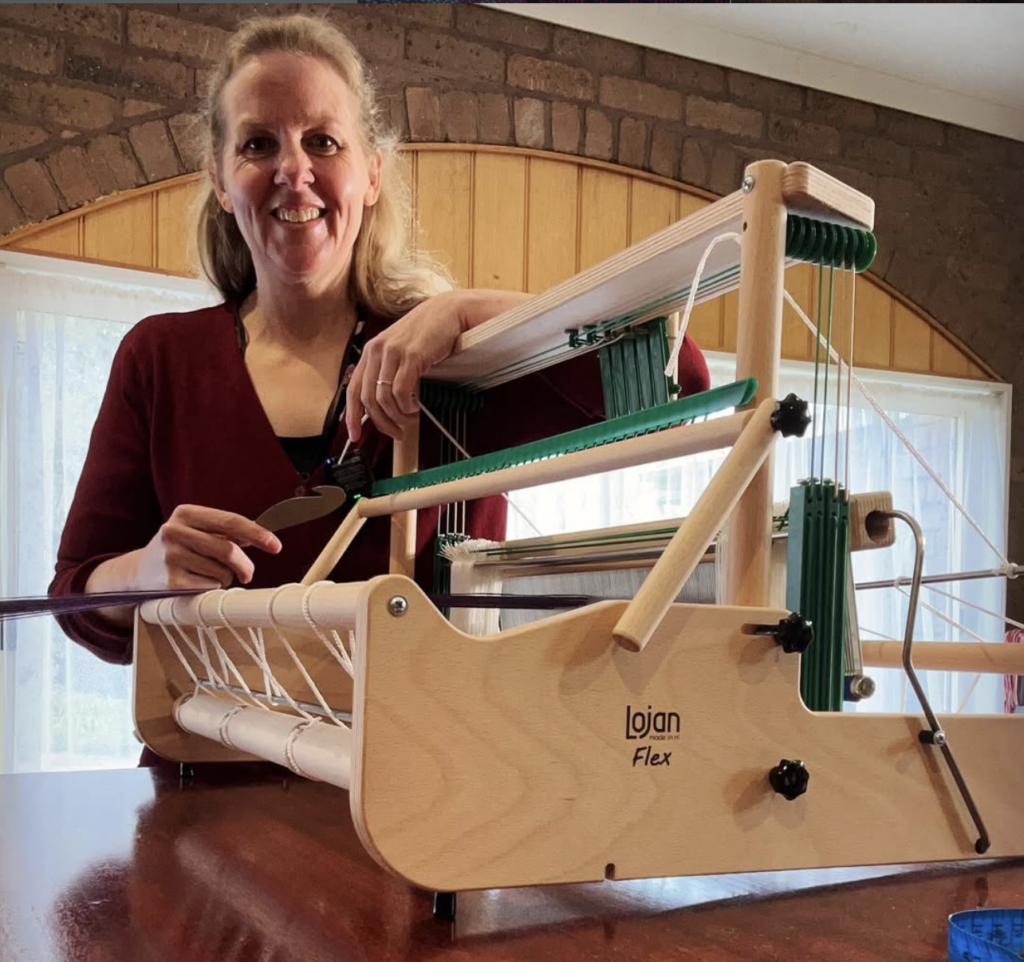
Unfinished Loom Pros:
More maintenance required: If you use wax it is ideal to re-apply periodically to help keep wood protected.
Less protection / durability: Wax alone offers only limited scratch, heat, moisture, or wear resistance; heavy use (especially near water, spills, rough handling or direct sunlight) may wear wood down faster.
Vulnerability to humidity swings (if completely unfinished): Without any sealing, wood may absorb moisture or dry out, possibly leading to warping, loosening joints, or dimensional instability (though this depends a lot on the wood species, ambient climate, and how well assembled). Some weavers mention problems when assembling looms in one season and letting them sit through another.
Less “ready to use”: A totally raw loom may absorb oils from skins or yarn more readily, possibly affecting how fibers behave on wood (though some weavers don’t mind this). There can be a build up of oils on “high touch” parts of your loom that can’t be easily wiped away.
Pricing differences
Usually you will notice a difference in pricing between finished and unfinished looms. This simply reflects the additional time and cost of materials to finish the loom.
What I’d recommend – depending on your specific needs
- If you want a loom that’s low-fuss, durable, and long-lasting – go for a finished (lacquered/varnished) loom (or finish it that way yourself). This is especially useful if you’re in a variable humidity climate, weave often, or don’t want to worry about regular maintenance.
- If you care about natural feel, ease of repair, and a “traditional wood-working feel” an unfinished or waxed loom may be better. Especially if you plan to treat or maintain the wood occasionally (oil/wax), or if you like working with wood surfaces directly.
Specific to Looms — why some prefer wax/unsealed wood
A few loom specific points that distinguish looms from “just furniture”:
- Many loom parts (shuttles, heddle bars, harnesses, shafts) move, rub against each other, or are handled frequently. A sealed finish will make movement more smooth than a natural wood surface.
- Looms may sit unused for periods, or be stored in changing humidity – a sealed wood may resist moisture fluctuations better than raw wood (which might absorb moisture or dry out).
- If you’re refurbishing an older loom, you need to know what finish was originally used: sometimes removing old wax or sealant is tricky, and applying new lacquer over residual wax can lead to problems. That’s why many advise to sand down thoroughly before refinishing.
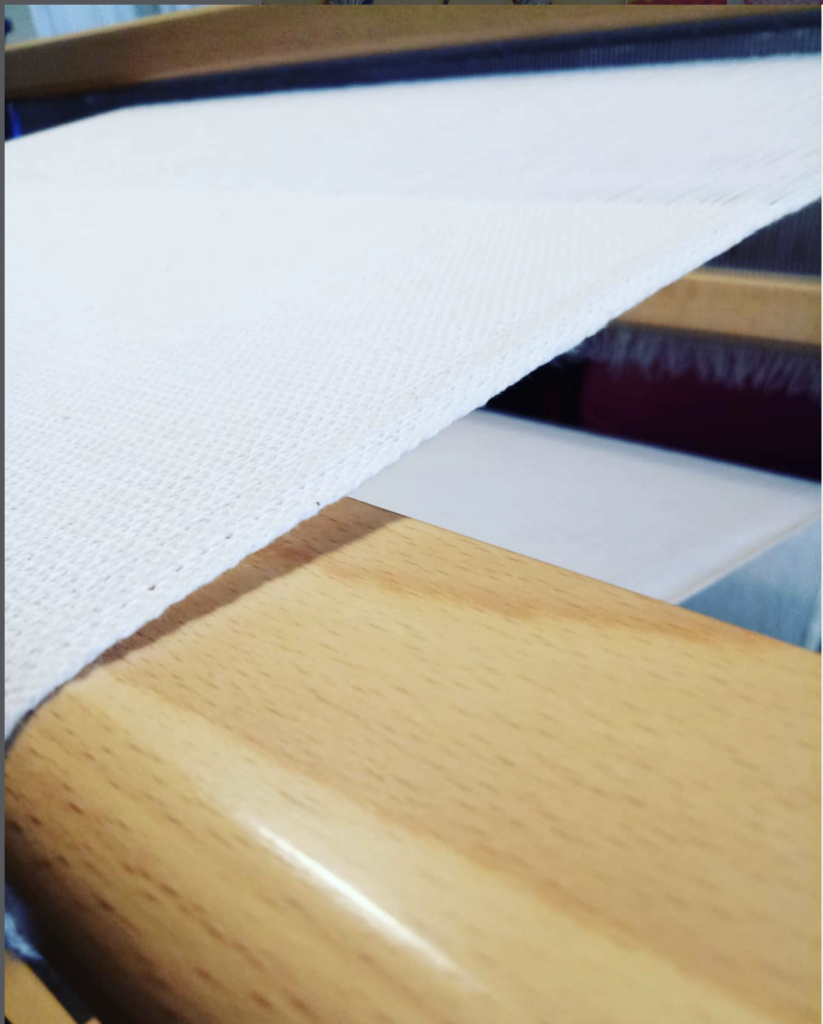
A Tip For Finishing a Loom Yourself
If your loom arrives in a box and unfinished and you decide to finish it yourself (either with a lacquer or a wax), make sure you do so while the loom is in pieces still.
It can be hard to calm yourself enough to take this extra step and possibly have to endure a drying time, but trust me, it is so much easier than finishing an already assembled loom!
If you would like to know more about weaving loom care, check out this free and helpful guide.
I hope this article has been helpful and educational. If you have any thoughts or tips to share with others, please leave them in the comment section below 👇
Until next time…
Happy Weaving!
*This article may contain affiliate links. For further information, please see my disclosure policy.


