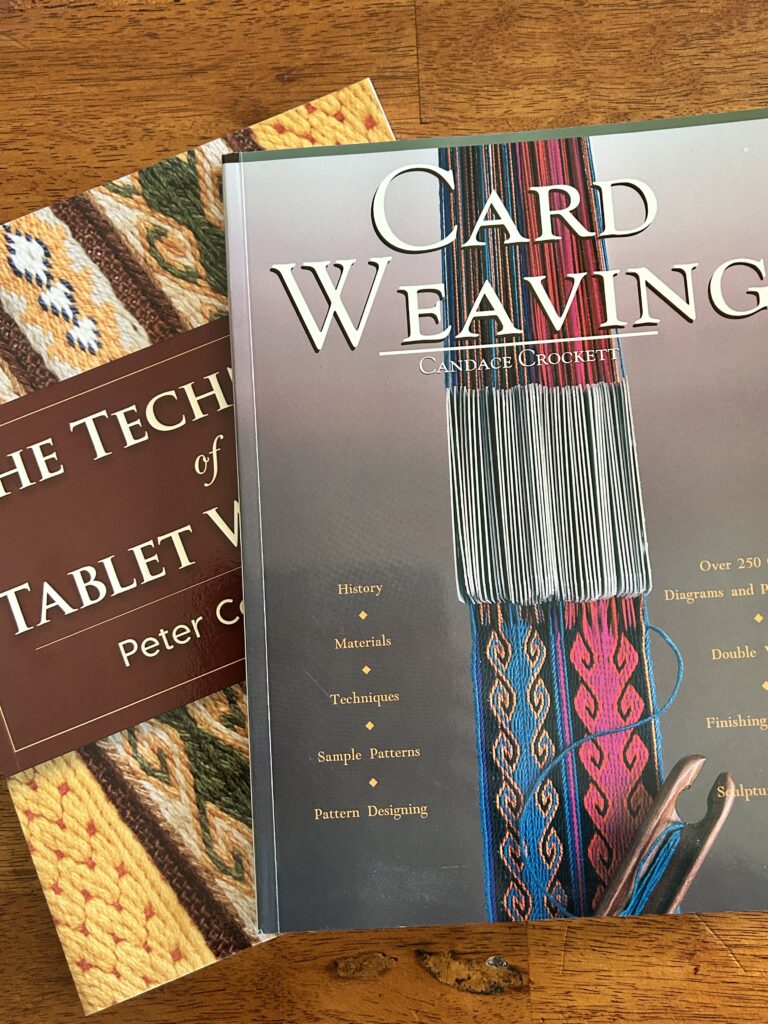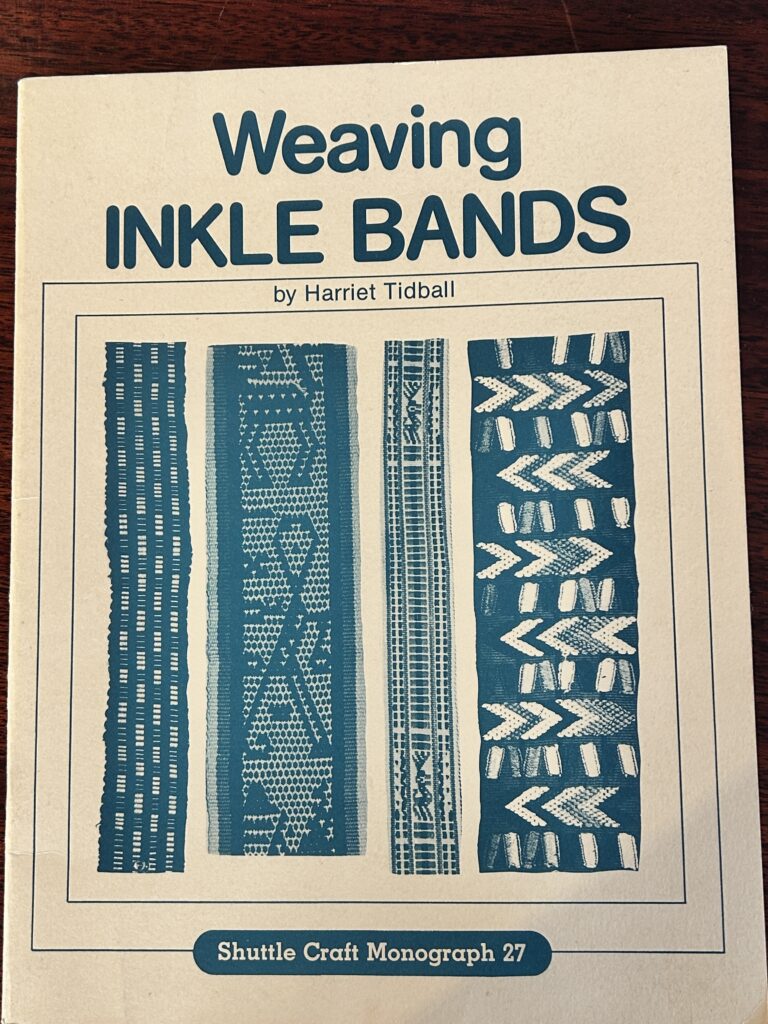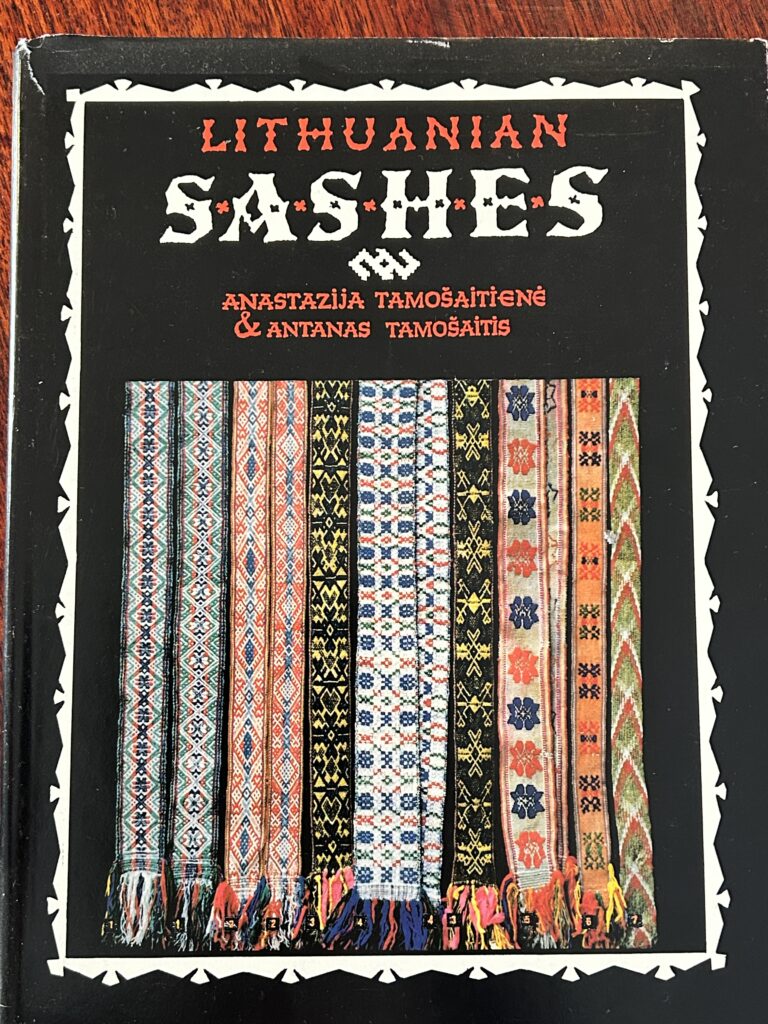
Recently I wrote about the best inkle and band weaving books but today I want to go a little deeper on three specific band weaving books that live in my own library and the author behind them.
Many years ago I purchased Norwegian Pick Up Bandweaving by Heather Torgenrud and was instantly taken by the beauty, quality and inspiration the book offered.
So naturally, when Heather offered to send me her next two books, including the brand new The Bandweaver’s Project Book, I jumped at the opportunity.
Today we will begin by discussing the merits of each book, then we will hear from Heather herself in an interview and finally, thanks to Heather and Schiffer Publishing, we have a copy of The Bandweaver’s Project Book to giveaway to one lucky winner!
So let’s dive into these wonderful books, in order of publication:
Norwegian Pick Up Bandweaving
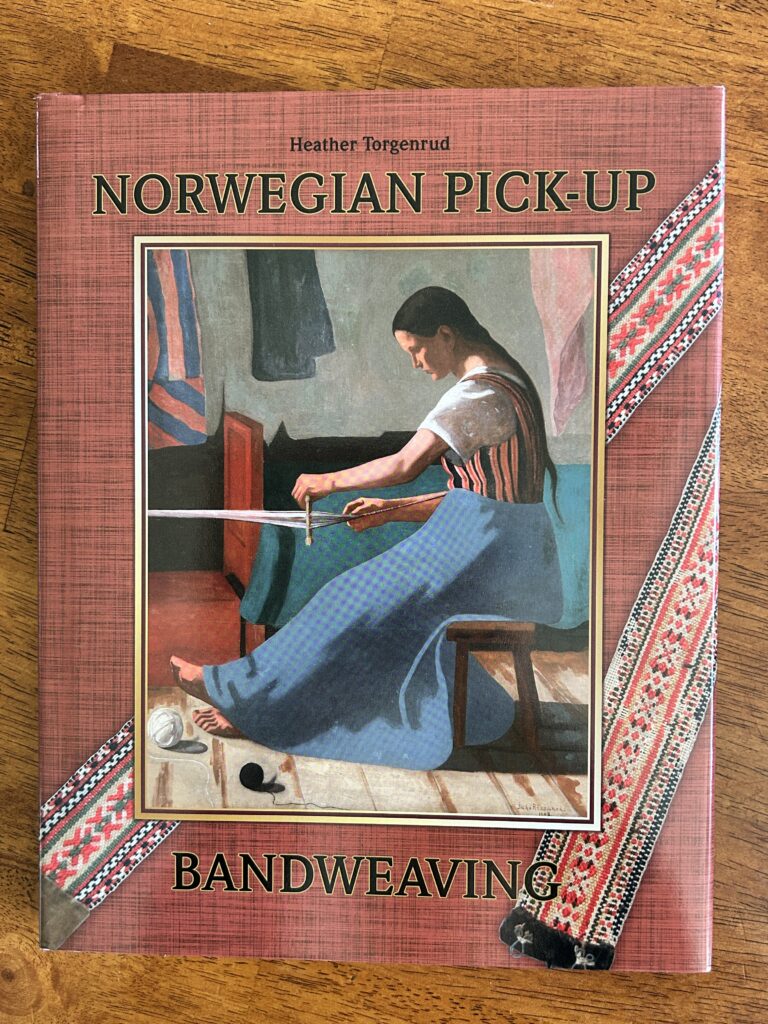
I love weaving books that incorporate history and stories – they give the “why” of the weaving and the “where from” – that appeals to me so much.
Broken into three parts, part one of this book talks about the historical and traditional uses of these pick up bands in Norway in the 18th and 19th centuries. Part two is about the Norwegian immigrants and some of the specific brands they took to America. Part three is the instructional section for weaving these tradition Norwegian band designs.
Although the instructions are for band weaving looms, the designs can easily be adapted to other looms, like inkle looms.
This book is full of beautiful photographs, pattern charts and historical examples.
Pick Up Bandweaving Designs
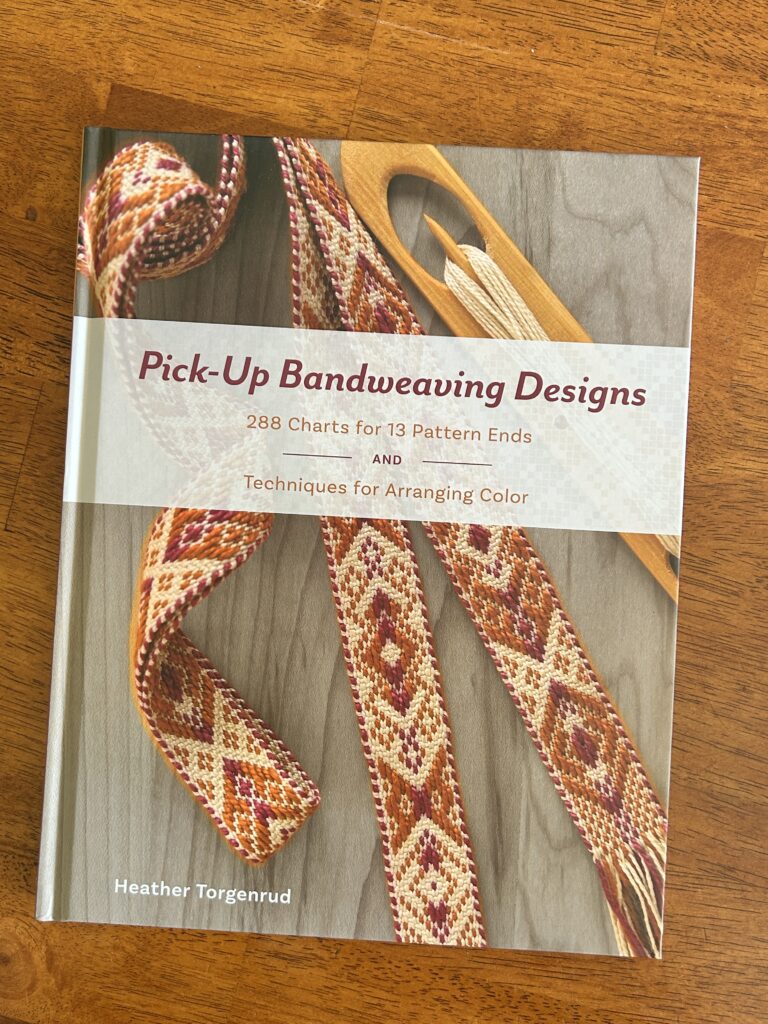
Heather’s second book is all about the designs and colour. Included are 288 Baltic style pick up band charts. Heather also talks about her own design process and the importance of colour choices in weaving attractive pick up bands.
Towards the back of this book there are many large photographs of sample bands with charts and specific yarn colours as examples for inspiration or for you to weave yourself.
This book is for weavers who already have band weaving knowledge but are looking for new and exciting design ideas.
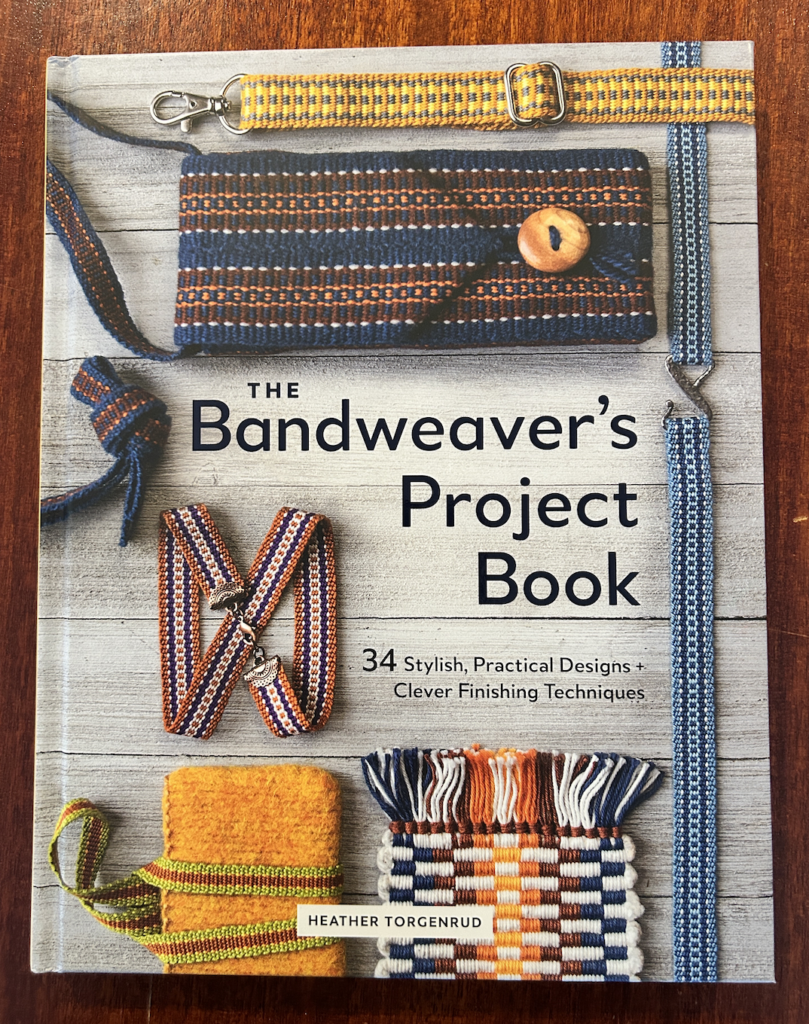
The Bandweaver’s Project Book
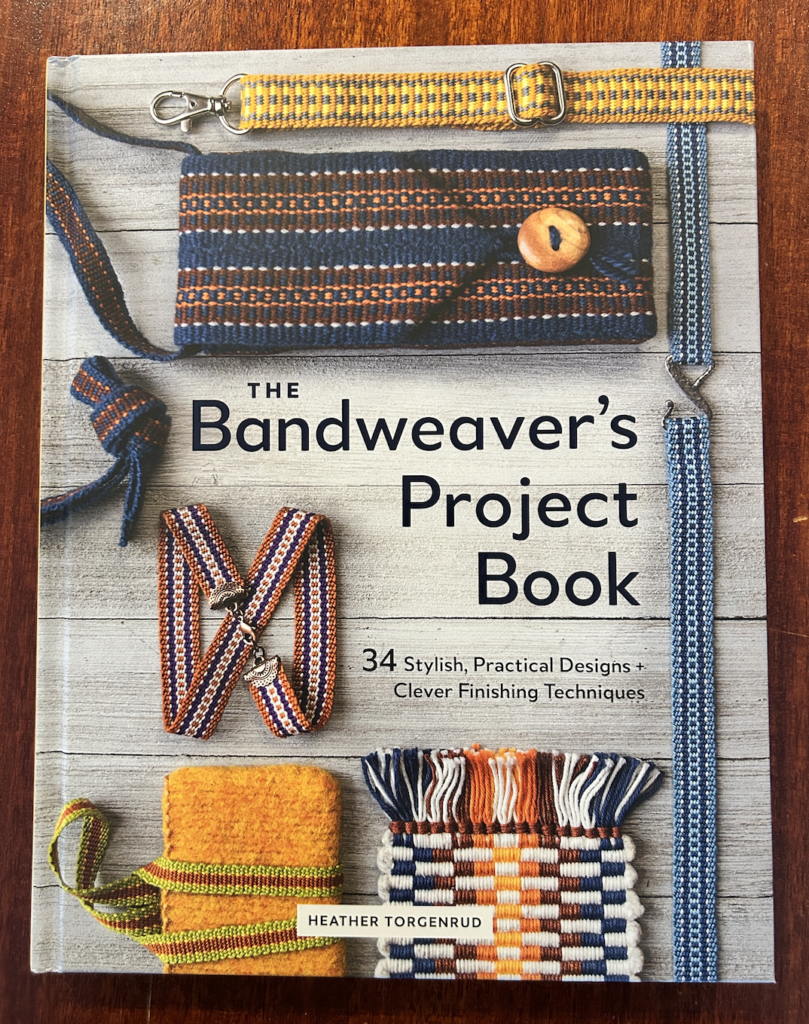
This book was just released this year and has caused some excitement among band weavers I know! The question of what to do with all your woven bands is a constant one, and this book provides some answers.
Again, this book is aimed at the experienced band weaver, so basic weaving instructions are not given. It is suitable for any type of loom weaver or for how you usually weave bands. All of the projects included are woven in plain weave with beautiful colour arrangements.
There are 34 projects altogether and each one has it’s own pattern chart as well as yarn colour and type and necessary calculations.
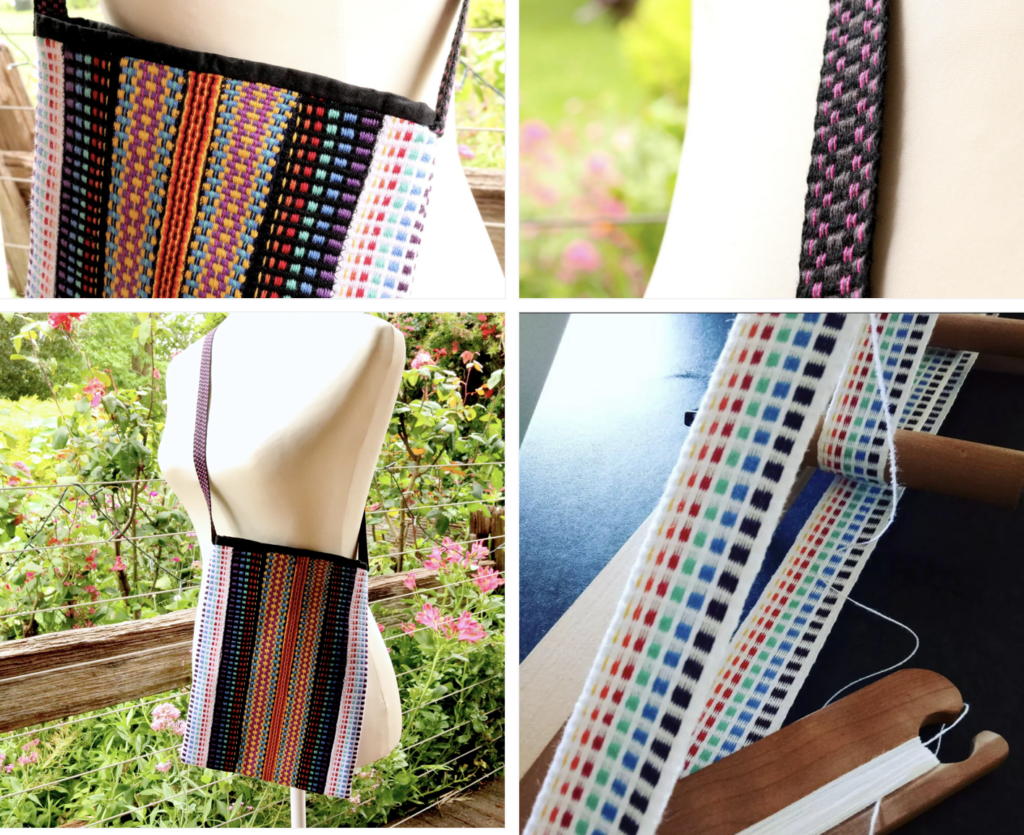
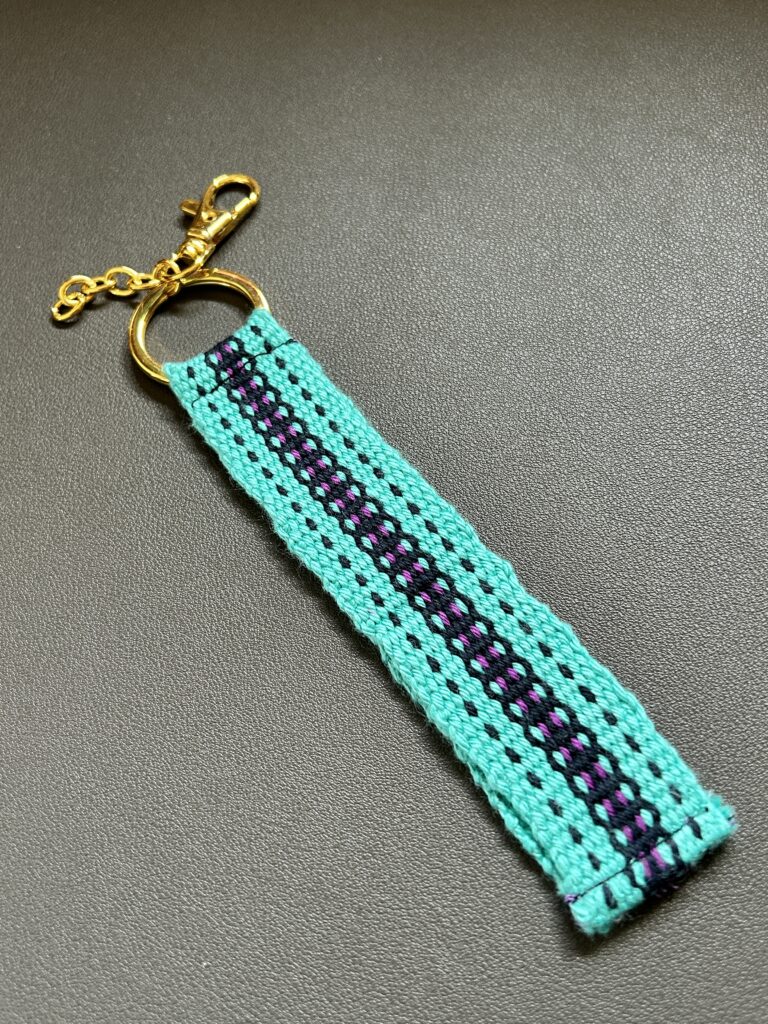
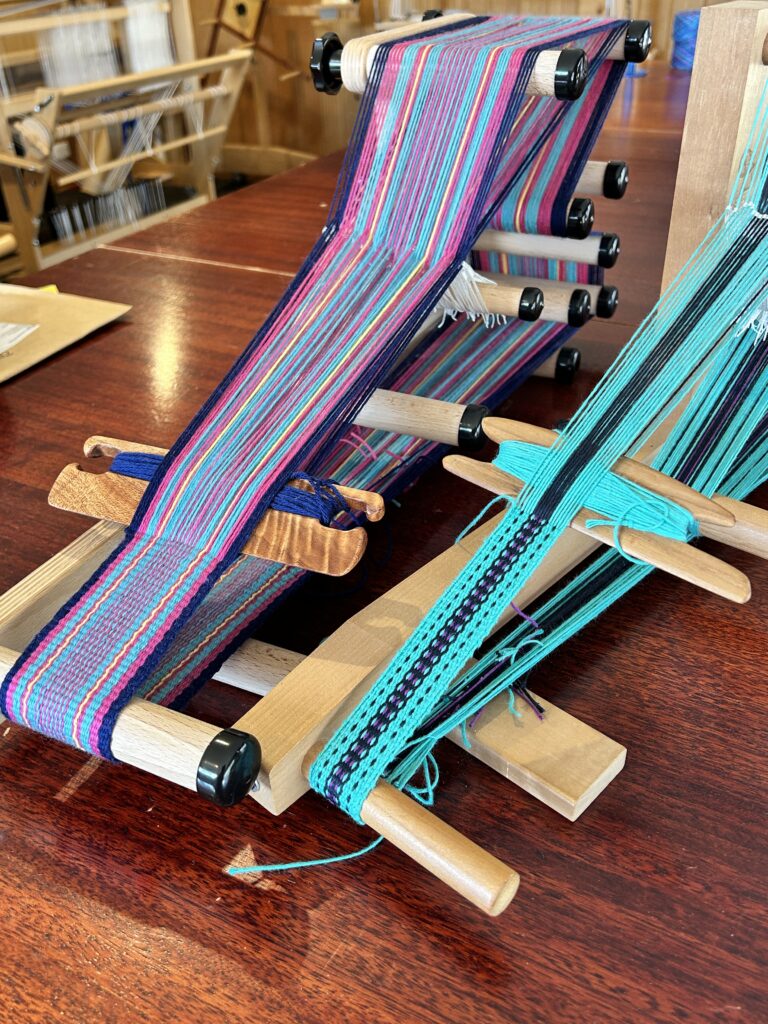
I chose the Key Fobs and Lanyards project from page 33 to weave on my inkle loom. As I wasn’t able to source the same yarn used in the book, I used my favourite brand of 8/4 cotton, which was a similar weight. I used the colours I had on hand but ensured enough contrast between them. The design is simple but so striking, like many of the designs in this book.
I also love the Tool Cases project on page 43 but again, did not have a suitable yarn. So I decided to do something a bit different. I used a fingering weight wool but doubled the ends. This completely changed the design layout but I was interested to see how it would turn out.
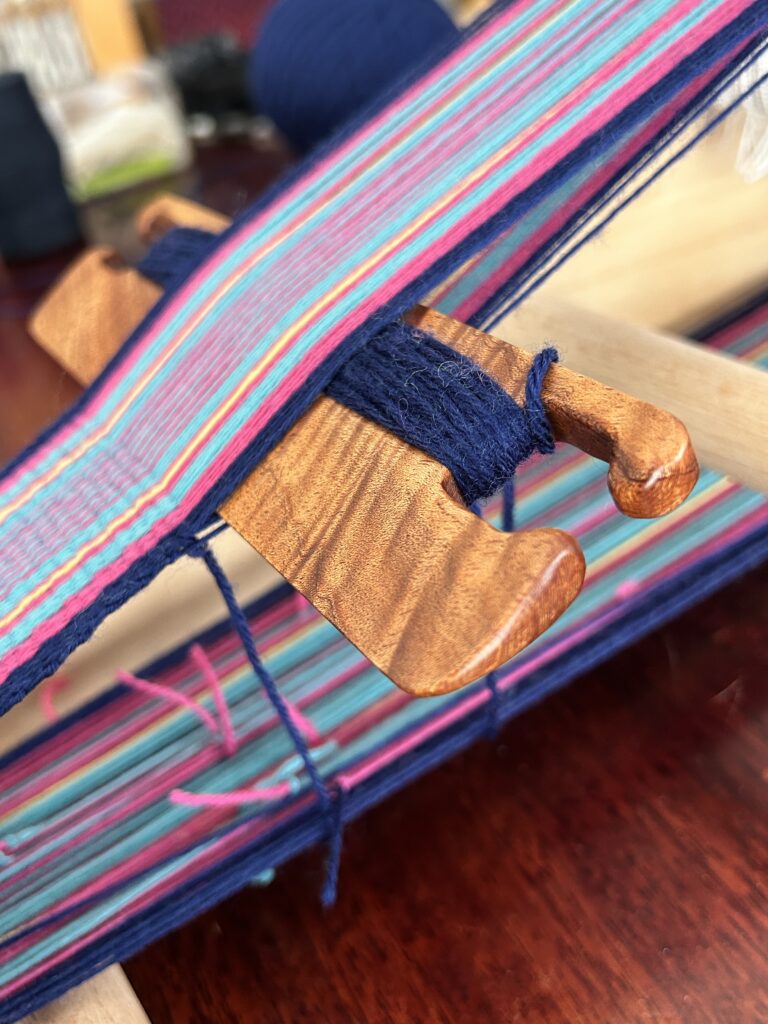
I’m not finished that project yet – my wool is quite soft rather than the more robust wool used in the book. For that reason, it has taken some patience to separate the stick sheds. But it sure is a pretty band and I’m looking forward to sewing it up into tool cases, especially to house my precious handmade Pickers Ridge belt shuttle.
In addition to answering the question of how to use your woven bands, this book addresses another important query that comes up repeatedly – how do I finish my band?
Part 2 covers all kinds of finishing options from fringes to hems, from binding to joining techniques – including some options you may never have come across before.
This is such an attractive book, I love the layout, the colours and fonts used and the entire presentation. It’s the sort of book that makes you feel happy just by flipping through 😊
I also really appreciate the ease of navigation. Each project page refers you to a technique page for sewing or assembling the project, and these have been laid out in a really easy to find and follow way.
What I Love About All Of These Books
Schiffer Publishing currently have 7000 titles in print. If you got to their website and type “weaving” “craft” or “art” in the search bar, you will see just what I mean. The weaving category alone will present you with so many beautiful choices, including the much anticipated re-print of Marguerite Porter Davison’s A Handweaver’s Pattern Book.
Heather’s books, printed and distributed by Schiffer are beautiful hardbound books with an attractive layout, colour photography and illustrated instructions.
Directions and charts are simple to follow and find when you need them. The way each book is divided into relevant sections makes navigation really easy.
I am often disappointed by the lack of quality in many of the books available for purchase nowadays, so Heather’s books are a joy to behold in comparison.
******************************************************************************************
Interview with Heather Torgenrud
When did you start weaving and what drew you to it?
Ever since I can remember, I’ve been drawn to textiles and soft fibers. As a child, I was fascinated with how the interlacement created the plaid patterns in my wool blanket and my father’s flannel shirts. In 1970, when I was fifteen, I got a Lily Mills table loom and taught myself to weave with Nell Znamerowski’s Step-by-Step Weaving. As soon as I opened that book, I felt like I’d come home, to a way to be creative that made sense to me. In 1972, when my husband and I were first together, he gave me the gift of an inkle loom, and my first floor loom followed a few years later.
Has it always been about band weaving for you, or are there other types of weaving you do too?
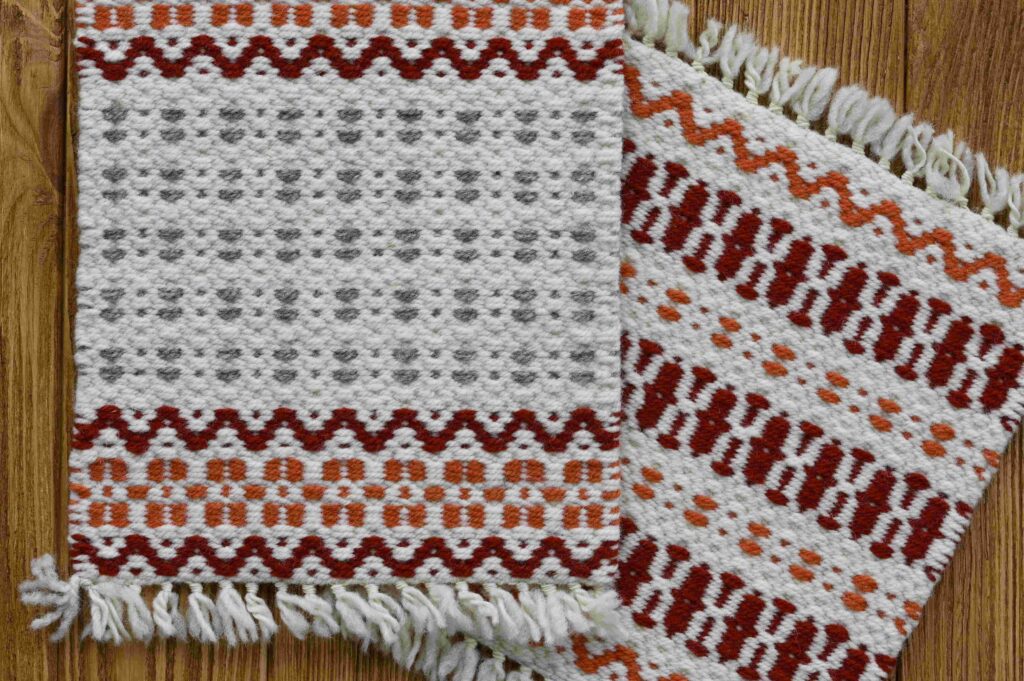
I’m passionate about band weaving, and there have been long periods when I’ve concentrated on that. But I’m also right at home with my four-shaft counterbalance floor loom. These days I’m enjoying working with wool in a weft-faced weave called rosepath treadled on opposites. The weaving is relaxing, the design possibilities seem endless, and the interlacement creates a texture I find really appealing. Plus, I like how both color and pattern change places on the back, just as they do with Baltic pick-up.
For your band weaving, do you favour a particular loom?
I used to weave all my bands on my beloved Schacht inkle loom, but now that’s changed. For plain bands, I weave on my Spriggs floor-type inkle loom, which I like because it’s comfortable to sit at for long periods and the sturdy tension peg is so easy to adjust. For pick-up bands, I weave on a band heddle with a backstrap, which I like because I can release the tension slightly as I beat to give the floats a little extra ease and form more compact motifs.
How did the idea of writing your first book, Norwegian Pick Up Bandweaving, come about?
When I first learned pick-up, I wanted to know more about the Baltic technique I loved so much. Who were the weavers, and how were the bands used in the old days? When a weave is that beautiful, it feels like something is missing if you can’t place what you’re creating in historical context. I told myself that someday I’d find the answers and write a book, but I was very young, so I pushed the idea to the back of my mind. Then, in the late 1990s, when my husband and I were studying Norwegian, I contacted the Vesterheim Norwegian-American Museum about their band collection. By then, I had experience in research and writing, and I knew that when we finished our language studies, I’d be able to write the book that I would have liked to have had as a young weaver.
Did ideas for your next two books grow from feedback from readers or a different motivation?
The idea for Pick-Up Bandweaving Designs grew while I was finishing the Norwegian book. I’d always loved to design my own patterns for Baltic pick-up, in keeping with a traditional style. And as I charted the patterns from the bands in Vesterheim’s collection, I kept getting ideas for variations. I wanted to share my love for pattern design and give readers a huge pattern library that they could draw upon or be inspired by. I also wanted to share my ideas for using color in pick-up bands. Not abstract color theory, but specific techniques illustrated by dozens of samples.
The idea for The Bandweaver’s Project Book came about because so many weavers have asked me: “What can I do with my bands?” Once I got started, the list of projects kept growing, from multiple small items cut from one band, to bands sewn together to make pockets and pouches, and so forth. I wanted to focus on finishing techniques because a thick, warp-faced band calls for a different approach than another textile might. And finishing is so important to the success of a piece. Weavers tell me they appreciate having all the finishing techniques in a separate, illustrated section that they can refer to when designing their own projects.
The Bandweaver’s Project Book, provides a much needed resource for showing how woven bands can be utilised in projects. Do you have a favourite project from the book and what makes it special to you?
It’s really hard to choose, but I’m quite fond of the design of the hatband that I wove for my late husband. I’m also partial to the pocket designs—the Notepad Pocket with its coordinating trim and channel for the pencil, and the Loose Pocket with its color pattern formed into an interesting shape by flipping the miter to the outside.
*********************************************************************************************
The Giveaway!
And now for the really fun part. Thanks to Schiffer Publishing and Heather Torgenrud, we are giving away one copy of The Bandweaver’s Project Book!
This giveaway is available worldwide. The winner will be notified via email and arrangements will be made to ship the book out.
For your chance to win, leave your comment below, answering this question:
What’s one thing you’d love to learn from Heather’s new book?
A winner will be drawn October 1st, 2026.
Your comment won’t show up right away – don’t worry, that’s just my spam filter doing its job. Your comment will be approved when I see it 😉
I look forward to reading your entries, best of luck!
Until next time…
Happy Weaving!
* This post contains affiliate links. For further information please see my disclosure policy.