• Skip to main content
  • Skip to primary sidebar

Kelly Casanova Weaving Lessons

  • Hi! I’m Kelly!
    • Affiliates Disclosure
  • Online Weaving School Class Index
    • Common account issues
    • Common technical issues
    • What do I get with a membership?
  • New to rigid heddle weaving? Start here!
    • Never heard of the rigid heddle loom?
    • How to weave neat edges on the rigid heddle loom
    • Rigid heddle weaving
    • Rigid Heddle Weaving Patterns
  • Patterns
  • Subscribe

weaving tools

Random Stripes Generator For Weavers

by Kelly Leave a Comment

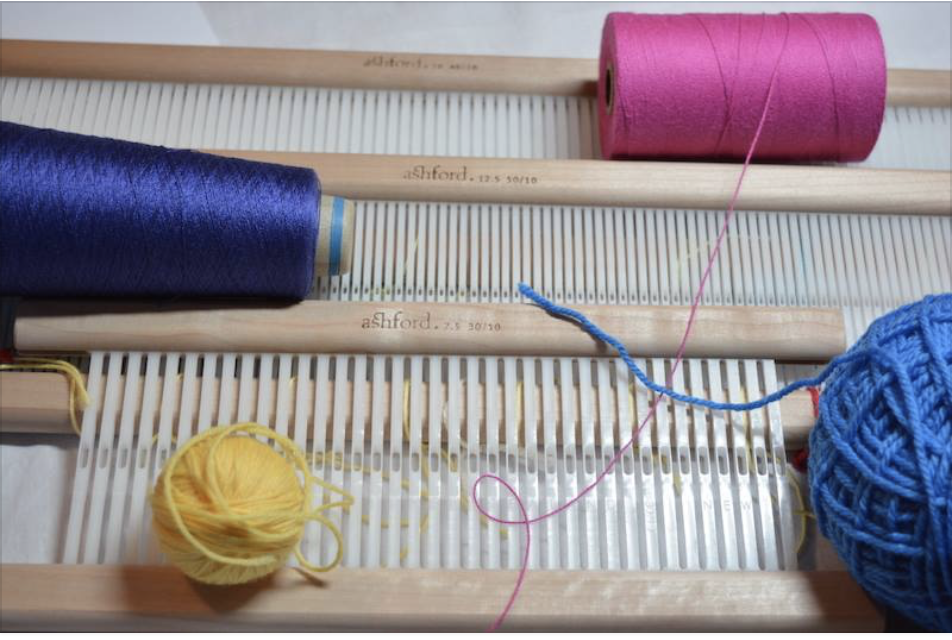
Choosing colours for a new project can be one of the hardest parts of weaving.

You can have a good understanding of your loom, know exactly what you want to weave and have plenty of yarn sitting on your shelves but then completely freeze when it comes to deciding which colours should go where.

I know this is something many weavers struggle with. And I know that colour decision can cause a paralysis that will prevent some weavers from moving forward and completing their best work.

Some people seem to have a natural instinct for colour. They can pull a handful of yarns from a shelf and somehow know that they will work beautifully together.

And then there are the rest of us!

The good news is that I don’t think you need to have a natural colour intuition to become confident with colour. A lot of it comes from experimenting, looking at what works and, importantly, giving yourself permission to try combinations that you might not have chosen yourself.

One thing that can work really well is to place cones of yarn colours in groupings to see what is pleasing to the eye. Even better is to lay sections of colour side by side in a stripe arrangement. If you are planning a striped warp, this method is indispensable, as it gives you a mini glimpse of how your warp will look on the loom. I show how to do that in my Gaining Confidence With Colour workshop.

What Is A Random Stripe Generator?

Another simple and effective way to plan colour in your project is by using a random stripe generator.

This is a really fun way to plan. You can choose from vertical or horizontal stripes, depending on whether you’re planning warp or weft colours. You can order the colours or choose to have them completely random. Wider stripes or narrower stripes, the choice is yours!

Let’s Start Generating Stripes!

Number of rows / stripes
Stripe direction
Number of colours
Choose your colours
Stripe order
Stripe height / width

Choose one or more sizes. One selection creates even stripes; multiple selections create varied stripe sizes.

Try it with your next weaving project

One example where you could use the generator is with your inkle loom.

Inkle bands are a great way to experiment with colour because you can see the effect of relatively small changes very quickly. A different colour order or stripe width can completely change the character of a band.

If you’re working through my Inkle Weaving course, you could use the generator to come up with some colour ideas before you start winding your warp.

It’s also useful for scarves, tea towels, blankets and other projects where you’re working with stripes or colour blocks.

And don’t feel that you have to use the colours exactly as the generator gives them to you. It’s as much about inspiration as it is about actual planning.

You might see a combination that you would never have thought of yourself and immediately love it. Or you might look at it and think, absolutely not! It’s just as important to identify which colours you love together and which you don’t.

Want to understand colour a little better?

I’ve written about basic colour theory for weavers, including some of the principles that can help you understand why particular colours work well together.

You don’t need to become a colour theory expert before you start experimenting. But having a few basic ideas about colour relationships can make choosing yarns feel much less mysterious.

You can read that post here: Colour Theory for Weaving – Choosing Harmonious Palettes

And then come back and play with the generator.

Try combinations you normally wouldn’t choose. Change the order. Make the stripes uneven. Try the same colours with a completely different arrangement.

The more you experiment, the more confident you become.

And eventually, you may find that mysterious thing called “colour intuition” starts to develop after all 😉

If you need help to use this tool, follow my video tutorial ⤵️

I hope this random stripes generator is a useful and fun tool for you in your weaving journey. Let me know in the comments if you use it and enjoy it!

Until next time…

Happy Weaving!

Support My Free Content Here – Thank You! 😘

*This post contains affiliate links. For further information please see my disclosure policy.

Filed Under: Color, Colour and Weave, Weaving Tagged With: design tools, random stripes generator, weaving, weaving tools

Essential tools for rigid heddle weaving

by Kelly Leave a Comment

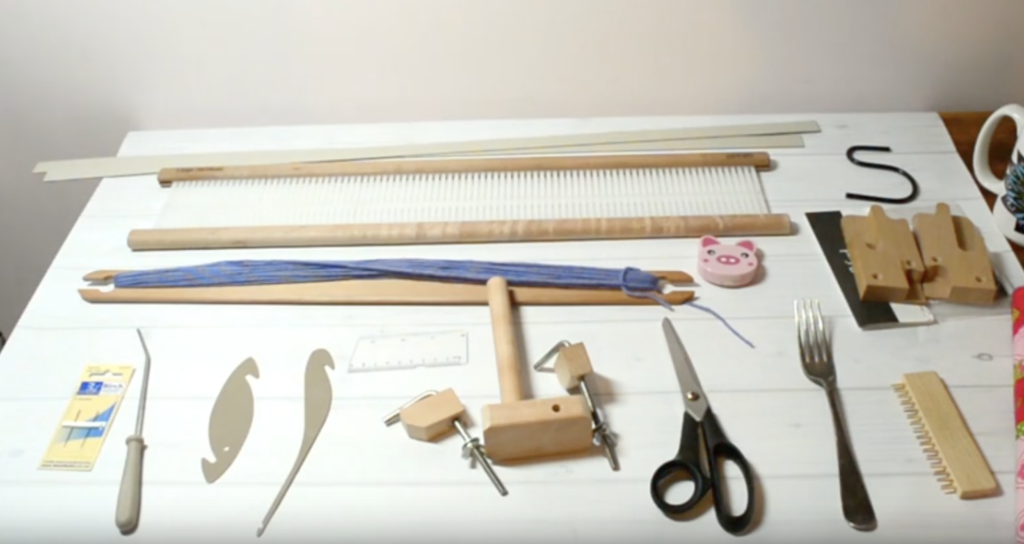
When you buy a rigid heddle loom, it will come with a few standard tools to get you started. Exactly what you get will depend on the manufacturer of your loom, but here are a few of the basics:

*A heddle/reed (usually 7.5 or 8 dent)
* A warping peg and clamp for direct warping
* A clamp for holding the loom to a table while warping
* A stick shuttle
* It may include a threading and reed hook
* Cardboard warp separators (may not come with all looms)
** Some looms now come with a double heddle block built in

Apart from the standard tools, there are extra things that are either essential or come in handy.

Other essentials:

*Scissors – A good pair of dressmaking shears will save you a lot of frustration

*Tape measure

*Something to separate your warp when rolling on (I like to use brown craft paper on a roll and cut it to size)

*Yarn

*Inch ruler (for figuring out the sett of your yarn)

*Project journal for recording all your project information

*A big mug of tea or coffee (hey, I don’t judge!)

   Handy optional extras:

* Tapestry needle
* Extra heddles
* Fringe twister
* Sewing machine 
* Serger
* Loom stand
* Tapestry beater, comb or household fork
* “S” hooks or other weights
* Calculator
*Instructional books –  this post will help you to determine which book/s might be right for you).
*Online lessons are an awesome tool to get started. You can check out my Youtube channel and my Online Weaving School for further help. 

Check out the video below where I discuss these tools in depth:

I also have an additional video that talks about affordable tools here:


Something to remember when you’re just starting out with rigid heddle weaving is that you don’t need All.The.Things right away! The tools that come with a newly purchased loom are sufficient to get you started, and you can gradually build from there as you begin to explore the wonderful world of rigid heddle weaving.

*This post contains affiliate links. Please see my disclosure policy for further information.

Until next time…

Happy Weaving!

Filed Under: Rigid heddle weaving, Weaving, Weaving Tools Tagged With: rigid heddle weaving tools, rigidheddleweaving, weaving tools

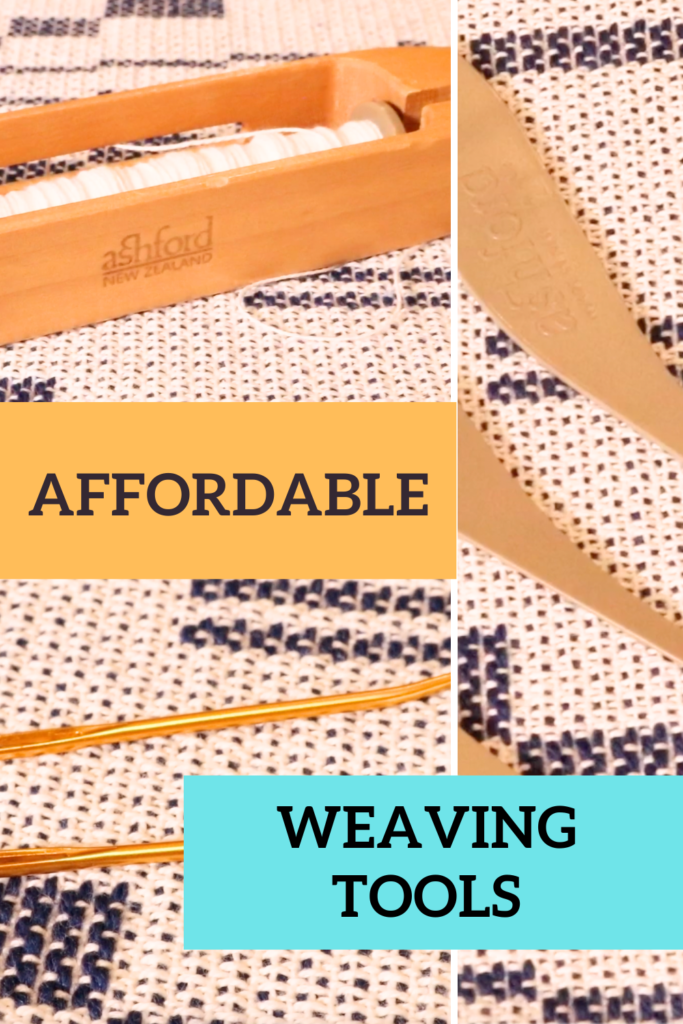
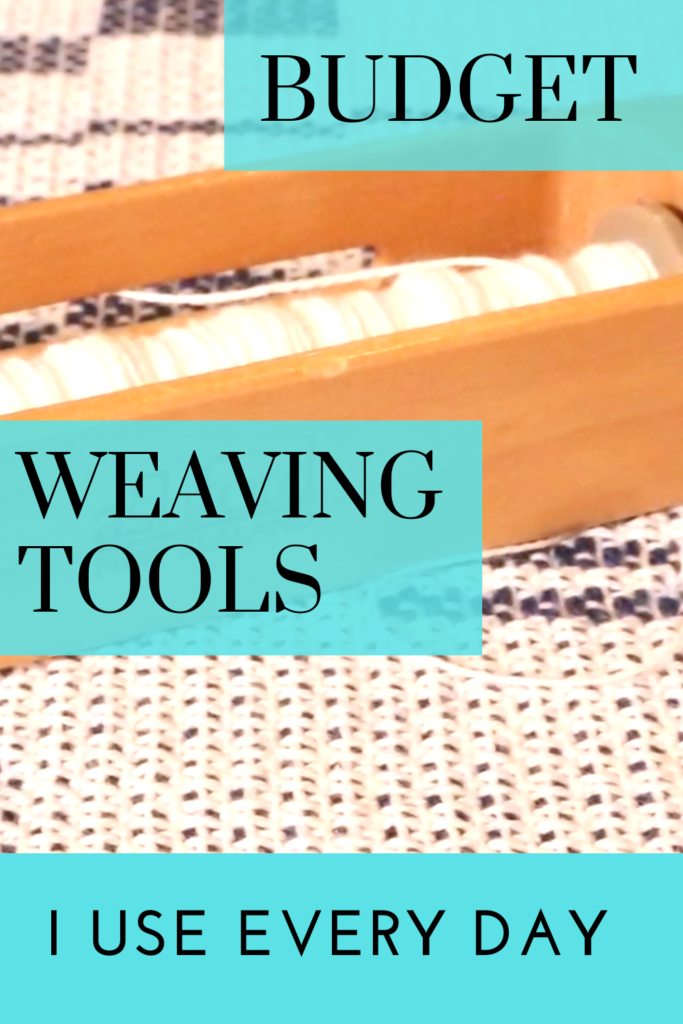
Affordable weaving tools I use every day

by Kelly 7 Comments

When you start a brand new hobby, it is easy to feel that you need to buy “all the tools” before you can begin and weaving is certainly no different.

But, once you have your loom (and the tools that come with the loom) there is not actually too much more you need to make a start.

And really, why overwhelm yourself by having to learn every new gadget and gizmo available when you can minimise your tools, stay within your budget and focus on using your loom?

*This post contains affiliate links. For more information, please see my disclosure policy.
Today I want to share with you the affordable tools I own and use constantly in my weaving studio.

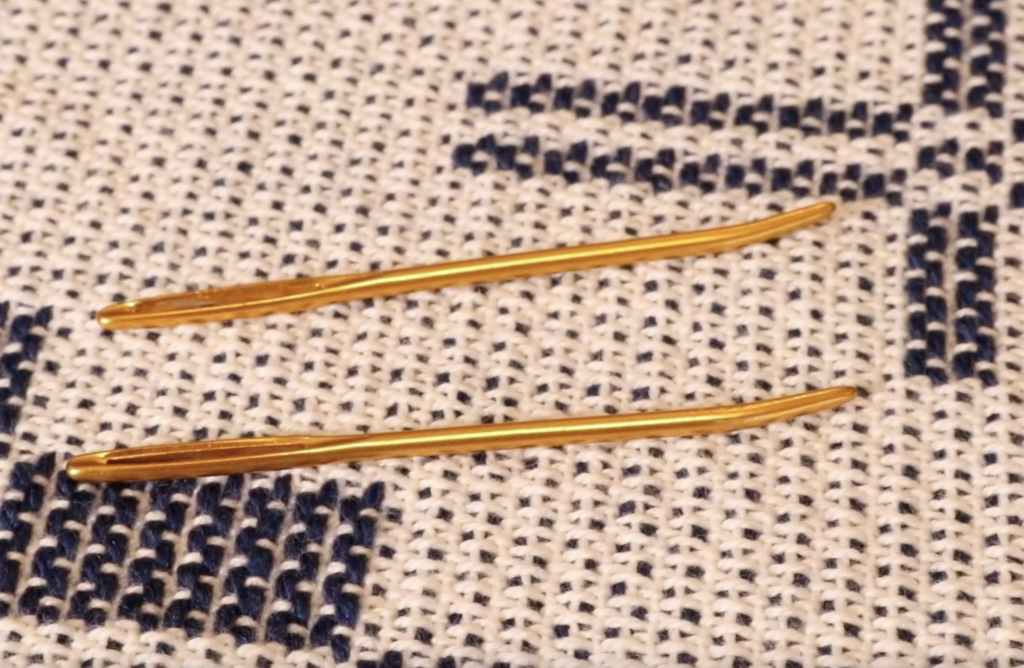
  1. Clover Bent Tip Jumbo Tapestry Needle

I have talked about these needles frequently (ok, perhaps a little too often!) but I can’t really sing their praises highly enough.

If you do hemstitching with any amount of regularity, you need these needles in your life. They are smooth but not slippery to hold, they have a large eye for easy threading, they slide through hand woven cloth like butter, they are gold (so they are hard to lose!) and the bent tip makes the angling of the needle for hemstitching just right.

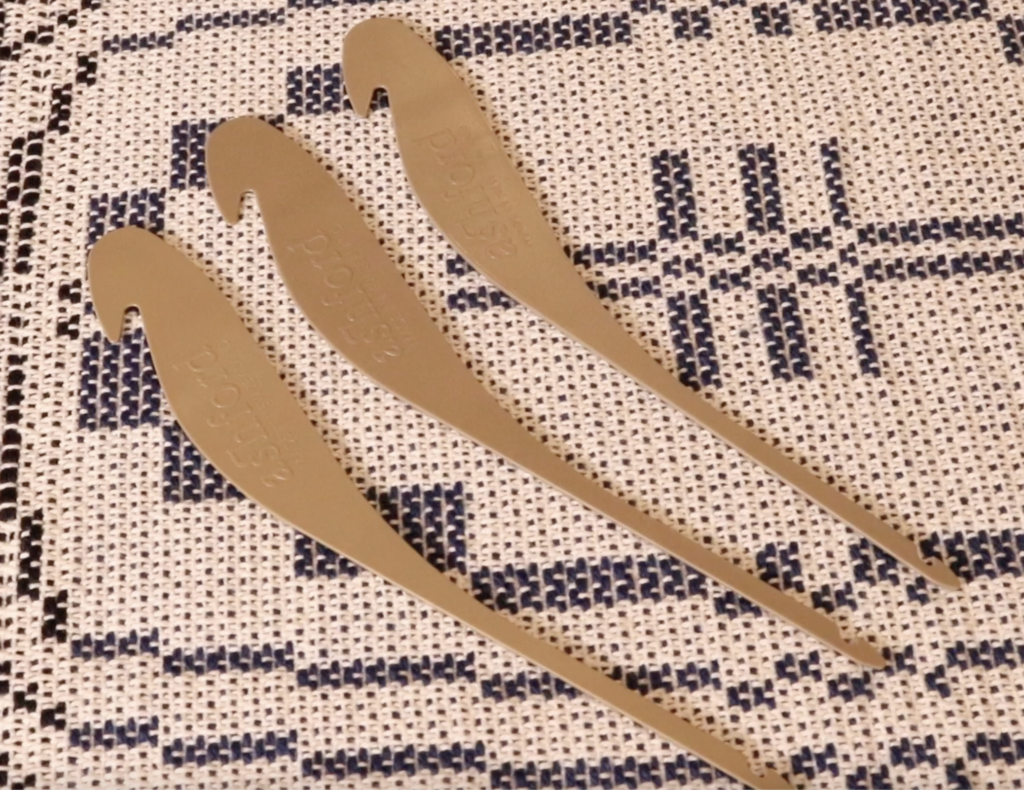
2. Ashford Double Ended Threading Hook

I was so happy when I first discovered these double purpose hooks. I abandoned my former metal threading hook and separate reed hook very quickly and have not used them since!

These double ended hooks are made of flat, durable, flexible plastic, which makes them perfect for manoeuvring through holes and slots on your rigid heddle loom. I also use them for floor loom and table loom weaving, the hole threading end is just right for threading string heddles.

Rather than having to use two different tools, you simple switch the end of the hook with a quick hand swivel to swap between threading holes and slots or string heddles and reed dents.

Their flat design makes them easy to store (I even use them as bookmarks in a pinch!) I suggest that you have several in order to have spares for the times you, ahem… can’t quite locate one when you need it! 🤭

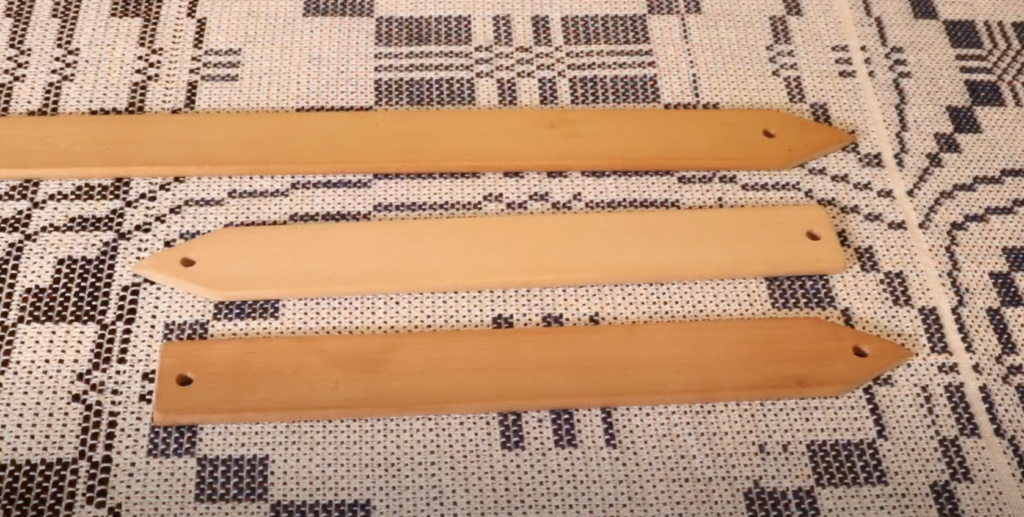
3. Pick up Sticks

Pick up sticks are one of the most economical ways to drastically increase the possibilities of weaving patterns on your rigid heddle loom.

A multi shaft loom can be quite a financial investment, but with your rigid heddle loom and a couple of pick up sticks, maybe a heddle rod or two, you can increase your shafts from two to three, four or more!

Using pick up sticks can be completely planned or quite random, depending on what you want to do. I think the really cool part for newer weavers is that you don’t really need to know what you’re doing to get some awesome results.

They are low cost to purchase new, or if you or someone you know are crafty with wood, you can make your own.

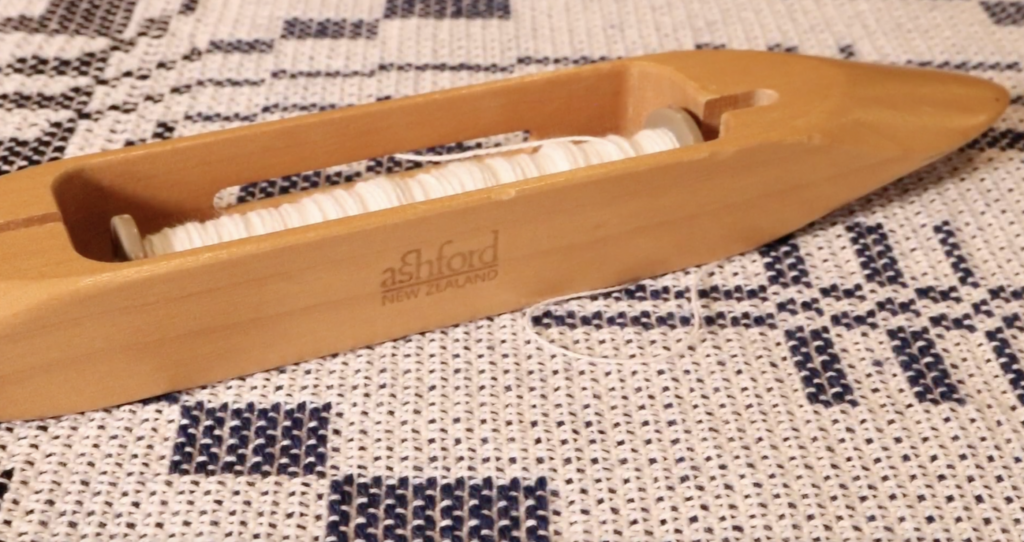
4. Boat Shuttle

This is a bit of a luxury item, but something that you may want to consider purchasing eventually. You can certainly just use your stick shuttles with no problems, but if you’re going to be weaving with finer yarns very often, a boat shuttle is really useful for quick weft winding and smooth weaving.

One thing to be aware of is the price difference in boat shuttles, depending on the company of manufacture, size and function, the wood used and whether it’s hand or machine crafted. My Ashford boat shuttles have served me very well for many years and were very affordable.

One day I may splash out on a special shuttle, but I’m very happy with these for now.

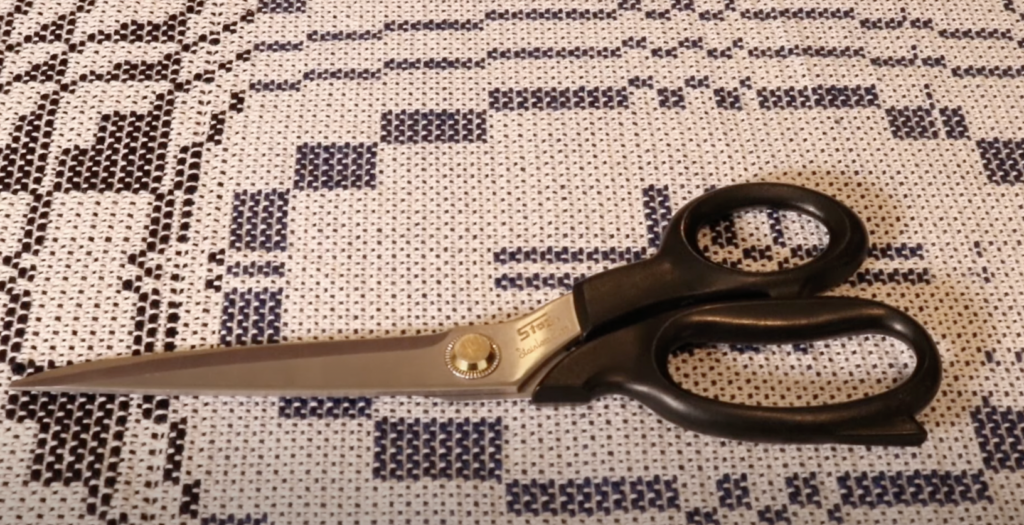
5. Dressmaker’s Shears

I love my dressmaker’s shears and have been using them for around 15 years. In that time, I’ve only had them sharpened a few times, so they have been a great deal for me.

My shears are the Stag brand, which unfortunately does not seem readily available now.

What I recommend is to not buy the cheapest, nor the dearest pair of shears, but go for the middle ground. Something similar to these looks good.

So, why dressmakers shears as opposed to regular or smaller scissors? Adaptability!

I can use my shears to snip yarn at the loom, make my warp, cut across my warp to take it off the loom AND cut through my handwoven fabric when I want to do that for a project. All of these things can be done with the one pair of shears, making them a very economical tool.

Well friends, although I do use other weaving tools, these 5 tools are the ones that are on regular standby and that I use almost daily in my weaving studio.

I hope this has been an informative and interesting post for you! If you would like to see this in video format you can do that right here:

Until next time…

Happy Weaving!

Filed Under: Rigid heddle weaving, Weaving Tagged With: budget weaving tools, weaving tools

What tools do I need for rigid heddle weaving?

by Kelly 13 Comments

When you buy a rigid heddle loom, it should come with a few standard tools, which usually include:
 
*This post contains some affiliate links, which means if you click and buy, I receive a small commission at no extra cost to you.

*A heddle/reed (usually 7.5 or 8 dent)
* A warping peg and clamp for direct warping
* A clamp for holding the loom to a table while warping
* A stick shuttle
* It may include a threading and reed hook
* Cardboard warp separators (may not come with all looms)
** Some looms now come with a double heddle block built in


Apart from the standard tools, there are extra things that are either essential or come in handy.
 
Other essentials:
 
*Scissors – sharp scissors will save you a lot of frustration
*Tape measure
*Warp separators (if not received with your loom)
*Yarn
*Inch ruler (for figuring out the sett of your yarn)
*Project journal for recording all your project information
*A big mug of tea (or is that just me?!)


                                    Handy optional extras:


*Tapestry needle
*Extra heddles
*Fringe twister
*Sewing machine 
*Serger
*Loom stand
*Tapestry beater, comb or household fork
* “S” hooks or other weights
*Calculator
*Instructional books (the  Book Depository (affiliate link) has a huge range of great weaving books and this post will help you to determine which book/s might be right for you).
*Online lessons are an awesome tool to get started. You can check out my Youtube channel and my Online Weaving School for further help. 


This post is a companion post to this Youtube video, so pop over and watch if you want to see the tools and hear my explanations.


Something to remember when you’re just starting out with rigid heddle weaving is that you don’t need All.The.Things right away! The tools that come with a newly purchased loom are sufficient to get you started, and you can gradually build from there.

If you have any questions, don’t be shy, leave me a comment below.

Until next time…

Happy Weaving!

Filed Under: Rigid heddle weaving Tagged With: learn to weave, rigid heddle loom, rigid heddle weaving, weaving tools

Primary Sidebar

About Kelly Casanova

Join Kindred Creatives!

Hand crafted boat shuttles

Categories

Archives

Meta

  • Log in
  • Entries feed
  • Comments feed
  • WordPress.org

Copyright © 2026 Kelly Casanova Weaving Lessons on the Foodie Pro Theme