Are you looking for the best rigid heddle weaving books to inspire your next project or deepen your weaving knowledge? You’re in the right place!
In this post, I’m sharing my favorite books for rigid heddle loom weaving—perfect for beginners through to more advanced weavers. These are the books I return to again and again, and many have helped shape my weaving journey.
📌 Pin this post for later so you always have a list of inspiring weaving reads handy!
If you’re lucky enough to have a great local library, it’s worth checking to see if they carry any of these titles. Many weaving guilds also have a library you can borrow from. But if you’re like me and your local options are a bit limited, this list can help you choose the perfect book to add to your personal weaving library.
This post contains affiliate links, which means I may earn a small commission if you click through and make a purchase. I only recommend books I truly love and use myself.
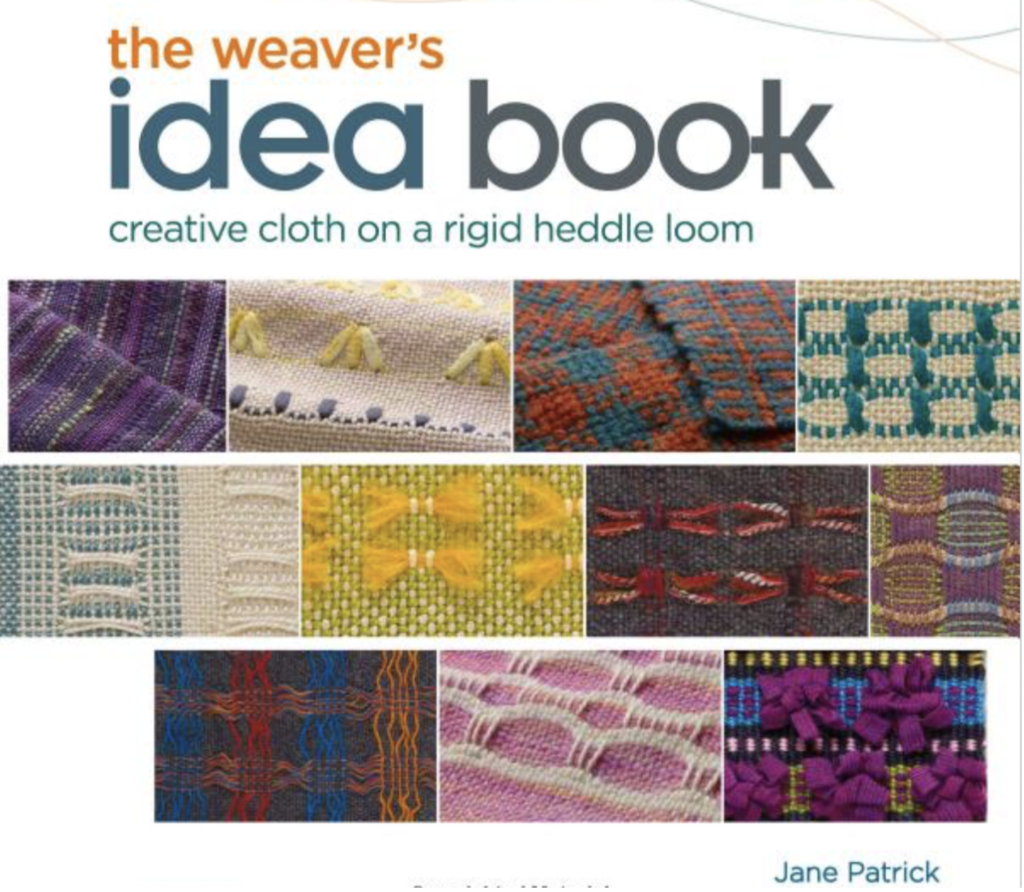
If you can only buy one rigid heddle weaving book, let it be this one. This was my very first weaving book, and I still refer to it constantly. It’s packed with inspiration and guidance—ideal for beginners but with plenty to explore as you gain experience. Spiral-bound for easy reference while weaving, it covers everything from the basics to more advanced textures and techniques. A must-have!
This is a beautiful, beginner-friendly book filled with practical advice on setting up your loom and starting your first projects. Liz has a knack for making things simple without talking down to you. The projects are approachable and satisfying for new and seasoned weavers alike.
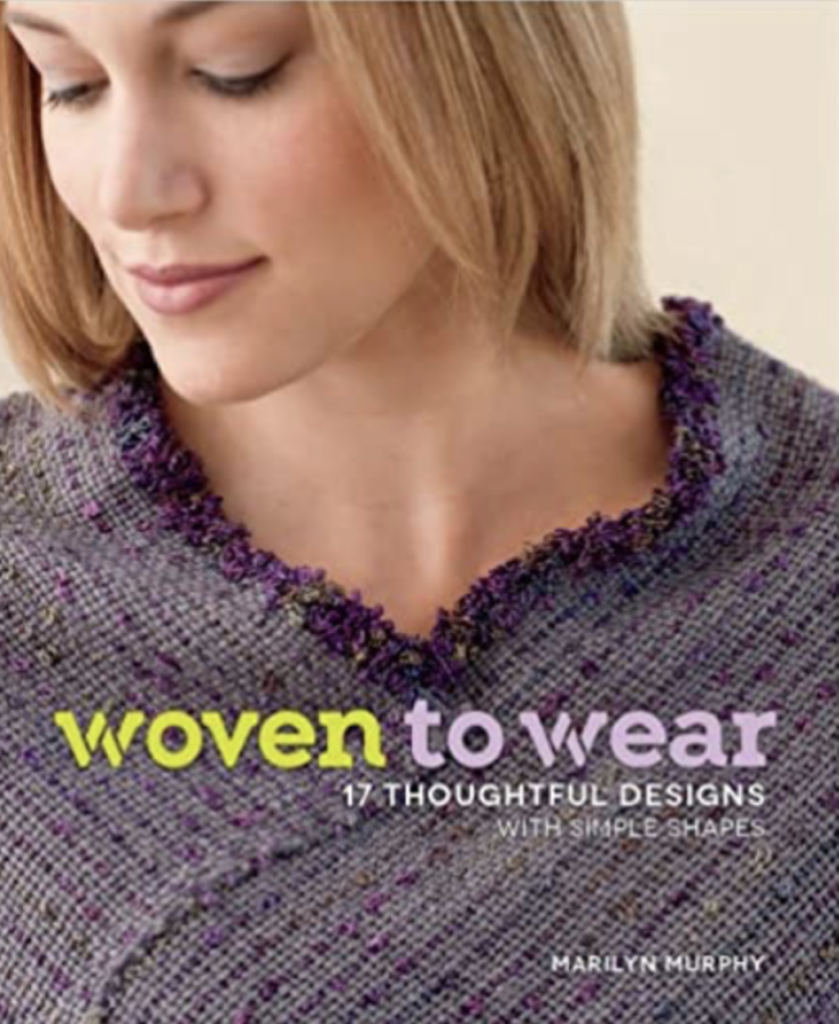
If you’re dreaming about turning your handwoven cloth into wearable art, this book is for you. With clear instructions and large, simple garment shapes, it’s beginner-friendly but full of creative inspiration. This book sparked my excitement for sewing with handwoven fabric!
This book is a treasure trove of information and ideas—perfect for curious beginners and growing intermediate weavers. While some sections may feel advanced early on, you’ll appreciate its depth as your skills develop. Topics like weaving with two heddles or more and creating transparencies are covered in detail.
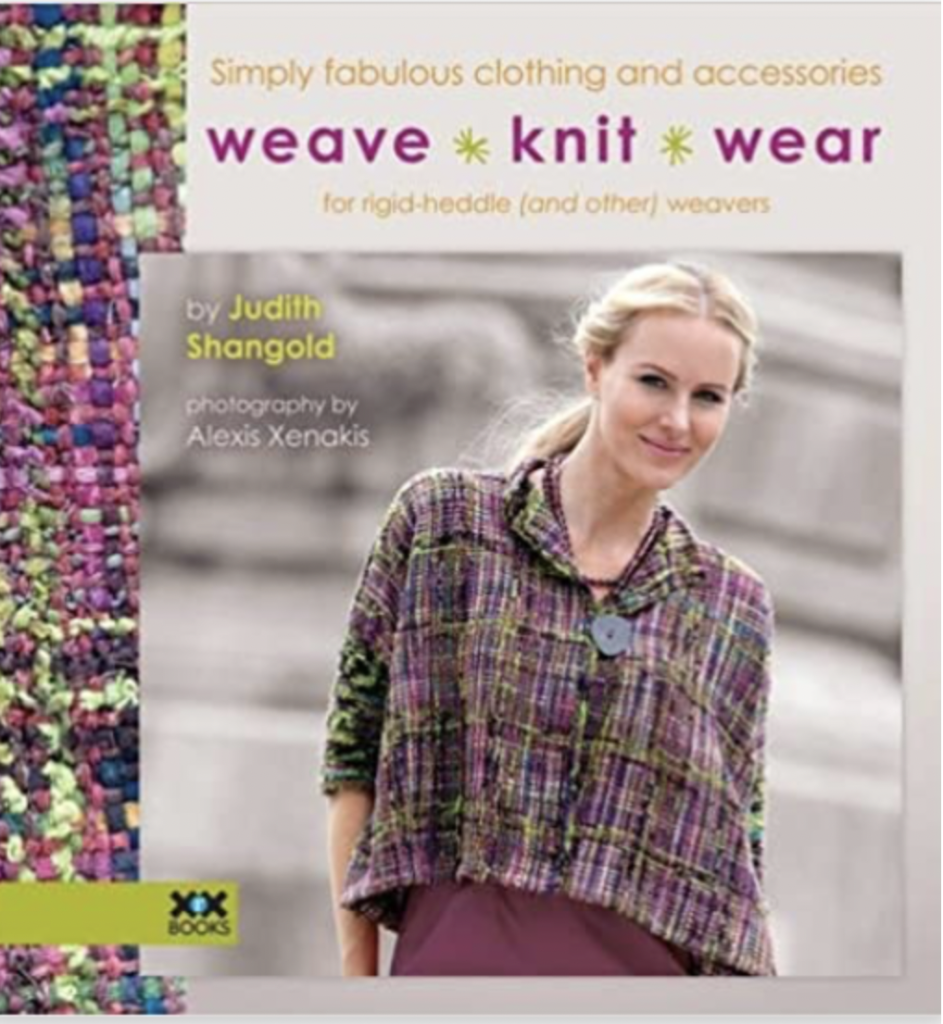
This book opened my eyes to the creative possibilities of rigid heddle weaving combined with knitting and crochet. Judith uses mostly plain weave but brings designs to life with color, texture, and clever garment construction. It’s incredibly inspiring and pushes you to think beyond scarves and tea towels.
If wearable weaving is your thing, you’ll love this book. It features over 20 projects made from colorful, handwoven cloth—each one wearable, customizable, and beginner-friendly. I especially appreciate the tips on adjusting garment sizing for your own fit.
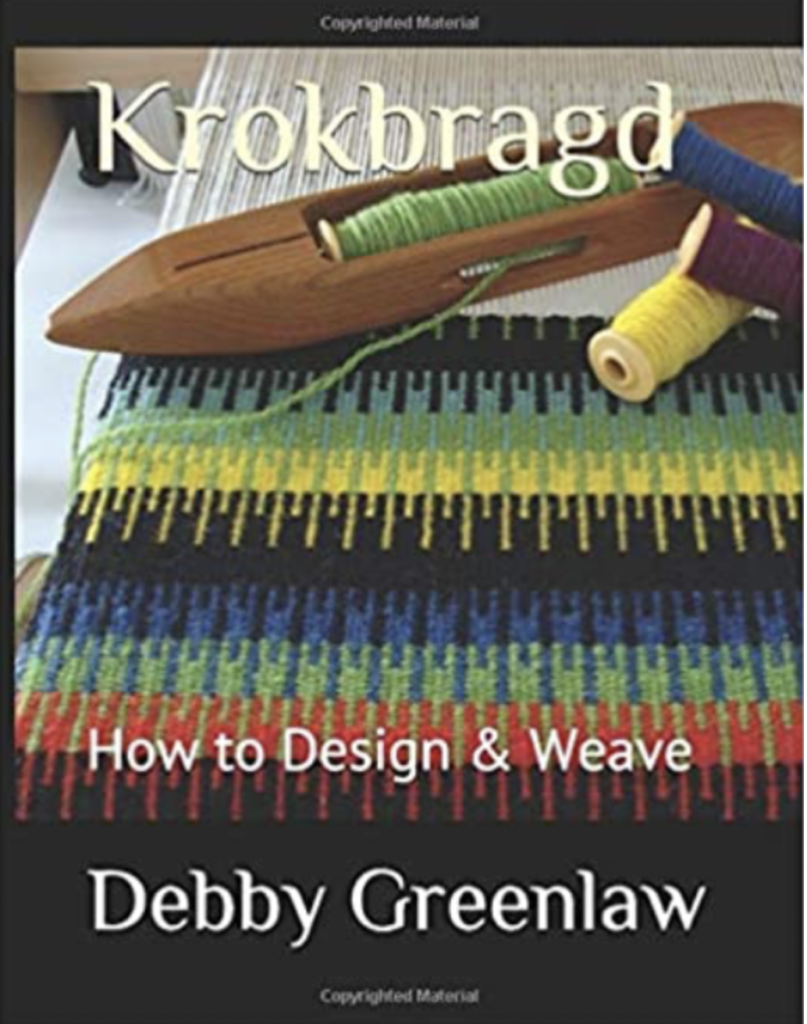
This is a brilliant guide for rigid heddle weavers who want to dive into krokbragd, a traditional and richly patterned weave. Debby’s clear explanations make this structure feel approachable, even for first-timers. I wrote a full review of this book here if you want to learn more.
Tip: Debby has since released Krokbragd Patterns—a fantastic follow-up for more design inspiration!
If you’re ready to slow down and make something with big visual impact, this book is a must. Myra’s take on overshot-style designs for the rigid heddle loom is beautiful and original. The projects are breathtaking, and she has since released a companion volume, Crazyshot Companion, to keep the inspiration going.
🤓 Further Resources – To learn more about this overshot style (or “Branoe” for Russian style) I have a playlist on Youtube and also an online class to get you started with the technique.
🎥 Want to See These Books in Action?
I made a video discussing many of these books in more detail. While it doesn’t include the newer additions to my list, it’s still a great resource if you prefer to watch rather than read 👇
📚 Browse My Full Book List
To see all my favorite weaving books in one easy-to-browse place, visit my Amazon shop. You’ll find rigid heddle weaving guides, project books, inspiration for wearable weaving, and more.
❤️ Final Thoughts
Whether you’re just getting started with rigid heddle weaving or looking to expand your skills, these books are truly worth adding to your collection. I hope this list helps you find your next favorite read—and your next great project.
If you’ve read a book you think I should add, let me know in the comments or send me a message. I’m always on the lookout for more weaving inspiration!
If you’re looking for book recommendations for 4 shaft or more weaving, I have you covered!
I love books, so it makes sense that I am a huge lover of good weaving books. It can be hard to know which books are worth buying, especially if you’re buying online and can’t view the book before purchase.
I have already made a video on my favourite rigid heddle weaving books, but haven’t talked about my floor loom or multi shaft books.
This is certainly not an exhaustive list, and I definitely plan on increasing my collection over the years, but these are a few that I have found particularly good. *This post contains affiliate links
I will start with my absolute favourite. If, in some terrible circumstance, I had to choose just one of the following books to keep, this one would be it!
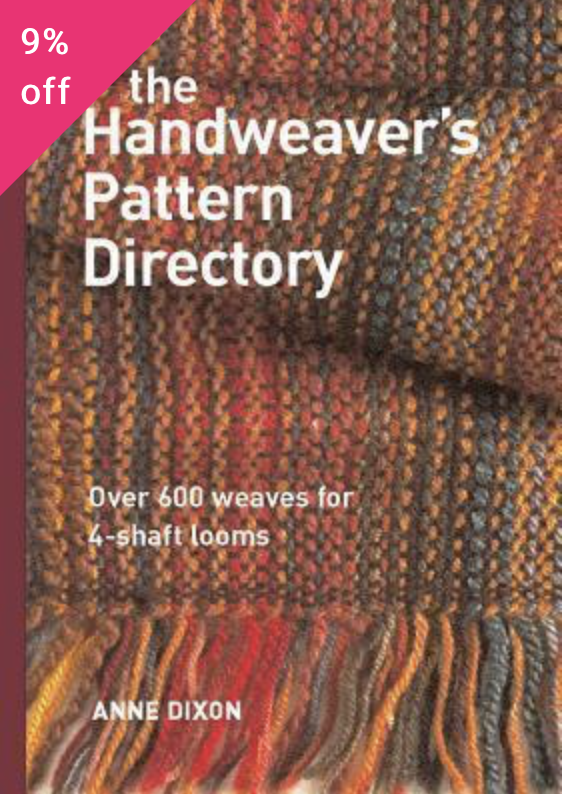
The Handweaver’s Pattern Directory by Anne Dixon only covers 4 shaft weaves, and yet, with the number of pattern drafts you could feasibly use this book for years before even considering buying an 8 shaft book. There is nothing I do not love about this book! Yes, it is a little expensive, but I consider it my “go to” for any 4 shaft weaving. It’s a hardcover book with spiral binding. This is awesome because you can lay the book flat to follow a threading or treadling pattern, and the hard cover prevents any damage to the pages. I’ve had mine for many years and it still looks as good as new. The layout shows you exactly what you can expect from each draft by providing colour pictures and yarns used to achieve each one – great for those just starting out.
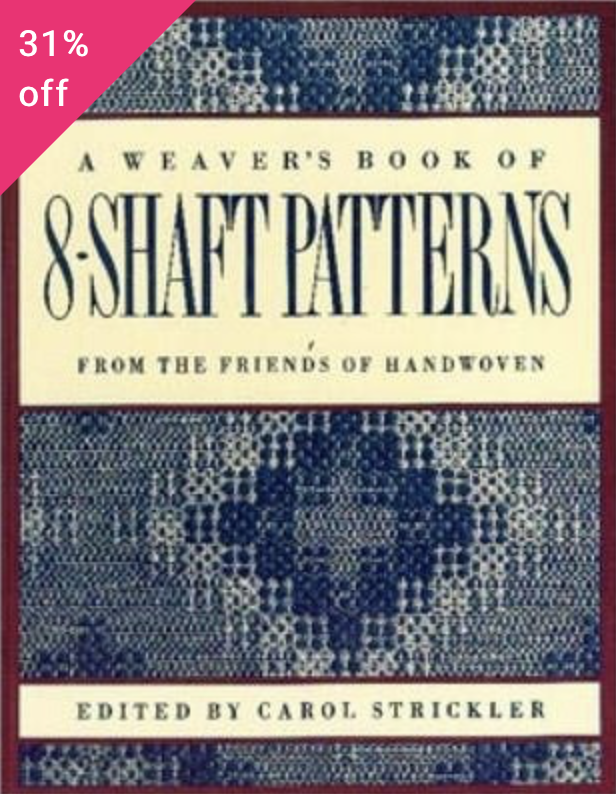
Once again, not a cheap book, but this one is an absolute classic! Carol Strickler’s A Weaver’s Book of 8 Shaft Patterns has plenty of information on 8 shaft weaves, explanations of tie ups and treadlings, and black and white pictoral representations of each weave (there are almost 900 photos). Individual yarn suggestions are not given, but in each new chapter, suggestions are made for particular weave structures. Many of the drafts have historical information – where the draft came from (if known) or where it is adapted from, which provides the keen weaver the opportunity for further research if desired.
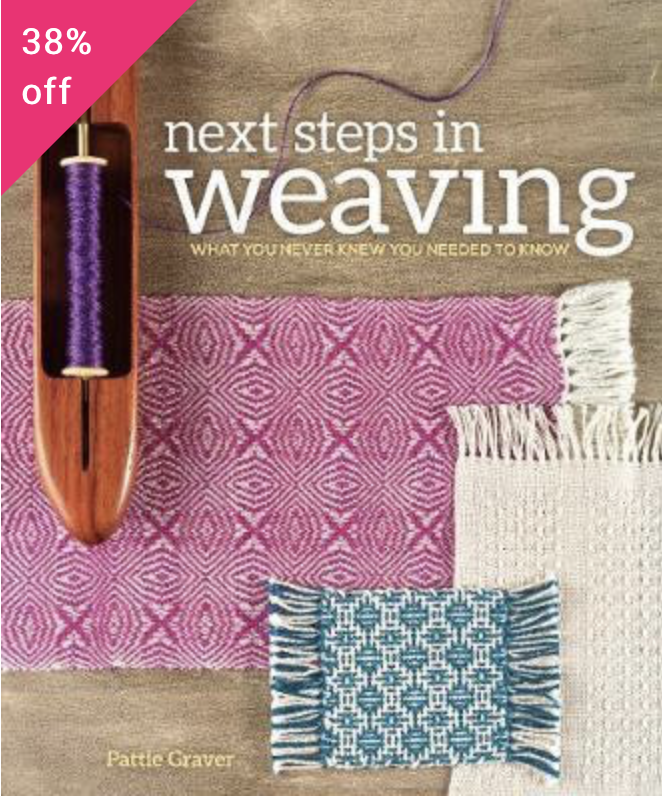
Next Steps in Weaving by Patty Graver has been a great one to add to my library. Published in 2015, it has a more modern and fresh feel. The layout is uncluttered but still contains a lot of information. I admit that I read this book when it first came out and I was in the infancy of my multi shaft journey. I felt like some of it was a bit beyond me at the time. However, when I cam back to it later (after a lot of research and practice) I found that the language now made sense and it was in fact a very helpful book!
The beginning of the book goes over understanding terminology and drafts (something that many new weavers struggle with!) She explains twills and twill orders and then launches straight into the projects. This is my style of learning and teaching – project based! To get stuck in and actually learn something as you do it, rather than be stuck at the starting line with a lot of theory and fear of how to put it into practice. Patty starts with some basic twill projects, then shows more advanced versions to expose the reader to what is possible with variations and colour. The threading charts for the projects are all colour coded, which I think is a really great visual learning cue for newer weavers, and even for more seasoned weavers who just want to follow a threading chart in a simple format.
There is a lot more I could say about this book, but then this post may turn into a book itself! So, I’ll finish up with this. It’s a great book, the projects and samples are beautiful and inspiring, and even if, like me, you find it a little overwhelming to begin with, it is a book you can keep going back to over and over.
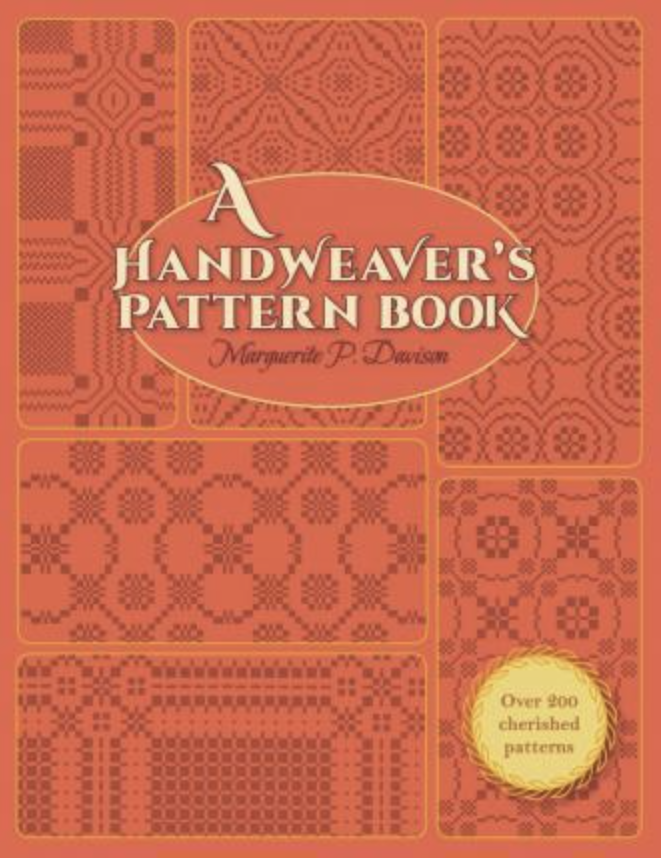
A Handweaver’s Pattern Book by Marguerite P Davison is another well know weaver’s classic. It was first published in 1944 as a green book, the orange one being a more recent and publication. Thanks to the generosity of a student, I now own the green book as well. This book has 200 pattern drafts and has 4, 6 and 8 shaft weaves. The layout is a little more old fashioned (though there are black and white photo representations of most drafts) and some may find it difficult to decipher the way in which the drafts are drawn. That should not put off the adventurous weaver though, as it is very beneficial to be able to read all styles of drafts so that you can decipher them, no matter what country or time period they are from.
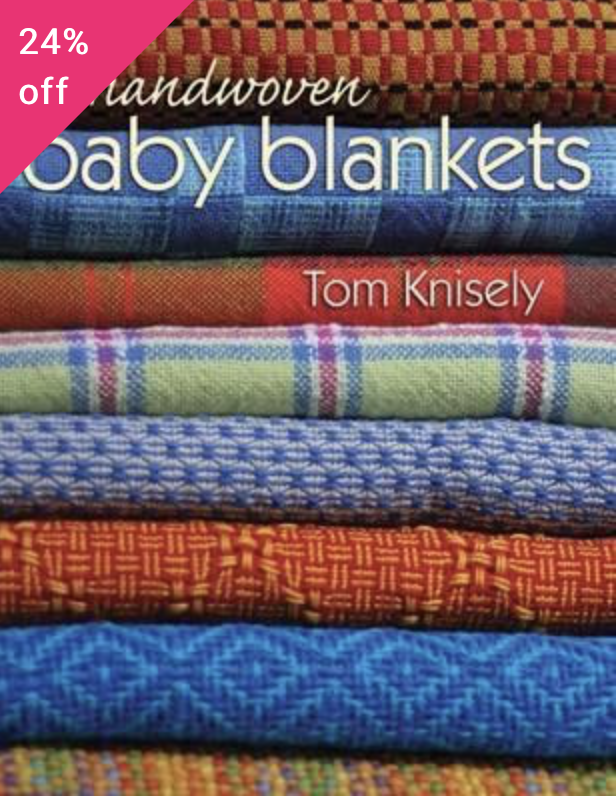
This is one of those books that you read and just think, “that is a lovely little book”. Simple, lovely big photos, nice colour. Tom Knisely’s Handwoven Baby Blankets starts out with a useful section on the basics of baby blanket weaving, such as sizes, colours and materials.
There are over 30 projects and it includes both 4 and 8 shaft. Every project has specific yarn and colour descriptions. If you’re interested in weaving baby blankets, I highly recommend this delightful book!
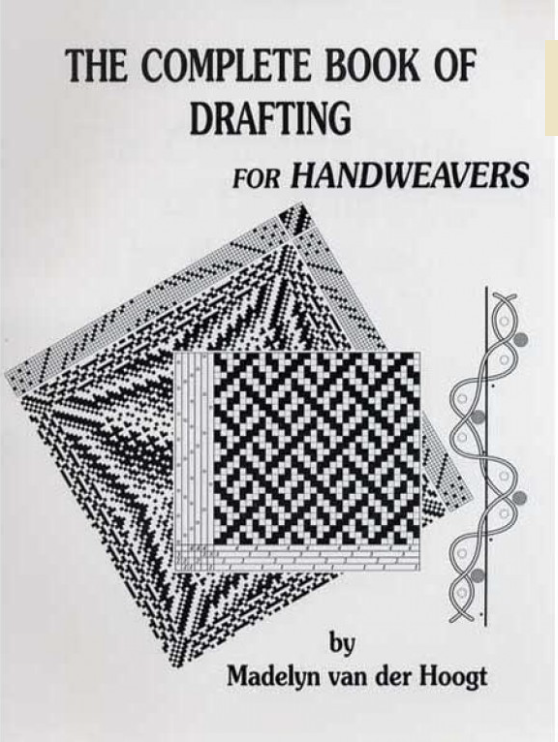
Probably my most asked question from multi shaft weavers is “how do I read a draft?” The next step on from understanding how to read and use a weaving draft is to begin drafting them yourself. This is something that is of huge interest to me, but something I have not devoted enough time to as yet and still have much to learn. If you are interested in drafting for yourself, Madelyn van der Hoogt’s The Complete Book of Drafting for Handweavers is going to help a lot! While I confess that I have not made my way through the entirety of the book yet (it is in a workbook style with drafting exercises for you to follow), I intend to do so as it contains such valuable information. This book is available from The Woolery.
If you’re as interested in coverlets as I am, these are my most loved coverlet books I own:
My last recommendation is for those who are keen to branch out into double weave on your floor loom or table loom.
Doubleweave by Jennifer Moore. Whether you are wanting to explore weaving double cloth or double (even triple) width, this popular book will be a very valuable addition to your collection.
I do have more weaving books in my collection, but these books I’ve listed and described are the ones that I am most happy to recommend and really feel that they would benefit your weaving library too.
I hope you have found this post helpful, please let me know if you have any questions. Do you own any of these books? Which is your most used?