• Skip to main content
  • Skip to primary sidebar

Kelly Casanova Weaving Lessons

  • Hi! I’m Kelly!
    • Disclosure
  • Online Weaving School Class Index
    • Common account issues
    • Common technical issues
    • What do I get with a membership?
  • New to rigid heddle weaving? Start here!
    • Never heard of the rigid heddle loom?
    • How to weave neat edges on the rigid heddle loom
    • Rigid heddle weaving
    • Rigid Heddle Weaving Patterns
  • Patterns
  • Subscribe

hand woven towels

Why Not All Towels Are the Same: Weaving Kitchen, Hand & Bath Towels

by Kelly 8 Comments

I find that towels are one of the most satisfying things to weave. They are practical, gift-worthy, and so customisable. If you’ve ever wondered how to weave towels that are absorbent, durable and enjoyable to use, this guide will walk you through what you need to know.

Not all towels are created equal. A kitchen towel has different demands to a hand towel, and a bath towel is a whole other level again.

In this article, I’ll walk you through the three main types of towels you can weave – kitchen towels, hand towels and bath towels. We will talk about:

  • suitable yarns for each
  • suitable loom types
  • weave structure considerations
  • and links to patterns and resources if you want a proven starting point

1. Kitchen Towels (Tea Towels)

Kitchen towels (we call them tea towels in Australia!) are usually the first towels handweavers make, and they’re an excellent place to start if you’re learning how to weave towels.

Kitchen towels are such a great place to start. They’re quick to weave, highly practical, and a fantastic way to experiment with colour, structure and yarns.

What a kitchen towel needs to do:

  • Be highly absorbent
  • Dry quickly
  • Stand up to frequent washing
  • Feel pleasant but not fluffy

Best yarns for kitchen towels (absorbent & durable)

  • Cotton (8/2 or 10/2 is ideal)
  • Cotton-linen blends (I love 8/2 cottolin for kitchen towels)
  • Linen (beautiful, but better for experienced weavers)

Avoid wool or acrylic – they simply don’t absorb well enough. They will repel, rather than absorb moisture.

I have a more detailed article about which cotton to use for kitchen towels here.

Best looms for weaving kitchen towels

  • Rigid heddle looms (perfect for beginners)
  • Table looms
  • Floor looms

Kitchen towels are very forgiving and work beautifully on a variety of looms.

Best weave structures for kitchen towels

  • Plain weave (simple and effective)
  • Waffle weave (especially absorbent)
  • Simple twills
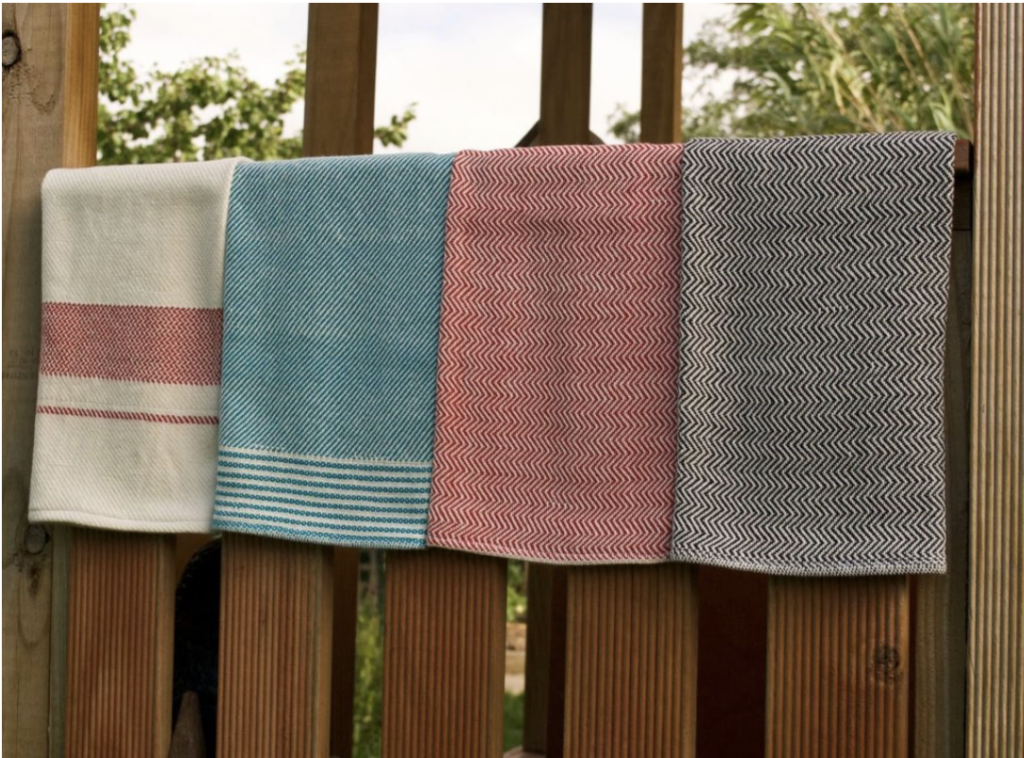
  • A combination of structures for a beautiful, classic look like these
  • Summer and Winter actually makes beautiful towels
2. Hand Towels

Hand towels bridge the gap between kitchen towels and bath towels. They need to be practical, but they’re also something you see and touch every day in the bathroom or kitchen.

Hand towels sit somewhere between kitchen towels and bath towels – they need to be absorbent, but also soft and attractive. They are usually thicker in weight and larger in size than a kitchen towel.

What a hand towel needs to do

  • Absorb water efficiently
  • Feel good against the skin
  • Look nice hanging in a bathroom or kitchen

Best yarns for weaving hand towels

  • 8/4 cotton (will weave a thicker fabric than 8/2 cotton)
  • Cottolin (cotton/linen blend – once again a heavier weight is preferable)
  • Knitting cotton
  • Cotton blends (choose natural fibres)

You can afford to prioritise softness and loftiness here more than with kitchen towels.

Best looms for weaving hand towels

  • Rigid heddle looms (with slightly wider widths)
  • Table looms
  • Floor looms

If weaving on a rigid heddle loom, consider using pick up sticks or two heddles to allow for more interesting structures.

Best weave structures for hand towels

  • Twills
  • Waffle weave
  • Honeycomb
  • Subtle textured patterns

3. Bath Towels

Bath towels are the most advanced towel project for handweavers because they are a large size and may require a more significant time investment if using a technique like loop pile (keep reading if that piques your interest!)

Bath towels are the most ambitious towel project, but can be very rewarding.

What a bath towel needs to do

  • Be very absorbent
  • Feel soft against the skin
  • Be strong enough for heavy use
  • Have good drape
  • Be regular wash friendly

Best yarns for weaving bath towels

  • Fine cotton (8/2 or finer)
  • Unmercerised cotton for maximum absorbency
  • Cotton/bamboo blends for softness
  • Other plant fibres can also be used successfully, like hemp, for example.

Bath towels usually require more yarn and more weaving time, so quality matters.

Best looms for weaving bath towels

  • Floor looms (ideal)
  • Large table looms
  • Large rigid heddle looms

While bath towels can be woven on rigid heddle looms, width limitations often mean compromises or seaming. This won’t be an issue if your RH loom is 32″ or larger.

Best weave structures for bath towels

  • Waffle weave (classic bath towel structure)
  • Twill variations
  • Textured blocks
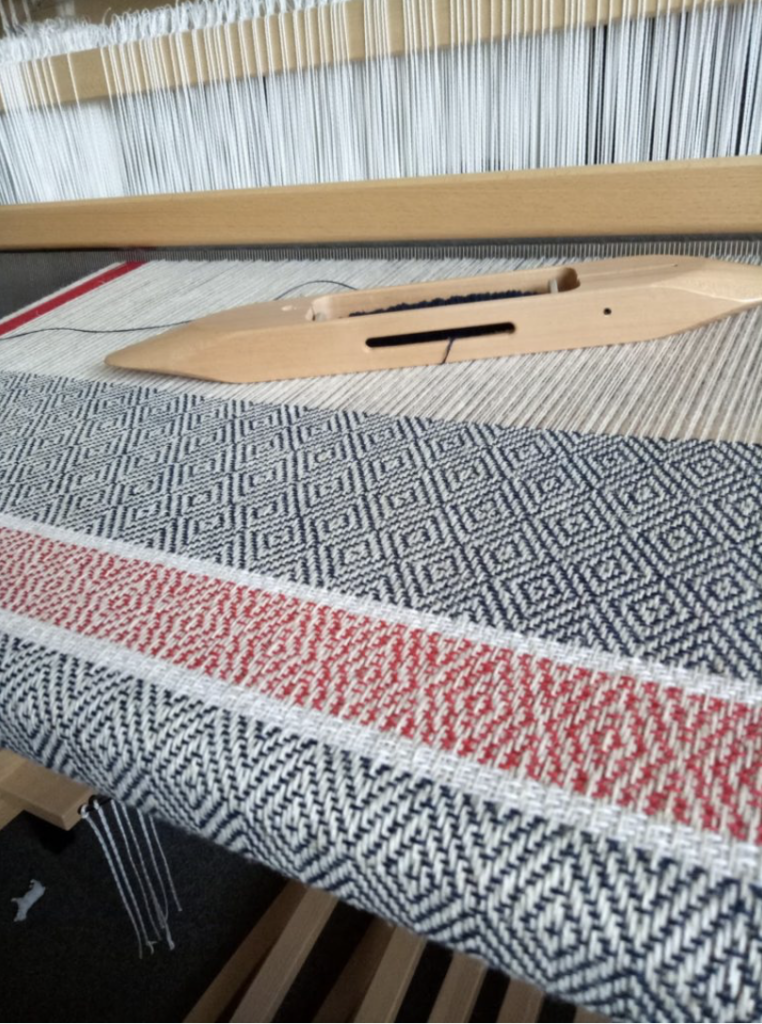
  • Loop pile or cut pile. Loop pile is the technique used for most commercially available towels. Cut loop is a little more luxurious and velvety but can be less absorbent. The loop pile technique is not hard to learn and is worked on a plain weave backing. My Lux Hand Towels pattern used loop pile as a decorative border.

Syne Mitchell has a handy section on loop pile in her book Inventive Weaving on a Little Loom, page 178- 181.
How to Choose the Right Towel Project for Your Loom and Skill Level

If you’re new to weaving towels, start with kitchen towels. Once you’re comfortable with yarn behaviour, finishing and shrinkage, move on to hand towels, and then tackle bath towels when you’re ready for a bigger commitment.

Each type teaches you something different, and all of them result in something genuinely useful.

Towel Weaving Resources (Kitchen, Hand & Bath)

If you’d like to learn more about weaving towels, I have a range of resources to help:

  • Kitchen towel patterns → 

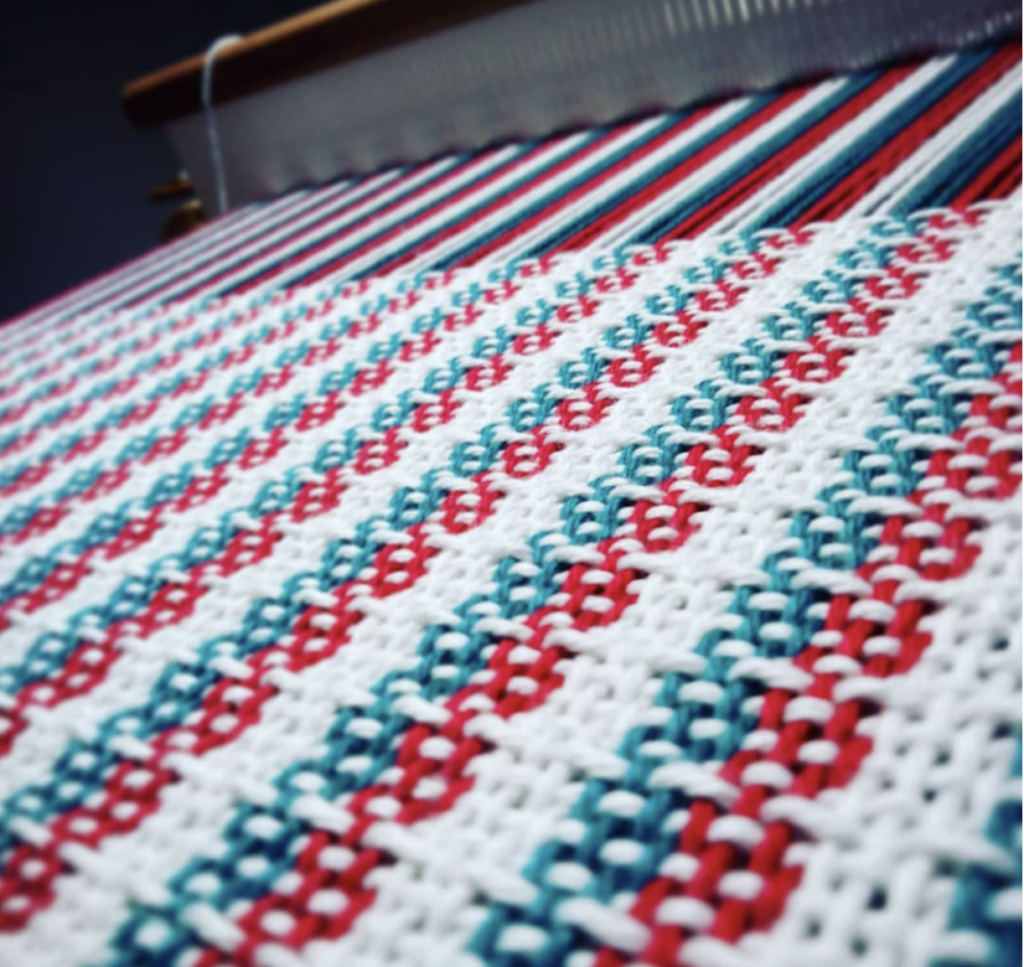
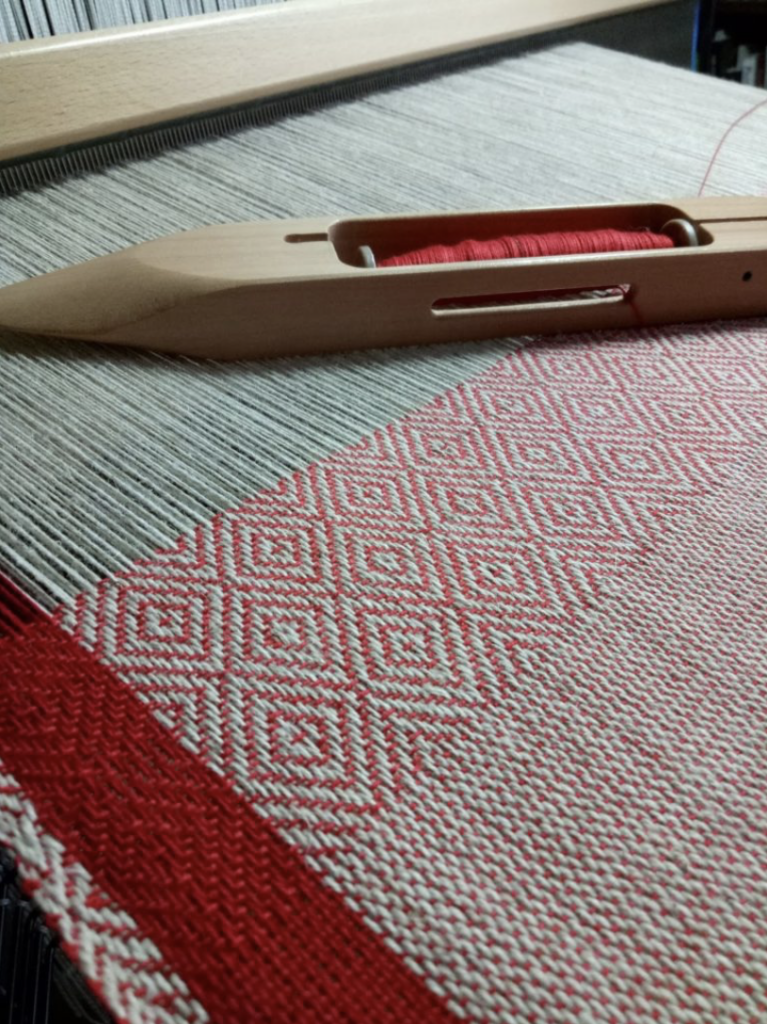
Diamond Stripe Towels

Happy Fibonnaci Towels

Bright & Beautiful Towels

Floor Loom 4 Shaft Class Towels

  • Hand towel patterns → 

Lux Hand Towels

Wash Your Hands Towels (free pattern)

These patterns remove the guesswork so you can focus on enjoying the weaving. Here are some other resources related to weaving towels:

  • How to hem hand woven towels
  • How to hem hand woven by hand (no sewing machine)
  • Which cotton weight for kitchen towels
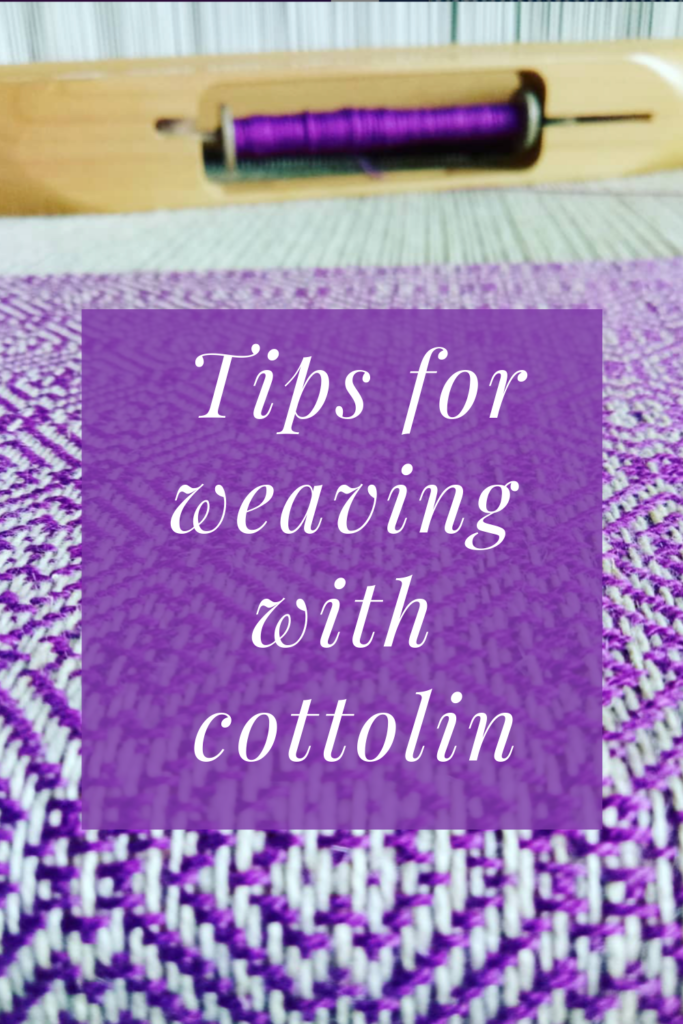
  • Tips for weaving with cottolin
  • New towels for our new home

Frequently Asked Questions About Weaving Towels

What is the best yarn for weaving towels?

For most towel projects, cotton yarn is the best choice due to its absorbency, durability and ease of care. I like 8/2 unmercerised cotton as it’s so easy to work with. Linen and cotton blends can also be used, particularly for kitchen and hand towels.

Can you weave towels on a rigid heddle loom?

Yes! Kitchen towels and hand towels are very well suited to rigid heddle looms. Bath towels are possible, but width limitations often make table or floor looms a better choice.

What weave structure is best for towels?

Waffle weave is one of the most popular structures for towels because of its excellent absorbency, but plain weave, twill and honeycomb can all work beautifully depending on the towel type.

Final tip: Always sample when in doubt. Towels change dramatically after washing, and sampling will tell you more than any chart ever could. This is especially important for weave structures like waffle weave, which has higher rates of shrinkage than plain weave.

I hope this guide has been super helpful to you 😊

Until next time…

Happy weaving!

*This post contains affiliate links. For more information, please see my disclosure policy here.
Filed Under: 4 shaft weaving, 8 shaft weaving, All about looms, Weaving, Yarn Tagged With: bath towels, hand towels, hand woven towels, kitchen towels, weaving towels

New towels for our new home!

by Kelly 19 Comments

I had two reasons for warping up my floor loom for some new towels recently.

With our house moving date looming closer, I felt the need for a “sanity project”. While all of my yarns and equipment were being packed away, I kept a few cones aside so that I would have something to weave during the in between time of packing up house and moving to the next one.

*This post contains affiliate links. Please see my disclosure policy for further details.

I also wanted to have some brand new kitchen towels to adorn our “new to us” kitchen, as all my current towels are ageing and starting to look a little shabby. I wanted special new towels for our special new place. This project turned out to be special in another way, but I’ll tell you about that shortly.

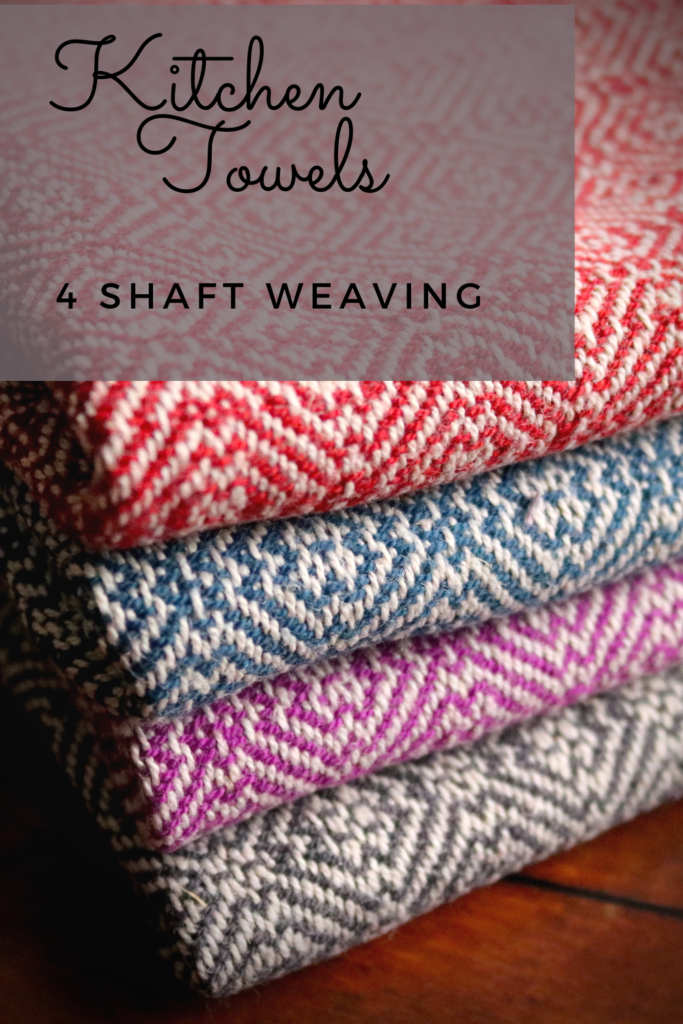
I chose one of my all time favourite drafts for kitchen towels, a 4 shaft twill on M and W threading. I love the design and I love the resulting fabric so I didn’t have to think too hard on that one!

The threading for this draft is not difficult and the tie up is a regular twill tie up – all things that I’m very familiar with and that make the process easy for me. I used my Louet David 2 Floor loom (link is for the new David 3), which has 8 shafts but for this project I wove on 4 shafts.

Having woven kitchen towels with this draft before, I was also sure of the yarn I wanted to choose. My favourite weaving yarn for soft and absorbent tea towels is 8/2 cottolin. The cottolin I use is 60% organic cotton and 40% linen. It’s a great yarn for those who want to incorporate a little linen but want something that is a bit easier to use than 100% linen.

For the warp I used:

Maurice Brassard 8/2 cottolin in Blanchi

For the wefts I used (one colour for each towel):

Maurice Brassard 8/2 cottolin in Charcoal

Maurice Brassard 8/2 cottolin in Magenta

Maurice Brassard 8/2 cottolin in Royal

Maurice Brassard 8/2 cottolin in Brick

…………………………………………………………………………………………………………………………………………………………..

Tips for working with cottolin:

  • Cottolin sheds a lot of fibre whilst on the loom. It is a more course yarn than just cotton on it’s own, which is very smooth. I sometimes opt to wear and apron while weaving and try not to wear anything black! The shedding nature may be irritating to some who are sensitive, it’s not a big problem for me but does make me sneeze sometimes! It also means that you will want to vacuum your loom when your project is finished or even during the project if the tiny stray fibres bother you.
  • It feels quite stiff on the loom. I remember the first time I wove with cottolin, I felt disappointed that the towels felt a bit rough. A hot machine wash was like a touch of magic – the towels softened up and the pattern came together beautifully. This is another thing that I love about cottolin, it softens more with each wash.
  • Your first one or two uses of your towels to dry dishes will not be optimal. The cottolin can leave small fibres on your dishes initially, and the towels are not as absorbent as they could be. Don’t lose faith! With a bit of use and a couple of washes, they will become a huge asset to your kitchen!

…………………………………………………………………………………………………………………………………………………………………

C

I tried some different techniques in the weaving of these towels, to help counteract some of the issues arising as I wove.

Firstly, I doubled my floating selvedges – something I haven’t done before. My reasoning for this was that for the towels I’ve woven in the past, the first place they would start to wear down was at the edges. A doubled floating selvedge gave a more defined, and stronger edge to the fabric.

Secondly, I switched to beating on an open shed. It is very much my habit to beat on a closed shed, but my beats were feeling a little stiff and the weft wasn’t settling as nicely as I would like. As soon as I switched to open shed beating, everything settled down and became much more fluid. Lesson learned – Don’t be stuck in your ways, be open to experiment from project to project as needs dictate 😉

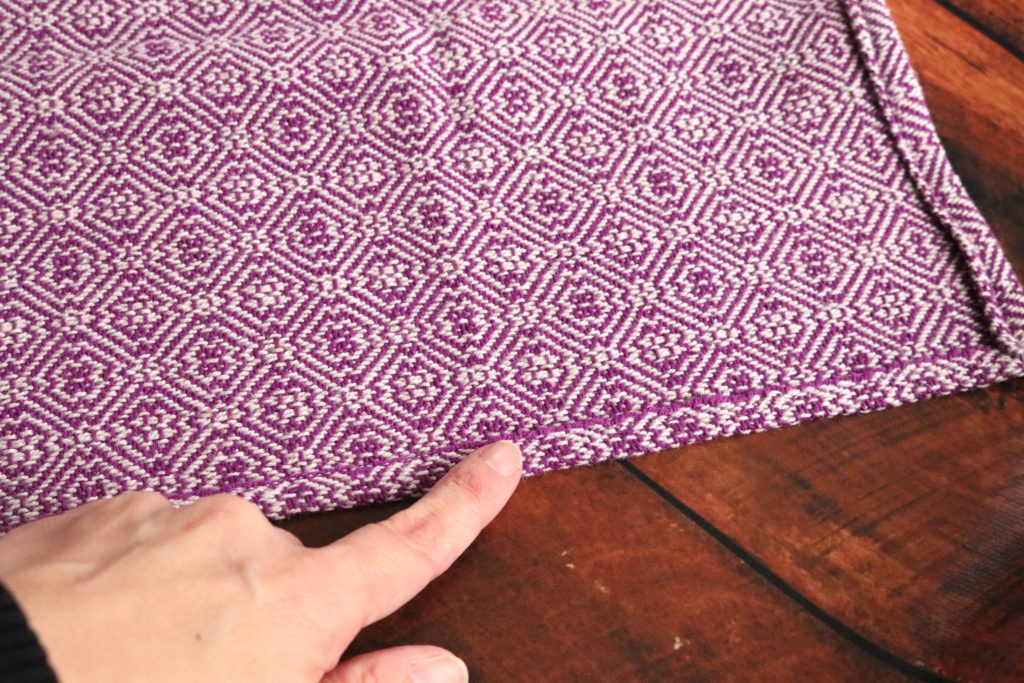
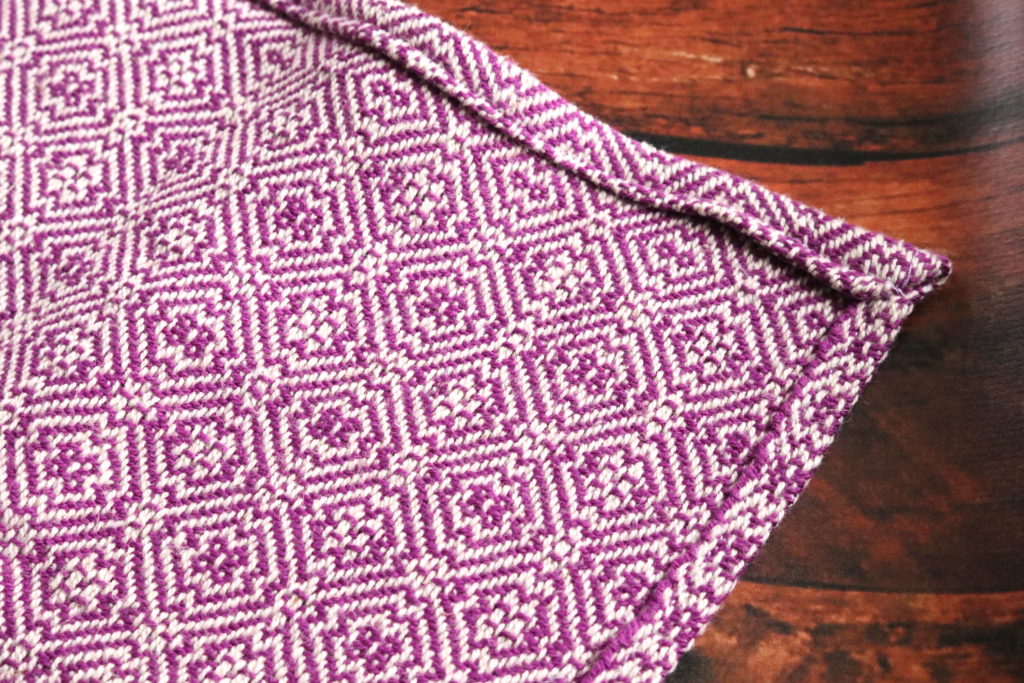
And thirdly, when hemming my towels, I decided to also hem the long edge. I have never done this before, but as I already mentioned, the edges are susceptible to wearing and I think this single turned hem will make a difference. Time will tell, but perhaps I will make this a regular technique for my towels.

Hemming the long side of the towel with a single fold hem.
Finished hems. The ends of the towel have a double fold hem.

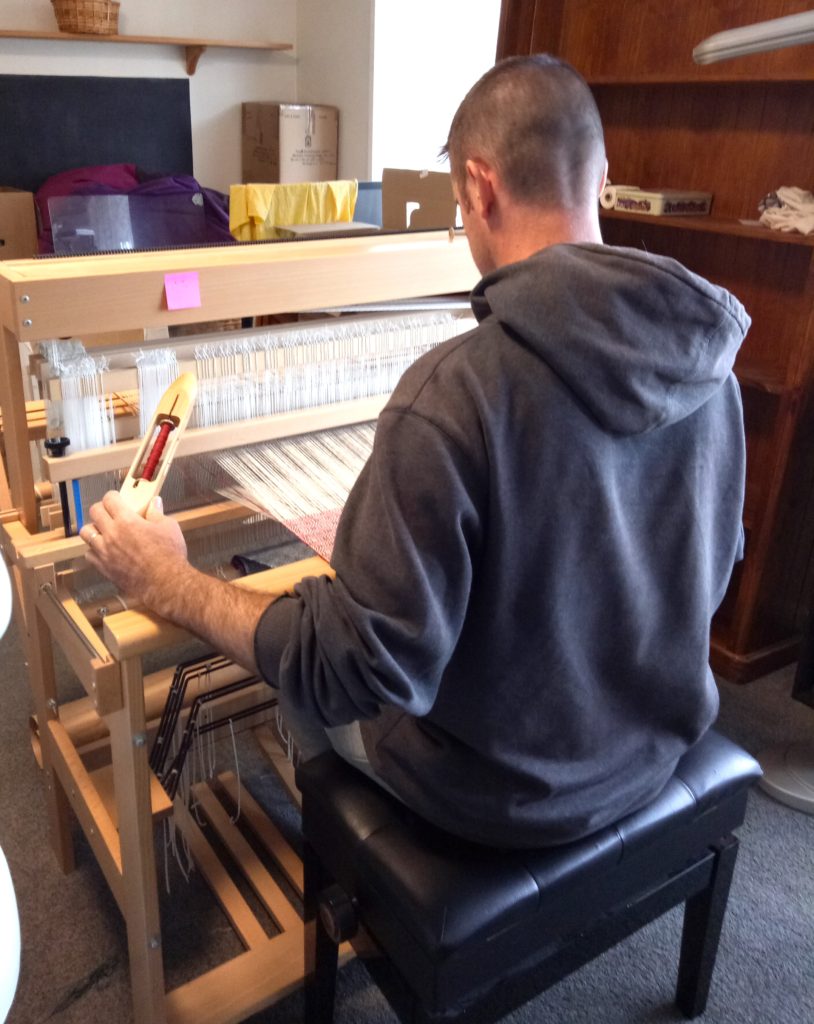
I mentioned that this project turned out to be special in another way. My husband has been interested in having a go on the floor loom for some time now, so I decided the last towel of the warp would be a good opportunity. I wasn’t too worried if it didn’t turn out well, as it was just for us.

Imagine my surprise when he took to it like a duck to water, quickly declared that it was “fun” and promptly finished off the second half of the towel I had started on! After giving him a few basic pointers, he surprised me with how quickly he picked up the steps. Now he is very interested in weaving more and even learning how to dress the loom. Victory! 😀

If you love this pattern draft as much as I do, you can find it on page 88 and 89 in Anne Dixon’s Handweaver’s Pattern Directory – a most excellent book and awesome resource for 4 shaft drafts.

I also recommend Patti Graver’s Next Steps in Weaving for weaving at this level.

If you’re interested in getting started in floor loom weaving, check out my Introduction to Floor Loom Weaving, my Follow Up Floor Loom Weaving, or save by purchasing a bundle of the two courses together.

I made a little video to compliment this blog post to help you feel confident about cutting your hand woven fabric. I explain my 3 Key Ingredients to cutting without fear:

If you have any questions about my towel project or using cottolin, let me know in the comments below!

Until next time…

Happy Weaving!

Filed Under: 4 shaft weaving, Cutting Hand Woven Cloth, Inspiration, Neat edges, Weaving, Yarn Tagged With: 4 shaft weaving, cutting cloth, cutting hand woven cloth, floor loom weaving, hand woven towels

Primary Sidebar

About Kelly Casanova

Hand crafted boat shuttles

Categories

Archives

Meta

  • Log in
  • Entries feed
  • Comments feed
  • WordPress.org

Copyright © 2026 Kelly Casanova Weaving Lessons on the Foodie Pro Theme