• Skip to main content
  • Skip to primary sidebar

Kelly Casanova Weaving Lessons

  • Hi! I’m Kelly!
    • Affiliates Disclosure
  • Online Weaving School Class Index
    • Common account issues
    • Common technical issues
    • What do I get with a membership?
  • New to rigid heddle weaving? Start here!
    • Never heard of the rigid heddle loom?
    • How to weave neat edges on the rigid heddle loom
    • Rigid heddle weaving
    • Rigid Heddle Weaving Patterns
  • Patterns
  • Subscribe

Weaving

Tote Bag Weave Along, Lesson 5

by Kelly Leave a Comment

In today’s post we carry on with the weaving of the tote bag panels and also talk about advancing the warp.

An important aspect of good weaving is advancing your warp. Of course, you can’t actually continue weaving unless you do so, as your weaving will fill right up to the heddle/reed and you won’t be able to weave any further.

Advancing the warp exposes more of the empty warp threads so that you can keep weaving. It basically involves releasing tension at the back of the loom, rolling the warp forward at the front of the loom, regaining your tension and then continuing to weave.

Releasing tension at the back
Readjusting tension at the front

There is always a “sweet spot” for your weaving, the position is where the tension feels right and the beating is easy. If you wind forward too far, when you beat, the reed will touch the cloth beam at the front and the beat will be uneven. It’s also uncomfortable for your body to have to bring the reed so far forward, it puts strain on your wrists and shoulders.

Woah, this is way too far forward!

Advancing often, and the right amount also helps you to keep weaving at the same tension.

My “sweet spot” for weaving. Not too close to the front cloth beam, not too close to the reed.

The best tip that I have for advancing the warp is “little and often”.

This video may help you to become more familiar with your loom’s tension system and gain a little confidence for advancing your warp.

I hope this post has been a help to you! Please leave me a comment and let me know, or ask any questions you may have.

The next post will cover removing your weaving from the loom and preparing for wet finishing.

Until next time…

Happy Weaving!

Filed Under: Rigid heddle weaving, Tote Bag series, Tutorials, Weaving Tagged With: rigid heddle weaving tutorial, tote bag

Tote Bag Weave Along, Lesson 4

by Kelly 1 Comment

Now you can really get excited about your tote bag project – it’s time to get weaving! If you missed the last post on threading, you can go here to read it.

Just one more teensy thing before you start to weave – the header. The header helps to spread the warp so that you don’t have big gaps at the very start of your weaving. As with most things in weaving, there is more than one way to put in a header.

*This post contains affiliate links.

My preference is (I think) the easiest. I use 2 cardboard separators (or warping sticks as they are also called). With the heddle/reed in the up shed I insert one stick, then change to the down shed to insert the second stick. Then beat to push them into place. You may want to weave an additional header with spare yarn if you feel your warp is too gappy (I demonstrate this in the video at 1:10) Pop the heddle into the up position again and you’re ready to weave!

Don’t forget to wind your stick shuttle.

It doesn’t matter which side you enter into the shed with the shuttle, but it is useful to develop a habit when working plain weave to always enter from the same side to avoid any confusion as to which shed you should be in and to easily develop a weaving rhythm.

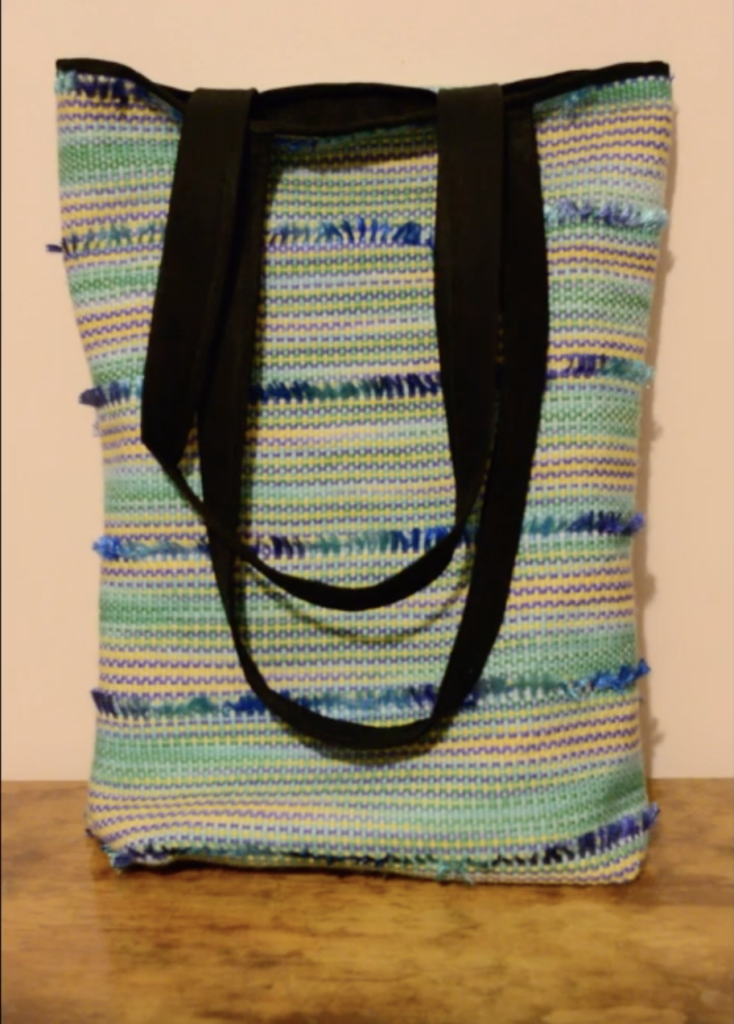
I give yarn recommendations in this post, but a variegated yarn is particularly effective and makes the plain weave look more fancy than it is. I dyed my own yarn for this project. You can also get a bit fancy by using a novelty yarn as a feature. I used an eyelash yarn as an occasional stripe to accent this bag.

If you are a newer weaver, you may be worried about obtaining neat edges. This is very much a matter of practice makes perfect, but this video shows you my pinching technique that has helped many newbies improve their edges.

You also want to try to keep your beat consistent and even. One way to see if you’re beating evenly is to stand up and look at your weaving from time to time. You will see quite clearly whether you are beating straight or at an angle.

Don’t forget to measure your weaving as you go. I do this in a simple manner by using a tape measure and marking my last measured place with a plastic or glass head coloured pin. I always write down the measurements as I go so that I don’t have to try to remember!

You will be advancing your warp every so often, and this video will show you how to do that.

Remember to refer back to your essential information project sheet, available as a free download for all the measurements you need to follow.

In the next lesson we will be talking more about continuing to weave and advancing the warp. Be sure to leave me a comment if you need to ask questions or are unsure of anything.

Until next time…

Happy Weaving!

Filed Under: Rigid heddle weaving, Sewing, Tote Bag series, Tutorials, Weaving Tagged With: rigid heddle weaving, rigid heddle weaving tutorial, tote bag

Tote bag Weave Along – Threading and getting ready to weave, Lesson 3

by Kelly 2 Comments

Now you’re ready to wind on your warp.

Your warp is secure with the choke tie you already put in place. If you need to read over the last lesson, please go here first.

Decision time! Are you going to warp with a helper or independently? This decision can often come down to whether you have someone to help you or not. But, if this is your first warp or if you’re not too confident with warping yet, I always recommend warping with a helper. This is a time to get to know your next door neighbour better! Or invite that friend or family member around for a cuppa and just casually mention that you need their help with something and that it won’t take but a minute!

*This post contains affiliate links

If you feel like you really need more information on warping at this stage, I have an excellent class, Warping for Beginners.

To roll your warp onto the back beam your will need something to use a separator. In the Youtube video demonstration I use my cardboard separators (also known as warping sticks) but you can also use a roll of paper or a blind if you prefer a continuous separator.

Having a helper takes the pressure off the newer weaver. You can concentrate on turning the clicker and pawl system which rolls the warp on without having to worry about uneven tension. It also means that you have two hands free instead of just one.


Place 1 cardboard separator for each full warp rotation.

I like to keep winding until the end of the warp is just over the front apron bar. This ensures that I have enough length in the warp for comfortable threading.

At this point I cut the warp ends, then undo the choke tie.

Time to begin threading! Before you start, I highly recommend that you watch my free Threading Tips video. So, for plain weave, I thread one in the left hole and leave one in the slot. It doesn’t matter whether you thread in the right or the left hole, but the left is my habit and I stick to it.

Keep threading in this simple fashion right across the width of the warp.

Now we tie on to the apron rod. Some weavers prefer to leash on but I only do that for slippery threads as I find I get better tension when I tie directly on to the rod. For this section, I will refer you to the video near the end of this post – it is much easier to show than to explain the knotting system.

Go back over your knots and tighten them all to an equal tension. You are trying to obtain firm and consistent tension, not necessarily to get them as tight as you can. If you have consistent tension, everything will tighten up when you advance the warp in readiness for weaving.

Here is the video that goes along with today’s lesson, I think you will find it very helpful!

Well, now we are almost ready to weave and things start to get exciting. Join me next time for options for putting in a header and beginning to weave!

Until next time…

Happy Weaving!
Filed Under: Rigid heddle weaving, Tutorials, Weaving Tagged With: tote bag weave along, weaving lessons

Tote Bag Weave Along – Warping, Lesson 2

by Kelly 4 Comments

In today’s Tote Bag Weave Along post, we will cover warping. The last post containing details about materials can be found here.

You can download the PDF with essential project information below.

tote-bag-weave-along-essential-infoDownload

Prior to warping for any project I find it very useful to mark out the width of the project with some waste yarn to avoid having to count and re-count slots, which can be a bit tedious! I just thread the waste yarn through the slot and tie it at the bottom of the reed. Easy peasy.

*This post contains some affiliate links, meaning that if you click and purchase, I receive a small commission at no extra cost to you.

You can begin warping on the left or the right side of the loom, it doesn’t matter, but my habit is to start on the right. Tie your first length of yarn onto the apron rod, take it through the first slot and around your warping peg, back through the slot and then around the apron rod again. Alternate so that your thread goes over then under the apron rod each time.

By the time you are finished warping, you should have 2 threads in each slot. Place your yarn gently on the peg – we are not aiming for tight tension at this point, just consistent.

When you are finished warping the required number of ends, cut your yarn and tie off on the apron rod.

Now you’re ready to place a choke tie around the warp near the peg to keep it all together as you wind the warp onto the back beam. A piece of waste yarn in a bow is perfect for this.

The step by step video instructions for this lesson are available for free.

If you need the basic equipment to get started on this project, here are my suggestions:

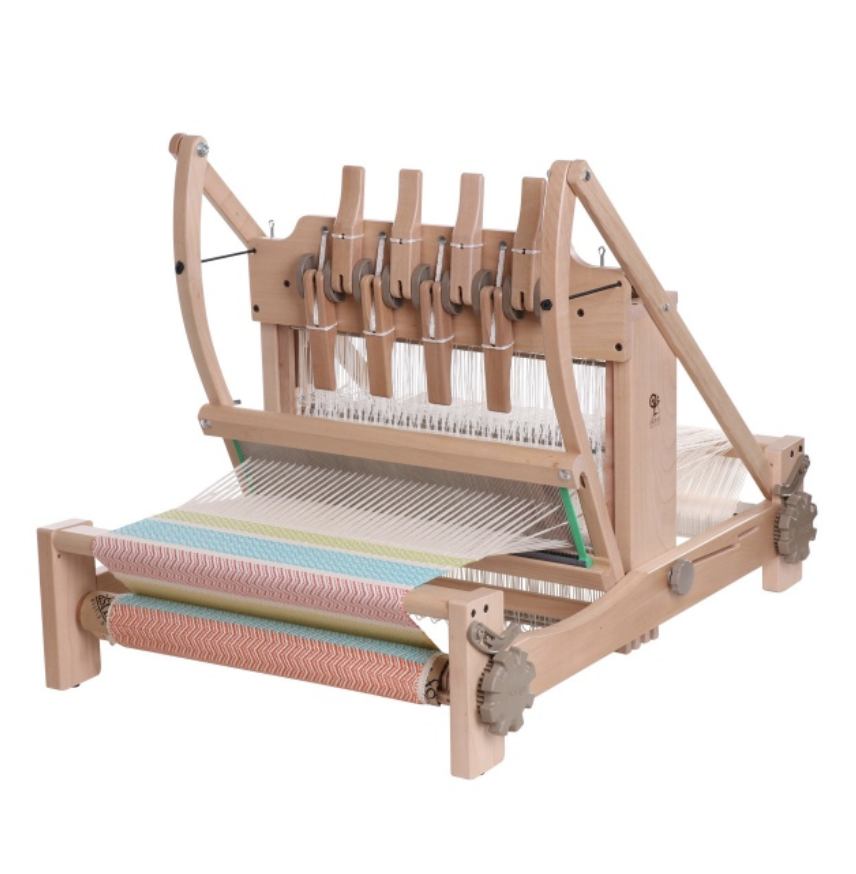
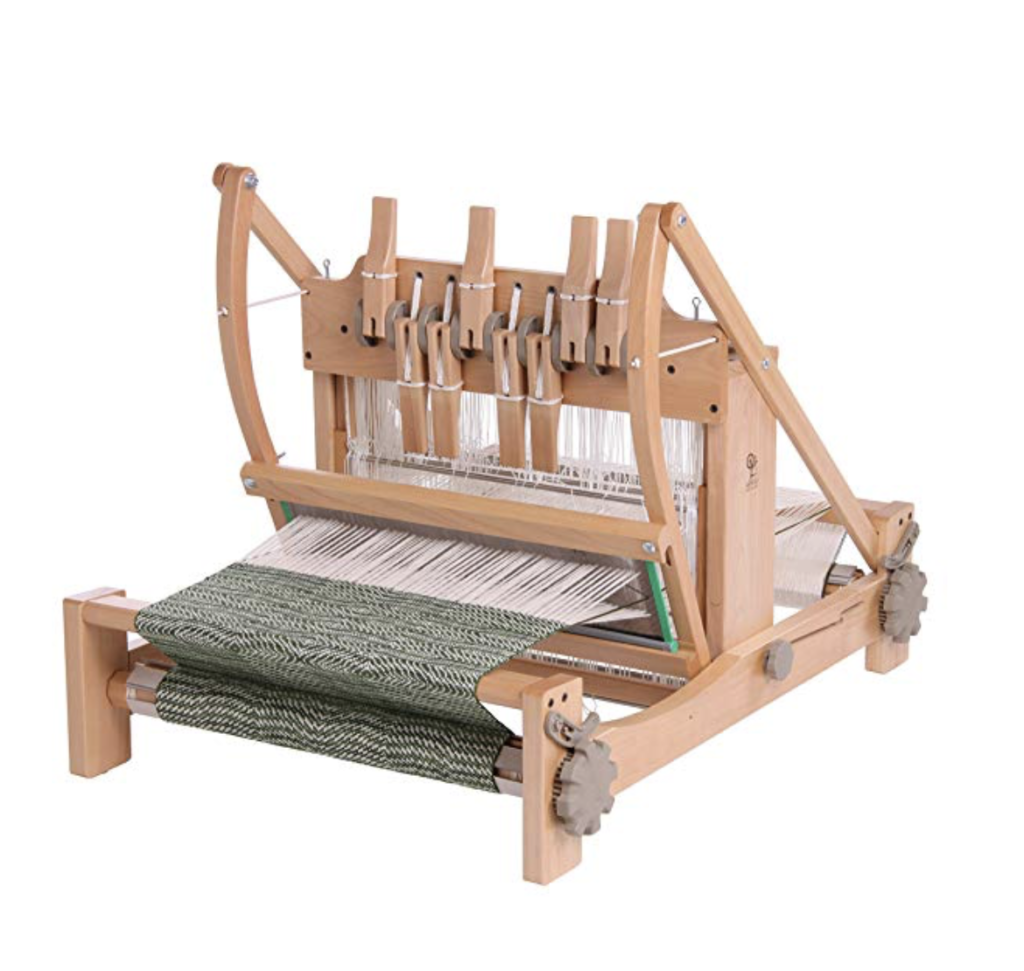
I have a 24″ Ashford Rigid heddle loom (most looms will come with a 7.5 or 8 dent reed, a threading and reed hook, one stick shuttle and a direct warping peg.

Ashford also have a 16″ rigid heddle loom that is appropriate for this project.

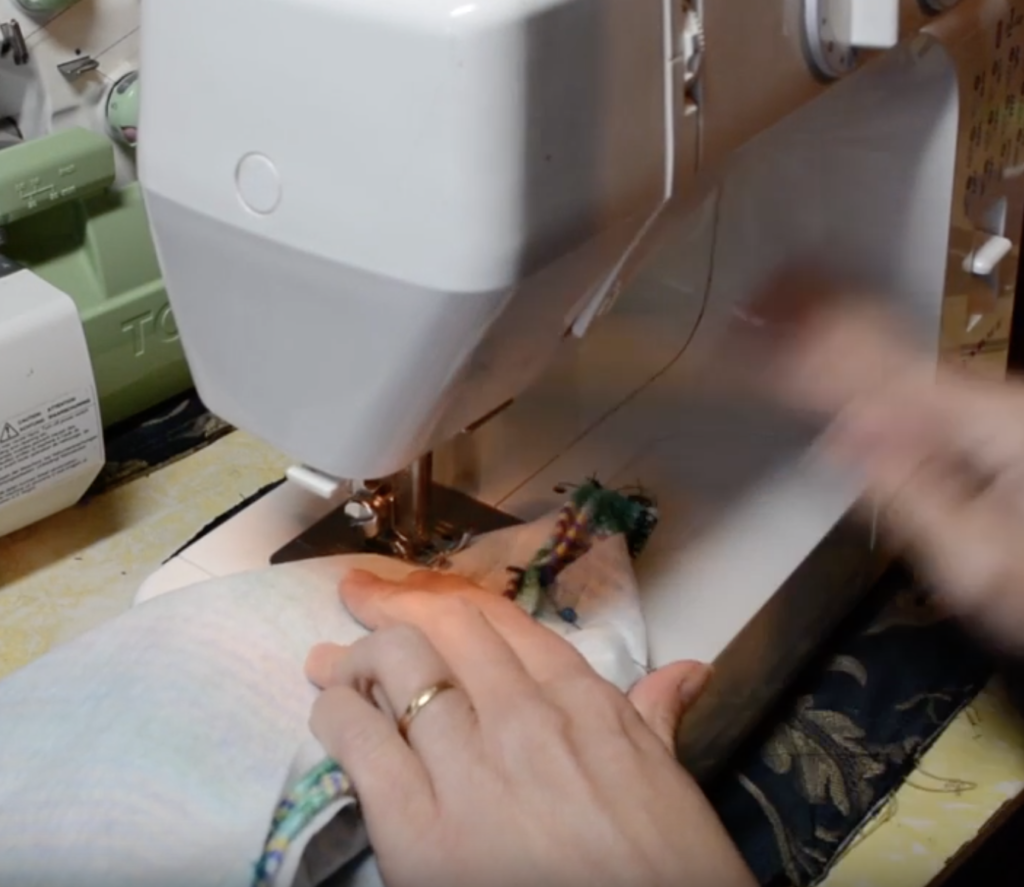
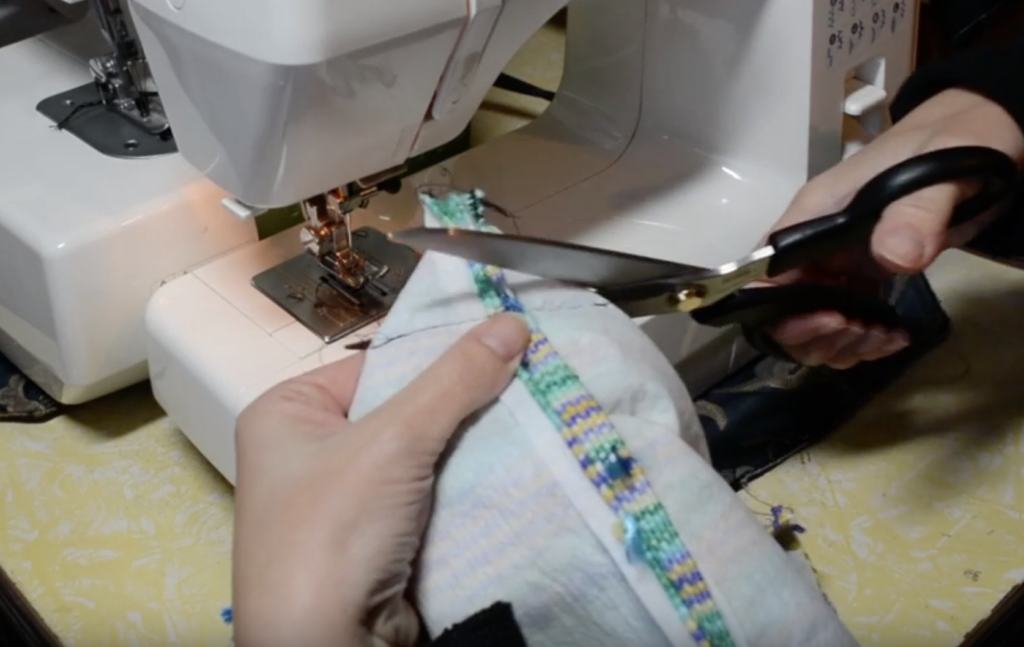
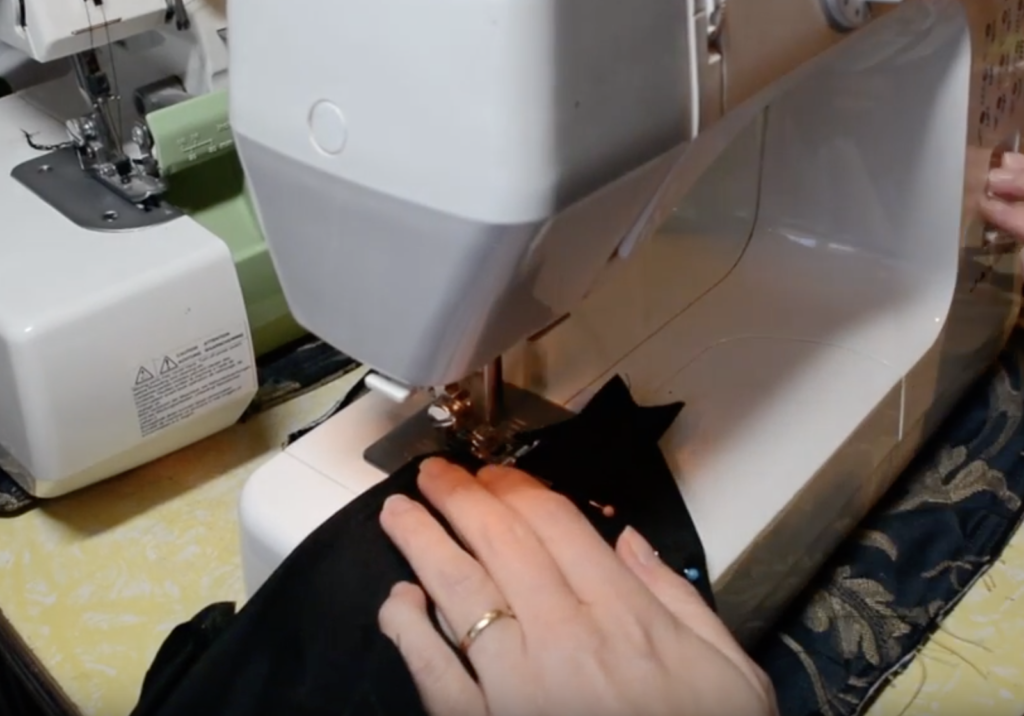
A sewing machine is really invaluable for making bags or any other sewing you want to do with your handwoven fabric. You do not need to spend a fortune on a fancy schmancy machine with all the bells and whistles, just a basic straight and zigzag stitch machine. I have a basic Janome and am very happy with it.

I’m not going to tell anyone that a serger is a must have for sewing hand woven, but the truth is, if you do a fair bit of sewing it will make your life a whole lot easier. I have an old Toyota serger that I bought cheap many years ago as it was an ex demo model. Sergers have actually come down in price since I bought mine, so a new one would set me back the same as what I bought my old one for. I do recommend checking out Janome sergers if you’re in the market for one though.

Yarn suggestions area covered in the last post.

If you have any questions at this stage, please leave them in the comments below.

Next time we will learn how to wind the warp onto the back beam, then thread and tie on in readiness for plain weave.

Happy Weaving!

Filed Under: Rigid heddle weaving, Sewing, Tutorials, Weaving Tagged With: learn to weave, rigid heddle weaving tutorial, tote bag, tote bag weave along

Tote Bag Weave Along Lesson 1

by Kelly 13 Comments

It is almost 3 years since I first posted my Tote Bag Weave Along series on Youtube. It has been my most popular series ever, and I’ve been thrilled to see so many bags woven by others!

I’ve wanted to add extra functionality to the series for those who desire it, and that is what I’ll be doing here over the next couple of posts. I will be giving yarn details and help, printable PDF’s, as well as some step by steps for some sections of making the bag.

I’m beginning with the materials list that you can now download and print out.

totebagweavealongmaterialslistDownload

OK, lets get into some extra details and questions you may have from the list.

*This post contains affiliate links, meaning if you click and purchase on the link’s given, I receive small commission at no extra cost to you 😉

Do I need to have a 24″ or 60cm rigid heddle loom?

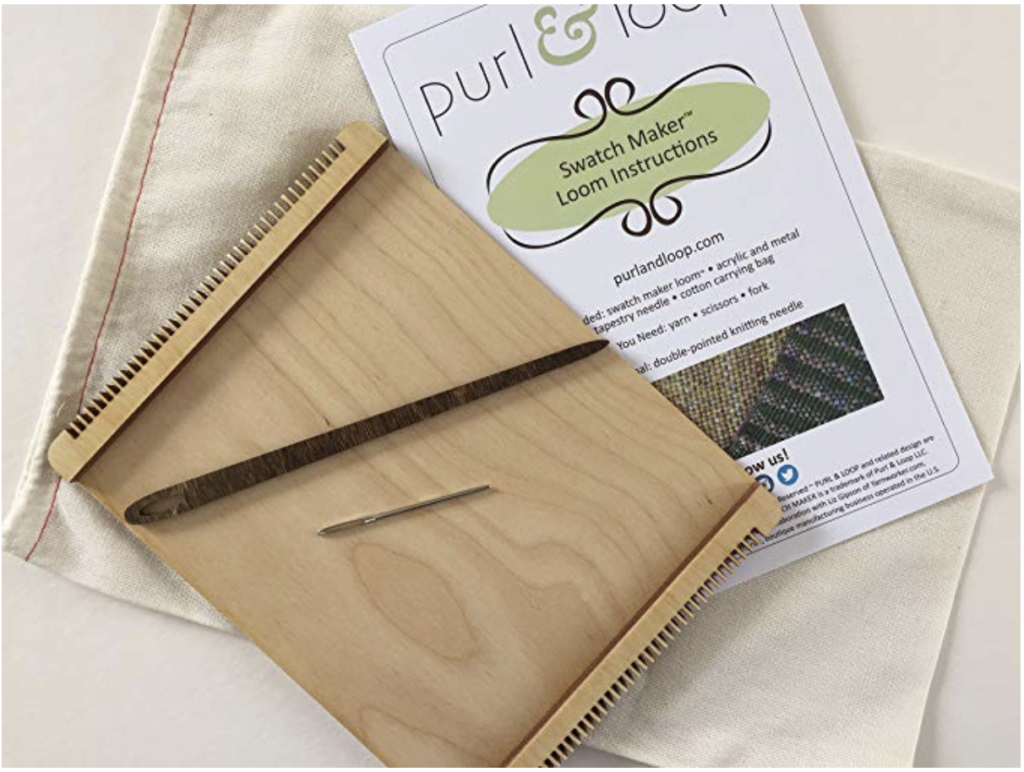
Not necessarily! Although weaving the bag in one piece is the easiest option, it’s not the only way. If, for example, you had a Sampleit loom, you could weave 2 panels, 10″ wide and sew them together for each bag panel you need. (So that would be 4 panels you would weave for one bag). You could even make a design feature of your panels by weaving the wefts in different colours so that each side of your bag would contrast. Where there’s a will there’s a way!

Do I need to sew the handles myself?

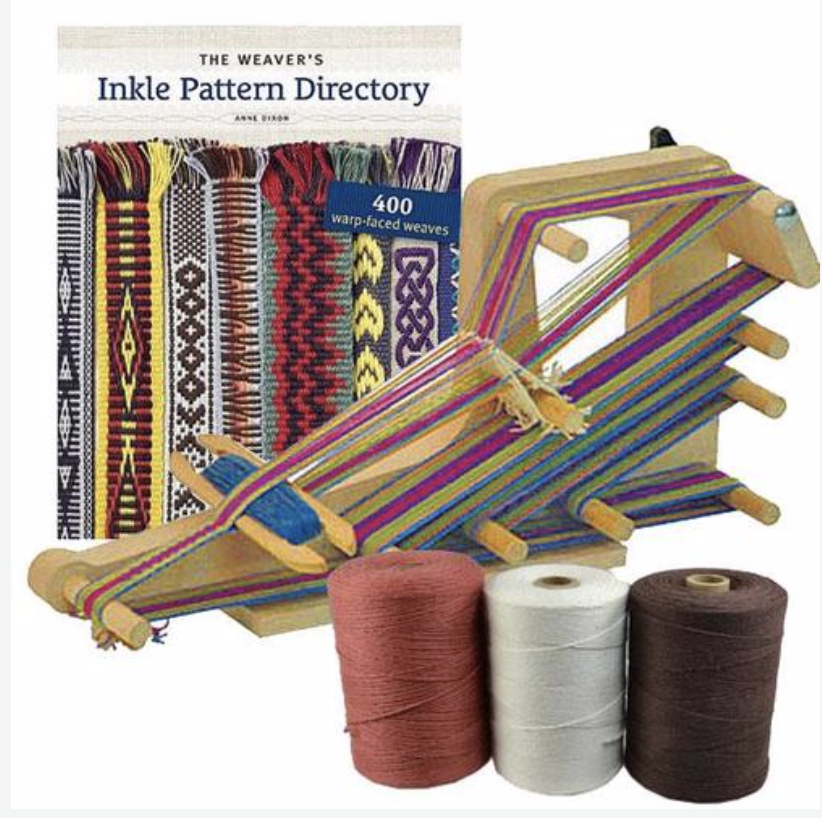
Nope. You have other options for the handles too. If you have an inkle loom, you could weave them yourself, in either matching or contrasting colours. You can also purchase ready made handles and these come in a huge variety nowadays. You can choose from metal, acrylic, wood, rattan, and faux leather, to name a few!

I can’t get Australian 8 ply merino – what are my other choices?

There are many yarns you can substitute with and you don’t have to use wool. Cotton, acrylic, bamboo and others can be used too. One world of caution though. When you iron on your interfacing, your chosen yarn needs to be able to take the heat without being scorched. Cotton or superwash wool are good choices.

Here are some suggestions for you:

Lily Sugar n Cream is a range of cottons that come in the most gorgeous colours and varieties. Their variegated cottons are wonderful and they even have curated colour packs! Cascade Ultra Pima is another possibility.

For wool, you have Cascade Superwash, Patons Classic, Carlton Merino and so many more. Yarnsub.com is an excellent resource for checking and comparing yarns.

Do I have to line my bag?

No, but it does give a really nice, more professional looking finish.

Do I need to use a sewing machine?

Technically, you could hand stitch this whole project, but that is not something I would do! If you decide to, make sure your stitches are small and strong, a bag needs to be hard wearing. Whether sewing on a machine or by hand you should always use a good quality thread like my favourite, Gutermann. Cheap thread is cheap for a reason!

Next time we will go through some of the steps for the project. If I have missed anything or if you have questions about the materials, please let me know in the comments. Also, please let me know if offering the series in this format is helpful to you.

In the meantime, if you want to take a look over the Tote Bag Weave Along video series, you can start with the introduction video below.

If you have any questions about the project or anything from this post, please let me know in the comments!

Until next time…

Happy Weaving!
Filed Under: Rigid heddle weaving, Sewing, Tutorials, Weaving Tagged With: rigid heddle weaving, rigid heddle weaving tutorial, tote bag, weave along

How to Use Pick-Up Sticks

by Kelly 24 Comments

Pick-up sticks can be a game-changer for rigid heddle weaving. These simple tools expand your loom’s capabilities, allowing you to create intricate patterns beyond plain weave. Whether you’re a beginner or looking to elevate your skills, this guide will help you understand how to use pick-up sticks effectively.

A rigid heddle loom has 2 shafts, essentially the hole threads and the slot threads. These 2 shafts allow you to work plain weave, which is a perfectly lovely weave structure on it’s own, but most weavers will begin with plain weave and then want to increase their own skills and their loom’s capabilities.

*This post contains affiliate links, which means that if you click a link and purchase, I will receive a small commission at no extra cost to you.

This is where pick up sticks enter and shine. Basically, they are simple, flat and smooth lengths of wood. You pick up warp threads and operate the stick/s from behind the heddle/reed. Your pick up sticks need to be longer than the width of your project, or they won’t hold the picked up threads. For my 24″ rigid heddle loom I use 24″ pick up sticks. I can use these same sticks whether my project is narrow or full loom width.

Incorporate one pick up stick and you can weave on 3 shafts. Incorporate two pick up sticks and you can weave on 4 shafts. And you can keep going from there, although you will probably want to learn about installing heddle rods to increase time efficiency. I happen to have a video showing you how to do that:

If that is a bit much for you at the moment, you can run with the knowledge that pick up sticks allow you to weave pretty patterns!

One of the rules of picking up warp threads with a stick is that your heddle needs to be in the “down” position. The threads we want to pick up must be slot threads, as the hole threads are already committed and are therefore inflexible.

Trying to pick up hole threads would be like trying to pick up the same threads twice! The slot threads are normally our shaft 2 threads and when we place the heddle in down position, they are raised.

Because we push our pick up stick/s to the back when not in use and they lay flat between the warp threads, they do not hinder you from being able to still operate shaft 2, as well as an additional shaft when the stick is engaged.

But I don’t think that you need to understand any of the above in order to use one or two pick up sticks, I certainly didn’t know what I was doing when I started with them. I just played around and liked what I saw and you can do the same!

Even if you are using a written pattern, you still don’t need a lot of understanding to follow them. If you see the instructions “1 up, 1 down” for your pick up, it simply means 1 warp thread will sit on top of the pick up stick, the next will sit underneath it and this will repeat across the warp.

Pick up sampler

The instructions for the actual weaving will be a little different, but easy to follow. Here is a simple weaving sequence as an example:

  1. Up (heddle up)
  2. Down (heddle down)
  3. Up, pick up stick (heddle up and slide pick up stick behind the heddle, leaving flat).

If you want to see pick up sticks and examples of pick up patterns demonstrated, watch my free Youtube video:

If you’re interested in exploring pick up in the form of a project, I can help! My Kitchen Cloths on a rigid heddle loom project is available as an online class.

In my Etsy shop, you will find my Lux Hand Towels pattern, which also uses pick up.

Lux Hand Towels

Oh, and let’s not forget the free pattern you receive when you sign up to my email list, the Moroccan Dream Scarf, which is easy enough for beginner pick up stick adventurists and can look so varied, depending on the yarn and colours you decide on.

The Moroccan Dream Scarf

I have some really cool pick up patterns for free, along with a video tutorial in this post.

I’m quite sure that you will be interested in taking a look at my Pick Up Stick Playlist on Youtube:

I also have a comprehensive course, Pick Up Perfection, available for purchase. If you have a membership to the Online Weaving School, this class is included for free.

I hope this has helped you to understand how pick up sticks can be utilised in your weaving. If this post has been useful to you or if you have any questions, please leave me a comment, I love to hear from you 😊

Until next time…

Happy Weaving!
Filed Under: Rigid heddle weaving, Tutorials, Weaving Tagged With: how to use pick up sticks, how to weave patterns, pick up sticks, rigid heddle weaving, rigid heddle weaving tutorial, tutorial

Pinwheels on a rigid heddle loom!

by Kelly 15 Comments

Pinwheels are a bit of an ultimate goal for some of us rigid heddle weavers. I’ve often heard it said that it was a picture of another weaver’s pinwheel project that first excited the interest of some to the rigid heddle loom.

I’ve had many requests for a pinwheels class over the past couple of years, so I finally knuckled down, and as a result “Pinwheels for the Rigid Heddle Loom” is now available.

*This post contains an affiliate link. For further information, please view my disclosure policy.

I really enjoyed making this class, as it’s always a thrill to introduce my students to a project that I know just naturally has the “WOW!” factor in abundance.

Pinwheels can be woven on either 8 or 4 shafts, and are essentially a twill draft combined with colour and weave to produce something really impressive, but not all that difficult. You have to love that!

For this class, I chose to weave on 4 shafts (for obvious reasons – 4 shafts is way more achievable on a rigid heddle loom than 8!) using a single heddle/reed and 3 heddle rods. The set up is a little time intensive, but very comparative to the time it would take to set up on a multi shaft loom. And once you start weaving, you are more than rewarded for your efforts.

The class demonstrates a Table Topper project (rather like a table centrepiece) but also provides all the calculations for a table runner, if that is your preference. I chose my colours (Latte and Peacock) to co-ordinate with my dining room curtains, which are a greyish coffee colour.

It is important with pinwheels to choose colours that are harmonious yet have enough contrast – you want those pinwheels to pop out at you!

Before undertaking this class, I highly suggest that you complete the “Converting Pattern Drafts to the Rigid Heddle Loom” to gain a good understanding of setting up your loom according to traditional pattern drafts. The Pinwheels class would then build on that knowledge and demonstrate that there are several ways to achieve the same result.

This class is available as a part of any membership to my Online Weaving School, or can be purchased as a single class.

Until next time….

Happy Pinwheel Weaving!

Filed Under: Online Weaving School, Pinwheels, Rigid heddle weaving, Weaving Tagged With: newclass, onlinelearning, pinwheels, rigidheddleweaving

What is the sett in weaving?

by Kelly 2 Comments

Perhaps one of the most confusing terms to newer weavers is the sett.

What is the sett and why does it matter?

Well, I’ve made a video explaining the basics and narrowing it down in an easy to understand format, so please take a few moments to watch that.


You will usually see the sett referred to as “ends per inch” or “epi”. When obtaining a measurement or calculation to determine your sett, you are figuring out the spacing between your warp threads.

The spacing is important because it affects the end result of your weaving. For example, if I have some really thick yarn that I’m using as warp, and I space it (or sett it) too closely together, I may end up with a fabric that is more like cardboard! If that is the effect you are going for, great – but if not, you need to understand why it happened.

*This post contains affiliate links. This means that if you click the link and purchase, I receive a small commission at no extra cost to you.

So, let’s take a look at how you can determine sett. Once again, I have a video that demonstrates the simple process. All you need is some yarn and an inch ruler!

The beauty of this inch ruler wrap test is that it works with whatever yarn you have. Some weaving threads have a recommended sett when you buy them, but you may not remember or have lost the information. No problem, you can figure it out for yourself.

If you are a rigid heddle weaver and have a good collection of different sized heddles/reeds it is very easy to transfer your calculated sett to the loom – you just choose the heddle/reed that is close or exactly the same as your figure.

Let’s have a look at an example. The yarn I used in the video is an Australian 8 ply (light worsted/ dk). When I wrapped it for an inch, I found that I could wrap the yarn 14 times. Dividing this figure in half gives me the correct sett for a balance plain weave. 14 divided by 2 = 7. My sett would be 7. I don’t have a 7 dent heddle/reed, so I would choose my 7.5 dent. An 8 dent would also be fine.

So, for every weave structure, I divide my wraps in half?

No.

The rules change when the weave structure changes. Plain weave is a balanced interlacement of warp and weft threads. One over, one under, one over and so on. But when it comes to twill, the weft yarn travels differently. It has to travel over more warp threads, so it has further to go. Therefore, when determining sett for twill, we use a different tactic.

Twill is generally sett 2/3 closer than plain weave. For those of us who are not strong on mathematics (hello!) it can be easiest to follow a simple formula. Instead of dividing our wraps per inch in half, we multiply by 0.67.

Let’s use our earlier example with the same yarn to figure out a sett for twill instead of plain weave. Remember that we wrapped the yarn for an inch and got 14 wraps? We take that 14 and multiply it by 0.67. 14 X 0.67 = 9.38. Now I need to make a decision – there is no heddle/reed with a 9.38 dent! So, I choose the closest, which would be a 10 dent.

Are these figures sett in stone? (Pun intended!)
No, they don’t have to be! You can make decisions based on your project as well. Lets say I’m using an 8/2 cotton that would normally be sett between 18 and 24 ends per inch. I want to weave some kitchen towels in plain weave. Experience tells me that a suitable sett would be 20epi, I would double my ends in a 10 dent heddle/reed. Or I could use 2 x 10 dent heddles to double the sett. Experience also tells me that if I use single and not doubled threads as weft, that will be a very pleasing result for the type of towels I prefer.
 
BUT, if I want to use that same 8/2 cotton for weaving a tote bag I need to put my thinking cap on. Knowing that my towel calculations give me a lovely soft but durable fabric, I’m thinking for a tote bag I’m going to want a sturdier fabric. After some consideration and perhaps working a sample, I may decide that my bag fabric will be sett at 24 epi and my weft will be doubled this time.


Sampling is always an excellent idea. It will leave you with no doubts about your project, or it may strike you with the realisation that you need to research and perhaps sample further.

You will get to a point (as all experienced weavers do eventually) of knowing your favourite yarns, projects and the sett you need to use. For a great deal of my projects these days, I don’t calculate the sett formally, it just becomes intuitive. If I buy a new yarn that I’ve never used or undertake a weave structure I haven’t tried, then I will go back to basics and calculate more carefully.

I hope this article has helped you to wrap (oops, there goes another pun!) your head around the whole idea of sett and why it is necessary in weaving.

If you feel you want to know more or are interested in delving further in, I have a great short class What do all the Numbers Mean and how do they apply to a Rigid Heddle Loom?

This class goes into the numbers that you see on your weaving thread cones and what they actually mean. It includes two printable yarn charts. One is specifically for weaving yarns and the other for knitting yarns.

Each chart gives you a list of common sizes of yarn and recommended setts, name conversions where necessary, recommended heddle/reed sizes and suggested related projects. It’s well worth a look and is the type of class you can refer back to again and again.

I also have the Weaver’s Toolkit Ebooklet available. This is a 22 page ebook for rigid heddle weavers. It includes many helpful resources like yarn conversion charts, sett explanations and recommendations, weaving yarn sizes and so much more. You can read more about the booklet in this post or you can purchase it from my Etsy shop.

Well, that’s all for today friends, until next time…

Happy Weaving!
Filed Under: Free tutorial, Tutorials, Weaving, Yarn Tagged With: ends per inch, sett

DIY Gentle Soak Recipe For Hand Woven Fabric!

by Kelly 35 Comments

Learn a simple and gentle soak recipe for wet finishing your hand woven fabric.

As weavers, we spend so much time on planning, preparing, then actually weaving a finished piece.

And it doesn’t stop there, because after all, a piece is not finished until it’s finished!

After choosing how we are going to finish our ends by either stitching, sewing or at least securing, we then come to…

THE WET FINISH!

But hey, it’s actually a pretty simple process and doesn’t take all that much time or effort. The really hard part is waiting for the piece to dry!

*This post contains affiliate links, meaning that if you click on a link and purchase, I receive a small commission at no extra cost to you.

I think it’s rather fitting then, that after all that hard work, we should finish off with as much love and care that we started with. That’s why I wanted to share my Gentle Soak Recipe with you today!

You can make it yourself, it’s economical as you only use a small portion for each woven piece, and best of all it feels luxurious to use – almost like a little treat to the weaver at the end of a project.

THE RECIPE

Dr Woods Baby Mild Castile Soap

Essential oil (optional) of your choice. I get my essential oils from here and here.

Glass bottle with a dispenser or glass cruet with stopper. I ordered some glass dispenser bottles, but when they got lost in the mail I ended up finding a cruet in a kitchen supplies store and used that instead.

THE METHOD

I pour the Castile soap into my 150ml (5oz) bottle until half full. To this I add my essential oil, approximately 15 drops depending on the strength of oil I’m using. I stir this around with a wooden skewer until I feel it’s well blended, then top up the rest of the bottle with more Castile soap, stirring again. Store with the lid in place.

Some essential oil blend suggestions:

There are so many lovely oils that can be used alone (you know how much I love the simplicity of lavender!)

Other oils that work beautifully as singles are peppermint, rose absolute and rose geranium.

If you want to try making some of your own blends, there are kits available where oils that go well together are sold in a pack. You can also buy already blended oils, taking the guess work out of it for you.

Oh, and if you don’t want to add your own oils, the Dr Woods Castile soaps also come in peppermint, lavender, and tea tree.

Don’t like essential oils? Just use the pure baby castile, which has no added scent, on it’s own.

WHY DO I NEED TO WET FINISH?

Sometimes, removing a project from the loom and having a good look and feel of it for the first time can be a bit disappointing! It may feel stiff, rough, and look, well… a bit lacklustre!

Enter the magic of the wet finish!

Allowing the project to soak in warm water with a mild detergent enables all those lovely fibres you have spent so much time and care to weave take in the water, plumping them up to maximum level and allowing them to bloom. Then, as the fabric dries, all those fibres settle into their rightful place and live happily ever after.

If you cut your fabric when it is still in loom state (prior to wet finishing) you will notice a dramatic difference to cutting it afterwards. The threads will want to spring apart, they are not settled in place yet.

Wet finishing also causes your fabric to shrink slightly (how much depends on the fibre). This is another important step in the finishing process.

An interesting experiment is to photograph your before and after wet finished fabrics. The difference can be quite amazing!

HOW TO USE THE GENTLE SOAK TO WET FINISH

I have used this gentle soak recipe with both plant and animal fibres. I have made a video tutorial on the wet finishing process so that you can see how easy and non stressful it all is:

Here are the step by step instructions:

  1. Place a squirt (around 1 teaspoon per item) of the gentle soak liquid into a sink or container that you intend to wash the item in.

2. Run enough warm water into the sink or container to enable your item to be covered.

3. Place your item into the water, gently pressing to submerge. Continue gently pressing until the item takes on enough water to sink down.

4. Leave the item, without agitating for at least an hour.

5. Gently rinse the item in just warm water briefly.

6. Using a clean, folded towel, press the excess water out of your item.

7. Lay the item flat and in the shade until totally dry.

Now, there are exceptions to these rules, as mentioned in the video. For example, I wash cotton kitchen towels in a hot machine wash. Not all projects need to be dried flat – sometimes I will hang the piece depending on what it is. If I have a piece that may be misshapen by being hung, I will dry it flat.

Thanks for reading, I hope this was helpful to you.

Until next time…

Happy Weaving!
Filed Under: Health and home, Weaving Tagged With: gentle soak recipe, wet finishing

Krokbragd – How to Design and Weave, Book Review

by Kelly 22 Comments

I had been following along the writing of this book for some time, so I was thrilled to see it published and available.

*This post is not sponsored, however it does contain affiliate links, which means if you click and buy I receive a small commission at no extra cost to you.

You all know of my love affair with the Scandinavian weave structure Krokbragd, so a brand new 2019 publication devoted to it was something I had to jump on right away!

I always get this funny feeling when a new weaving book arrives on my doorstep. It’s a mixture of excitement and apprehension. Will this book change my life? Will this book be a total waste of money? Will this be a valuable addition to my weaving library or will it be relegated to the charity bin?

Well, I can assure you that Krokbragd: How to Design and Weave by Debby Greenlaw is not in the least disappointing and is, in fact, very impressive!

It seems that the author Debby is a lady after my own heart, having traded suburban life for a more creative and simple existence in the country, surrounded by animals and weaving.

The book starts out with a historical overview of Krokbragd and other Scandinavian weaving techniques, including beautiful historical pictorial examples. It then goes on to cover threading and treadling options, explanations of the structure, drafts, yarns and weaving options.

This book is so comprehensive, so affordable and there is no fluff or overkill. Just the style I love! I admit that much of what is written and taught in the book is not new to me, but it certainly gave me food for thought on a few levels.

Firstly, the threading variations that I have not yet tried, for example, threading over rose path instead of the usual single point 3 shaft I use.

Secondly, the drafting and designing section. This part is so invaluable! I have always had trouble designing Krokbragd off the loom and usually design as I’m weaving. As krokbragd is weft faced and woven over 3 picks which condense to make a single row, I find it hard to get my head around what a design will look like before I weave it. Debby’s chapter on design has given me some new ideas for how I could better go about designing off the loom, which would allow me to plan my projects more effectively.

But, to be honest, what I love most about this book is that as you read, you feel you are talking to a weaving friend, not someone who has been weaving since forever ago and wants you to know that they know infinitely more about weaving than you do! (Have you ever had someone come across like that in a book?!) It is obvious that Debby has written this book out of a love of weaving and a joy of sharing.

Krokbragd: How to Design and Weave is available as a physical, soft cover book or as a Kindle download.

*Since the completion and publication, Debby has discovered some errors. As a course and pattern writer, I know how easily this can happen and how frustrating it is. If you have purchased the book, you can go to the “Errata PDF” at the bottom of this page to access amendments. Debby is also working with Amazon, where her book is being sold, to determine the best way forward with this issue.

Trust me, if you love Krokbragd, you want this book for your weaving library!

If you’re as interested in Krokbragd as I am, here are some of my past blog posts for you to take a peek at:

I deleted my last post and wrote about Krokbragd instead

New Krokbragd Bag Class

Krokbragd Mug Rug Weave Along

What is Krokbragd?

Krokbragd Weave Along Round Up

Plus I have a bunch of Youtube videos on the topic:

Krokbragd Playlist

And a couple of classes over at my Online Weaving School:

Krokbragd Bag Class

Krokbragd Mug Rug Weave Along

Let me know your thoughts on Debby’s book if you already have it or if you decide to purchase, I would love to know if it has inspired you too.

Thanks for reading dear Weavers, until next time…

Happy Weaving!

Filed Under: Reviews, Weaving Tagged With: book reviews, krokbragd

  • « Go to Previous Page
  • Page 1
  • Interim pages omitted …
  • Page 23
  • Page 24
  • Page 25
  • Page 26
  • Page 27
  • Interim pages omitted …
  • Page 29
  • Go to Next Page »

Primary Sidebar

About Kelly Casanova

Hand crafted boat shuttles

Categories

Archives

Meta

  • Log in
  • Entries feed
  • Comments feed
  • WordPress.org

Copyright © 2026 Kelly Casanova Weaving Lessons on the Foodie Pro Theme