• Skip to main content
  • Skip to primary sidebar

Kelly Casanova Weaving Lessons

  • Hi! I’m Kelly!
    • Disclosure
  • Online Weaving School Class Index
    • Common account issues
    • Common technical issues
    • What do I get with a membership?
  • New to rigid heddle weaving? Start here!
    • Never heard of the rigid heddle loom?
    • How to weave neat edges on the rigid heddle loom
    • Rigid heddle weaving
    • Rigid Heddle Weaving Patterns
  • Patterns
  • Subscribe

Rigid Heddle Weaving Patterns

3 Ways to Jazz up Plain Weave

by Kelly 8 Comments

I love plain weave, I really do. But sometimes I just think that it is so fun to jazz it up with something special!

Today I’m going to show you three ways that you can jazz up your plain weave, and have some fun with it.

I’ve written several other articles on simple things you can do on the loom for major impact. Things like Colour and Weave , Rigid Heddle Patterns for Beginners and techniques for Making Pictures with your Loom.

*This post contains affiliate links.

I’ve structured this lesson as a sampler for those of you who want to follow along with me and weave a sampler of your own. I used my 10″ Sampleit loom, but any rigid heddle loom will do as we’re only weaving an 8″ width.

All of the yarns, calculations and warp details are contained within this printable PDF, so please download that to access all of that information:

3-Ways-to-jazz-up-plain-weave-part-1Download
  1. STRIPES

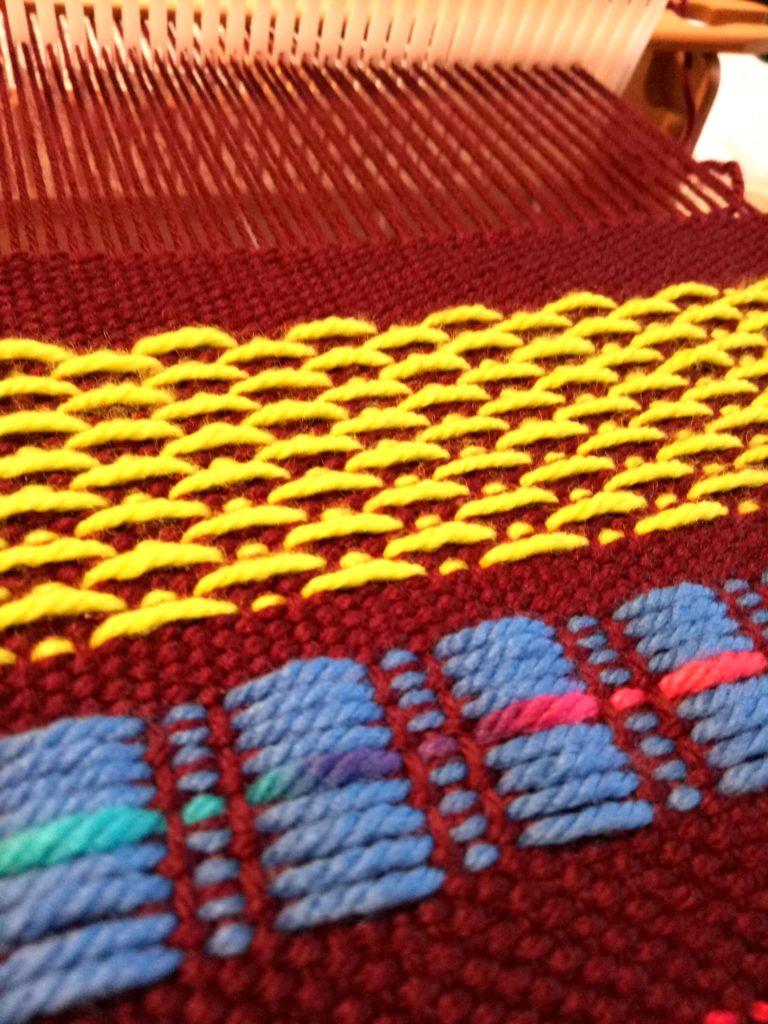
The first example for the sampler is a pretty easy one, but has many variations that really pack a punch visually – stripes!

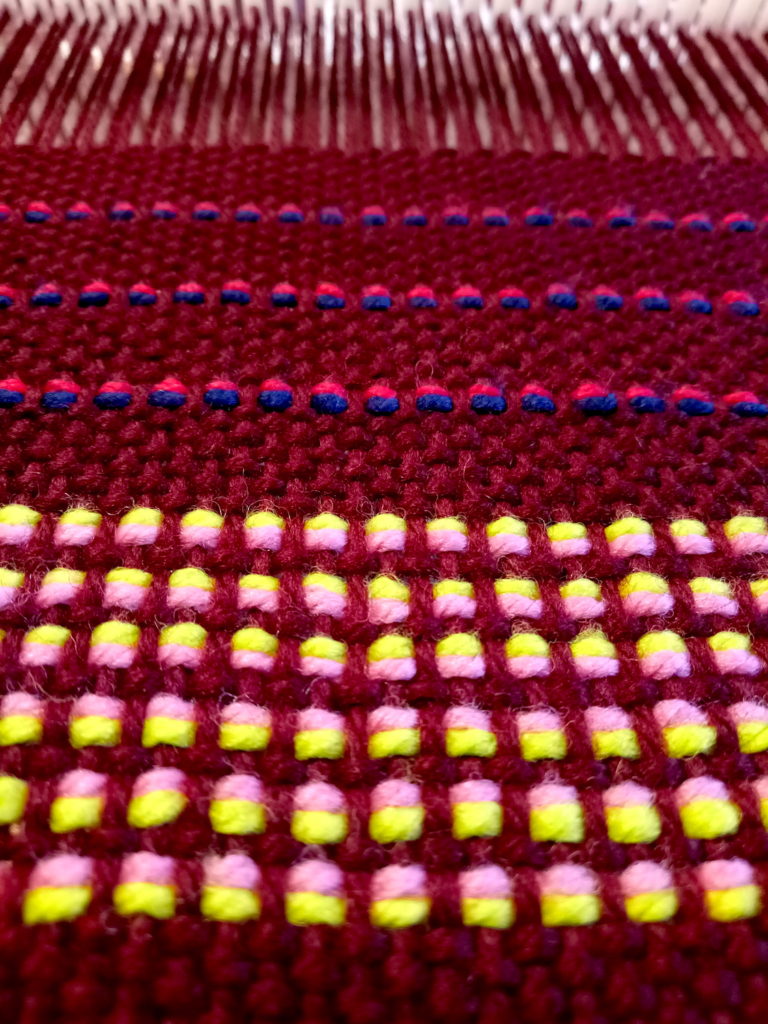
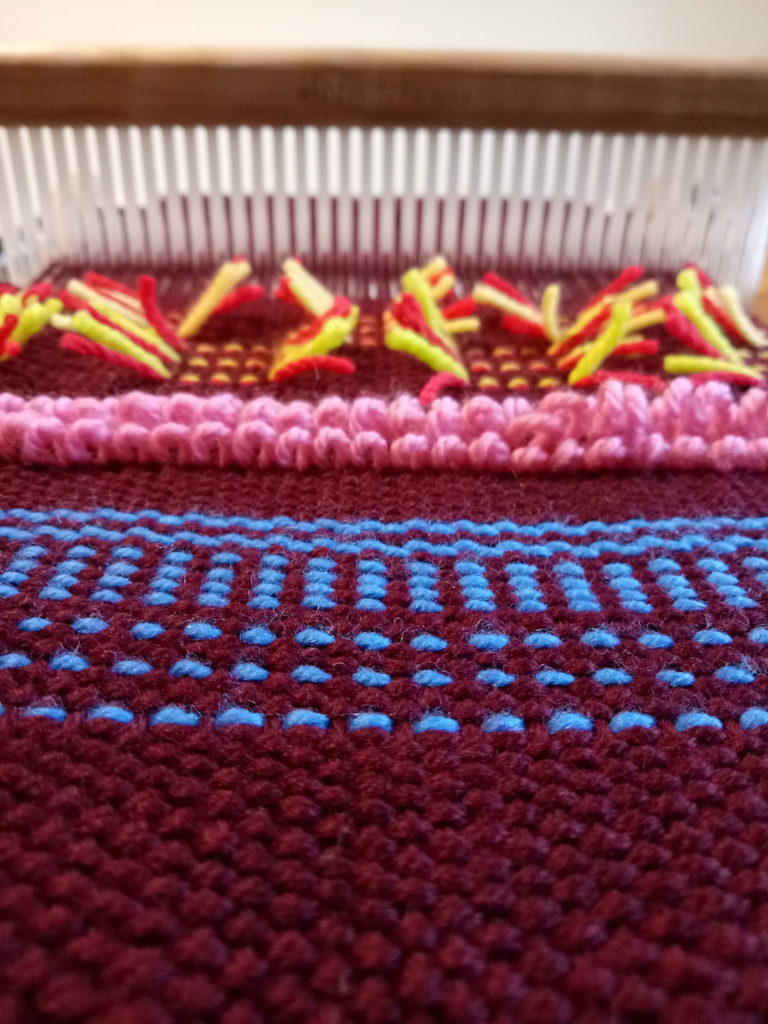
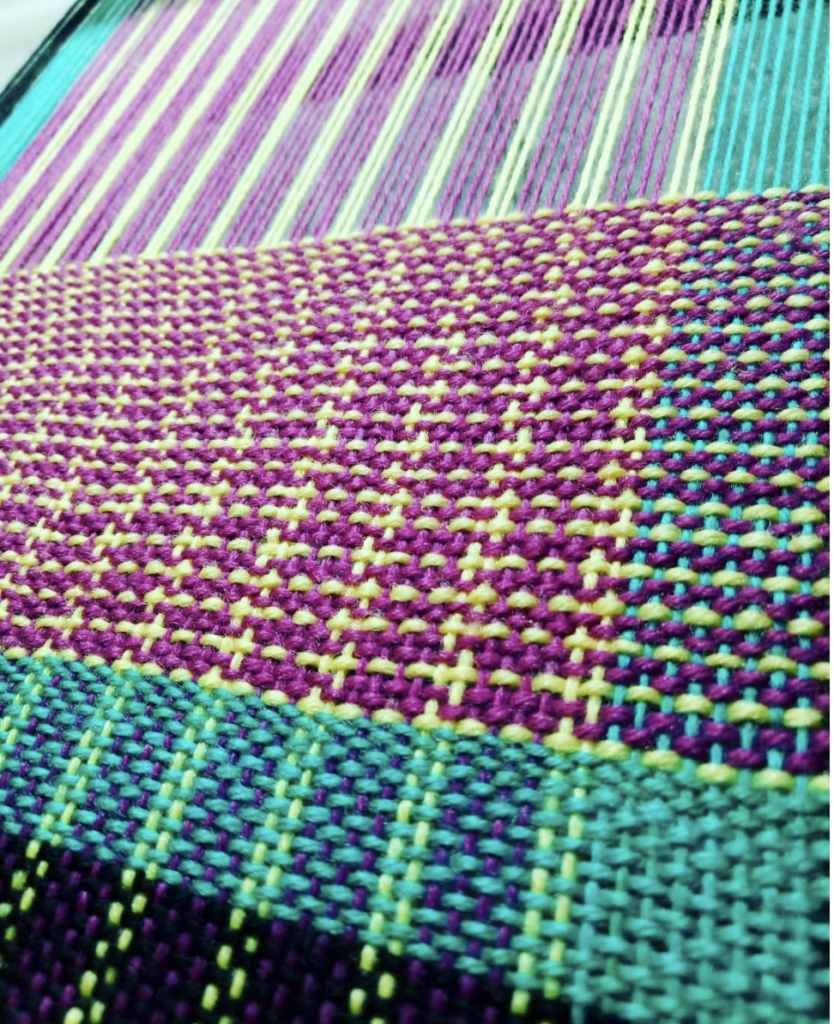
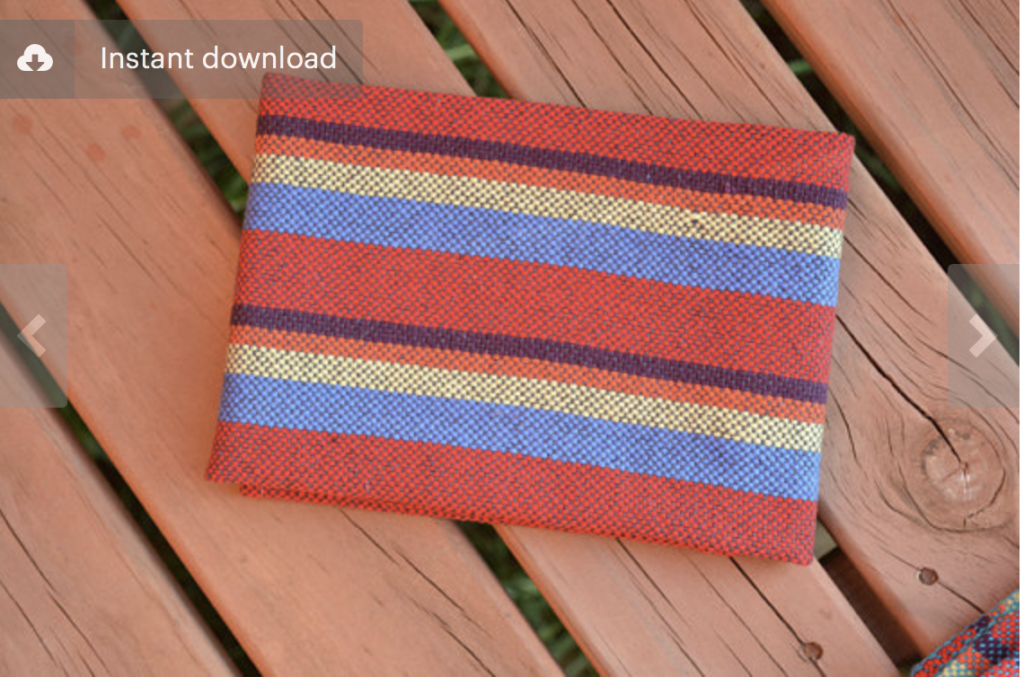
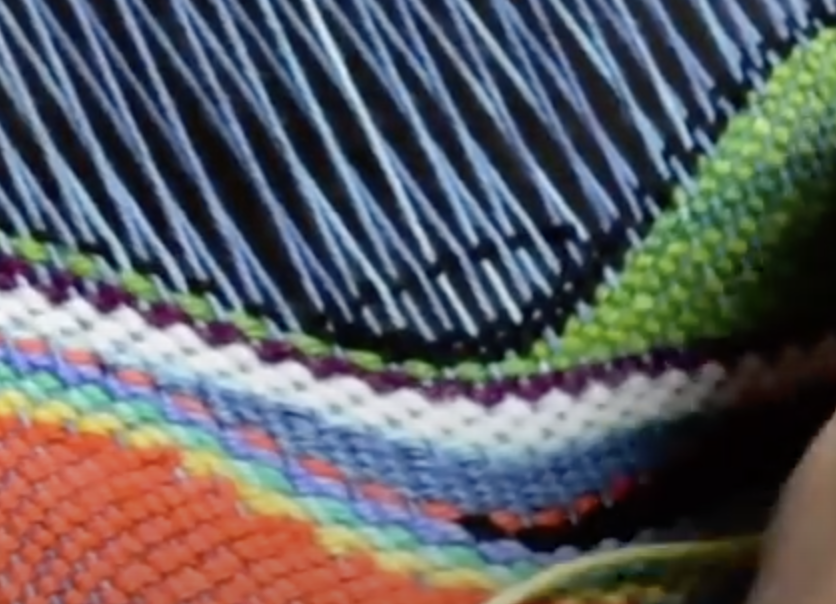
My example doesn’t look much like stripes because I was using one weft colour in blue and the other matched the maroon warp – so rather than traditional stripes you can end up with dots, dashes and squiggly lines. Pretty cool!

2. LOOPS

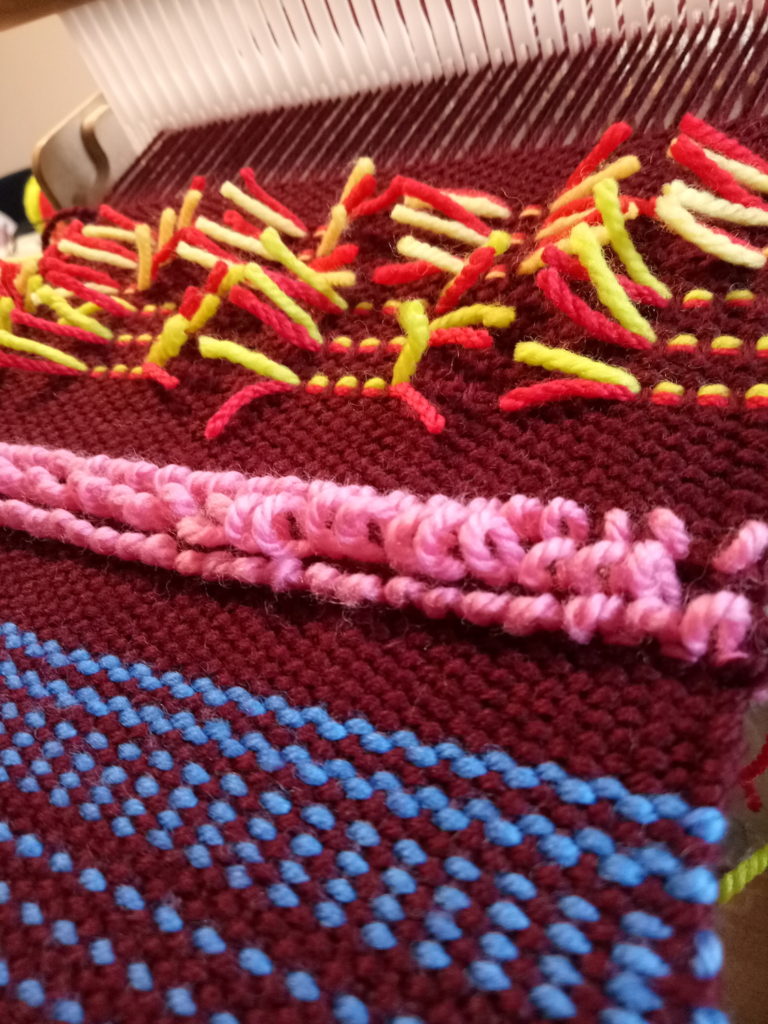
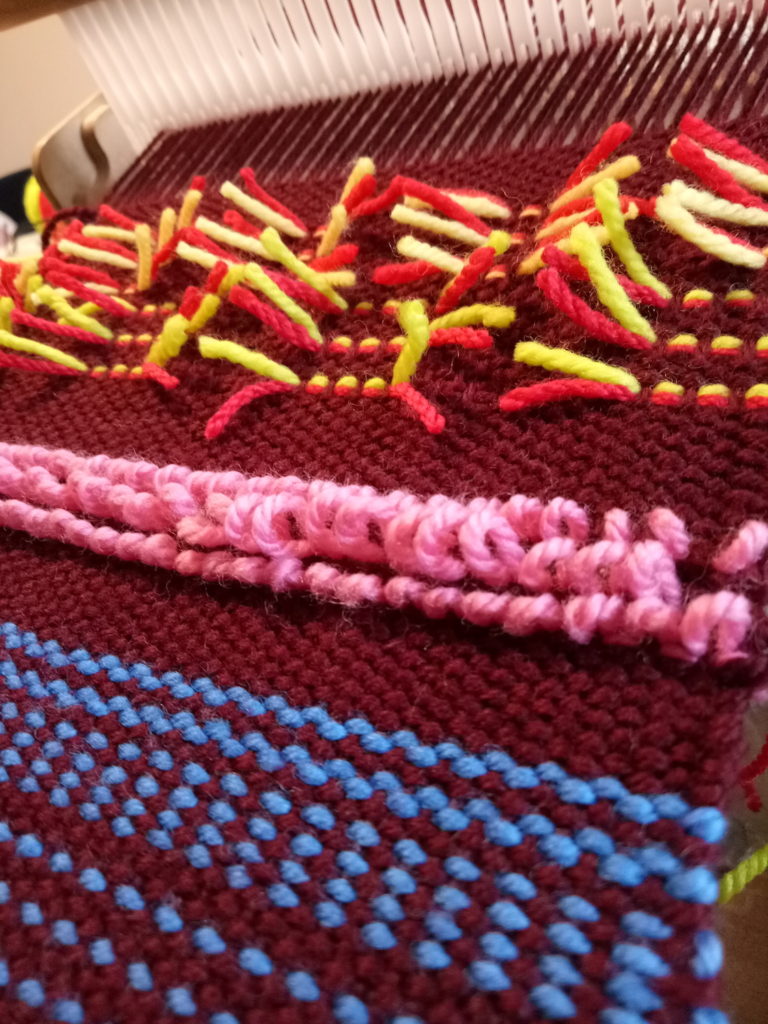
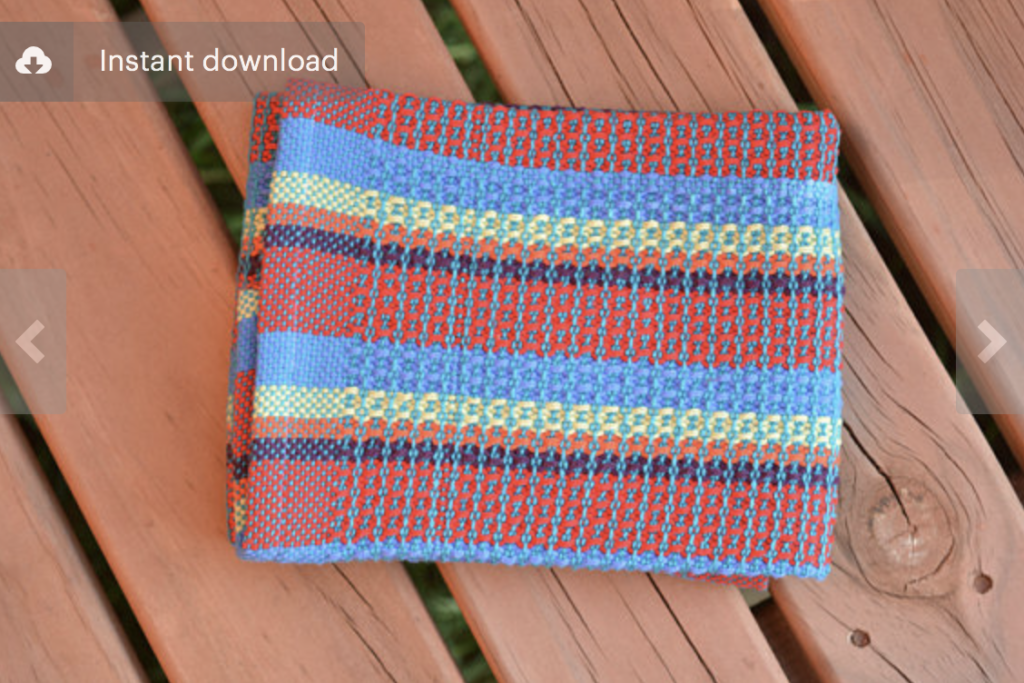
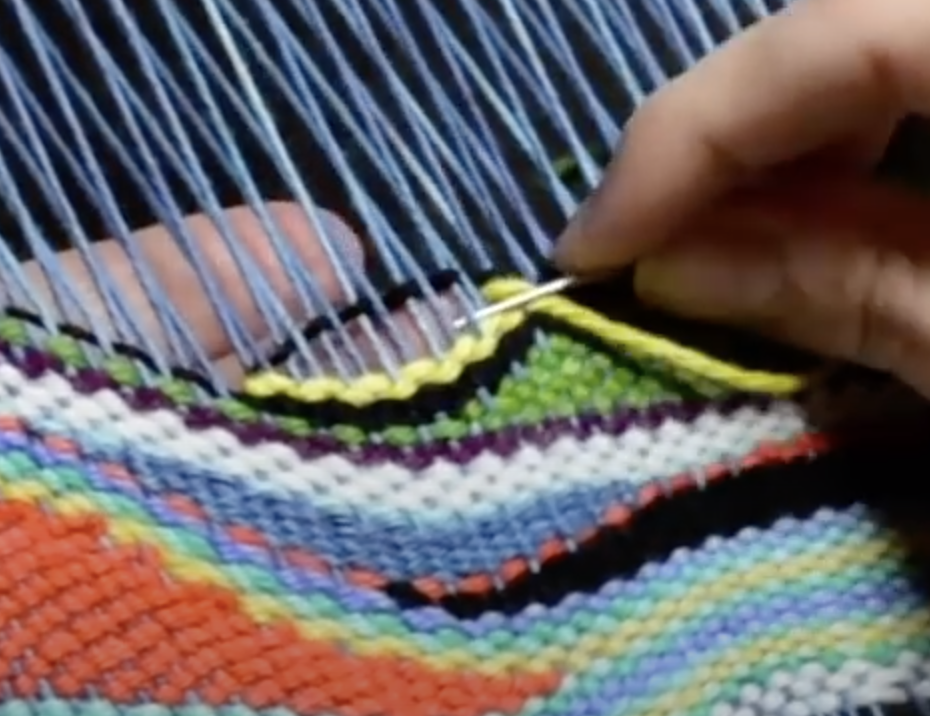
This is a super fun technique that requires a bit of patience but is not hard to do. You use a knitting needle to pull up loops of weft between warp threads. This gives a really interesting and textured look, but also has practical applications, like for wash cloths. I employed this technique as a feature in my Lux Hand Towels pattern.

3. BUTTERFLIES

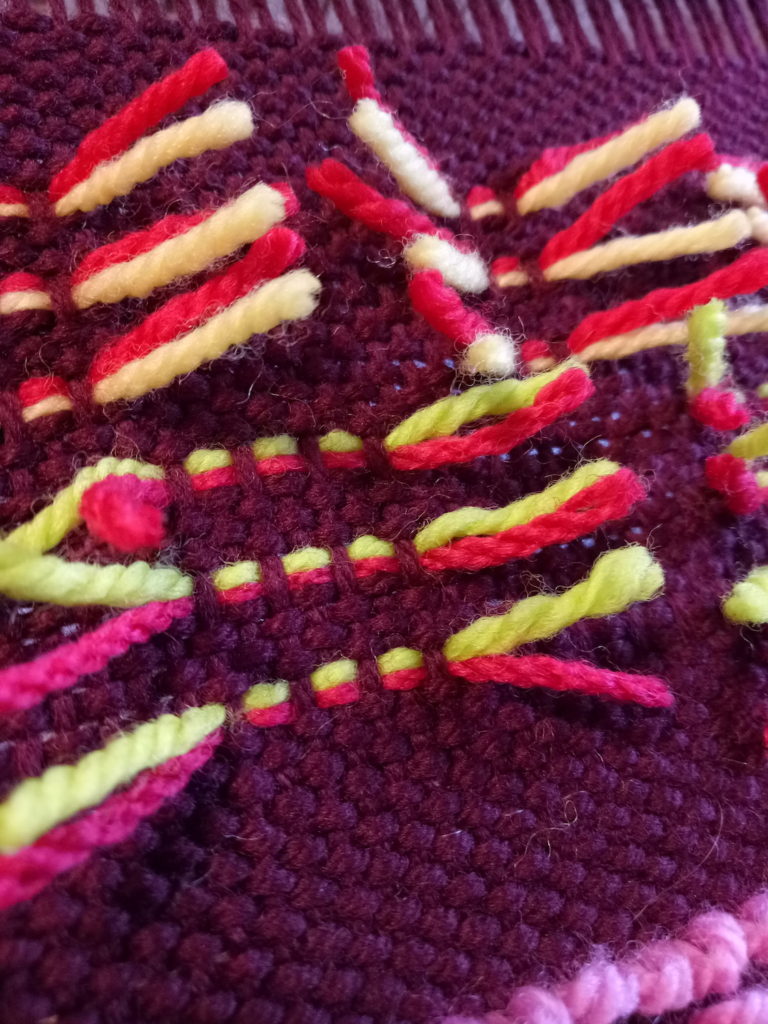
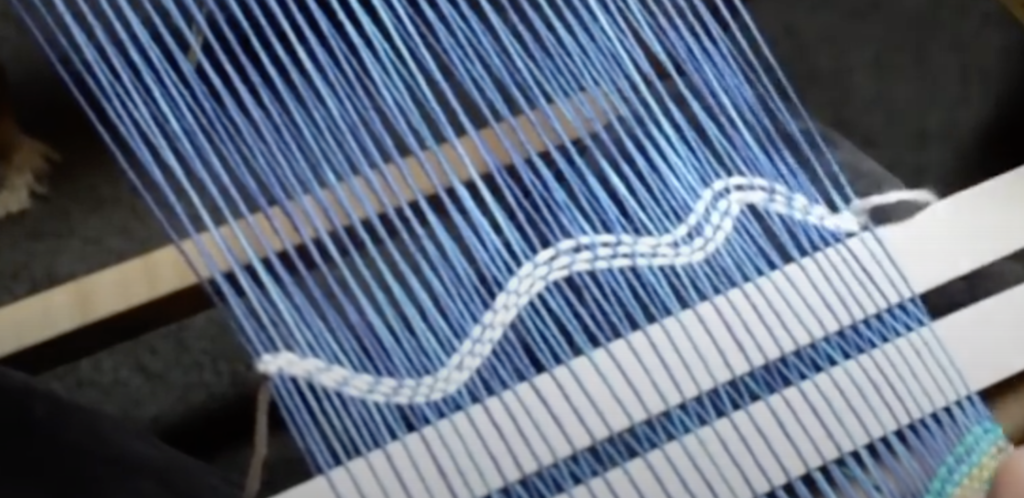
Admittedly, my first attempt at butterflies looked rather spider like, but the second lot were much better. Whatever the case, this is a fun and unique technique where you use a pick up stick to make extra long floats and then CUT them while on the loom! Pretty wild, huh?

In conjunction with the PDF I have for you here, you will definitely want to check out the corresponding video for a full demonstration of all the techniques. You can view that here:

In the video, quite a few links were mentioned. I’m putting them here so that they are easy for you to find-

Online Weaving School

Sampleit loom

Woe to Go! Beginner Rigid Heddle Weaving class

Neat edges for colour changes video

I hope you really enjoy this little sampler project and that it gets your creative weaving juices flowing over! Which of the three techniques is your favourite? Will you weave a sampler of your own?

Stay tuned, as next week I will have part two of this series ready with even more techniques for jazzing up your plain weave!

Until then…

Happy Weaving!

Filed Under: Free tutorial, Rigid heddle weaving, Rigid Heddle Weaving Patterns, Tutorials, Weaving Tagged With: plain weave, rigid heddle weaving, rigid heddle weaving patterns, rigid heddle weaving tutorial

Colour and Weave Basics for Beginners: Plain Weave Patterns That Pop

by Kelly 12 Comments

Recently I was talking about patterns for the rigid heddle beginner (you can read that post here if you missed it). I briefly mentioned Colour and Weave as an additional technique to jazz up your weaving, but decided that it would need to have it’s own discussion, as it is so versatile and varied.

Firstly, what is colour and weave?

Well, it’s very simple. It’s the introduction of colour, usually in a set sequence, first in the warp and then also in the weft. When you begin weaving, that is when the magic happens!

The prearranged colours cross paths and have a party on your loom 🥳

Plaid, which I discussed recently is a type of colour and weave, as you have set colours in set amounts in the warp and then cross with the same colours and amounts in the weft. Take a look at this post if you want to see some examples of plaids I made on my weaving software.

*This post contains some affiliate links. For further information please see my disclosure policy.

Candy Store Scarf

When the warp and weft colours cross over each other, they can produce some very interesting effects. You can use colour and weave in all kinds of weave structures, but it works great for plain weave and is perfect for the newer weaver. You are still weaving your familiar plain weave, but it can look very different! My Candy Store Scarf is the perfect example of this.

Colour and weave is wonderful for the rigid heddle weaver as it is such a simple “next step” once you have practiced plain weave and are looking for a new and interesting challenge.

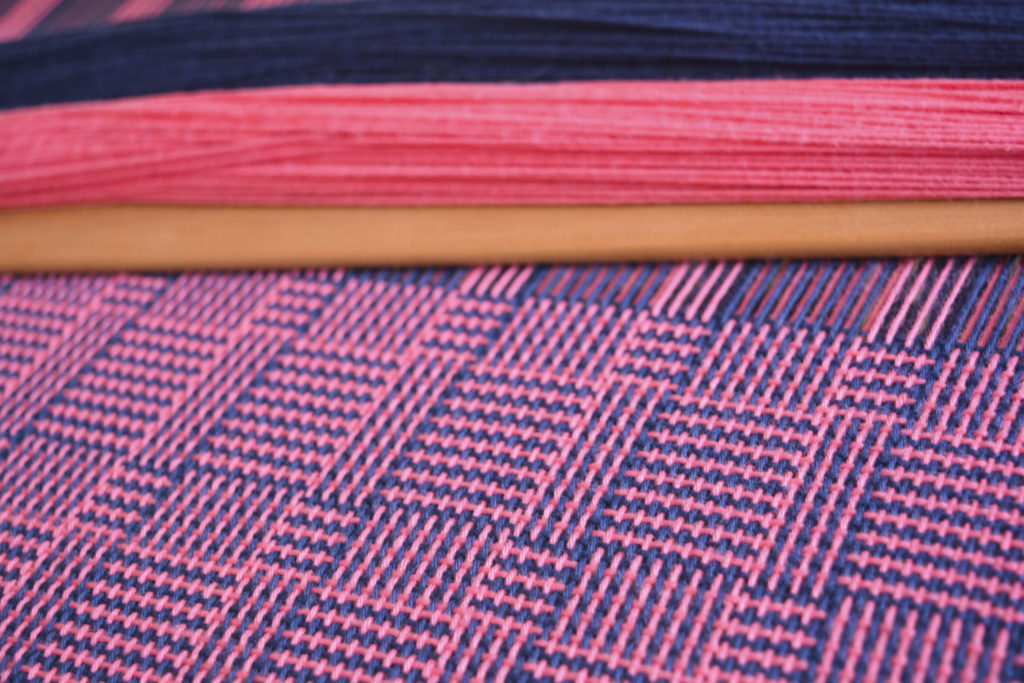
Log Cabin

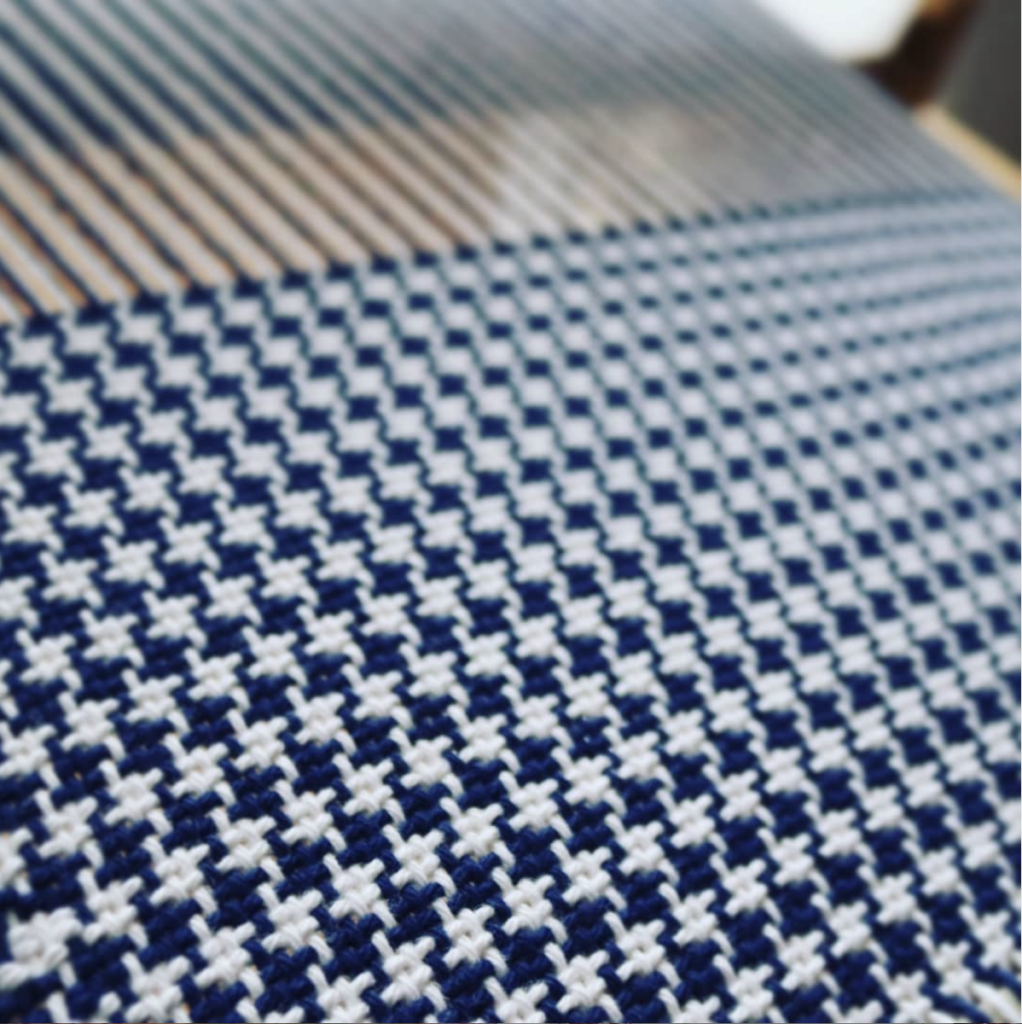
Some of the most famous and popular examples of colour and weave are Log Cabin and Houndstooth. These are often considered a “next step” for weavers venturing out from limited colour plain weave.

Although you can use multiple colours for both of these weaves, it can be a good idea to limit the colours to two that contrast well, otherwise the beauty of the crossing colours can become a bit lost.

Houndstooth colour arrangement is very simple, whereas log cabin is a little more complicated and warping can take quite some time. So, if you are a newer weaver, definitely have a go at houndstooth before attempting log cabin.

Houndstooth

Jane Patrick’s “The Weaver’s Idea Book” is a great resource for getting started with this technique. She has a section on weaving a colour and weave sampler and it includes many examples or suggestions for colour arrangements.

If you’re interested in exploring colour and weave, you have come to the right place! Here is a list of resources I have that can help.

Log Cabin Table Runner Class

Log Cabin Rable Runner PDF

Houndstooth Placemats Class

Candy Store Scarf PDF

The Town Bag PDF

The Weekend Scarf PDF

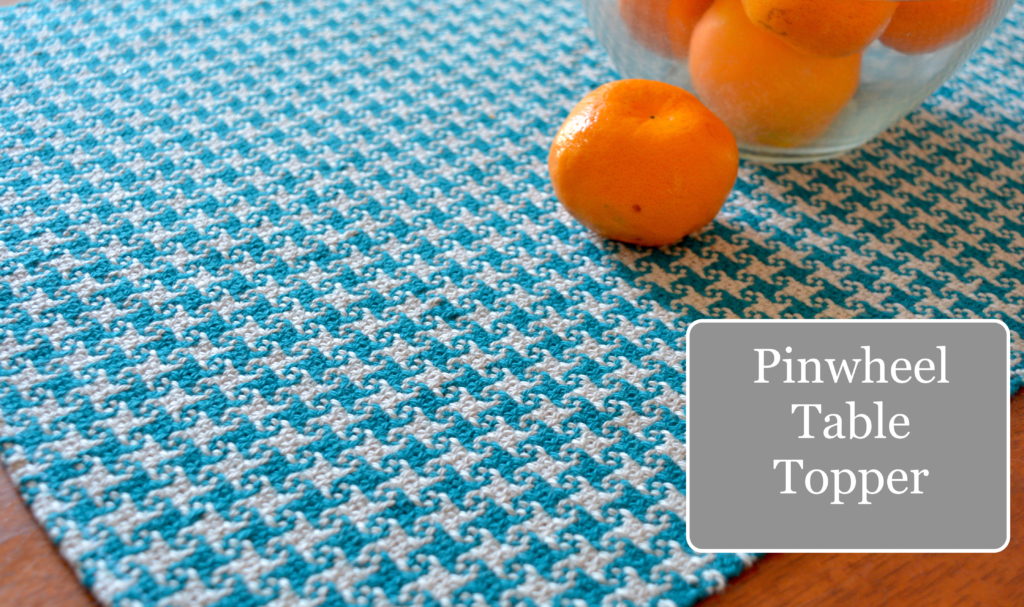
Pinwheels

Finally, I want to mention the applications of colour and weave beyond 2 shafts. Pinwheels are an easily recognisable example of this and can be woven on 4 or 8 shafts. Even though there are more shafts, the initial warp colour setup, then weaving colour sequence is still an essential aspect. My Pinwheels Table Topper class shows you how to set up your rigid heddle loom to weave this beautiful 4 shaft pattern.

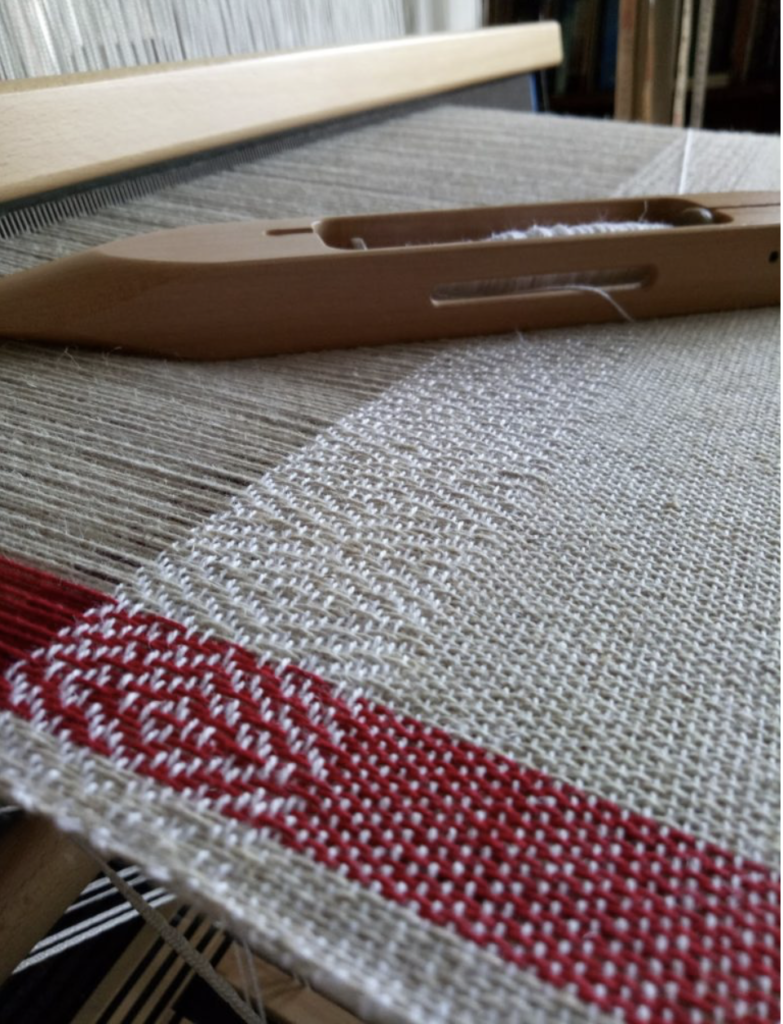
When you get into 4 shafts and beyond, you can play around with your colour placement in the warp and weft in order to highlight certain areas of pattern. When I wove some bread towels for myself, I included a contrasting strip of red in the warp.

This is really not a colour and weave because I had already threaded the loom with the intended pattern – the pattern didn’t appear strictly because of my colour placement.

But I still think it’s worth mentioning to highlight how patterns can appear or at least become more prominent when selective colour arrangement is used. If I had planned this piece better, I would have ensured in the design process that the strip of red was going to be wide enough for one full repeat of the pattern – you can see part of the pattern has been cut off.

Another example from a 4 shaft project for the floor loom or table loom weavers is the Bright and Beautiful Towels.

This project uses a twill weave structure but strategically uses colour in the warp and weft so that they meed at specific points of the pattern AND so that they weave squares. This twill pattern is beautiful to begin with, but playing with the colour arrangement makes it truly unique and eye catching.

I think it’s a wonder that so many fascinating patterns can appear just by the meeting of colour!

I hope you enjoyed this post, and please leave any thoughts of questions you may have in the comments below – I would love to hear from you!

Until next time…

Happy Weaving!
Help Support My Free Content 😀

Filed Under: Colour and Weave, Pinwheels, Rigid heddle weaving, Rigid Heddle Weaving Patterns, Weaving Tagged With: colour and weave, weaving

What is Clasped Weft? A step by step tutorial.

by Kelly 23 Comments

Just when you think you’ve tried everything in weaving, you come across something different, like Clasped Weft.
Clasped weft can be a great “next step” for newer weavers with a few plain weave projects completed and who are ready for something a bit more adventurous.
The cool thing about weaving clasped weft is that, similar to Colour and Weave, most of the work is in using colours to make your weaving look fancy, when in actual fact it is quite simple.
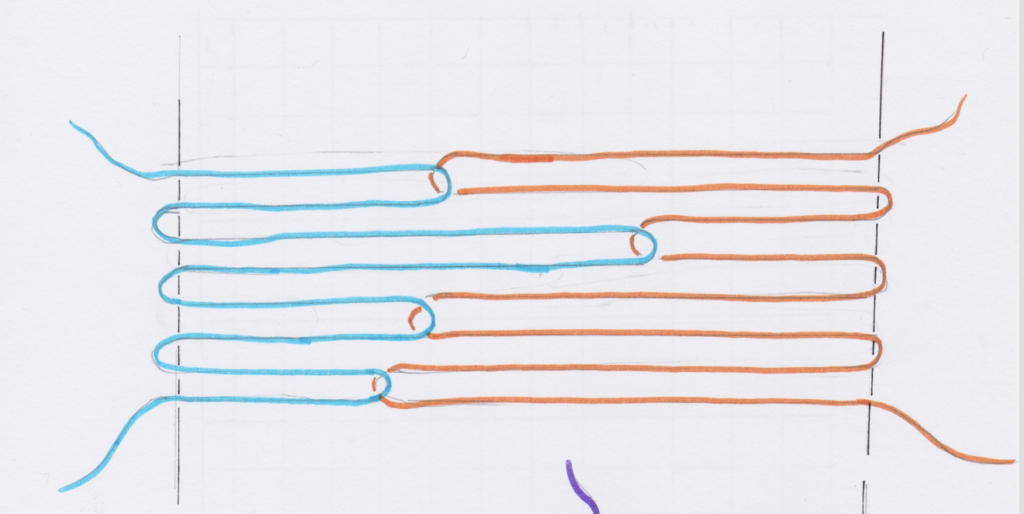
The clasped weft technique uses 2, 3 or 4 interlocking weft colours. Using 2 colours to begin with is the easiest and least complicated approach. If you have done any tapestry, you may already be familiar with the interlocking technique.
*This post contains affiliate links. for more information, see my disclosure policy.

We mainly use a plain weave structure (though clasped weft can actually be used in other structures, such as twill). It is a perfect technique for a rigid heddle loom, because, although it’s simple, it looks special and has big impact.


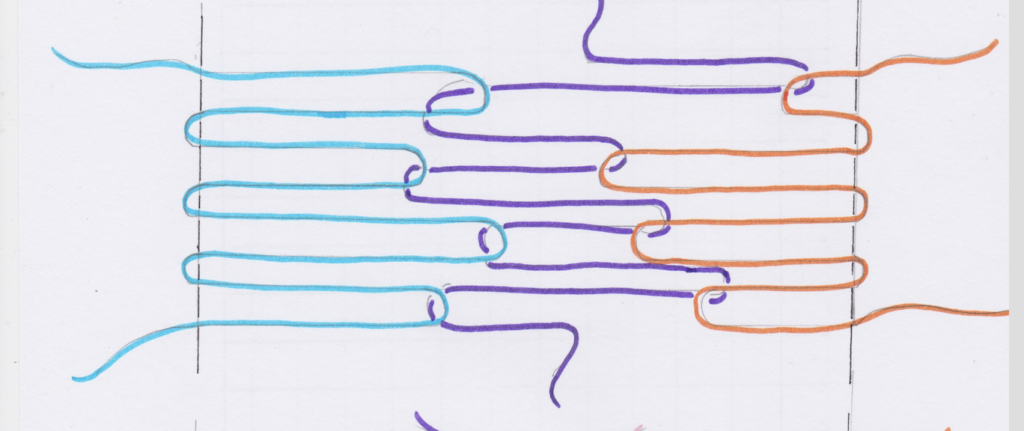
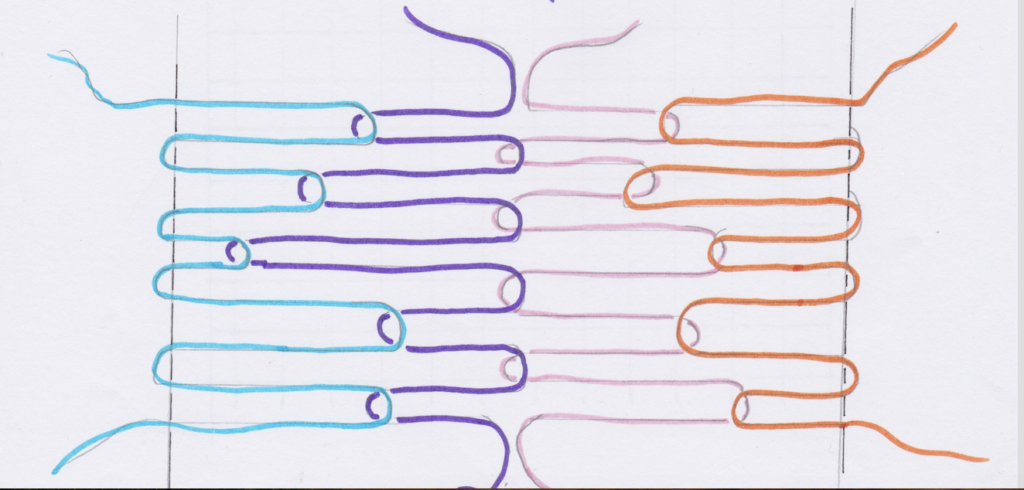
Before we go through the tutorial steps, let’s look at some (rather poorly drawn, sorry about that!) diagrams to get a clearer idea of how this works. The drawings are over simplified, as I haven’t drawn in the warp and weft interlacement, but I have drawn in the edge warp threads:

Clasped weft with 2 weft colours.

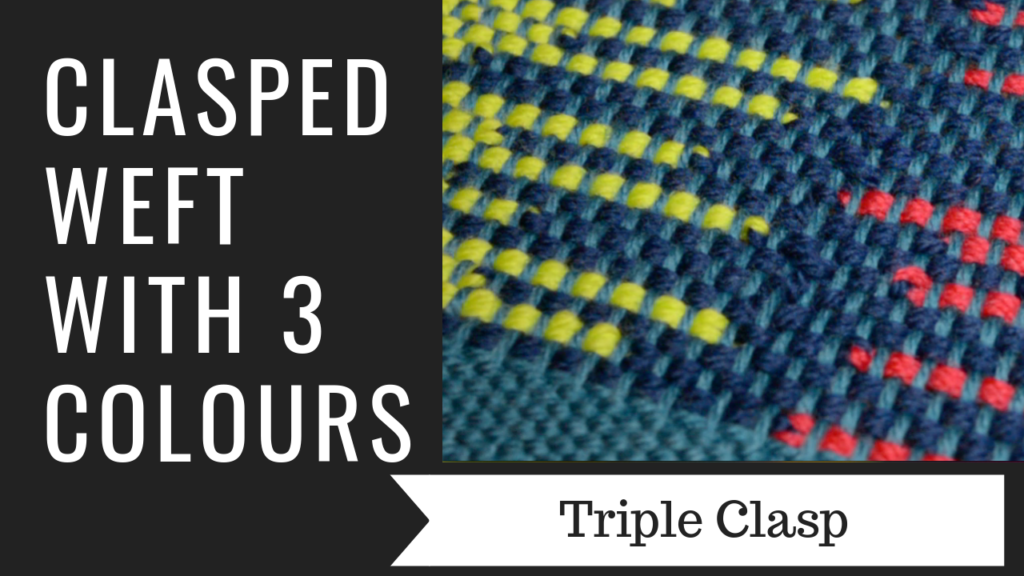
Clasped weft with 3 colours.

Clasped weft with 4 colours.

Now let’s go through the tutorial steps so that you can get clear on how clasped weft is actually woven. Today, we are just focusing on working the two weft colour technique, as I believe this is the best place to begin if you’re not familiar with clasped weft or haven’t attempted it before.
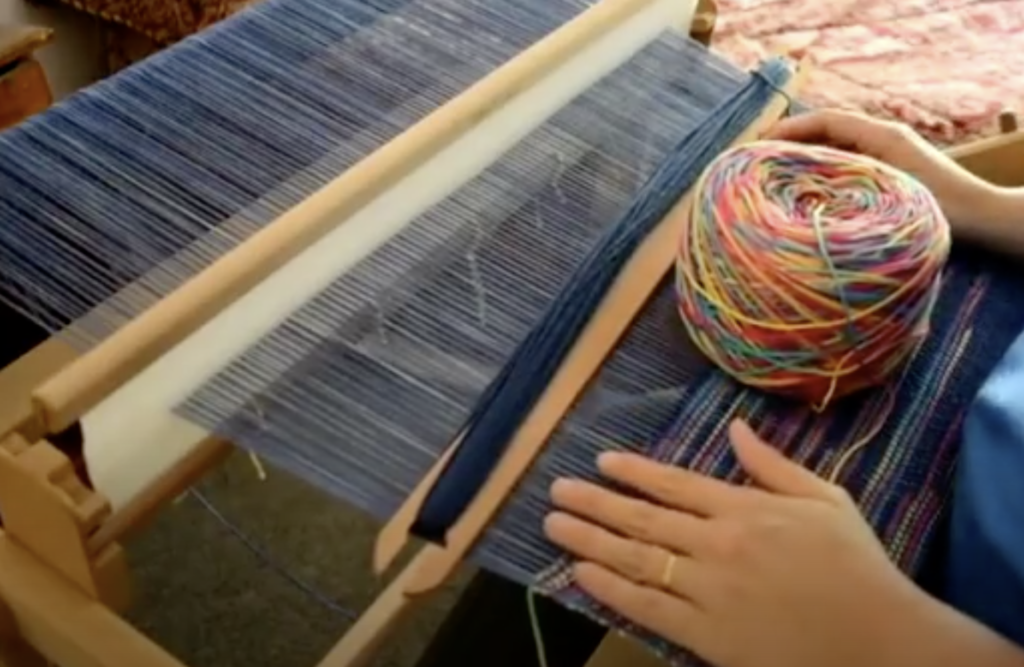
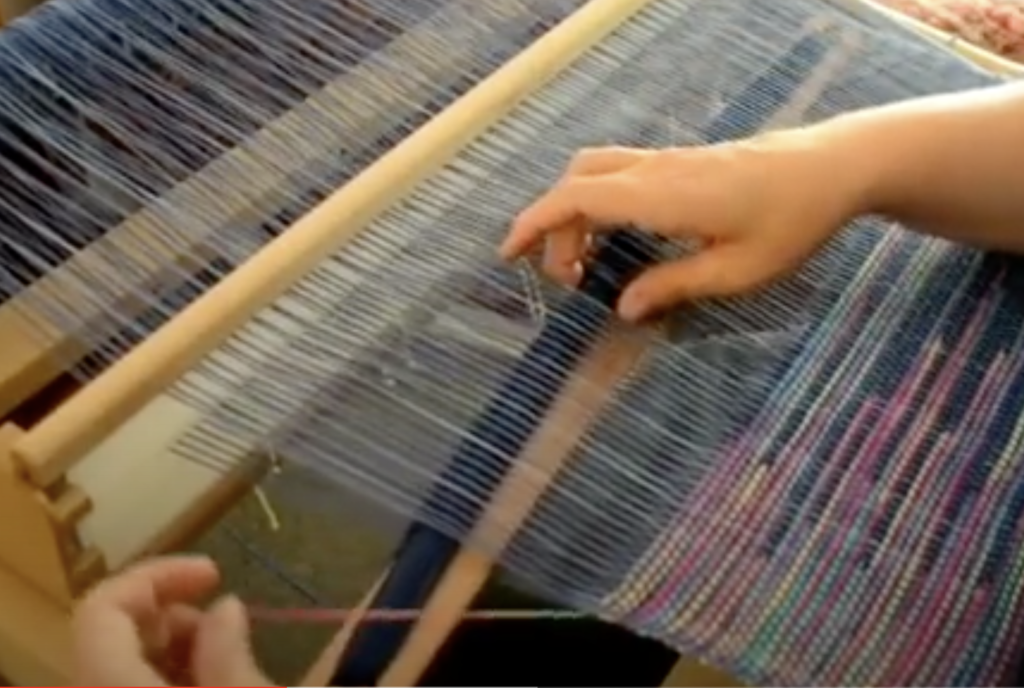
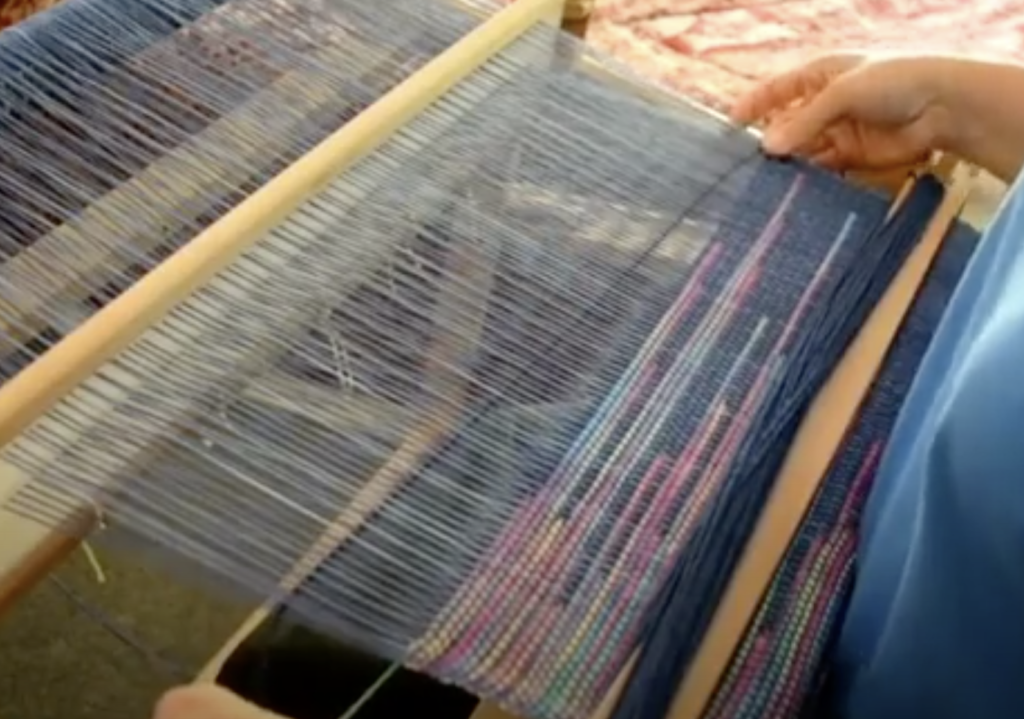
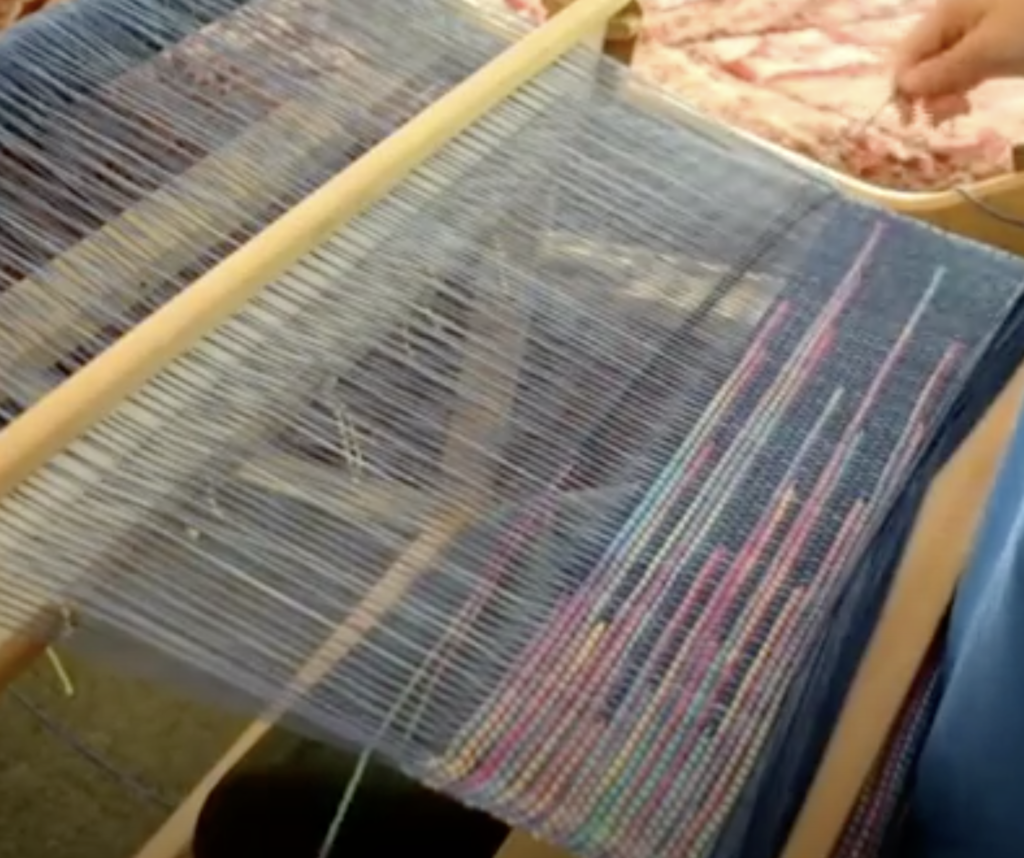
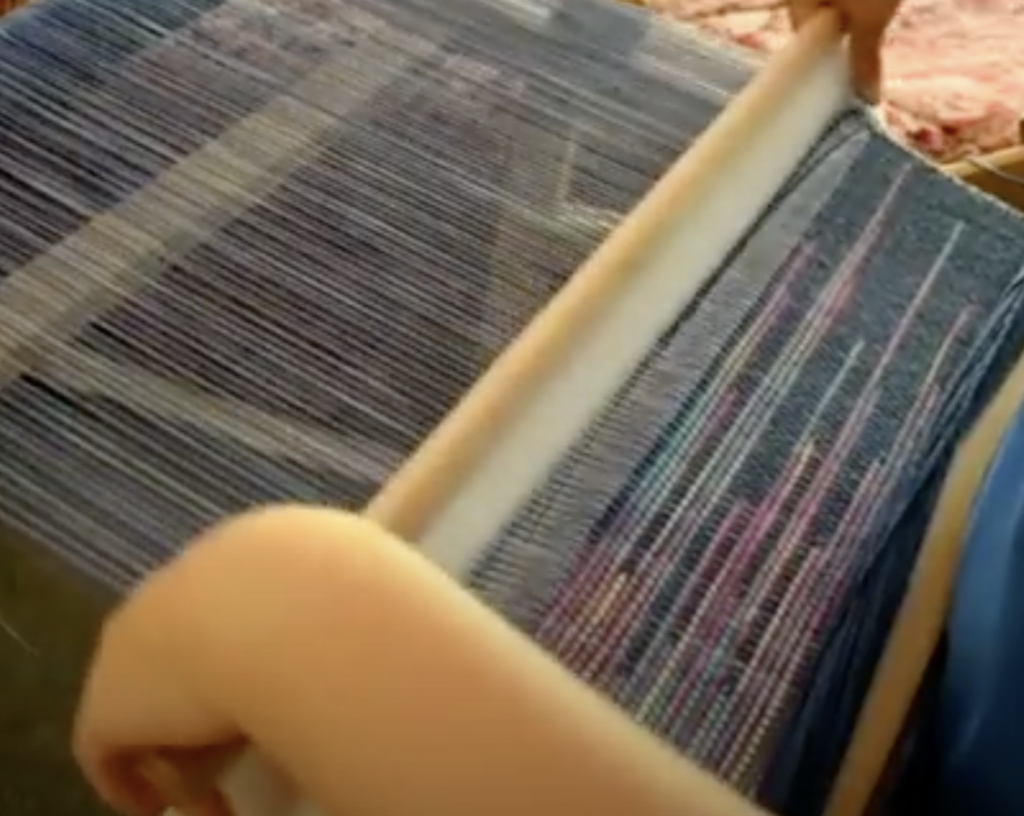
Begin with two contrasting weft yarns of the same weight. I have used one with a dark navy colour and another that is variegated with bright colours.
See the tips section below for more on why variegated works perfectly.
My warp and weft yarns were all light worsted/dk/ Australian 8 ply weight. Wool, acrylic or cotton are all fine.
One weft yarn is loaded onto a stick shuttle, in my case this was the dark navy. The other colour is left in a ball or on the cone. My variegated colour was in a skein and so I wound it into a yarn cake with my ball winder.
A yarn cake (also known as a centre pull ball) is particularly good to work with for clasped weft, because it sits nice and flat on the floor and won’t roll away. The yarn also feeds off the yarn cake seamlessly, which makes the whole process that little bit easier. If you have a ball, you may want to sit it in a box or basket on the floor to contain it.
Place the ball of yarn on the floor at your left. It doesn’t matter if you place it on the right or left, but for the purpose of this tutorial it’s on the left.
Because the ball (let’s call it the contrast yarn) is on the left, we enter the shed with the stick shuttle on the right. Again, it doesn’t matter whether you are in the up or down shed, but I am beginning in the down shed.
Take your stick shuttle across from the right hand side to the left as though you’re going to weave a regular plain weave pick.
When your shuttle reaches the left hand side, pick up the contrast yarn and place it over the top of the stick shuttle.

Take the shuttle the rest of the way through the shed at the left – as you would for your normal plain weave pick.

On the right hand side (where your shuttle entered), tidy up and prepare your weft yarn as though you’re going to beat the pick in. If you’re not familiar with how to do this, watch my free video on How to Weave Neat Edges.  DON’T BEAT.

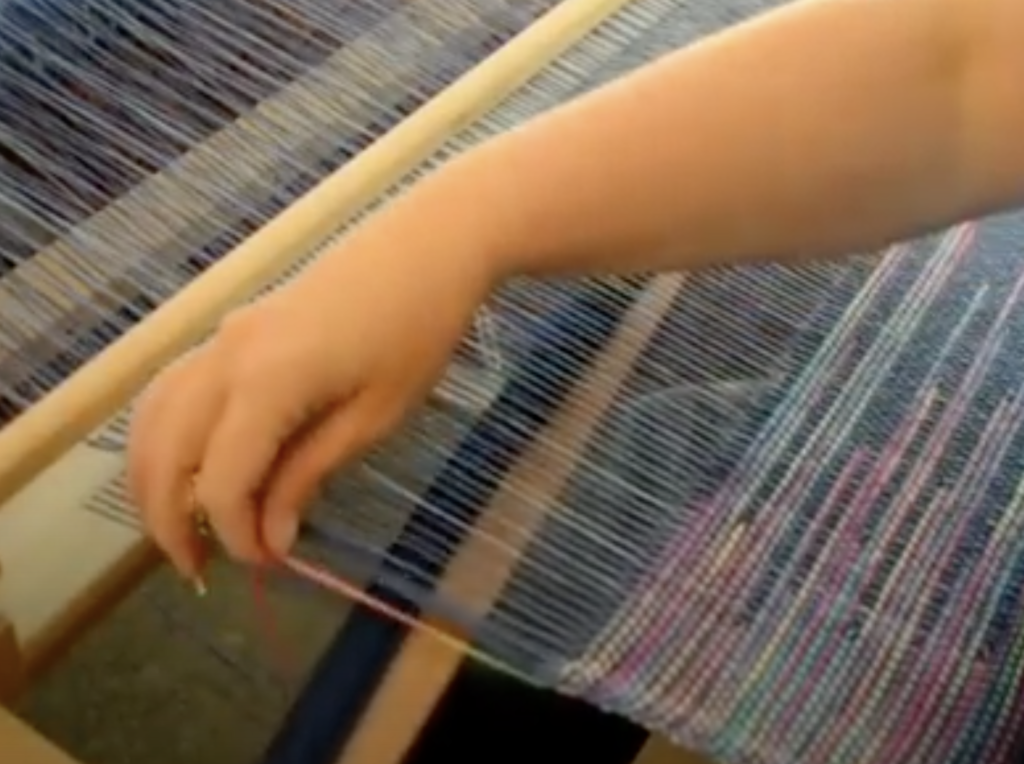
Take the shuttle straight back into the same shed. Don’t change sheds, and don’t beat! Take the shuttle through, back to the right where you first entered the shed.
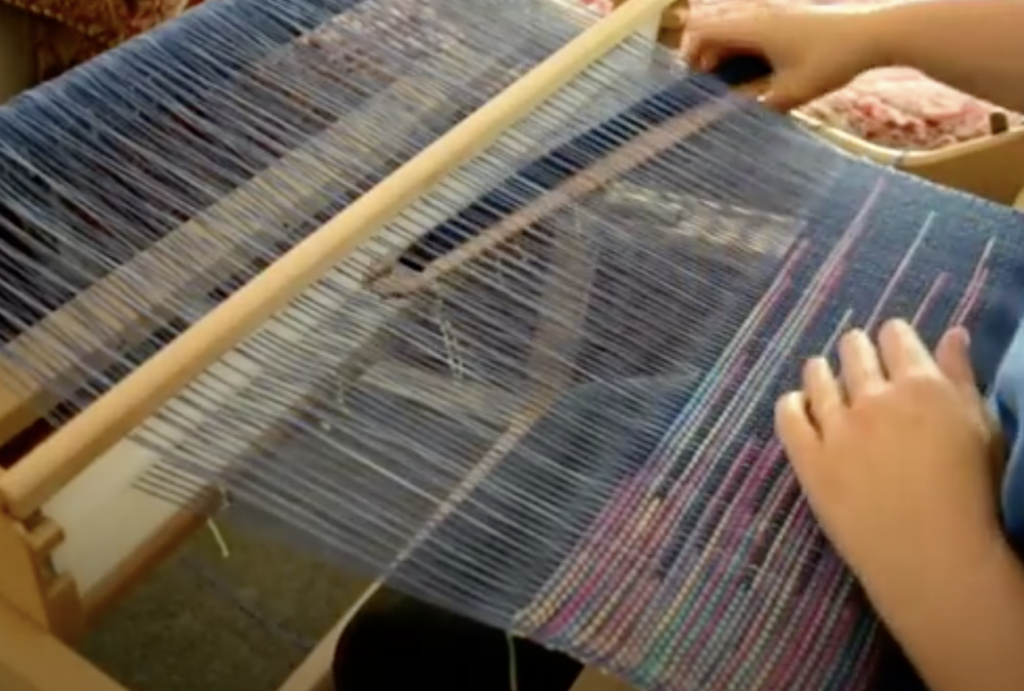
As you return the shuttle to the right, you will find that the navy yarn is linked or clasped with the contrast yarn. This means that the contrast yarn is pulled into the shed. Now you get to decide how far you will pull the contrast yarn into the shed. A little? A lot? Your choice, depending on the effect you want to achieve.
Hold both yarns under tension on either side to manipulate where you want the two yarns to go.
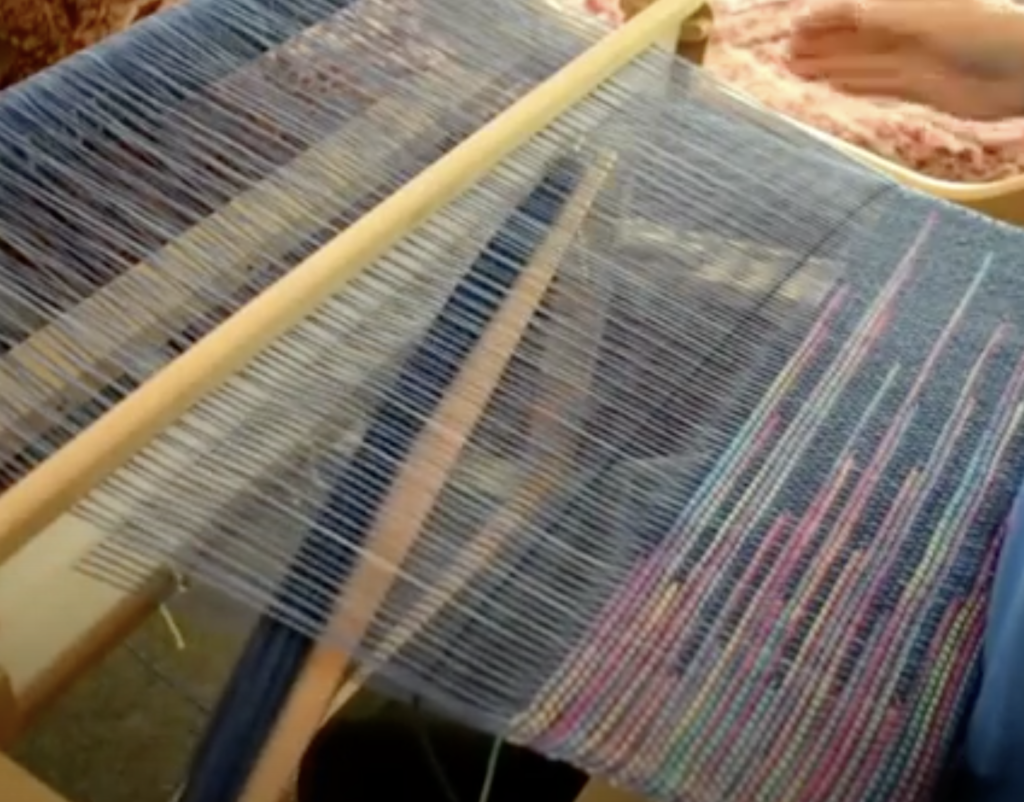
When you’re happy with the yarn positioning, beat the picks into place. You will notice that both yarns are now doubled in the shed.
Change to the next shed (in my case I had been working in the down shed, so I go on to change to the up shed).
Continue weaving in the exact same manner in the new shed and repeat until you’ve finished weaving.
Isn’t your head just swimming with all the possibilities of this wonderful technique?
Clasped weft can be extremely planned or extremely random. It looks wonderful both ways and is just so much fun to weave.
Here are a few recommendations for best results:
1. Use contrasting weft colours.
Light and dark will make the weaving pop. 
2. Use the same weight yarn for both warp and weft.
You will get better results and avoid the not so pretty lumps and bumps that can occur at interlocking points.
3. Variegated yarn is perfect for this.
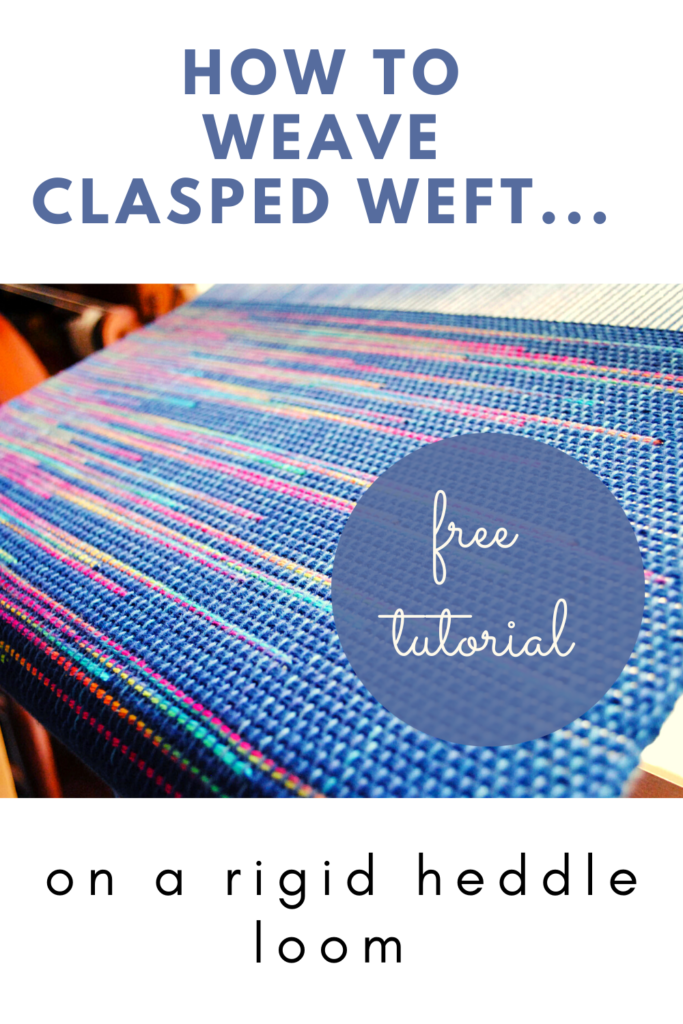
For the 2 colour clasped weft technique, a variegated yarn with a contrasting yarn looks really cool! (See photos below and above).

              4. Using the same colour as the warp for one of your weft colours works great.

Too much colour can confuse the contrast of the clasped weft lines. In the tutorial, I used the same navy yarn for warp and weft no.1. I then used a contrast yarn for weft no.2.

If you like the look of clasped weft as much as I do, I have some great news for you! I have 3 free Youtube video tutorials that will teach you each of these techniques. Start with video 1 so that you can practice the technique, before moving on to the others. 

Clasped Weft with 2 colours
Clasped Weft with 3 colours
Clasped Weft with 4 colours
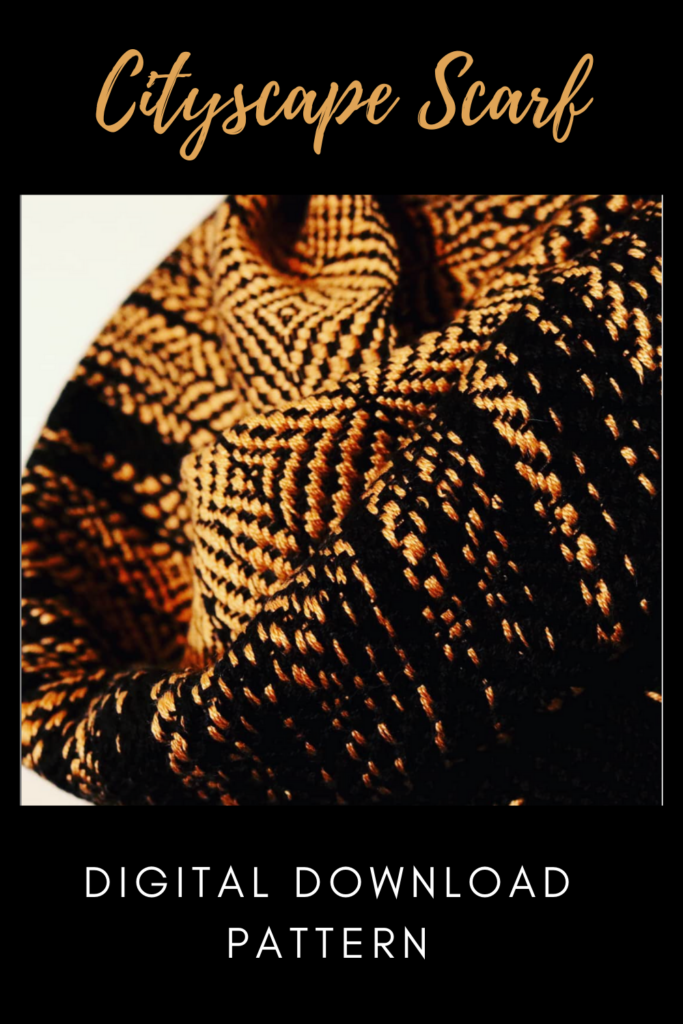
I mentioned that the clasped weft technique can also be used for other weave structures. This can create really interesting and impressive special effects. One of my Etsy patterns, The Cityscape Scarf is a perfect example of a clasped weft combined with a twill.
Try it out and let me know what you think. Leave me a comment here or under any of the Youtube videos, I love to hear from you!
Until next time…
Happy Weaving!
Filed Under: 4 shaft weaving, Free Pattern, Free tutorial, Inspiration, Online Weaving School, Rigid heddle weaving, Rigid Heddle Weaving Patterns, Tutorials, Weaving Tagged With: clasped weft, my youtube channel, rigid heddle weaving tutorial, weaving

Weaving for Christmas

by Kelly 3 Comments

My favourite time of the year is coming and what better way to celebrate the festivities than by weaving for family, friends and your home!


I have quite a few free video tutorials to get those creative juices flowing:

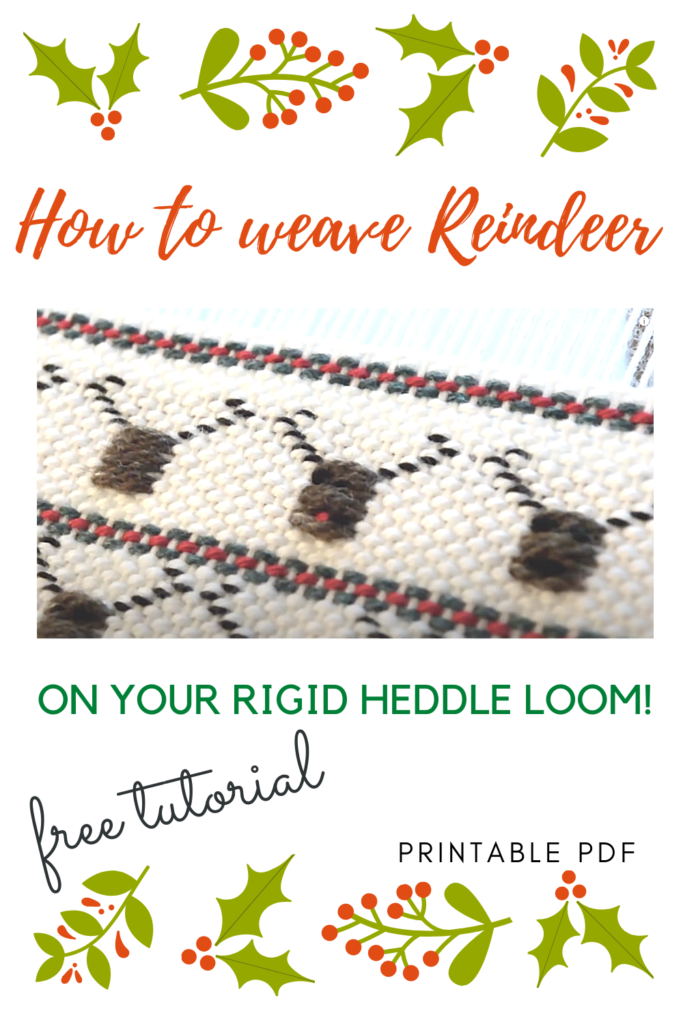
Reindeer on a rigid heddle loom


Handwoven No Sew Christmas Hearts


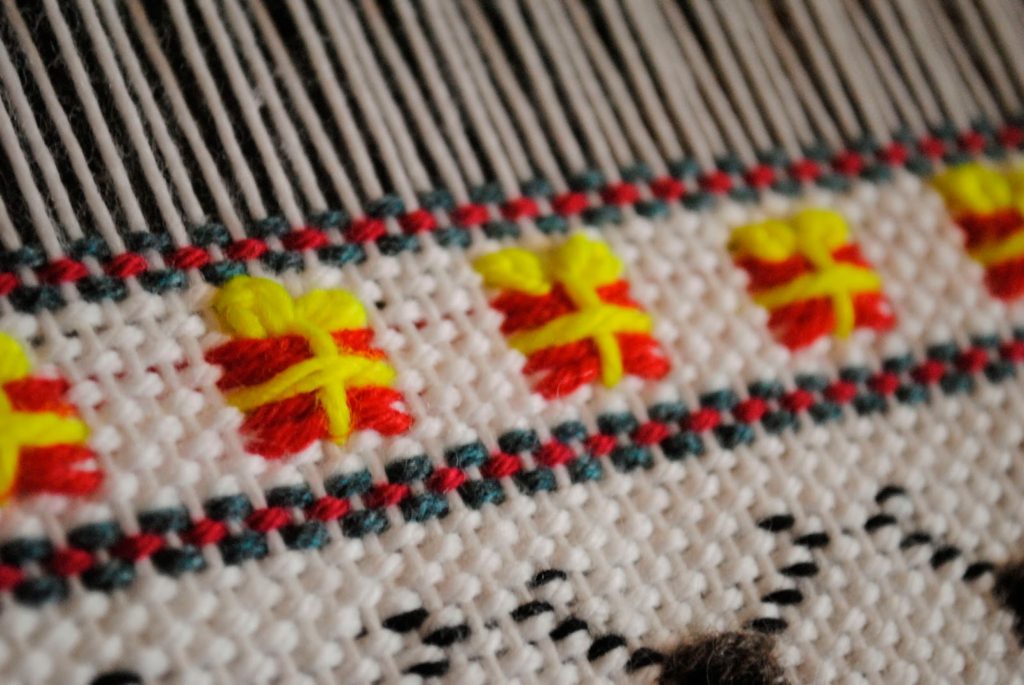
Gift boxes on a rigid heddle loom

Winter Trees

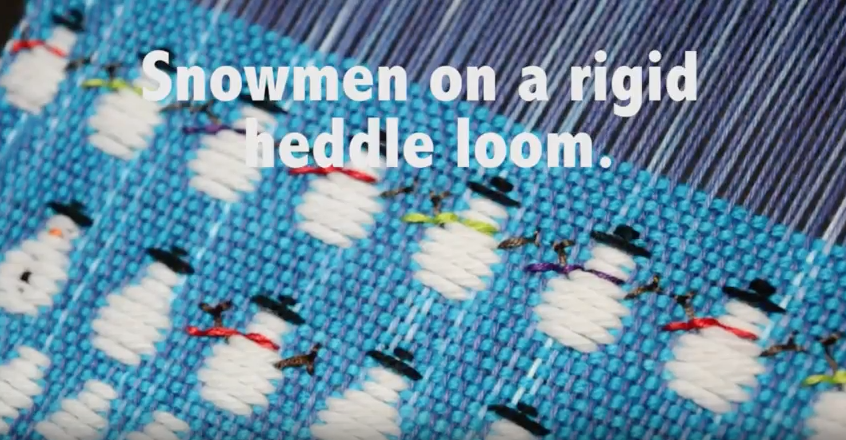
Snowmen on a rigid heddle loom

I also have some festive classes available at my Online Weaving School:
Exploring branoe 
                                                Christmas Table Runner
 
Christmas Bunting

I hope these inspire you to add some beautiful hand woven

Christmas cheer to your home or someone else’s!

Until next time…

Happy Weaving!
🎄 🎄🎄🎄🎄🎄

Filed Under: Free tutorial, Inspiration, Online Weaving School, Rigid heddle weaving, Rigid Heddle Weaving Patterns, Tutorials, Weaving Tagged With: Celebrations, christmas, Kelly casanova weaving lessons, rigid heddle weaving, rigid heddle weaving tutorial

Can you really weave that on a rigid heddle loom?!

by Kelly Leave a Comment

I hear that a lot. And most of the time, the answer is yes!


Take my newest pattern release as an example. Did you know I have 2 patterns in my Etsy shop now? Yes, I’ve been a busy little bee.

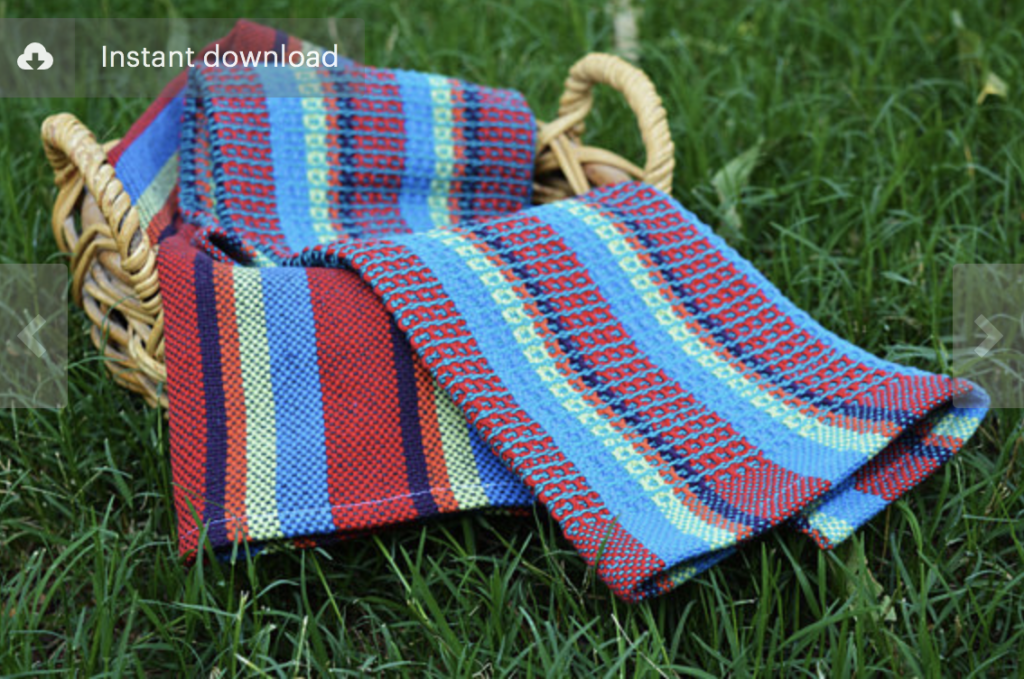
My new project is entitled “Happy Fibonnaci Kitchen Towels”. “Happy” because of the happy colours and “Fibonacci” because I based the design on the Italian mathematician’s sequence. These are a perfect example of using the rigid heddle loom to obtain the WOW factor.


With the right arrangement of colours and a pick up stick you can weave a towel that looks like it’s hot off a multi shaft loom.

I hope you find the time to weave some beautiful towels for your kitchen or to give as a special gift.

Filed Under: Rigid heddle weaving, Rigid Heddle Weaving Patterns, Weaving Tagged With: Etsy, kitchen towels, my pdf patterns, rigid heddle weaving, rigid heddle weaving tutorial

Double heddle weaving

by Kelly 1 Comment

Recently on my Weaving Lessons channel, we explored some of the possibilities of weaving with two heddles on a rigid heddle loom. It’s these sort of techniques that really open up the imagination of what can be achieved on this humble loom. We covered sett, patterning, twill, double layer and tube weaving. Fascinating stuff! 

I love to polish off a series with a project or two, to enable students to see the new techniques in action and apply them practically.

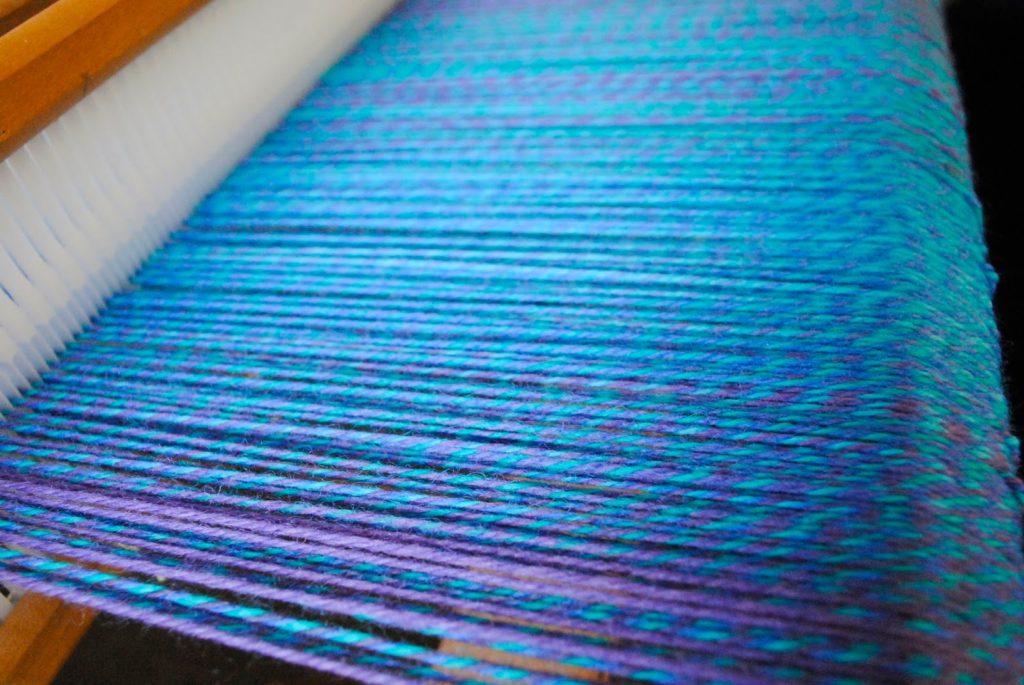
I’m not telling what the project is (yet), but if this warp is anything to go by, it’s going to be a beauty! This pure new wool is “Bloom” from Bendigo Woollen Mills and is just a delight to look at, a beautiful intricacy of colours.

I’ll be back once the videos for this project are posted, stay tuned!

Filed Under: Free tutorial, Online Weaving School, Rigid heddle weaving, Rigid Heddle Weaving Patterns, Tutorials, Weaving Tagged With: my youtube channel, rigid heddle weaving, rigid heddle weaving tutorial, weaving, wool

Honeycomb without the calories

by Kelly 6 Comments


The title is a little misleading, I am, of course referring to the weave structure honeycomb rather than something edible. 

It is a gorgeous structure though, and one that is easy to achieve despite the fact that it looks quite involved. 

Check out my latest video series on weaving honeycomb on a rigid heddle loom.

Follow this link to the introductory video!

Filed Under: Free tutorial, Rigid heddle weaving, Rigid Heddle Weaving Patterns, Tutorials Tagged With: honeycomb, my youtube channel, rigid heddle weaving, rigid heddle weaving tutorial

  • « Go to Previous Page
  • Page 1
  • Page 2
  • Page 3
  • Page 4

Primary Sidebar

About Kelly Casanova

Hand crafted boat shuttles

Categories

Archives

Meta

  • Log in
  • Entries feed
  • Comments feed
  • WordPress.org

Copyright © 2026 Kelly Casanova Weaving Lessons on the Foodie Pro Theme