• Skip to main content
  • Skip to primary sidebar

Kelly Casanova Weaving Lessons

  • Hi! I’m Kelly!
    • Disclosure
  • Online Weaving School Class Index
    • Common account issues
    • Common technical issues
    • What do I get with a membership?
  • New to rigid heddle weaving? Start here!
    • Never heard of the rigid heddle loom?
    • How to weave neat edges on the rigid heddle loom
    • Rigid heddle weaving
    • Rigid Heddle Weaving Patterns
  • Patterns
  • Subscribe

Rigid heddle weaving

Do I need to pack the front beam?

by Kelly 17 Comments

When warping our rigid heddle looms, we are careful to pack the back beam as we wind on the warp. This may be done with a variety of materials, and some are more effective than others. It can be a personal preference too!

What a lot of weavers don’t seem to be so familiar with is the idea of packing the front beam. Quite often, when I’m troubleshooting with a student and I ask if they’ve packed the front beam, they seem surprised by the question. Packing the front beam? I’ve never heard of that!

*This post may contain affiliate links. For more information, please see my disclosure policy.
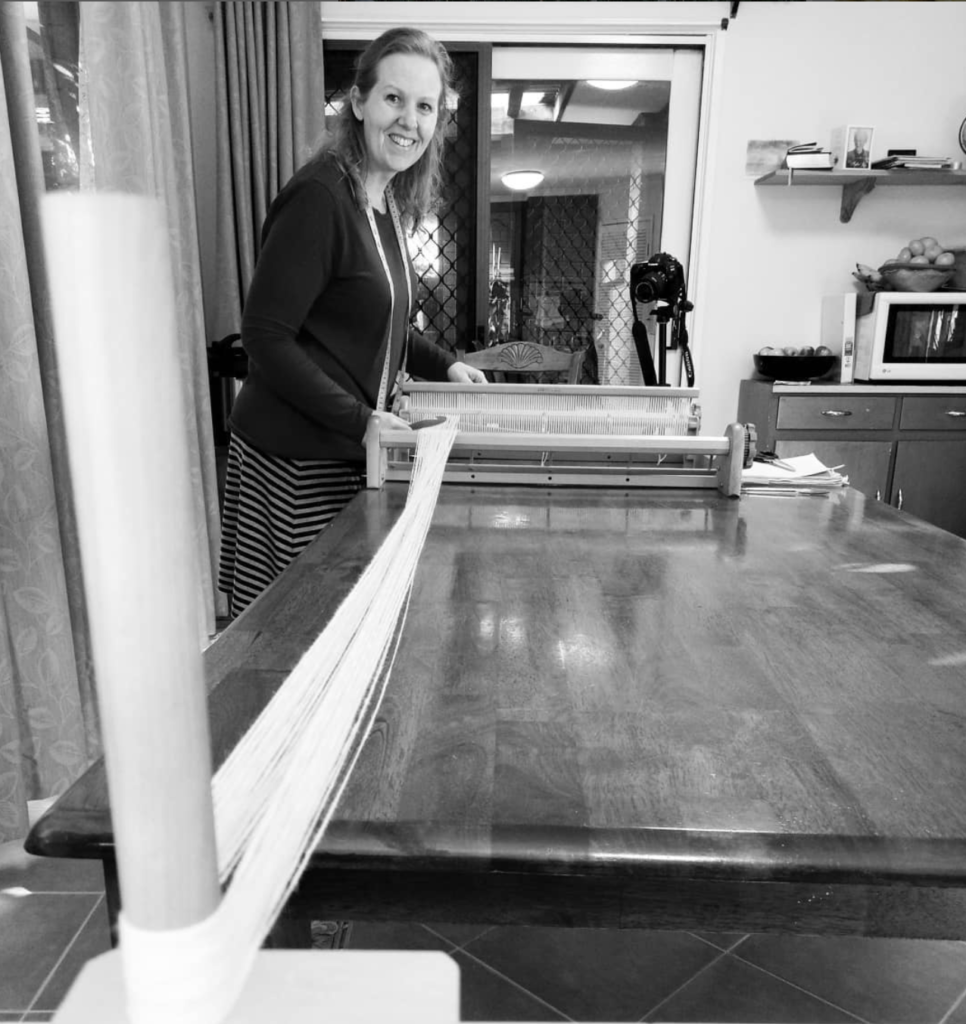
So, why would you want or need to pack the front beam? And what exactly do I mean by that?

Let’s start with the definition so we’re all on the same page!

Packing the front beam is simply introducing something extra to separate the warp as you weave and it begins to roll around the front beam.

Now we can look at the why. There are a couple of reasons as to why packing the front beam is a really good idea.

When you have finished warping and threading, you then need to tie or lash on your warp onto the front apron rod. Doing this results in knots or bumps on the apron rod.

As you begin to weave and advance your warp, you will reach the point where your warp is rolling around the front roller beam and onto itself. As this advancing of the warp happens, the knots, plus the apron rod ties can begin to have a detrimental effect on your weaving.

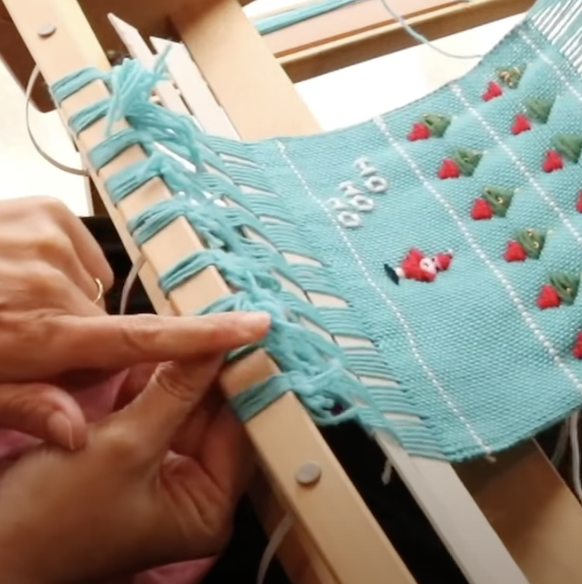
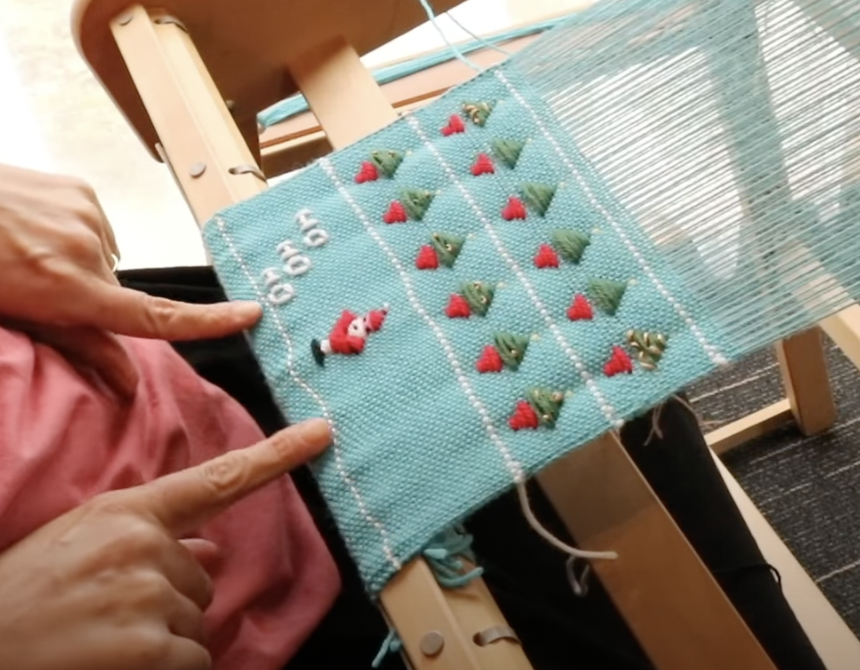
Firstly, you will likely begin to see some lumpiness at the bottom of your weaving (note that the white line of weaving that was previously straight is now a bit wavy!)

This is caused by the knots or apron ties pushing against your weaving from the underside. There are two problems with this happening:

  • The raised and lowered parts cause a change in the warp tension. The bumps tighten the tension and the dents lower the tension, so you end up with slightly uneven tension.
  • The worse case scenario is that your weaving is irreparably damaged because the knots or ties push the weaving apart. This can be more likely to happen when using a slippery thread like tencel, silk or bamboo, where your woven threads can move more easily, rather than something like wool, which is more “grabby” and unlikely to move out of place.

Fortunately there is a really simple solution to the problem, and that is to pack the front beam, or insert something that will separate those layers of fabric and act as a barrier between your weaving and the knots and ties.

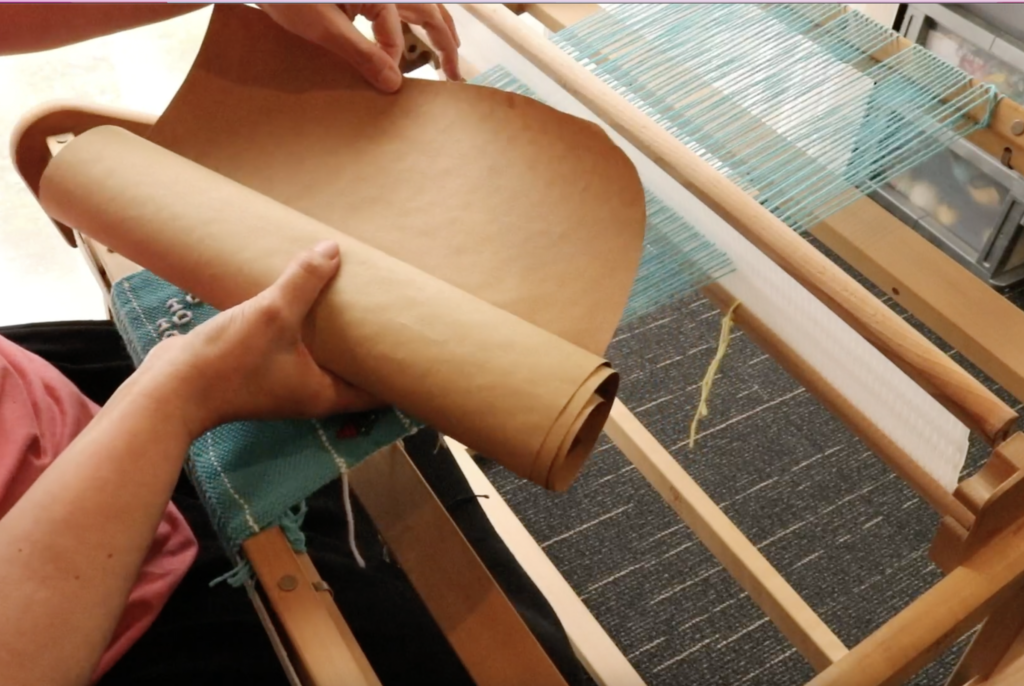
Weavers use a variety of materials for packing, and it can really be a personal preference or what you find most effective. Initially I used the cardboard separators that came with the loom, and while they do work well, I find that the brown craft paper on a roll that I now use to be the superior choice.

What I love about the paper on a roll is that it’s thick and sturdy (a thinner paper will not work in the same way as it tends to crumple while you’re trying to advance your warp), you can purchase it to the width of your loom (or if the same width is unavailable, it’s easy to cut pieces to size) and you can use it over and over, so it’s very economical.

The roll that I bought years ago is still going strong and there is still a huge amount left.

An additional benefit of packing your front beam as you advance the warp is that your overall tension will vastly improve, and will continue to do so as you continue to weave.

I pack the front beam, whether I’m weaving on my rigid heddle, table or floor loom, it is beneficial for many types of weaving.

If you would like to see how I insert the paper roll at the front beam of my rigid heddle loom, please watch this video-

Until next time…

Happy Weaving!

*This article contains affiliate links. For further information, please see my disclosure policy.

Filed Under: Rigid heddle weaving, Weaving Tagged With: pack front beam, rigid heddle weaving, weaving, weaving tips

Best Rigid Heddle Weaving Books (Updated List!)

by Kelly 2 Comments

Are you looking for the best rigid heddle weaving books to inspire your next project or deepen your weaving knowledge? You’re in the right place!

In this post, I’m sharing my favorite books for rigid heddle loom weaving—perfect for beginners through to more advanced weavers. These are the books I return to again and again, and many have helped shape my weaving journey.

📌 Pin this post for later so you always have a list of inspiring weaving reads handy!

If you’re lucky enough to have a great local library, it’s worth checking to see if they carry any of these titles. Many weaving guilds also have a library you can borrow from. But if you’re like me and your local options are a bit limited, this list can help you choose the perfect book to add to your personal weaving library.

This post contains affiliate links, which means I may earn a small commission if you click through and make a purchase. I only recommend books I truly love and use myself.

📚 My Favorite Rigid Heddle Weaving Books

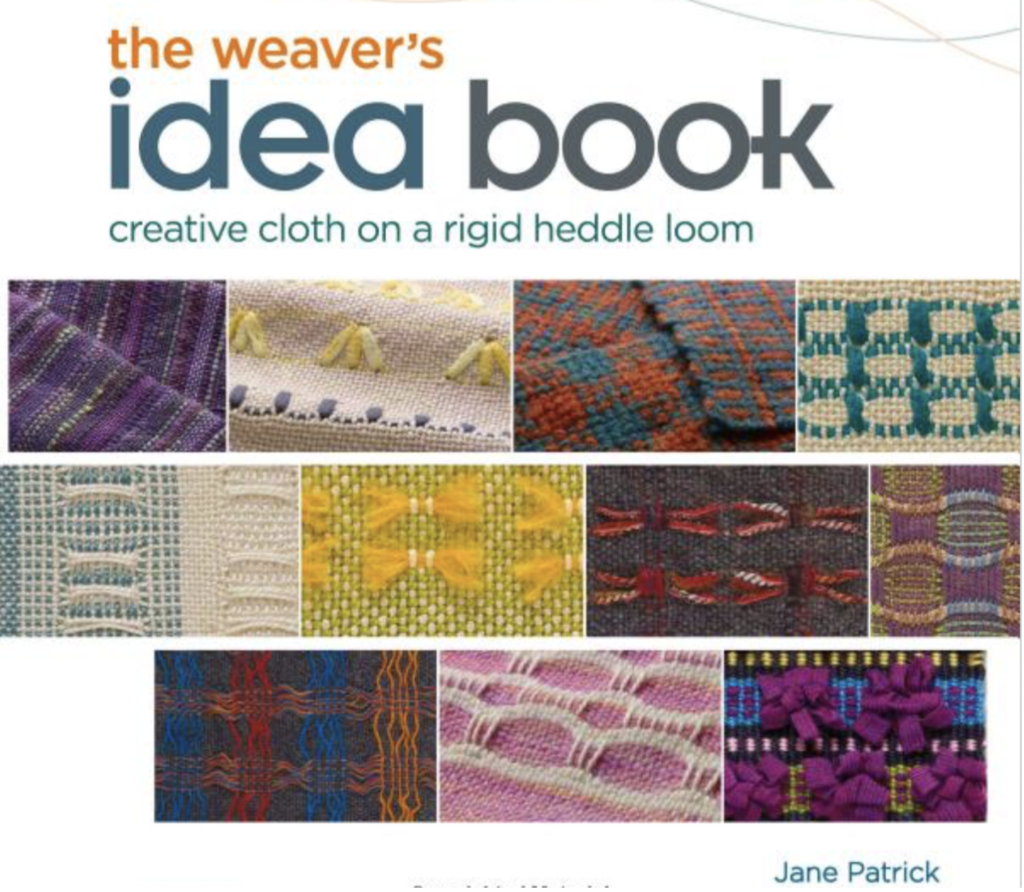
1. The Weaver’s Idea Book by Jane Patrick

If you can only buy one rigid heddle weaving book, let it be this one. This was my very first weaving book, and I still refer to it constantly. It’s packed with inspiration and guidance—ideal for beginners but with plenty to explore as you gain experience.
Spiral-bound for easy reference while weaving, it covers everything from the basics to more advanced textures and techniques. A must-have!

2. Weaving Made Easy by Liz Gipson

This is a beautiful, beginner-friendly book filled with practical advice on setting up your loom and starting your first projects. Liz has a knack for making things simple without talking down to you. The projects are approachable and satisfying for new and seasoned weavers alike.

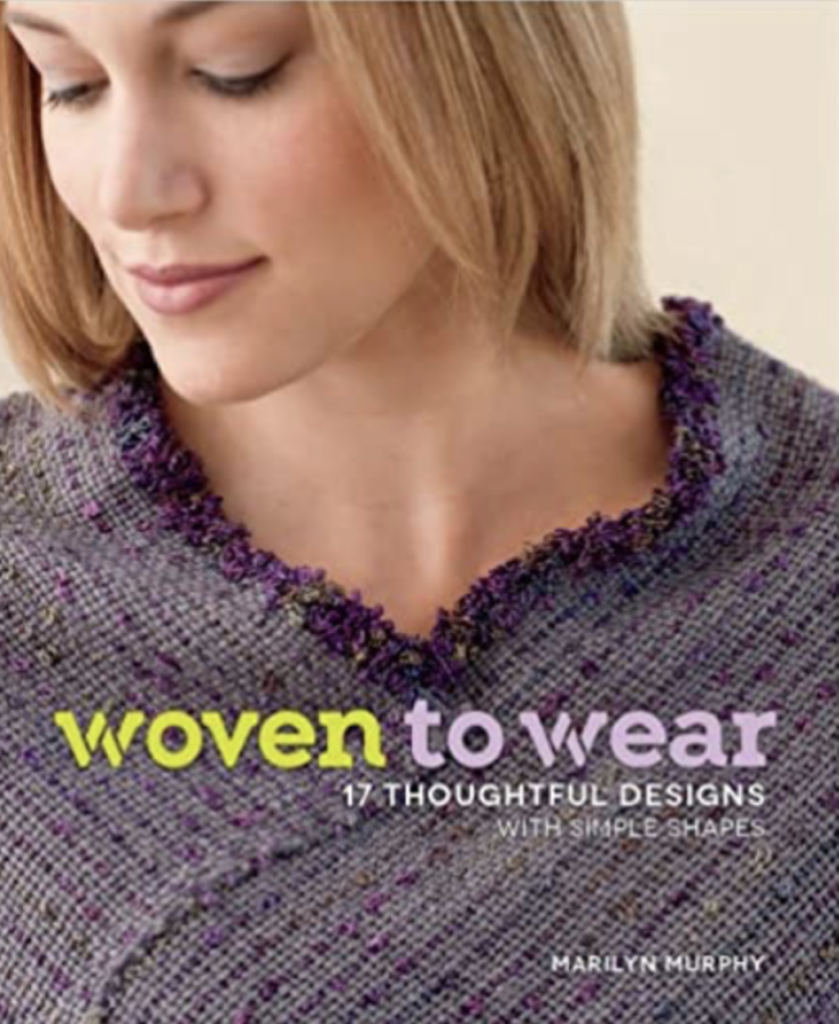
3. Woven to Wear by Marilyn Murphy

If you’re dreaming about turning your handwoven cloth into wearable art, this book is for you. With clear instructions and large, simple garment shapes, it’s beginner-friendly but full of creative inspiration. This book sparked my excitement for sewing with handwoven fabric!

4. Inventive Weaving on a Little Loom by Syne Mitchell

This book is a treasure trove of information and ideas—perfect for curious beginners and growing intermediate weavers. While some sections may feel advanced early on, you’ll appreciate its depth as your skills develop. Topics like weaving with two heddles or more and creating transparencies are covered in detail.

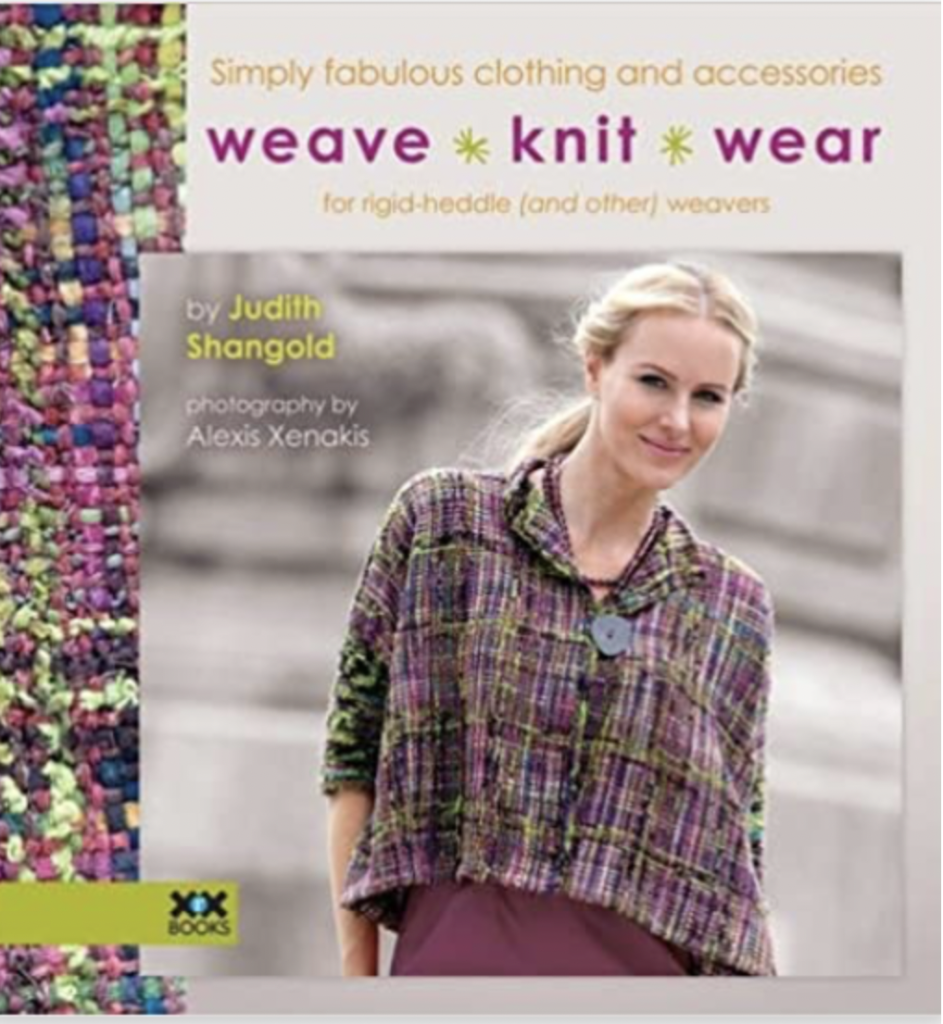
5. Weave, Knit, Wear by Judith Shangold

This book opened my eyes to the creative possibilities of rigid heddle weaving combined with knitting and crochet. Judith uses mostly plain weave but brings designs to life with color, texture, and clever garment construction. It’s incredibly inspiring and pushes you to think beyond scarves and tea towels.

Note: This book is now out of print, but you can still get a PDF version by emailing Judith directly via her website—thank you Allison for the tip!

6. Simple Woven Garments by Sara Goldberg

If wearable weaving is your thing, you’ll love this book. It features over 20 projects made from colorful, handwoven cloth—each one wearable, customizable, and beginner-friendly. I especially appreciate the tips on adjusting garment sizing for your own fit.

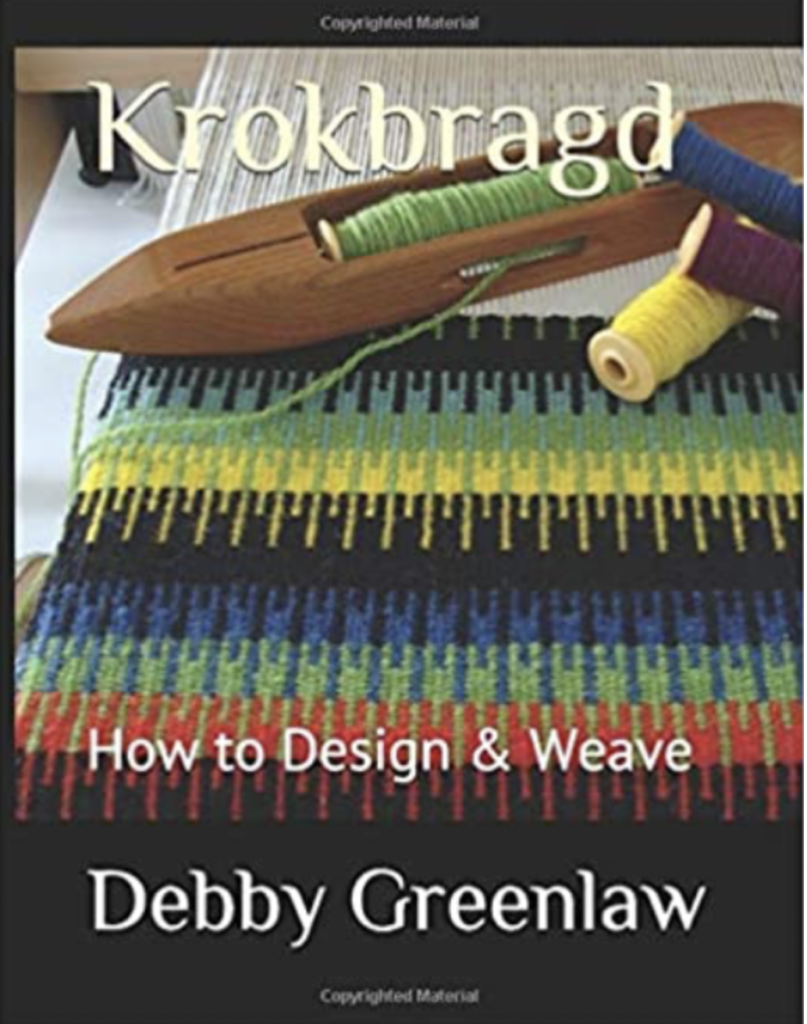
7. Krokbragd: How to Design and Weave by Debby Greenlaw

This is a brilliant guide for rigid heddle weavers who want to dive into krokbragd, a traditional and richly patterned weave. Debby’s clear explanations make this structure feel approachable, even for first-timers. I wrote a full review of this book here if you want to learn more.

Tip: Debby has since released Krokbragd Patterns—a fantastic follow-up for more design inspiration!

8. Crazyshot: Creative Weaving for the Rigid Heddle Loom by Myra Wood

If you’re ready to slow down and make something with big visual impact, this book is a must. Myra’s take on overshot-style designs for the rigid heddle loom is beautiful and original. The projects are breathtaking, and she has since released a companion volume, Crazyshot Companion, to keep the inspiration going.

🤓 Further Resources – To learn more about this overshot style (or “Branoe” for Russian style) I have a playlist on Youtube and also an online class to get you started with the technique.

🎥 Want to See These Books in Action?

I made a video discussing many of these books in more detail. While it doesn’t include the newer additions to my list, it’s still a great resource if you prefer to watch rather than read 👇

📚 Browse My Full Book List

To see all my favorite weaving books in one easy-to-browse place, visit my Amazon shop. You’ll find rigid heddle weaving guides, project books, inspiration for wearable weaving, and more.

❤️ Final Thoughts

Whether you’re just getting started with rigid heddle weaving or looking to expand your skills, these books are truly worth adding to your collection. I hope this list helps you find your next favorite read—and your next great project.

If you’ve read a book you think I should add, let me know in the comments or send me a message. I’m always on the lookout for more weaving inspiration!

If you’re looking for book recommendations for 4 shaft or more weaving, I have you covered!

Until next time…

Happy Weaving!

Filed Under: Books, Rigid heddle weaving, Weaving Tagged With: books, recommended books, rigid heddle weaving, rigid heddle weaving books

Supplementary Weft Rigid Heddle Weaving Tutorial

by Kelly 16 Comments

What is supplementary weft in rigid heddle weaving?

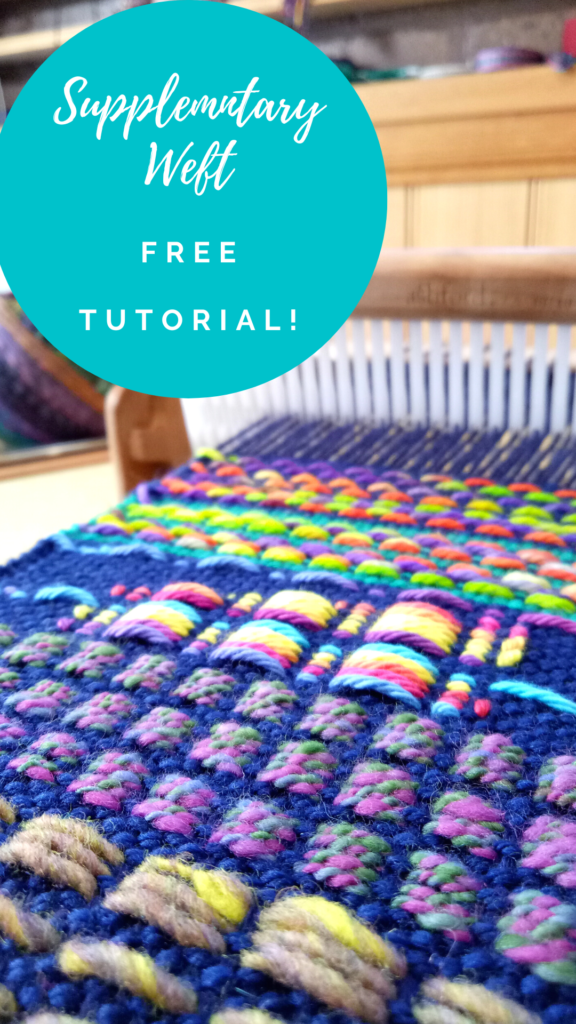
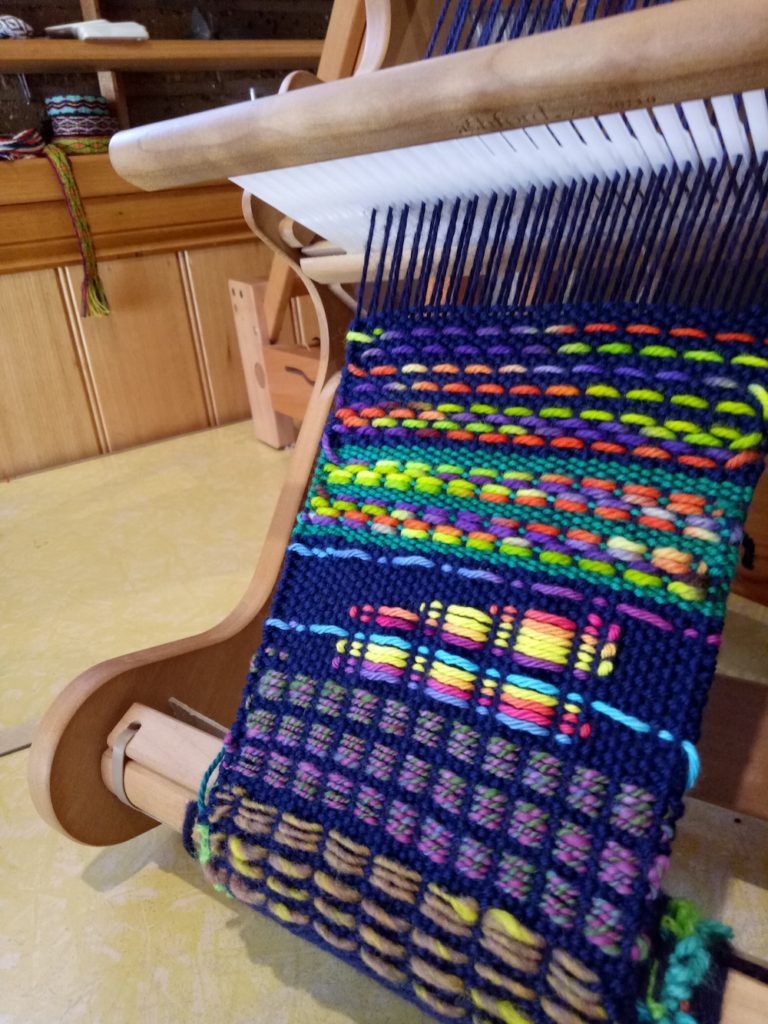
Supplementary weft in rigid heddle weaving is an extra weft yarn added to your fabric in addition to your regular weft. This extra yarn sits on top of a plain weave background and is used to create decorative patterns, texture, and visual interest.

Unlike your regular weft yarn (often called the tabby weft), the supplementary weft is not required for the structure of the cloth. Instead, it is used purely for design purposes. Because of this, supplementary weft is often referred to as a pattern weft, especially in pattern-based techniques such as overshot weaving.

In most cases, the supplementary weft yarn is thicker or more prominent than the tabby weft and warp yarns. This allows the pattern to stand out clearly against the plain weave background, making supplementary weft an ideal technique for adding bold design elements to your rigid heddle weaving projects.

*This post contains affiliate links. For further information, please see my disclosure policy.

This technique is a great way to use a handspun or novelty yarn to really highlight the beauty of the yarn and is also an excellent way to use up leftovers.

A pick up stick is usually used with a supplementary weft – this helps to make a pattern through the use of weft floats.

Using supplementary wefts is a really versatile way to showcase pretty yarn and weave a truly unique piece. I love to design on the loom, trying out different pick ups and different yarns, it’s so much fun and it suits my creative preferences to not have to plan ahead too much.

To weave a sample like I have in the tutorial, you will need the following materials:

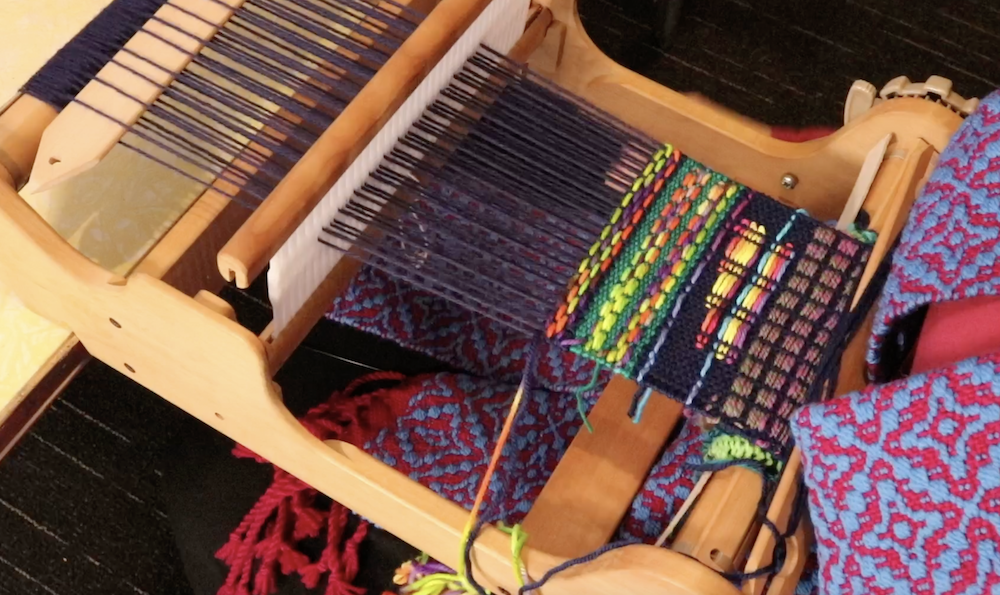
  • A rigid heddle loom (I used my Sampleit loom)
  • A 7.5 dent heddle (of course, you can adapt this by using a different sized heddle with a different yarn weight)
  • Threading/reed hook
  • A stick shuttle or several (use one that is the right size for your loom)
  • A pick up stick (again, use the size that is suitable for your loom or the width of warp you have on)
  • Something to separate your warp (cardboard stick separators, thick craft paper on a roll etc)
  • Scissors

Yarn Requirements:

I’m not giving exact yarn amounts, obviously you need more yarn for your warp and tabby (plain weave) than you do for the supplementary weft, but just experiment with what you have.

For my warp I used Bendigo Woollen Mills Luxury 8ply (this is a dk weight wool) in Navy. I used this same yarn for the majority of my tabby.

For supplementary wefts I used Noro, handspun and some of my hand dyed wool and cotton – most of these were around a dk to aran weight.

Sampler size suggestion:

When I warp for a sampler like this one, I like to warp around 8-10 inches in width and at least 30″ in length (total length of warp). For my 7.5 dent heddle this was 47 ends.

Weaving and Pick Up Sequences:

You will find all the information you need to follow the video sampler in this downloadable, printable PDF.

Supplementary-weft-youtube-tutorialDownload

There are three ways to use this tutorial. You can either:

  1. Warp your loom and then follow my examples exactly according to the video and PDF.
  2. Warp your loom and follow some of my examples to gain confidence, then try some of your own designs.
  3. Use my designs as inspiration but go your own way by using the techniques and ideas to create your own unique fabric.

Whatever you decide to do with this tutorial, don’t forget to relax and have fun – that’s what it’s all about!

The 45 minute video tutorial is available here-

As always, comments and questions are very welcome in the section below.

Until next time…

Happy Weaving!

Filed Under: Free tutorial, Inspiration, Rigid heddle weaving, Rigid Heddle Weaving Patterns, Tutorials, Weaving Tagged With: rigid heddle weaving, supplementary weft, weaving tutorial

Herringbone on a Rigid Heddle Loom

by Kelly 202 Comments

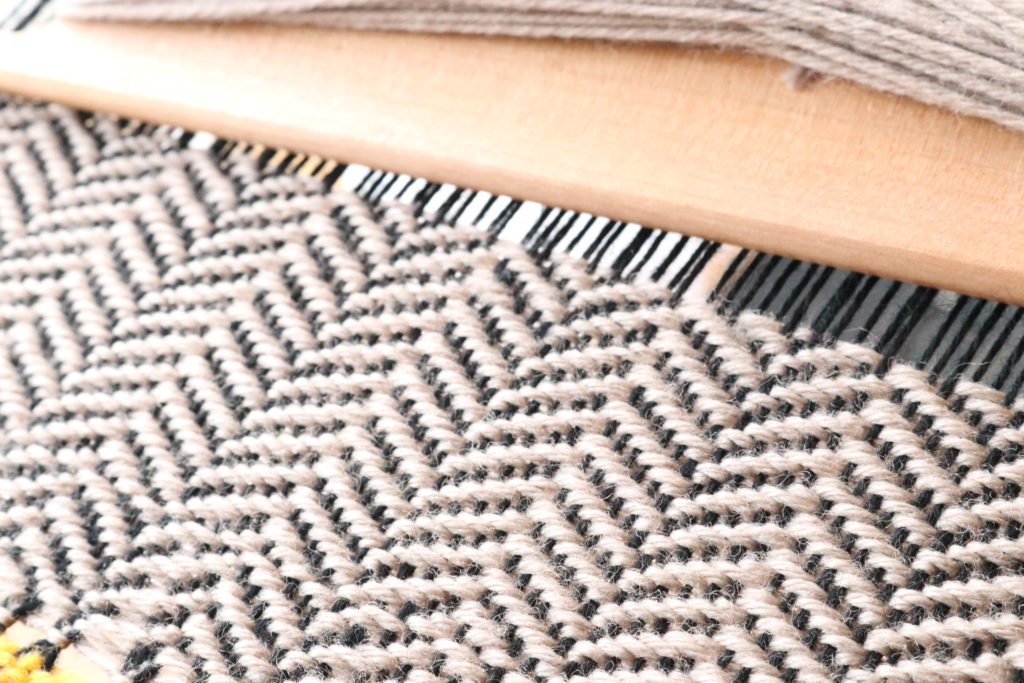
I am really excited to be offering the Herringbone on a Rigid Heddle Loom class!

Not just because herringbone is such an enchanting weave, but also because this class is very unique.

Usually when I release a new class, I focus on a particular technique or means to set up the rigid heddle loom. This presents a problem. I’m always asked how to set up in other ways.

*This post contains affiliate links. Please see my disclosure policy for more information.

For example, if I use a single heddle, heddle rod and pick up stick to weave a particular project, students will ask how to weave it with two heddles. And vice versa.

For this class, I decided to spoil students by providing not just one, but three options for setting up the loom to weave herringbone.

This helps to cater for different learning styles and also differing budgets.

Method one uses two heddles, a pick up stick and a heddle rod.

Method two uses one heddle, 2 heddle rods and a pick up stick.

Method three uses three heddles.

Each method provided has step by step video instructions, visual threading charts and written instructions.

Students will complete a classic herringbone scarf as the class project.

To complete this class you will need:

A rigid heddle loom, 10″ or wider

10 dent heddle (number of heddle required depends on your method choice)

Also, depending on your set up choice, you may need:

Pick up stick

Heddle rod/s

Elastic bands

Tapestry needle

Full yarn requirements will be available upon enrolment.

The class will be available for single purchase, or, if you are a member of the Online Weaving School, this class will be included in your membership. Premium members currently have early access.

Now, for a little fun! As a pre-release celebration, I’m offering two of you the chance to win this class. The winners will be given access to the class upon it’s release shortly.

Here are the entry requirements:

  • You will need to be registered with the Online Weaving School. That way, I can enrol the winners in the class.
  • In the comments section below, tell me whether you would be most interested in method one, two or three to complete the class.

The winners will be announced at the end of this week.

Please note – if you don’t see your comment posted right away, don’t panic, I have to approve all comments first.

*UPDATE – THIS GIVEAWAY HAS NOW ENDED.

CONGRATULATIONS TO THE WINNERS – ERIN MCGANN AND LYETTE MONGEON

Filed Under: Giveaways, Online Weaving School, Rigid heddle weaving, Weaving Tagged With: giveaway, herringbone, rigid heddle weaving

Warp Floats on a Rigid Heddle Loom: Free Tutorial + Printable

by Kelly 6 Comments

Have you ever noticed longer threads sitting on the surface of your weaving? Those are often warp floats. While accidental floats can be frustrating for beginners, planned warp floats are a powerful technique. In this free tutorial (with a free printable to follow along), you’ll learn how to use warp floats to add beautiful texture, create unique patterns, and open up exciting new design possibilities on your rigid heddle loom.

What is a Float?

So, what is a float? Well, if you think about it, weaving is made up of floats. The plain weave structure or interlacement occurs when the threads go over/under/over/under each other. We wouldn’t generally think of this interlacement as being comprised of floats, but that’s what it is, just really short floats.

*This post contains affiliate links. For further information, please see my disclosure policy.

A float can be described as any thread travelling over another. Most of the time when we refer to floats, we are talking about a thread travelling over more than one other, often a group. Floats are also often referred to as “skips”.

A float can occur either horizontally or vertically. A horizontal float is known as a weft float. A vertical float is known as a warp floats. Today’s tutorial is specifically for warp floats.

In case you need a visual reference on the difference between a warp and a weft float, The Heart Scarf free Project uses weft floats (note that the grey weft floats are horizontal).

Warp Float Tutorial

Today’s tutorial is specifically for rigid heddle weavers.

What you will need:

  • A rigid heddle loom (I used my Ashford 24″ rigid heddle loom. )
  • A pick up stick that is wider than the width of your warp
  • Yarn that is appropriate for the project you’re weaving and the heddle size you’re using. In this tutorial, I am playing around with a sampler and used a dk weight rainbow dyed cotton in the warp and a dk weight navy wool weft. My heddle size was 7.5dpi.

We begin by placing the heddle in the DOWN position so that all slot threads are raised. It is the slot threads that we want to pick up, not the hole threads. You can consider the hole threads as already picked up, by being held in the holes.

Use a Pick Up Stick

If you have not used a pick up stick before, don’t worry, they are very easy to get started with by following some very basic rules. If you want to gain some familiarity with how you might use a pick up stick, check out this video before going through the rest of the tutorial:

If you specifically would like to see what a 1/1 pick up looks like (which is what I use for this tutorial), I demonstrate it in this video at around the 10 minute mark 😉

Once your pick up stick is in place you are ready to start weaving the sequence. Your shuttle should be filled with your weft yarn. In my case, I’m using a solid, dark weft to contrast with the colourful warp.

Place the heddle in the DOWN position, throw your shuttle, then beat.

Change to the UP shed and slide your pick up stick forward to sit behind the heddle. There is no need to turn your pick up stick on edge, and in any case it would be very difficult to do so with the up shed being so firm. You can see the pick up stick right against the back of the heddle in the above picture.

Throw your shuttle and beat. Slide the pick up stick to the back of the loom.

Change to the DOWN shed. When you enter the shed with stick shuttle this time, you will need to manually go around the warp edge thread – it won’t catch on it’s own. This is really common when you move away from plain weave. If you need more information on the concept of manually going around the edges, I have a detailed article here.

Throw your shuttle and beat.

Change to the UP shed. Bring the pick up stick forward and lay it flat at the back of the heddle once more. Throw the shuttle and beat. Slide the pick up stick back.

Change to the DOWN shed. Again, you will need to catch the edge warp as you enter the shed. Throw shuttle and beat.

By now you will notice the vertical floats forming and getting longer. Really long floats are not practical, as they will catch on things, so it’s time to halt the float in it’s tracks with a tie down thread.

Change to the UP position. No pick up stick this time! Throw the shuttle and beat.

That is one complete weaving sequence. If you want to continue weaving the pattern, you go back to the beginning and work through the steps again.

Grab the Free Printable

If you would like the pick up and weaving sequence in a printable format, please click on the download button right here ⤵

15-warp-floats-Download

If you would like to see this tutorial in video format, I have you covered!

Further Resources

If you want to explore floats further, I have a lot resources to help (too many to list here!) that you can find here on my website or Youtube channel.

I also want to recommend Jane Patrick’s The Weaver’s Idea Book. It has a HUGE section on weaving warp and weft floats that you will find very instructive and inspiring.

I hope this was helpful to you, be sure to leave any questions or comments down below!

Until next time…

Happy Weaving!

Click to help keep this resource free! 😀

Filed Under: Free tutorial, Rigid heddle weaving, Tutorials, Weaving Tagged With: floats, pick up sticks, tutorial

What is art cloth?

by Kelly 10 Comments

I think of art cloth as a happy meeting of art and weaving.

It doesn’t have to be anything set or particular, art is a difficult topic to distinguish as it can be so incredibly broad.

Usually, when we plan a new woven piece, we start with calculating, sourcing materials, deciding on pattern and colour, and visualising how the finished project might look. It is already an artistic process by default.

This post contains affiliate links. For more information, please see my disclosure policy.

But when I think of art cloth, I think of a piece that is truly my own. I think of multi media techniques and the introduction of tools and materials that I might not ordinarily use in my weaving. I think of creating a piece that will not look like any other, it will be completely unique and original.

What an exciting concept!

I have just completed filming my new class, Art Cloth Workshop.

I’ve been spent a lot of time sampling and exploring, carefully considering what techniques I might like to share with students, testing to ensure quality control and choosing what I think gives great results and is achievable for anyone.

The curriculum plan includes some of the following techniques:

  • Warp painting
  • Inlaid overshot
  • Clasped weft
  • Sun printing
  • and more!

This workshop is a little different to many of my classes in that it is not specifically project based. I do provide project ideas along the way, but the focus is more on sampling to explore the techniques. Once you have learned how to implement them, you can decide whether to go ahead and use them in a project.

The class is filmed on my 24″ Ashford rigid heddle loom. We use a wide variety of materials, and details of these are provided in the class.

The workshop is completely pre-recorded so that you can learn in your own time.

If you are a member of the Online Weaving School, you will have free access to the workshop.

The class is also be available for single purchase.

To view the introduction video to the workshop, click below.

If you are ready to access the workshop, click on this link to enrol.

Until next time…

Happy Weaving!

Filed Under: Art cloth, Online Weaving School, Rigid heddle weaving, Weaving Tagged With: art cloth, new class, online weaving school, rigid heddle weaving

How to use floating selvedges

by Kelly 4 Comments

In my last post I talked about what floating selvedges are, how they can benefit your weaving and included a photo tutorial for how to install them.

Today, we’re going to have a look at how you actually use floating selvedges in the weaving process.

It’s very simple, but there are a few little rules and things to remember:

  • “Over, under”. This is going to be on repeat in your mind as you weave with your floating selvedges in place. The photo tutorial will show you how this works.
  • You will need to adjust your weights as you weave and advance the warp. This is because your floating selvedge (FS) threads will roll on to your front cloth beam along with the warp threads as you advance.
  • The weft should always wrap around the FS on each side. This also relates to the “over, under” action and will be clear for you to see when you’re weaving.
  • The yarn that you use for your FS can be the same yarn as either the warp or weft. Most of the time, I will use the exact same yarn for the FS as I’m intending to weave with (weft). But, if I have frequent colour changes and more than a few colours in the weft, I will use the warp yarn to set up my FS.

In this tutorial, I’m imagining that you have already set up your floating selvedges and you’re ready to start weaving. If you haven’t done that yet and need a step by step tutorial, please view this post first.

*This post contains affiliate links. For further information, please see my disclosure policy.

This tutorial is specifically for rigid heddle weavers, but I also have a video tutorial for table/floor loom weavers.

I am starting with my shuttle on the left and my heddle is up. (It doesn’t matter which side your shuttle is on or which shed you’re in, but I wanted to be specific so that the photos make sense!)

When I enter my shuttle from the left, my shuttle (and therefore my weft yarn) goes OVER the floating selvedge. As my shuttle exits the shed on the right, it goes UNDER the floating selvedge. Beat.

Now I change my heddle to the down position. As my shuttle enters the shed from the right, it will go OVER the floating selvedge. As it exits the shed on the left, it will go UNDER the FS. Remember, OVER, UNDER. Beat.

Here is how your shuttle should look for that second pick (weft row).

Back to the up position for the third pick. The shuttle will go OVER the FS on the left and come out UNDER on the right.

It’s important to note that using floating selvedges does not change the way we weave. We still need to arrange and tension our weft picks to ensure neat edges. If you are not familiar with my pinching technique, I have a free video tutorial that will make a huge difference to your edges:

If you are having trouble remembering whether you are supposed to be taking the shuttle over or under the FS in your next shed, you only need to look at how your last weft pick is sitting.

For example, you can see clearly in this photo that the last weft pick is sitting UNDER the floating selvedge. This tells me that, to ensure the weft yarn wraps around that FS edge, I will need to take it OVER the FS as the shuttle re-enters the shed.

When your heddle is in the up shed, you can see that the floating selvedge also sits up a little with the warp. The easy way to weave is to just depress the FS with the tip of the shuttle as you enter the new shed.

See how the weft yarn wraps around the FS as it you enter the shed?

As you weave, the FS becomes a part of the fabric and provides a straight edge. The floating selvedges are not removed when you finish weaving, like you would remove fishing line if using the Lifeline Technique, they are truly a part of the piece and that is why we match the yarns when we set up our FS in the beginning.

Continue to tension and angle your weft as you weave. I think you will be very pleased with the results!

If you would like to see me weaving on the table loom using floating selvedges, please view this free video tutorial:

I hope you found this tutorial valuable.

Until next time…

Happy Weaving!

Filed Under: Floating selvedges, Free tutorial, Neat edges, Rigid heddle weaving, Table loom weaving, Tutorials, Weaving Tagged With: floating selvedges, table loom weaving

What are floating selvedges?

by Kelly 17 Comments

If you’ve been weaving for a little while now it’s very likely that you’ve come across the term “floating selvedge”.

What is a floating selvedge?

Floating selvedges (FS) are used on either side of a warp and are replacement threads for the original edge warp threads. This may lead you to wonder why you would want or need to replace your edge threads?

When weaving a simple plain weave, the interlacement of weft and warp doesn’t change. You alternate between the two plain weave sheds and the weft thread always naturally wraps around the outer most warp threads.

*This post contains affiliate links. Please see my disclosure policy for more information.

But when you are weaving something other than plain weave, you will often find that the weft skips the outer warp thread – either in every shed or, more likely just in certain sheds. If you don’t do anything to combat this problem, the result will be messy edges and a cloth that lacks integrity at the selvedges.

Now, there is a manual method you can use to prevent this from happening, but I find it easy to install floating selvedges and I also love the neat edge finish this gives me.

How does the floating selvedge work?

A floating selvedge will provide you with an unchanging edge thread, unlike your natural edge thread that may change according to the pattern, or the way you have threaded your loom. The path of the weft thread is determined by your action with the shuttle when you begin weaving, ensuring that every edge warp thread (now your floating selvedge) is wrapped with weft yarn.

When we install floating selvedges, they are usually not a part of the original warp. They are always threaded into an empty slot next to the last naturally occurring warp thread. This makes them independent of your warp and pattern, and means that we can adapt them to our own purposes.

Although floating selvedges are not necessarily a part of the original warp, they do become a part of the finished woven piece – they are not removed afterwards.

For this reason, it’s important to choose a colour that will blend well with the project. If I am weaving my piece with just one, solid coloured weft, I will choose that same yarn and colour for my floating selvedges.

If I am going to be changing the weft colour multiple times within that one piece, I will choose the same yarn and colour as my warp.

The idea is that, once your piece is off the loom and finished, you won’t be able to tell that there was a floating selvedge introduced (other than the fact that your edges will look really nice!)

Can you use a floating selvedge on any loom?

Pretty much. I use them mostly on my floor loom and table loom, and on my rigid heddle loom if I’m weaving something other than plain weave.

Today’s tutorial is specifically for the rigid heddle loom. Scroll to the end of this post to find a video tutorial specifically for table loom floating selvedges.

I like to install my floating selvedges when the warp is all tied on and I’m almost ready to weave.

The photos from this tutorial are taken from my member’s only Floating Selvedges on a Rigid Heddle Loom class.

I most often use the same yarn for my floating selvedges as I use for my weft. So, in the example above, I will be using a white weft.

I don’t do this every time though. If I am weaving a project where I intend to have multiple and frequent weft colour changes, I will use the same yarn that I used for warp for my floating selvedges.

Step 1. is to measure out a length of yarn that is similar to the length of your warp. A little more is fine, a little less is not so great, as then you may have to install the floating selvedges again in the same project. It’s doable, but preferable to have a little more than you need so you don’t run out.

Cut your length of yarn and tie one end in a secure, double knot to the front apron rod on one side of the warp. It makes no difference whether you do the right or left side first.

Drape the tied yarn over the top of the heddle. It doesn’t really matter what position the heddle is in at this point, but it make sense to have it in the neutral or resting position.

Find the next slot, next to your outer most edge warp thread that is empty. This is the slot you will thread your yarn through. Having the floating selvedges in a slot makes them a “free agent” that we can then manipulate in the weaving process to ensure that our edges are always wrapped with a weft thread.

Pull the thread right through the slot and over the back beam and leave it hanging.

Now repeat the exact same steps on the opposite side of the warp.

Now you have two threads in slots on either side of your warp and they are ready to be weighted. If you don’t weight them, they won’t work, they need to be under tension!

Make a slip knot in the hanging thread. You can do this half way down, or further towards the floor, the main thing is that the weights are not resting on the floor, you want them to dangle and place tension on the thread.

Place an “S” hook or something similar through the loop of the slip knot and allow it to hang. You can tighten up the slip knot to prevent your hook from jumping out of the loop. I have a bunch of S hooks, they are so handy for tensioning broken or loose threads and I always use them on my floating selvedges.

Do the same for the other floating selvedge thread, and you’re ready to start weaving!

As a side note – this method is not the only way to install floating selvedges. Some weavers prefer to allow for the additional two threads when calculating the warp, and then roll the FS on with the rest of the warp. They would then thread the FS threads through an empty slot rather than threading as part of the pattern.

If you’re interested in knowing more about floating selvedges and viewing a tutorial for installing them on a table loom, please view this video:

In the next post I will have a tutorial for how to actually use the floating selvedges when weaving, so look out for that one.

Until next time…

Happy Weaving!

Filed Under: Floating selvedges, Floor Loom Weaving, Free tutorial, Neat edges, Rigid heddle weaving, Table loom weaving, Tutorials, Weaving Tagged With: floating selvedges, rigid heddle loom

Diamond Stripe Towels Weave Along Gallery

by Kelly 2 Comments

Last year I ran a Weave Along based on my Diamond Stripe Towel pattern.

This rigid heddle pattern is a best seller in my Etsy shop (over 1000 copies sold at the time of writing this article!), but many weavers requested that I put together a class or weave along to compliment the PDF pattern.

The first Weave Along was such a huge success and I had so many students ask me to run it again this year. The second weave along ran throughout January 2022 and just like the first one in 2021, was a raging success.

*This post contains affiliate links. For further information, please see my disclosure policy.

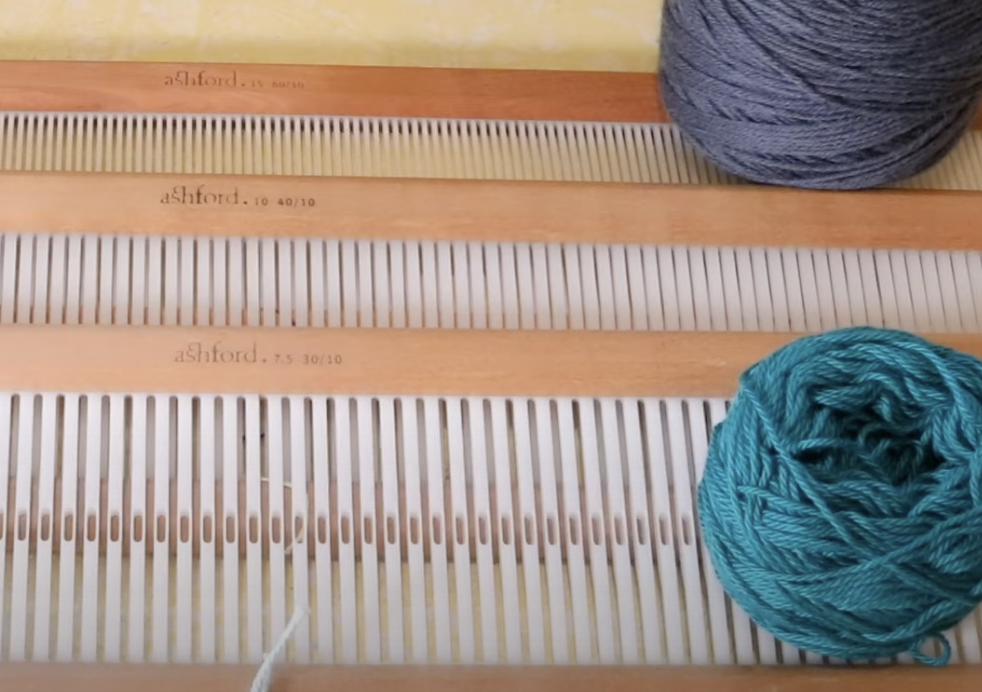
Similar to the Wash Your Hands Towels Gallery, I wanted to be able to showcase some student’s beautiful work from the weave along.

The individual choices of colours and styles is so impressive and inspiring!

In this project we use two heddles to create the diamond pattern. It is a challenging technique, but so many participants completed their towels successfully.

Many participants told me that finishing the Diamond Stripe Towels and weaving with two heddles has opened up a whole new world of weaving for them. That is so exciting to hear!

In addition to the community interaction at the Online Weaving School, participants were also invited to join a private Facebook group to share and troubleshoot. This is a wonderful group with a true spirit of willingness to help.

In the first weave along and in the pattern, there was only the option to use 8/2 cotton for the towels. Following feedback from the first participants, I updated the information to include a supplement video section for those who wished to use 8/4 cotton instead. This has allowed weavers to use what is readily available to them, either from their stash or from local suppliers.

*Please note, these cottons are available in Australia from Thread Collective.

The 2022 Diamond Stripe Towel Weave Along is closed for enrolments, but here is the good news.

If you are a Gold Member of the Online Weaving School, this Weave Along is available to you at any time, following the purchase of the pattern.

And who knows? Maybe if I start to get requests, I will run this weave along again sometime in the future 😉

I hope you enjoyed viewing all of these beautiful towels.

Until next time…

Happy Weaving!
Filed Under: Rigid heddle weaving, Rigid Heddle Weaving Patterns, Weave Along, Weaving Tagged With: diamond stripe towels, rigid heddle weaving

How to double your weft thread

by Kelly 16 Comments

There are times that you will want to double your weft thread in order to achieve a balanced sett. Or, you may just be wanting to make the weft stand out and feature more.

If you only have one cone or ball of yarn to work from, you will need to think around how you’re going to load the shuttle to be double, rather than single stranded.

*This post contains affiliate links. For more information, please see my disclosure policy.

Today I’m going to show you how to easily double your weft when using a stick shuttle. I’ll cover a couple of different methods.

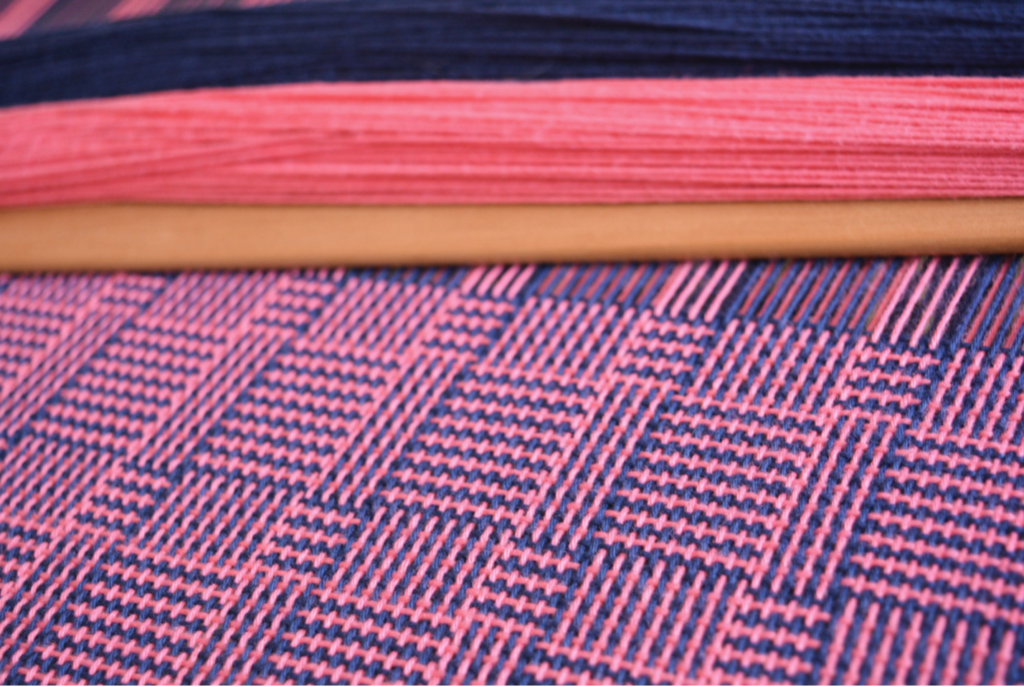
In my example piece, my warp is 8/4 cotton. For my weft, I want to use a lovely, bright yellow, I received recently from the brand new Australian cotton range from Thread Collective. This yarn however, is 8/2 cotton – quite a bit lighter than the 8/4 warp.

Considering it’s important to me that my pattern stands out and is nice and bold, the 8/2 as a single weft would not have the impact I’m wanting to achieve. I decided to double the weft.

I start by placing the cone of yarn that I want to use for weft on the floor next to the table I’m sitting at. I use my cone warping stand to hold the cone steady and to feed the yarn off freely. You can also stand your cone in a box or empty cylinder of the right size – whatever stops the cone from rolling all over the floor while you’re trying to feed yarn off it!

I’m going to be using my ball winder for this tutorial, but you do not have to have one in order to successfully load your shuttle with doubled weft.

Another suggestion is to use an empty cone cylinder to wind the yarn off your full cone by hand. This plastic one is handy because it has a grip, so it’s easy to wind fast by hand, but empty toilet paper rolls are also great. You can even wind off an amount of yarn just onto your hands, though that may be a more potentially tangly method.

A ball winder is simple to use and does the job really quickly. I just clamp the winder to my table, thread the yarn in through the side loop, up over the central cylinder and into one of the notches, which holds the yarn in place initially and also creates a centre pull ball once you’re finished.

You then just wind manually, using the handle until you have a quantity of yarn. A couple of tips I have for successfully ball winding:

  • Keep some tension on the yarn as it’s feeding off the original cone, but don’t make it really tight. This is a mistake I made initially, and it caused problems with the yarn rotations slipping off the ball and tangling. Now I keep it a bit looser and never have that issue.
  • Hold the yarn tail for the first few rotations (particularly if you’re using a finer yarn) so that it doesn’t slip out of the notch. After the first few rotations, you can let go and it will be fine.
  • When I’m using the ball winder for doubling my weft, I usually wind off relatively small amounts at a time. I can always come back and wind off a little more if I need to.

Now you have 2 sources of yarn to feed from. I place the yarn cake on the cone stand, next to the original cone and feed it up through it’s own round hook.

Yarn Donation

Now things get super easy! I just slip knot the two yarns together at the ends, ready to start loading onto my stick shuttle.

From this point on, you can treat the two yarns as though they are one, and simply wind them on together.

If you need help with how to wind a stick shuttle in a figure 8 (my favourite method), watch this video:

When you are ready to start weaving, you also just use the two yarns together as though they are one. So, each pick will have two threads instead of one.

This tutorial is available in video format, if you’re interested, click on the video below:

I hope this tutorial was helpful to you, leave your questions or comments down below.

Until next time…

Happy Weaving!
Filed Under: Free tutorial, Rigid heddle weaving, Weaving, Yarn Tagged With: double weft, doubling weft, weaving tutorial

  • « Go to Previous Page
  • Page 1
  • Interim pages omitted …
  • Page 3
  • Page 4
  • Page 5
  • Page 6
  • Page 7
  • Interim pages omitted …
  • Page 16
  • Go to Next Page »

Primary Sidebar

About Kelly Casanova

Hand crafted boat shuttles

Categories

Archives

Meta

  • Log in
  • Entries feed
  • Comments feed
  • WordPress.org

Copyright © 2026 Kelly Casanova Weaving Lessons on the Foodie Pro Theme