• Skip to main content
  • Skip to primary sidebar

Kelly Casanova Weaving Lessons

  • Hi! I’m Kelly!
    • Affiliates Disclosure
  • Online Weaving School Class Index
    • Common account issues
    • Common technical issues
    • What do I get with a membership?
  • New to rigid heddle weaving? Start here!
    • Never heard of the rigid heddle loom?
    • How to weave neat edges on the rigid heddle loom
    • Rigid heddle weaving
    • Rigid Heddle Weaving Patterns
  • Patterns
  • Subscribe

Kelly

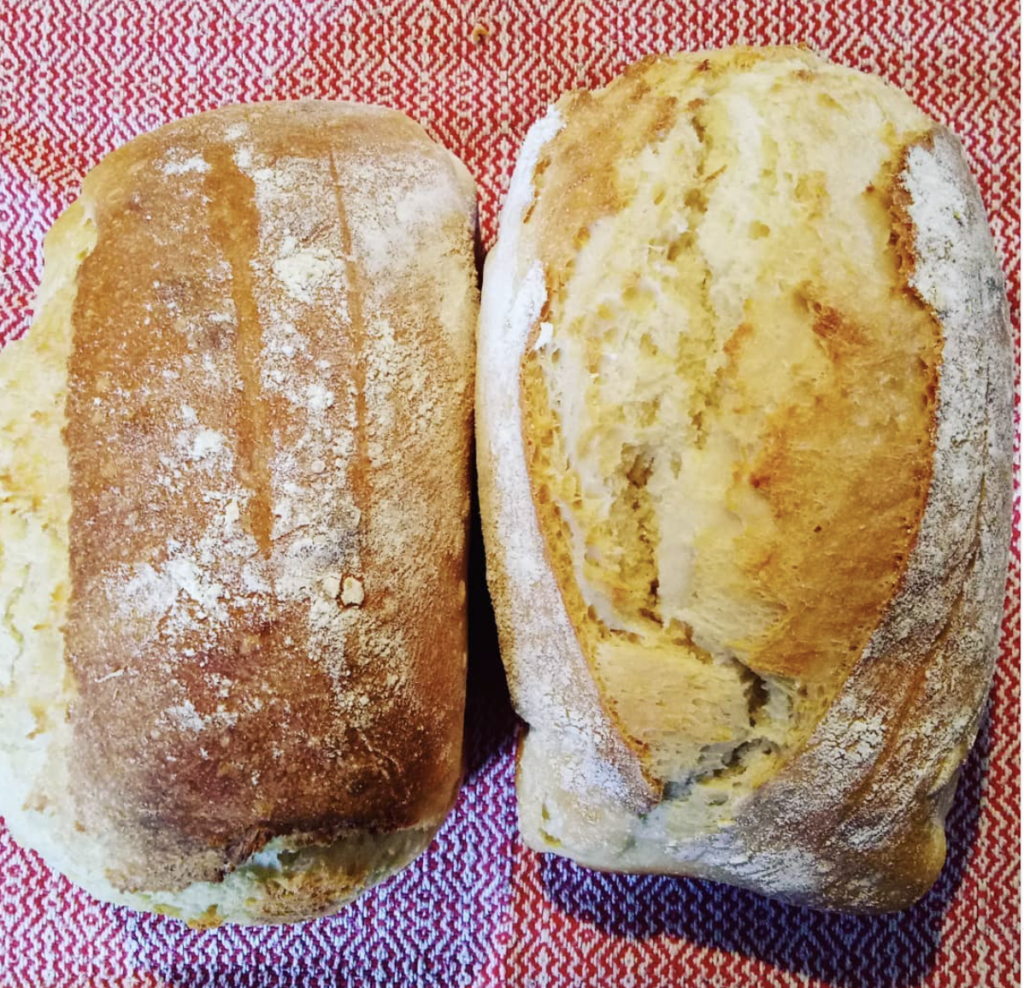
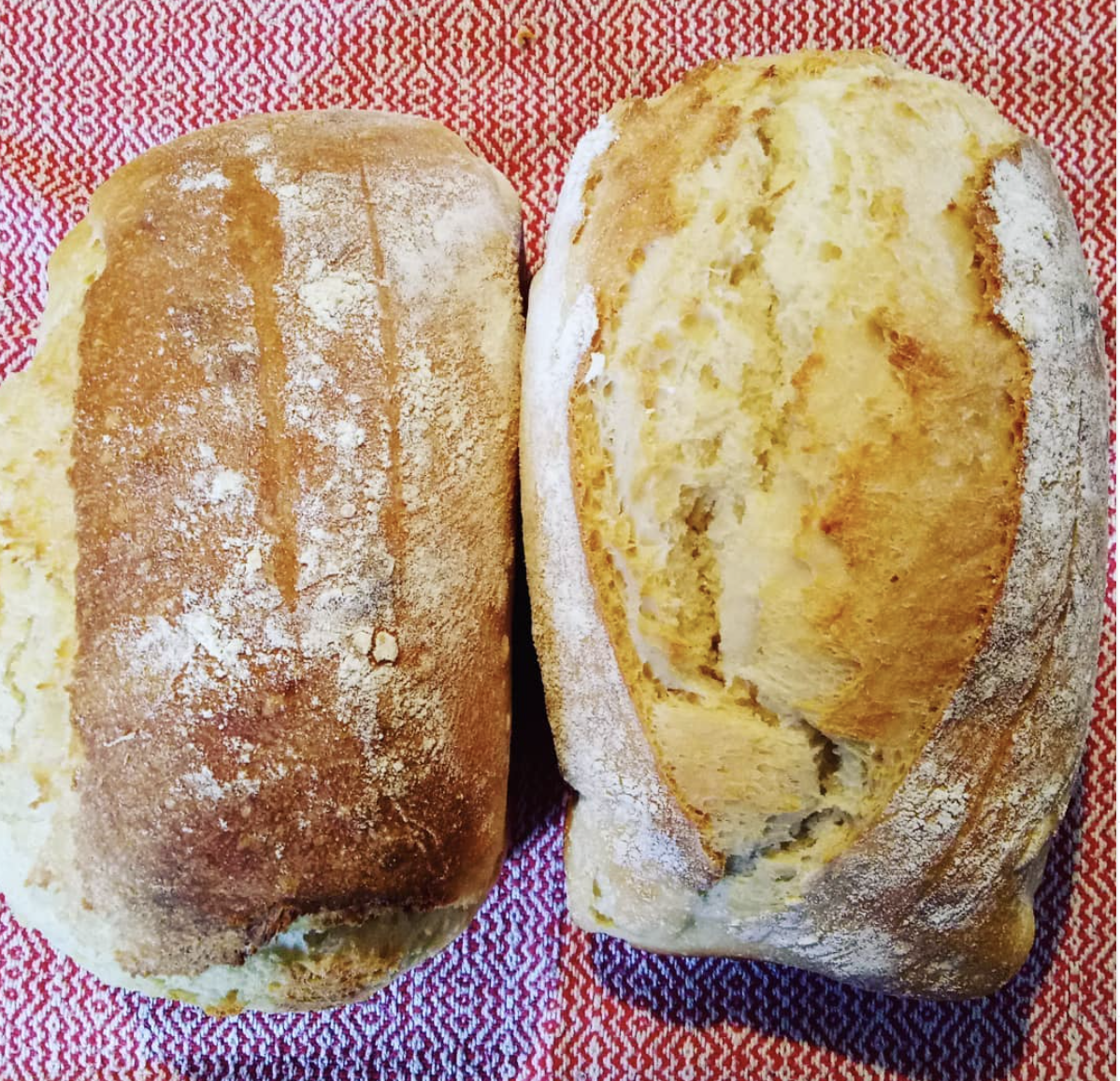
How to make bread – my No Knead Whole Wheat Bread Recipe

by Kelly 25 Comments

I’ve been making home baked bread for my family for at least 15 years (yes, I supply ALL the bread, but I have helpers too!) I started baking our bread at home for a few reasons – curiosity, nutrition, economy and self sufficiency. It is the perfect time right now to learn how to bake bread at home.

The idea of knowing exactly what was going into our bread, the superior taste and the cheapness of making it has made baking our own a priority.

Around 4 years ago, I bought a Hawos Billy 100 grain mill after wanting one for 10 years (I’m very patient šŸ˜Ž). It sits out on the kitchen bench as it’s in constant use. The first time we set up the mill and ground some wheat, I tasted some on it’s own and was immediately hooked. I had bought commercial wholemeal flour from the supermarket, but grinding it fresh is really next level.

*This post contains affiliate links

I buy my wheat from Simply No Knead and have it delivered. If you’re in the U.S. and looking for some wheat to grind , you can get hard white wheat berries here. If you’re wondering about the differences between red and white wheat, check out this helpful article.

Milling our own grain is a huge blessing at this time when currently there is no commercial flour available to buy due to coronavirus related panic buying. I bulk buy my wheat in 20 kg bags and have plenty of it, I’m so thankful.

I’ve always wanted to share with you all how I make bread. Over the many years of baking for my family, I’ve devised my own methods to make the process faster, easier and more achievable. My methods are no knead, low mess, low ingredients and very straightforward. I’ve tweaked my methods to streamline the process and am very happy to share this with you!

Now, if you have flour and wish to use that, go ahead! This recipe is very adaptable and has the same basic components of flour, yeast, salt, water and oil. You can use white or wholemeal flour, or a combination, they all work. You may have to adjust your liquid amounts slightly, as wholemeal flour takes up more water.

If you prefer your bread on the sweet side, you may want to add in two tablespoons of cane sugar or two tablespoons of honey. I do this occasionally as an extra treat for the kids.

Then you will just need a large mixing bowl, a wooden spoon, 2 bread tins, and you’re ready to bake some delicious bread! If you are going to make bread a lot, you will want a good bread knife, it will take the headache out of slicing. My husband gifted me this Mundial Serrated Knife right at the beginning of my bread baking journey and I use it every single day. Alright, let’s check out the recipe!

Let’s just go over some measurements first so that we’re clear on amounts. If you don’t know how much grain to mill to get the required amount of flour, 5.5 cups of whole wheat grains grinds up to 7.5 cups of flour. This amount of grain and flour also equals 1 kilogram (2.2 pounds). 1 litre of water is equivalent to 1.05 quarts.

Kelly

No Knead Wholewheat bread

5 from 2 votes
Print Recipe Pin Recipe
Servings: 2 loaves
Ingredients Method

Ingredients
  

  • 7.5 cups Wholewheat flour (I use freshly milled)
  • 1.5 tsp Instant dried yeast
  • 2.5 tsp Salt
  • 1 litre Warm water (Around 1 quart)
  • 3 tbsp Sunflower oil

Method
 

  1. Weigh and mill your whole wheat grain, if using. Otherwise, measure out your commercial wholewheat flour into a large bowl.
  2. Add yeast and salt to flour and mix through with a wooden spoon.
  3. Mix the warm water and oil together in a jug.
  4. Make a well in the middle of your flour and pour all of the liquid in.
  5. With a wooden spoon, mix gently to begin combining the wet and dry ingredients.
  6. When the water is no longer "sloshy", use a chopping action with the wooden spoon to bring ingredients together. You want to eliminate any dry flour spots.
  7. Once combined and completely wet, let the dough sit in the bowl for 3 – 5 minutes.
  8. Using the folding technique shown in the video, fold the dough whilst turning the bowl slightly. Fold it around 5 times. Then allow dough to sit for 3 – 5 minutes again.
  9. Repeat the folding technique 2 more times for a total of 3 times. You will notice the dough begin to change and become elastic.
  10. Sprinkle with flour, cover with a cloth and allow to sit until approximately doubled. Depending on the temperature in your kitchen, this could be 1 – 2 hours. My dough took around an hour to double in a warmish kitchen.
  11. Oil or flour your bench surface and tip the dough out. It will be stretchy and airy.
  12. Fold the dough in on itself on each side. Cut in half with a sharp knife.
  13. Shape the two pieces of dough into loaves according to the video instructions. Place in prepared loaf tins.
  14. Sprinkle with flour and cover with cloths to rest for around 30 minutes. Begin to preheat your oven to 225 degrees celsius (437 farenheit).
  15. Score your risen loaves with a sharp knife and place in the oven for 35 minutes.
  16. Remove from the oven and tins and place on a cooling rack. Allow to cool completely before cutting open.

Did I tell you that this bread freezes well? I make up a batch of 4 loaves at a time, the maximum amount my oven will hold. I usually keep one loaf out for the next couple of days (if it lasts that long, often it does not) and put the rest in individual freezer bags, tie them up well and freeze until needed.

You will want to watch the video I’ve put together in order to learn the techniques I use, as these are crucial to the success of your loaves.

I hope you enjoy this recipe and bake some bread for your family! Please leave any questions in the comments section, let me know if you are going to give it a try, or if you already have. I’d love to hear from you!

Until next time…

Happy baking!
Filed Under: Health and home, Recipes, Tutorials Tagged With: how to make bread, make bread at home, recipe, wholewheat bread recipe

Healthful Toasted Muesli (Granola)

by Kelly 10 Comments

 
I know, I know, there are thousands of recipes for toasted muesli (or granola) on the internet. But I’ve been fiddling around to try and make a healthy, not too oily, but not too dry recipe.


And I’ve hit on something pretty darn good! There is the base recipe, but then you can add to that according to what you have at the time. This batch was timed to coincide with a visit to a Lebanese nut shop, so we had a lot of extra delights to put in.
 
The best part is that many of these ingredients are easily accessible and may be in your pantry already.


It includes those wonderful staples such as rolled oats, raw honey, olive oil, shredded coconut, vanilla extract and sultanas.
 
All you need to make this recipe is an oven and a roasting pan.
 

Kelly

Healthful Toasted Muesli (Granola)

5 from 1 vote
Base recipe
Print Recipe Pin Recipe
Prep Time 5 minutes mins
Cook Time 30 minutes mins
Ingredients Equipment Method

Ingredients
  

  • 5 cups rolled oats
  • 1/4 cup honey
  • 3 tbsp olive oil
  • 1 cup shredded or desiccated coconut
  • 2 tsp vanilla extract
  • 1 egg white (optional)
  • 1/2 cup sultanas

Equipment

  • Oven, roasting tray

Method
 

  1. Preheat oven to 170 degrees (C).
  2. Mix all dry ingredients in a tray with sides so it doesn’t spill. A roasting tray is ideal.
  3. Warm the honey until runny and mix in olive oil and vanilla. Pour evenly over dry mix. Mix thoroughly.
  4. Now pour over the egg white and mix thoroughly.
  5. Place tray in the oven and set the timer for 10 minutes.
  6. After 10 minutes, take out the tray, turn the ingredients and return to the oven.
  7. Repeat until the muesli has baked for 30 minutes.
  8. Remove from oven and stir in the sultanas.

This recipe is super flexible, making it great for when you have certain ingredients on hand. Here are a few options for ways you can vary your muesli.

Add ins (examples of)
1/2 cup chopped peanuts
1/4 cup chopped almonds
1/4 cup sunflower seeds
1/4 cup chopped macadamias
1/4 cup chopped cashews
1/4 cup pistachios 
1 cup LSA mix
Chopped dried fruit eg. apricots, peach, paw paw, apple, dates, cranberries
Rules for add ins
*For seeds and nuts, add these in at the dry mix stage. 
*For dried fruit add ins, mix in when the muesli has finished baking.
 
Allow the muesli to cool before placing it in an airtight container. Serve with milk or use as a delicious topping on stewed fruit and yoghurt.
 
Also makes a delightful gift when placed in an attractive jar.

I hope you enjoy this recipe! Don’t forget to comment and let me know how yours turned out. If you love it, you could even leave me 5 stars šŸ˜‰

Filed Under: Health and home, Recipes Tagged With: frugal living, healthy food, muesli, my recipes, Recipes and food

When your life is on hold

by Kelly 32 Comments

Where to start when writing a post like this? It’s not like I’ve ever experienced anything like this before. But that’s the thing that really unites all of humanity at the moment. We’re all in this together and none of us are immune from the possible and real effects of the coronavirus.

Many of us are isolated in our homes, some working from home, others facing the uncertainty of job insecurity. No social meet ups. No extended family meet ups. No popping out to the shops to pick up some milk. It’s a completely different lifestyle to what most of us are accustomed to.

I know that there is some concern about the impact all of this could have on mental health if the isolation has to continue for some time. We don’t know at the moment when it will be safe to resume former activities, we don’t know if we will contract the virus, and if we do, we don’t know how bad it will be. There is so much we just can’t predict or plan for.

In many ways, it feels like life is completely on hold. No planning ahead, no getting ready to go back to work or school or social activities. For now, we just have to BE.

People have been talking about the state of JUST BEING for a long time. Of being present in the moment in whatever we’re doing. To think, be grateful, live slow. In the busy, noisy world of today, that goal can feel unrealistic and unobtainable.

Enter quarantine. And self isolating. And social distancing. Enter 2020 and COVID 19.

What if we completely turned this pandemic thing on it’s head and focused on the positives of what it means for us right now?

How many times, as you were rushing off to work in the morning or dragging yourself home at the end of the day, have you wished that you had more time? Have you thought to yourself “if only I had an extra day, I could take the time to learn to…… (fill in the blank)”. Or when you’ve been absolutely run off your feet and wondered why? Why am I doing this? Is this what I was meant for? Then why am I so unhappy?

That hobby that you’ve “always wanted” to get started with. “Maybe when I retire!” you may have joked. Or “I’ll do it once the kids have all left home and I have some time to myself”.

How about now? In this time of major uncertainty, perhaps you feel a bit lost. But maybe it’s time to search and find. Maybe it’s time to discover what God is leading you to – what talents are waiting to be revealed, perhaps even find out what you should really be doing and who you really are.

I’m finding that it’s wonderful time, not just for discovery, but re-discovery as well. I am taking more pleasure and satisfaction in my daily tasks as a homemaker. Baking bread is not just something that I do an have done for a long time anymore, now it’s an important skill that provides my family with food.

Preserving vegetables is something I can take pride in, knowing that my family will have healthy fermented vegetables to eat even if we can’t leave our home to go to the shops.

Our garden has become a major focus as we aim to grow as much of our own food as we can. It’s something that the whole family can work at and reap the rewards and benefits at harvest time. It gives us time out in the fresh air and sunshine too.

I have been thinking for some time how I would like to make soap again, it’s been so long. Now, it happens that you can no longer buy soap, you can however buy ingredients to make soap.

I’ve been writing on this blog since 2008 and if you look back on past posts, many of them are related to simple and frugal living. It’s something I’ve been both striving for and living out for a long time, and something that just makes sense to me. It’s serving us pretty well at the moment!

If you’re interested in reading some of my “posts from the past” related to simple living, I’ll list some here:

The Simple Life

Back to Basics, Frugality revisited

Honey and Oat soap

Cheese and Bacon Scrolls

I have a lot of recipes, all of them are simple and frugal. You can search the “recipes” tab on my blog or type in “bread” or “recipe” in the search bar and you’ll be inundated with posts! I need to do an updated bread blog post, as I make bread in a different, very easy and intuitive way these days.

If you’re looking to learn how to weave, start with my Youtube channel. I promise it will keep you busy for many, many hours!

This has become quite a rambling post, but I guess what I really want to say is: What are you going to do this with this time? How are you going to be different? Are you the person you want to be? The person you were made to be?

Today is the first day of the rest of your life. What will you do with it?

Filed Under: Health and home, Inspiration, Recipes Tagged With: coronavirus, covid19, frugal living, inspiration, life, Recipes and food, self sufficiency, simple living

Van Gogh inspired freestyle tapestry!

by Kelly 5 Comments

It’s hard to know what to say about the present world situation. Strange. Unprecedented. Uncertain. At times, scary.

Many people throughout the world are in isolation or quarantine – some self imposed, others enforced. Countries in lockdown.

My mind can’t help thinking that it all feels very much like a suspense movie or novel. But no, this is the reality of 2020 and coronavirus for all of us. Strange times indeed!

Beyond the feeling of bewilderment though, is one of hope and unique opportunity. We may be isolated in our homes, but we live in the age of the internet, where it easy to stay connected to others and share burdens. Many people have more time than they usually would, to explore interests and hobbies. My Youtube channel and Online Weaving School are great places to be right now!

With that in mind, I have a new Youtube project that is long, slow and relaxing. We could all use a bit of that right now!

The project is inspired by the wonderful Van Gogh painting, The Starry Night. I have long admired this art work for it’s colours, movement and mood. I thought it would translate really well to a tapestry, not as a replica but as inspiration.

I thought this would be a great, calming project because it is adaptable, doesn’t require much planning, is relaxing and free flowing. Oh, and the idea is to use stash yarns so you don’t need to go out to buy more!

All the materials plus the warp calculations are provided in this printable PDF-

Van-Gogh-inspired-tapestryDownload

Some of my stash yarns included wool, cotton, silk, acrylic and handspun, tencel and metallic. Weights included 8/2, lace weight, fingering, light worsted/dk and aran. My favourite weight ended up being the fingering.

The video/s are mostly in real time, something I have not done before. It means long videos, but I was figuring some people might appreciate sitting and weaving with me at this time – step by step and no hurry. And I know how some of you love to know all the details.

Begin with video one, which explains my aims for the tapestry and shows you the yarns I used:

Some additional resources that are relevant and helpful are:

My first freestyle tapestry series for Youtube –

You may be interested in my online course, Tapestry on a Rigid Heddle Loom to learn traditional tapestry techniques.

Then there is my review of the Mirrix Big Sister Tapestry Loom –

And my Tapestry Necklace project –

Filed Under: Free tutorial, Inspiration, Rigid heddle weaving, Tapestry Weaving, Tutorials, Weaving Tagged With: freestyle tapestry, tapestry weaving, tutorial, van gogh

How to Choose Yarn for Weaving: A Beginner’s Guide

by Kelly 44 Comments

Choosing the right yarn for your weaving project can feel overwhelming—especially when you’re just starting out on a rigid heddle loom. With so many options available, you’d think it would be easy. But when faced with dozens of yarn weights, fibers, and heddle sizes, even experienced crafters can feel unsure. Let me help you to choose yarn for weaving, regardless of your project!

One of the most common questions I hear is:
ā€œHow do I know which yarn to use with which heddle size—for which project?ā€
In other words… where do you even begin?

If you’ve ever felt confused by weaving yarn labels, sizing numbers, or what will actually work on your loom, you’re not alone. That’s exactly why I created my low priced online class, What Do All the Numbers Mean?—it’s a practical, beginner-friendly guide to demystifying yarn measurements and conversions, with helpful charts you can refer back to again and again.

In this article, I’ll walk you through how to choose yarn for weaving by looking at real weaving projects I’ve made. We’ll explore what worked, why it worked, and how you can apply the same approach to your own weaving.

*This post contains some affiliate links. For more information please see my disclosure policy.

Try the Snap Test First!

In all weaving, you begin with the warp, so it makes sense to start there. Doing a snap test will help determine whether the yarn you want to use for warp is going to be strong enough – you don’t want broken threads. Yes, they are fixable (this video shows you how) but not so ideal.

You should also be familiar with the drift test when choosing a yarn for your warp. This frequently occurs with an acrylic or wool yarn that is spun with low twist (here is an example). Although this creates a beautiful, soft and lofty yarn, it is better suited to the weft than the warp.

Knitting Yarn

To choose yarn for weaving your first projects, I highly recommend knitting wool. It’s economical, easy to use, accessible and thick. I use Bendigo Woollen Mills Luxury 8 ply a lot, it is a dk weight yarn and pairs perfectly with the 7.5 or 8 dent heddle that comes with most new rigid heddle looms. It is perfect for wearables, as it’s lovely and soft. Which brings me to the next point.

If you intend to wear your woven piece, give it the face brush test. Hold the yarn up against your cheek and lightly rub. If it feels too scratchy, you’re not going to like wearing it and it’s best saved for something else!

Cost effectiveness

Consider the cost of the yarn you intend to use. If you are a less experienced weaver, don’t go for that beautiful, expensive yarn – it will only put pressure on and stress you out. Use something affordable until you have more confidence. I have a handy weaving yarn cost estimator to take the guesswork out of it for you.

This scarf is a good example of a balanced plain weave piece using light worsted/ dk yarn with my 7.5 dent heddle. A piece like this is great for beginners and an excellent opportunity to practice neat edges.

The Right Sett

Before beginning a project, it’s really important to figure out the best sett for your chosen yarn. All you need is an inch ruler and your yarn. Once you have more experience, you may not need to do the test every time, but it’s a must for beginners. Here’s how:

The Weaver’s Toolkit is an invaluable resource for new and seasoned weavers. It includes useful charts that help you to match up the right sized heddle with your chosen yarn, yarn size conversion charts and so much more. Available as a digital download ebooklet, the Toolkit is a valuable asset to any weaver’s library.

I Love Wool!

A good example of a project using wool is my Garden Path Scarf pattern. This pattern is my best seller and I myself love to wear my assortment of GP scarves! I love that it looks a bit like lace knitting.

Woven with a lighter 4 ply Australian merino (fingering weight) it is light and airy but still warm to wear, thanks to the wool. I wouldn’t necessarily say that it’s an absolute beginners project, but it is actually not as difficult to weave as it looks!

Blended Yarns

I must give a caution at this point when it comes to blended yarns. Depending on what the blend is, it can make a nightmare out of your project.

For this “special” scarf I use a silk/ merino/ sparkle weft and a baby alpaca warp. All painstakingly hand dyed. I didn’t know until later that often, yarns with a silk blend will not always grip other yarns like, say a wool on wool will grip. So, I ended up with uneven weaving resulting in warp threads showing at the selvedges. It was an expensive mistake, but one that I’ve never forgotten (or repeated!)

Handspun Yarns

A lot of spinners also become weavers, and what a wonderful progression and integration of one art form into another. Handspun can definitely be used to weave with, and gives a very different look to commercial yarns. The main things to consider with handpsun:

*Does it hold up to the snap test?

*Which heddle is going to suit best?

Spun yarn can be inconsistent, depending on how it has been spun and what the spinner is wanting to achieve, but if you use your inch ruler to determine sett, you won’t have any problems choosing the right heddle.

Cotton Yarns

Cotton is also a great choice, but should be chosen a little more carefully for beginners. In fact, my Beginner Rigid Heddle Weaving course project uses the popular US cotton, Sugar n Cream. It is an aran weight yarn, thicker than light worsted, so it weaves up quickly. It’s pretty affordable to buy too! And, it’s just right for your 7.5 or 8 dent heddle. In Australia, Sugar n Cream is available from American Yarns.

I wouldn’t advise an inexperienced weaver to start out with a thinner cotton, there are too many extra things to consider. Your success is far more guaranteed with a thicker, more manageable cotton.

When you have gained that experience, you may want to explore weaving kitchen towels and other, finer pieces. This is where your 8/2 cotton comes in nicely. It is readily available, reasonably economical, strong and multi purpose. My personal favourite is Maurice Brassard 8/2 cotton because, out of all the cottons I’ve tried, it is the most consistent and reliable. It is unmercerised, which is my big preference over mercerised. In Australia you can purchase Maurice Brassard yarns at the Thread Collective.

My Happy Fibonnaci Towels project is available as a downloadable PDF and also as an online class.

Cottolin Yarn

I’ll give cottolin a quick mention, because it’s my favourite yarn for weaving kitchen towels. Linen on it’s own can be difficult to manage, but a blend of linen and cotton is a match made in heaven!

You can buy cottolin in dyed, undyed, bleached, unbleached and half bleached – lots of choices! I love the natural look of the half bleached. Once again, Maurice Brassard 22/2 is what I use. Don’t be confused by the numbers, linen is measured differently to cotton, so the 22/2 cottolin is very similar to 8/2 cotton size. Cottolin is so absorbent and after washing, so soft, I love it!

Bamboo Yarn

Now onto another personal favourite, bamboo. It’s available in a number of different sizes. One that I use very often is Bambu 7, which is available in Australia from BB Yarn Supply. A suitable alternative is Valley 5/2 bamboo and for a thinner weight, Maurice Brassard 8/2 bamboo.

I used Bambu 7 recently for the scarf project for my Table Loom Weaving course. The results speak for themselves!

Tencel Yarn

Another weaving yarn I love is tencel. This is an interesting fibre, manufactured from wood pulp. It is similar to bamboo in that it has a high sheen and is silky. It is very light and even though it comes in 8/2 size, it seems quite thin. I use Maurice Brassard 8/2 tencel. I’ve woven a number of pieces with tencel and have never been disappointed. It also takes dye beautifully. Once again, not a beginner’s yarn!

The Galaxy Scarf PDF pattern uses a combination of bamboo and tencel, with great effect! The two yarns together have a beautiful drape and work perfectly for light garments.

Silk Yarn

Last, but not least, we have silk. There is no denying the gorgeousness of silk, but it’s not the easiest yarn to weave with, especially if it’s very fine.

It is extremely light and almost “glows”, particularly if you use certain colour combinations. The project above was woven with 60/2 silk at 40 ends per inch on my floor loom. This yarn in definitely not cheap, so for special projects only.

In the following Youtube videos, I go through lots of my own projects and explain the yarns and heddles used and why. I hope you enjoy them!

Failing to plan is planning to fail

A guaranteed way to not waste yarn through avoidable accidents is to calculate for your project before you start. It’s not as confronting as it sounds!

If mathematics is not your favourite thing šŸ™‹ā€ā™€ļø don’t worry. I have calculating resources that take all of the guess work out of it.

Are you a pen and paper kind of weaver? Then check out my free printable calculations sheet for rigid heddle weavers. It even comes with a free mini class that explains everything.

If you’re more of an online/techy weaver, you will love my free interactive warp and weft calculator.

When you’re new to weaving—especially on a rigid heddle loom—choosing weaving yarn can feel like one big guessing game. But as you’ve seen from the examples in this post, it becomes easier with time, experimentation, and a little guidance.

The more you weave, the more you’ll begin to understand how different yarns behave, which sett works best, and how to get the results you’re after. Don’t be afraid to sample, make mistakes, and learn along the way—that’s all part of the joy of weaving!
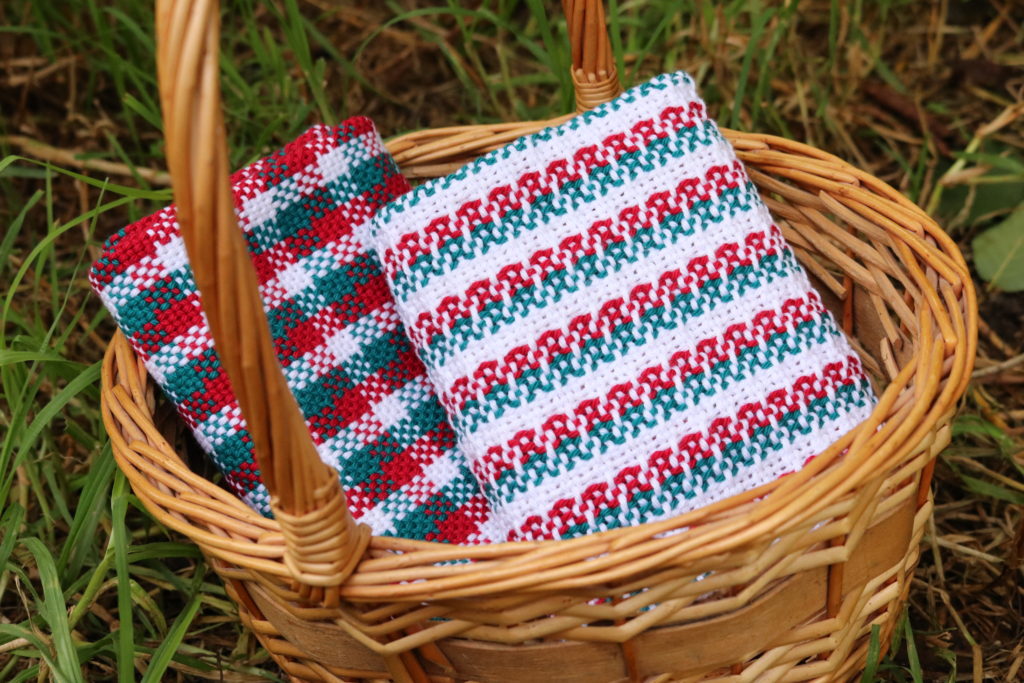
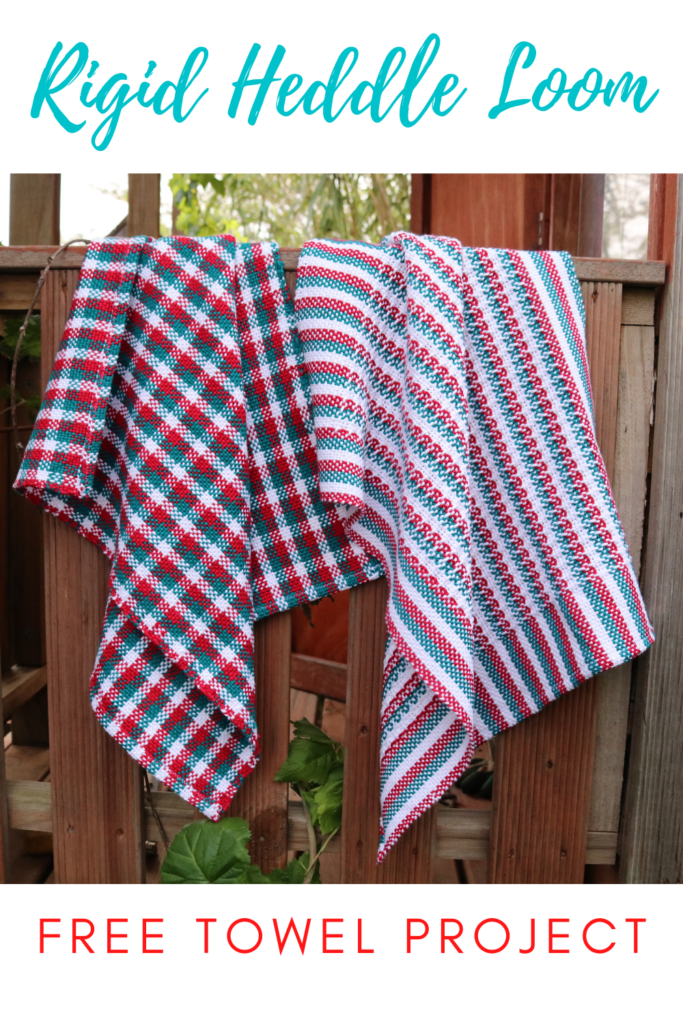
Need a gentle nudge in the right direction? Check out my Beginner Rigid Heddle Weaving Online Course for step by step instructions. Complete a lovely, practical project and get to know your rigid heddle loom while growing in confidence.

You can do it!

Until next time…

Happy Weaving!
Filed Under: Rigid heddle weaving, Weaving Tagged With: beginner rigid heddle weaving, choosing yarns, rigid heddle weaving, weaving yarns

Goodness Gracious Energy Balls

by Kelly 6 Comments

I seem to be craving sweet, nutrient dense foods frequently in the afternoons.

A cup of tea with something sweet around 3-4pm seems to be just what I need. I used to have a sweet, commercial cookie to dip in my tea, but that is way behind me now!

Something that I love about switching to a healthier lifestyle is that I have found I don’t have to compromise on taste or treats – I just need to find a way to make it tick some healthy boxes.

*This post contains affiliate links

And, if it’s quick and easy to prepare a batch that I can then have waiting for me in the fridge or pantry – even better!

These little energy balls tick all the boxes and then some!

They are sweet, slightly salty, substantial, economical and so fast to make.

To throw these together, I only used ingredients that were already in my pantry and that are always there.

The goodness and simplicity of oats, combined with favourites such as honey and peanut butter, (I can not get enough of the stuff!) coconut, linseeds (flaxseeds) , plump raisins, tahini and vanilla extract. So simple, so delicious!

A recipe like this is so adaptable too, you can put in whatever healthy ingredients you have on hand that you think will work.

*Change the linseeds for sunflower seeds.

*Add some chopped nuts to the mix.

*Switch honey for maple syrup or other natural sweetener.

*Switch the raisins for craisins, chopped dried fig, chopped dates or sultanas.

*Add in some chopped, dark chocolate.

*Dip half of each ball in some melted dark chocolate.

Goodness Gracious Energy Balls

5 from 1 vote
Healthy snack balls that taste amazing!
Print Recipe Pin Recipe
Prep Time 10 minutes mins
Servings: 14 serves
Ingredients Method

Ingredients
  

  • 1.5 cups Quick or rolled oats
  • 0.5 cups Dessicated coconut
  • 2 tbsp Linseeds (whole)
  • 3 tbsp Raisins
  • 2 tbsp Peanut butter
  • 3 tbsp Tahini
  • 2 tbsp Honey
  • 2 tsp Vanilla extract

Method
 

  1. Mix all ingredients together in a large bowl. I find it easiest to get my hands into the bowl and squeeze everything together. Once well combined, squeeze and roll into balls and store in the fridge.
    *Note – if your mixture is a little dry, add more honey
    ** If you want to make your balls a little more decadent, add some chopped, dark chocolate!
If you try out this recipe, I’d love to hear if you enjoyed it!

Filed Under: Health and home, Recipes Tagged With: bliss ball, healthy lifestyle, healthy recipe, recipe, recipes

Afternoon Choc Hit Bliss Balls

by Kelly 6 Comments

Do you have that typical afternoon slump? For me, it happens around 3:30 – 4pm. I always try to look after myself by having a cup of tea and, if I’m lucky, putting my feet up for a few minutes.

*This post contains affiliate links

It’s also the time of day that I start craving a sweet treat. To have something sweet but healthy on hand is a great way to prevent myself from scoffing something that is not so good for me.

Bliss balls are the perfect treat. You can make them in the size you want and from a variety of healthy ingredients. They are quick and easy to throw together. Oh, and they are absolutely delicious!

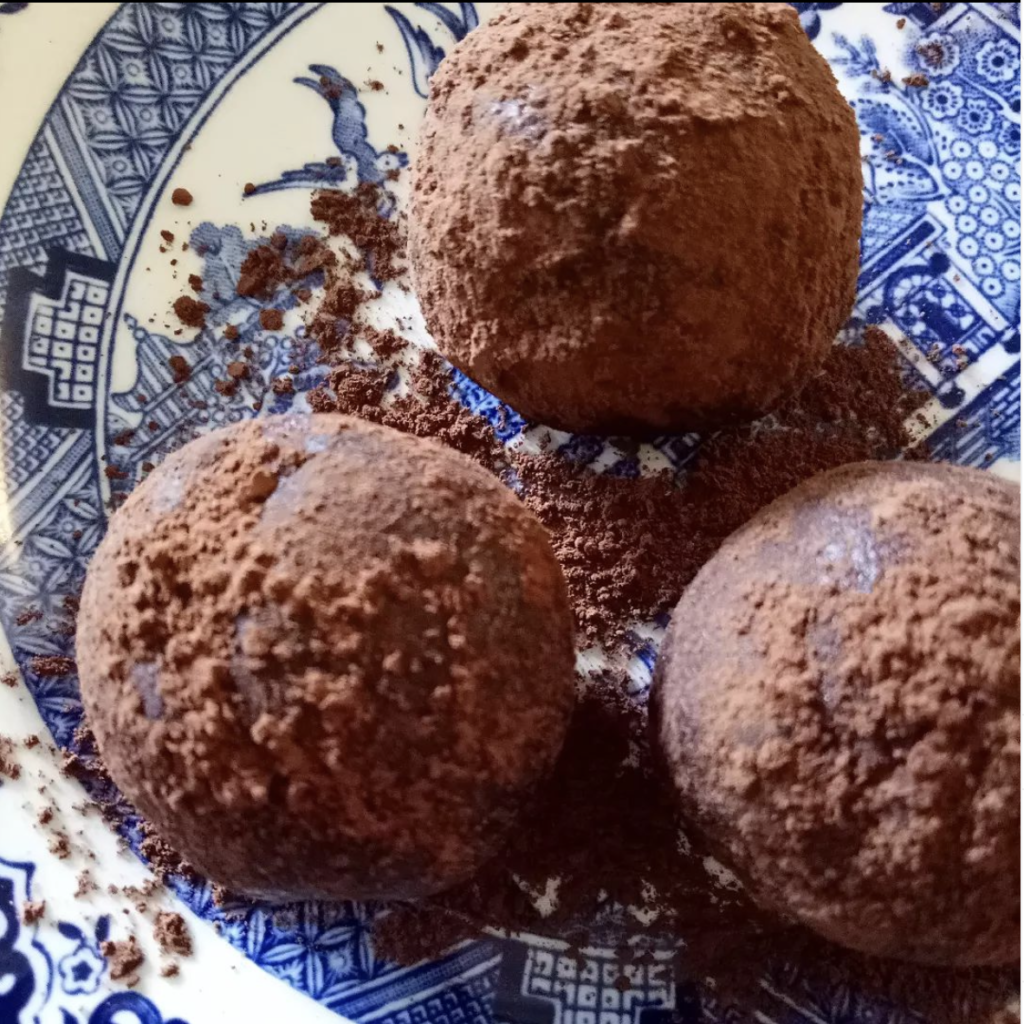
For this recipe, I’ve used some simple ingredients like almond meal, cocoa powder , local honey, maple syrup, freshly squeezed orange juice (if you love an orange zing, you could even include some orange zest!), vanilla extract and dessicated coconut (optional).

I hope you enjoy my recipe!

Kelly

Afternoon Choc Hit Bliss Ball

5 from 1 vote
A delicious and healthy afternoon treat
Print Recipe Pin Recipe
Prep Time 10 minutes mins
Ingredients Method

Ingredients
  

  • 1.5 cups Almond Meal
  • 2 tbsp Cocoa powder
  • 1 tbsp Honey
  • 1 tbsp Maple syrup
  • 1 tbsp Fresh orange juice
  • 1 tsp Vanilla extract
  • Dessicated coconut (optional for rolling)

Method
 

  1. Place all ingredients in a medium sized bowl.
  2. Mash together using a fork until well combined.
  3. Roll into balls.
  4. Roll in dessicated coconut or extra cocoa
  5. Store in the fridge in a container.

Here is a little tip: If you can bear to let the balls sit in the fridge overnight, they taste even better the next day!

If you make this recipe, I would love to hear how you liked it, simply leave me a comment below 😊

Filed Under: Health and home, Recipes Tagged With: bliss ball, healthy, recipes

Why would you weave with two heddles or more?

by Kelly 28 Comments

When you buy a rigid heddle loom, it comes equipped with one heddle – usually a 7.5 or 8 dent, depending on the company you purchase from. So, if there is only one heddle with the loom, why would you weave with two heddles or more?

Heddle or Reed?

Before I go any further, I just want to say that when talking about rigid heddle looms, the terms “heddle” and “reed” are usually interchangeable but mean the same thing. For the rest of this article, I will use the term “heddle”.

*This post contains affiliate links. For more information, please see my disclosure policy.

Image from Ashford website

What is a heddle?

The actual “rigid heddle” part of a rigid heddle loom is one of the features that makes it such a great loom for learning how to weave. The heddle is a multi purpose piece of equipment. It spaces your warp, allows you to achieve two different shafts and is also your beater. It’s pretty awesome!

One heddle equals two shafts. The holes are one shaft and the slots are another. So, a rigid heddle loom can be called a two shaft loom, though there are some hot debates about this (Facebook, I keep out of these arguments!) as some people argue that a rigid heddle produces sheds not shafts.

Not really worth arguing over in my opinion, as whatever the case, you can weave 2 shaft drafts (plain weave) with one heddle and a rigid heddle loom.

You may assume then, that when you add a second heddle, you can then weave a 4 shaft pattern, but that is not so.

“What? Didn’t you just say that one heddle equals two shafts? Now I’m confused!”

One heddle does equal two shafts when used on it’s own. BUT, adding an extra heddle does not add two extra shafts, because the slots can only be counted as one shaft.

Before you throw your hands up in frustration and storm away from this page, let me give you an example:

Two Heddle Example

I’m using two heddles. On heddle one, I’m using the holes as shaft 1. On heddle two, I’m using the holes as shaft 2. That leaves the slots for shaft 3.

Think of the threads in holes as dedicated – they’re on one set path that can’t be changed once they’re threaded in. If I lift heddle one, all the shaft 1 hole threads will go up and the slot threads stay down. If I lift heddle two, all the shaft 2 hole threads will go up and the slot threads will stay down.

The only way I can make the slot threads go up would be to put both heddles in the down position, forcing the hole threads down. So you see that the slot threads operate differently to the hole threads and can’t be manipulated in the same way.

The Desire for Exploration

It seems that the desire of weavers to explore and push the boundaries of their looms has been influential in loom production. Many commercially available rigid heddle looms now come with a built in double heddle block rather than just the single they used to be made with. This is a pretty good indicator that weavers want to weave with more than one heddle!

But what can you actually do with more than one heddle? Let’s take a look at the possibilities.

Possibilities

  1. Two heddles to increase your sett.

Say you want to weave a yarn at 20 ends per inch (epi). There is no heddle available that can do that for you, the closest sett available is a 15 (which will give you 15 epi), and that just won’t do when you want to weave at 20 epi! If you use 2 x 10 dent heddles, that will give you 20 epi.

2. Two heddles increase your pattern possibilities.

You can set up your loom with an extra heddle instead of a pick up stick to weave all kinds of patterns. You can consider an extra heddle as an extra shaft, so using two heddles will allow you to weave a three shaft pattern. And there are lots of three shaft patterns to choose from!

I really enjoy weaving with extra heddles in place of pick up sticks or heddle rods. The set up time is less and the weaving is more straightforward.

3. Two heddles allow you to weave double width cloth.

This is one of those eye opening weaving revelations that is just so exciting to discover. Your loom is not wide enough for the project you want to weave. With two heddles, you can weave double your loom’s available weaving width. It’s like magic!

Can I Use Pick Up Sticks or Heddle Rods Instead?

Of course! Extra heddles are definitely more of a financial outlay and the same results can be achieved by other means. This article discusses some pros and cons for each method.

Weaving with more than one heddle is such a popular topic that I have several resources available for weavers who wish to explore further:

Online classes-

Weaving with Two Heddles

Doubleweave Baby Blanket

Christmas Table Runner

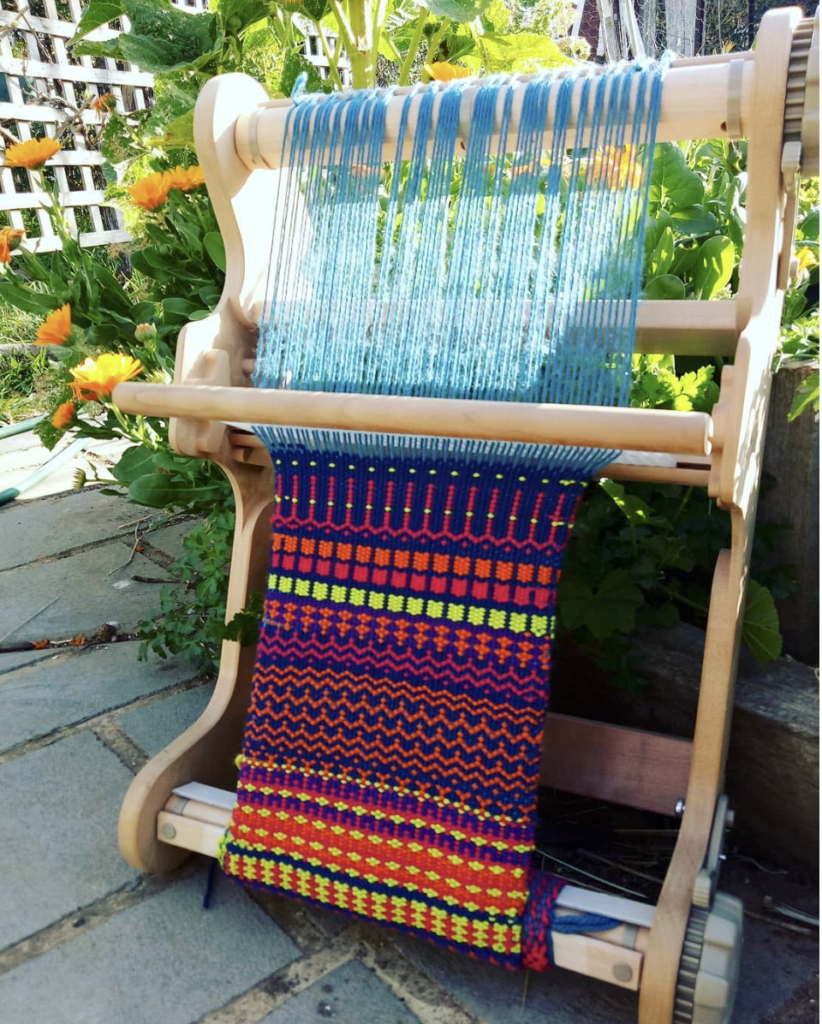
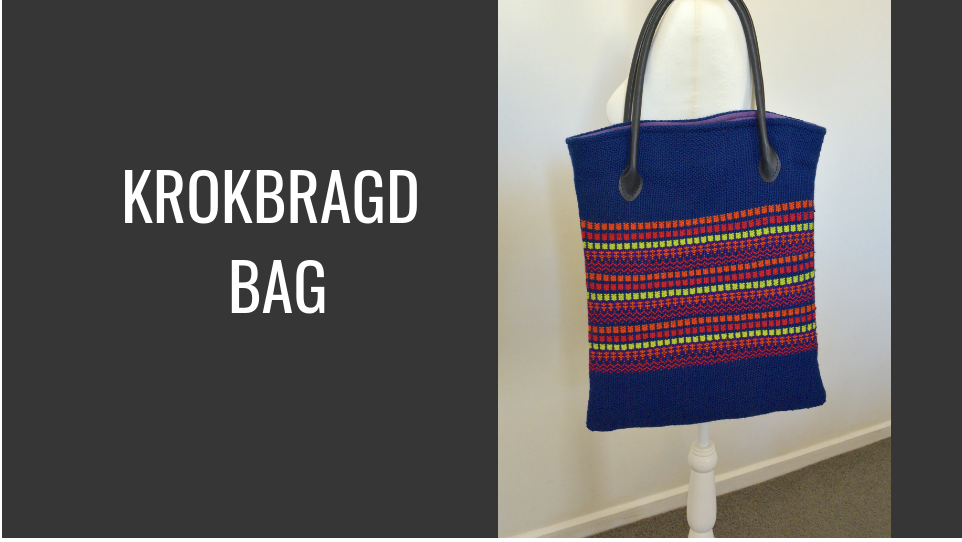
Krokbragd Bag

PDF Patterns-

Diamond Stripe Towels

The Midnight Shawl

Double Width Blanket Ebooklet

And if you’re up for a challenge, this class will walk you through how to weave on three heddles!

Three Heddle Adventures

I hope this post was interesting and helpful to you, please leave me a comment to ask questions or let me know if you enjoyed this.

Until next time…

Happy Weaving!

Filed Under: Rigid heddle weaving, Weaving Tagged With: rigid heddle weaving, two heddles

Making pictures with your loom

by Kelly 10 Comments

Something that really captivated me before I even started weaving, was the idea of using artistic creativity in weaving.

When I was younger I loved to draw and paint. In my adult life, I have not made a lot of time to devote to making art, but I have been happy to discover that there is a huge crossover with art and weaving.

This post contains affiliate links.

One of the most obvious forms of weaving that this crossover takes place in is tapestry weaving. In tapestry, the weaver can have total artistic licence through the use of colours and shapes. The shapes can be basic or complex. Colours can be blended on the loom. And, tapestry can be woven on many different types of looms.

I purchased a Mirrix Big Sister last year, as I wanted to develop my tapestry techniques and also have a dedicated tapestry loom. It is an excellent loom for tapestry, as even though it’s small, I find the available weaving room quite spacious and the tension is awesome.

Before I bought the Mirrix, I wove tapestries on my rigid heddle loom.

I had a lot of fun using different yarns and styles. My most popular Youtube series details how to weave in a free and unplanned style with a variety of yarns and colours.

I’ve also explored more tradition tapestry techniques on the rigid heddle loom. I particularly enjoyed taking my Sampleit on vacation, which enabled me to sit on the beach, watch the kids enjoy the waves and weave. What bliss!

My adventures with tapestry on the rigid heddle loom gained so much interest on social media, that I developed a course to show others how to do it! The course includes all the basic tapestry techniques you need to know, plus how to use all of these techniques to weave a finished project. If that sounds interesting to you, the course is available here.

Another way to get started in tapestry without breaking the budget, is with a more affordable tapestry loom. Depending on your budget, you could opt for something like the Schacht Tapestry Loom, or even just an el cheapo like a Melissa and Doug simple frame loom. Some people choose to make their own by building a simple frame or repurposing a wooden picture frame or similar. Just be aware that the more tension the loom holds, the better it is for tapestry and if you go down the cheap route, well, you tend to get what you pay for.

A resource that I found to be great when starting out with tapestry, and still use for inspiration, is Kirsten Glasbrook’s book, The Art of Tapestry Weaving.

Aside from tapestry, are there other ways to make pictures with your loom. Oh, yes indeed!

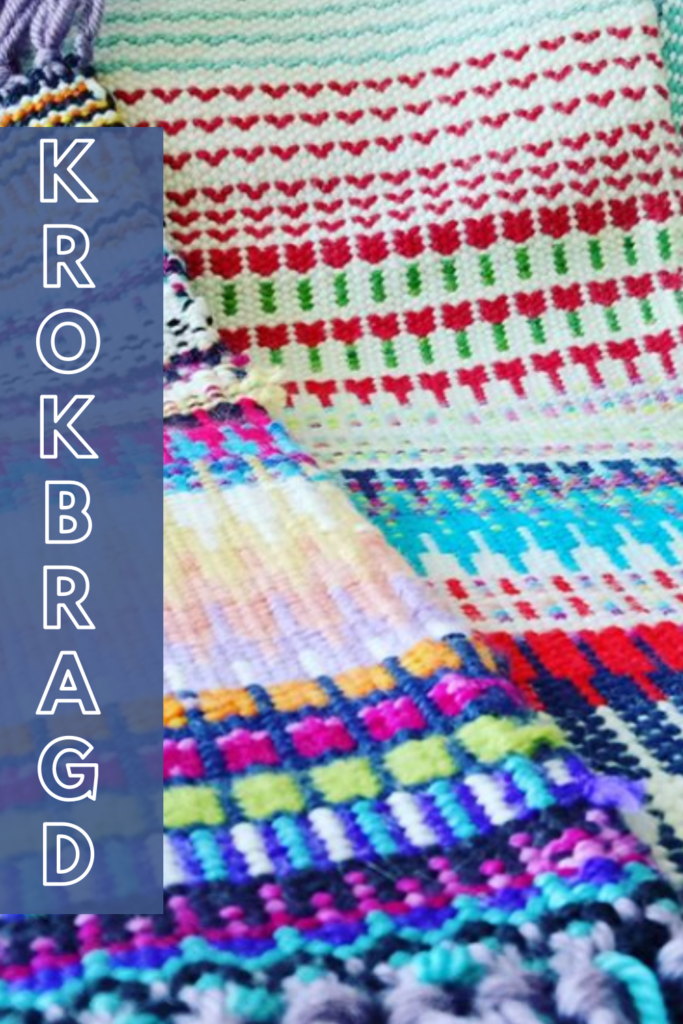
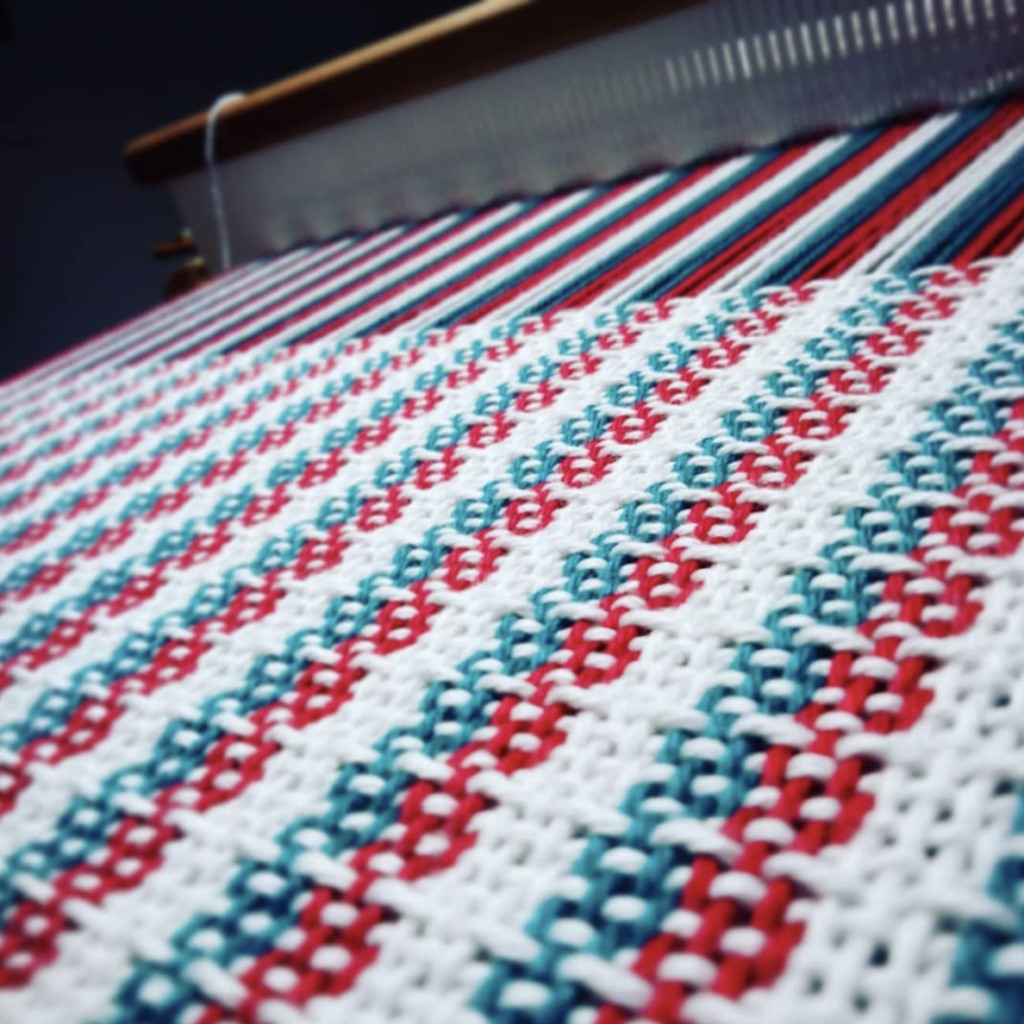
If I haven’t already gushed about krokbragd on this blog enough times, here I go again! If you’re interested in going down my blog rabbit hole on this topic, start with this post. Krokbragd is a weft based, most of the time but not always 3 shaft, weft faced weave. You repeat the same order of treadling over and over, but can vary your yarn colour combinations to produce simple and complex shapes and images. It is seriously cool, and that is why I’m always gushing about it.

Many of the shapes are open to interpretation, as they can be slightly non specific, but there is really so much to explore. One of my goals for this year is to weave a striking krokbragd wall hanging using my floor loom. Can’t wait for that one! Debby Greenlaw has written a terrific book, Krokbragd: How to Design and Weave.

I have a number of Youtube lessons on krokbragd using my rigid heddle loom, but if it’s new to you, start with the above video.

Boundweave is another weft faced weave that is very adaptable and versatile. It can be woven on 4 or more shafts (so it’s possible on a rigid heddle loom). The picture possibilities are endless. I have been playing around with bound weave on rose path threading and 6 shafts recently on my floor loom.

I’m using Nancy Arthur Hoskins’ Weft Faced Pattern Weaves book for guidance. My goodness, what an extensive book – so much to learn! This was my first attempt and I’ve now branched out with some more random designs, which is all very interesting. Slow, but interesting.

There is a lot more to be said about making pictures on your loom, but I hope this post has inspired you with some of the possibilities. Have you tried any of these techniques? Which is your favourite? Let me know in the comments!

Until next time…

Happy Weaving!

Filed Under: 4 shaft weaving, 8 shaft weaving, Floor Loom Weaving, Krokbragd, Rigid heddle weaving, Tapestry Weaving, Weaving Tagged With: boundweave, pictures, tapestry

I’ve been keeping a secret…

by Kelly 86 Comments

Things are about to change in a big way in our household. It’s all very exciting and scary. Let me give you some background information to explain!

The past year has been just little too crazy. Running my business, homeschooling the kids, driving hours every week to get kids to lessons, activities and jobs, trying to ensure that everyone stays healthy with nutritious food, meeting the mental, physical and spiritual needs of 4 young people, maintaining a happy marriage, nurturing my faith and pretending that my house doesn’t look like a disaster zone are just some of the things I’ve been trying to juggle. More often than not, those juggling balls have been dropped.

So often people ask me how I “do it all” and I always reply that I don’t! I can’t – no one can. I have a family who I also consider my team. We work together to get things done, and still there is more than we can handle.

I’ll admit that I’ve been really stressed this past year and that my old, unwelcome “friend”, anxiety has been popping up more often than I care to mention.

On top of all this has been the problem of my husband’s back injury. Without going into too much detail out of respect for him and for the organisations he has worked for, he sustained an injury at work almost 15 years ago. He has a collapsed and oozing disc in his lower back. He has continued to work in his job to support us, but it has become increasingly difficult to do so. In recent years, it has become a bit of a jumble of specialist’s appointments, employer negotiations, daily pain medications, more doctor’s appointments and more referrals. The specialists want to avoid surgery, as it would mean full fusion, a 12 month recovery period, and no guarantee of success.

It has always been a dream of mine that my husband and I could work on a business together. I have been given the gift of being self employed and not having to rely on a job for income, and I wanted that for him too. We had planned to wait and hope that my business income would grow to such an extent that it would replace his work income. We’re not there yet. But it has become unfeasible for him to continue working when he is in constant and often severe pain.

That brings me to our decision! He is coming home. He will remain on casual status at his current job, but he is only obligated to work one shift a month. All of the things that I’ve talked about have been the catalyst for the change, and we feel that God is leading us in this direction, in fact, we feel that there is no other choice to make at this time. It’s not how I hoped or planned, but life rarely is that way.

So, what does this all mean for us?

It means that we can now be a real team. That I can get help with all of the things I need help with. That we will be working together for the benefit of our family. Reduced stress. More time to work on making the business bigger and better. More time to work on our neglected home and fix those things that have needed fixing for I don’t know how long! Particularly for my husband, who has worked so hard for so long, more time to spend fishing, which is his lifetime passion. Yes, it’s going to be a big financial change and challenge, but I think the benefits will outweigh the negatives. And I’m really excited about the possibilities that it will open up for my weaving school.

My husband is pretty camera shy, but who knows, maybe you will see a little more of him in my videos from now on.

Once again, I am so grateful to all of you wonderful people out there who choose to support me and my family by purchasing classes, memberships and patterns and watching my Youtube channel. Without you none of this is possible.

Onward and upward!

Until next time…

Happy Weaving!

Filed Under: Health and home, Inspiration Tagged With: changes, family

  • « Go to Previous Page
  • Page 1
  • Interim pages omitted …
  • Page 21
  • Page 22
  • Page 23
  • Page 24
  • Page 25
  • Interim pages omitted …
  • Page 118
  • Go to Next Page »

Primary Sidebar

About Kelly Casanova

Hand crafted boat shuttles

Categories

Archives

Meta

  • Log in
  • Entries feed
  • Comments feed
  • WordPress.org

Copyright © 2026 Kelly Casanova Weaving Lessons on the Foodie Pro Theme